
 I’m rather looking forward to Jack the Giant Slayer. It’s my kind of movie – epic fantasy, more CGI than live action, and a plot that’s frankly just an excuse for two hours of visual excess. I thought it might be a remake of Jack the Giant Killer from back in 1962, which Little Satis and I watched a while back. It isn’t, really; it’s as different from the original fairytale as the first movie was.
In all of this, I honestly never gave a second thought to the cast and crew, and certainly not the director. Didn’t really know who Bryan Singer was – I’d heard his name somewhere, but couldn’t really associate it with anything. But, for some reason, he really, really wants me to know that he directed it:
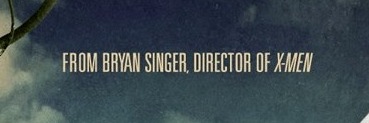
I can’t recall ever seeing this on a movie poster before. I get the whole “from the director of” ploy: if you liked that, then you’ll love this. I remember this vividly from the previews of 10,000 B.C.; all I really saw was “from the director of Independence Day“. I recall wondering what on earth the two movies had to do with each other, and why the director made any difference. But, the big difference was that it was never pointed out who that director was (some dude called Roland Emmerich). Frankly, I didn’t care; even if the two were related in some way, it didn’t matter much to me who the director was – I knew it wasn’t Steven Spielberg or Ridley Scott.

 So why is it so important to Bryan Singer that we know he directed the movie? And of all things, why point out he’s the director of X-Men? Why not The Usual Suspects? That would tell me this guy is a masterful director. (Of course, it would also tell me Jack the Giant Slayer was a mind-bending crime flick with an ending twist to rival The Sixth Sense.)
Is it just me, or does this seem just a tad self-congratulatory? Have you ever seen this before?


 Satis Writes