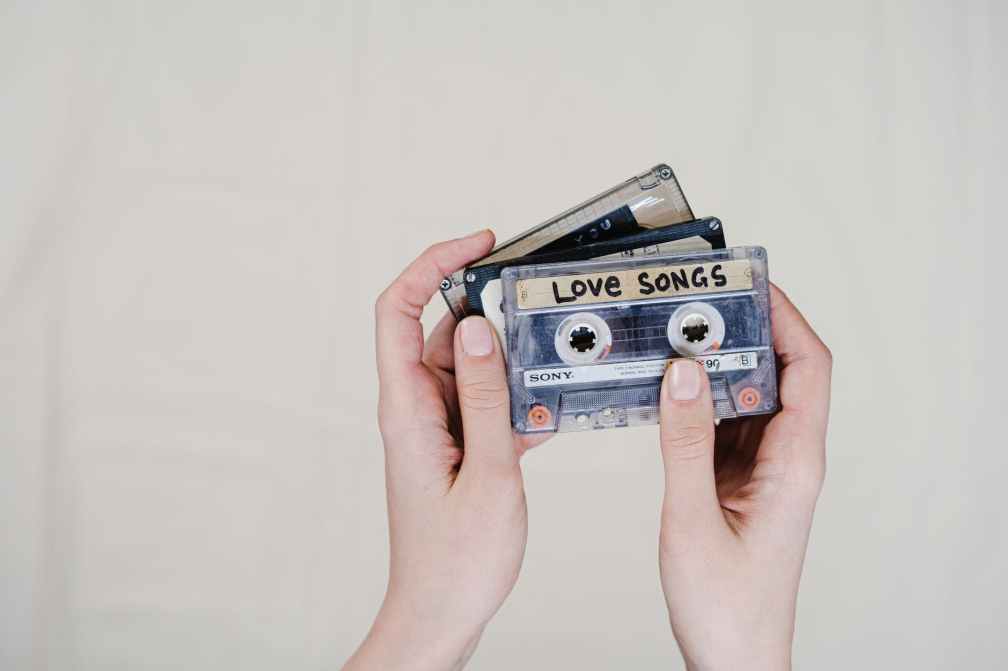
We don’t learn music anymore.

It’s no secret I love music. From my background as a pianist and composer to the wealth of songs from rock and metal artists around the world, it’s rare to find a moment when I’m not listening to music of some kind. From Beethoven to Behemoth, and Mozart to Mastodon, music is a central, fundamental part of my life, and I don’t think I could survive without it.

To that extent, the evolution of music consumption has been fascinating to me over the past few decades. To a large extent, I think the change from physical media to online streaming platforms has been a positive one, allowing far more artists to disseminate their music than ever before, getting their creations into the hands – and ears – of their fans. The ability to distribute music over the internet has revolutionized entire music scenes, never mind the industry as a whole, and where once young bands had to pawn their homemade tapes and CDs at gigs to the same crowds over and over, they can now see their music heard literally the world over with almost no effort whatsoever.

The ability to make revenue from record sales, of course, has diminished drastically, with streaming companies paying out fractions of pennies to starving artists, whilst keeping the bulk of their subscription costs to themselves. There are always two sides to every coin, and in this case the ability to distribute content globally means far less revenue per sale, or in most cases, per stream.

But there’s another aspect to streaming that I think has perhaps diminished our ability to truly enjoy and appreciate music, and it’s the overwhelming quantity of music available. With great quantity comes, if not a reduction in quality, a reduction at least of our ability to absorb the music and truly grow to know a song or album inside out.

Let me give you an example. Back in the early 2000s, I would frequently visit a local CD store to discover new music. Whilst there were a handful of bands who I knew, and would eagerly purchase each release the day it came out, I was also interested in discovering music from artists I had perhaps heard less of – or never heard of at all. To this extent, I would spend hours browsing albums, looking for album art, band names, and lyrics that spoke to me – all before ever hearing the music at all.

There was a lot of junk I discovered this way; artists who, had I been able to hear their music before purchase, I would likely have never spent money on. But there were some true gems, too – albums that stayed on heavy rotation, and which I grew to know like the back of my hand.

This lack of abundance – the fact that I could only afford to purchase a few albums a month – meant that I would spend those months listening to the same albums on repeat, over and over again, until I knew intimately which song came after which, exactly when the chorus was coming up, and was even able to sing along (to those songs that weren’t death metal) to the lyrics. I know Opeth’s masterpiece, Blackwater Park, better than I know some of my own compositions. I could sing along to ever single track from Sentenced’s brooding goth rock albums – especially Crimson and The Cold White Light.

The point here is that I learned these albums. They became a part of my subconscious, due to no other reason than I had nothing else to listen to. I might have listened to album 2-3 times a day back then – close a hundred times a month, until another album came out that I could afford to buy, and then I’d listen to that one a hundred times over as well.

This just doesn’t happen anymore. In the past few weeks, two of my favorite bands released new albums: Katatonia’s Sky Void of Stars, and Insomnium’s Anno 1696. I’ve listened to them a handful of times, certainly, but before long I get distracted, listen to some other new music, or have Siri play random songs ‘picked just for’ me. In the past, I would have been listening to these albums on endless repeat.

The worse part of this is that, in order for a song or album to truly qualify for that now-unattainable “endless-repeat” status, it has to be of absolute stellar quality. And not every band, every time, can produce that level of quality. Even Opeth, arguably my favorite band of all time, have released albums recently that I’ve only listened to a handful of times. It’s not because they’re bad albums; it’s just because the choice of infinite other music means that unless I’m utterly blown away at first listen, I’ll eventually drift off to other new entertainment.

In the long term, I think this may lead to another musical detriment: the absence of strong, thought-out albums. Sure, there will be some artists that will continue to write just what they want to write, but for many, this mentality of having to come up with “instant hits” may mean that they sacrifice long-form integrity for the sake of a quick success. Albums that contain one or two killers tracks, and the rest is hot garbage.

Of course, the concept of “filler” tracks isn’t terribly new. But I do fear that we may, over the coming decades, even see the death of the album altogether, as it becomes physically and financially easier to just release individual songs as they’re recorded. Even Slipknot have done this recently, with tracks such as All Out Life, and more recently Bone Church, not being intended for an album at all.

In any case, this is the evolution of music consumption. It isn’t inherently good or bad, but I do miss the days when I would “learn” an album simply because I would have no choice but to listen to it over and over again. I don’t think I can say I truly “know” an album released in the past fifteen years.

I hope that one day, someone will release an album that I’m so taken with, I only want to listen to it, and nothing else, for a month straight.

We shall see.

New Music Is Available!

So … when I’m not writing, it seems, I’m writing music. Whilst The Redemption of Erâth has been on pause for a few months, I’ve been revisiting some music I created between 2019 and 2021 – an album of symphonic metal called Despair.

Recently, I upgraded the orchestral sample libraries I use, and re-recorded all five tracks of the album using EastWest’s phenomenal samples and sound engine. Whilst the final result may not sound exactly like a live orchestra, it’s (in my mind, at least) pretty damn close.

So without further ado, I present to you: Despair, a suite of orchestral heavy metal in five parts, channeling the deepest, darkest emotions of human nature!

1: Depression

Depression is the first track from Despair, opening with quiet strings and horns, building to crescendo before the crushing heaviness of the metal band comes crashing in. Segueing to a softer, melodic verse section, things eventually take off with pounding guitars and drums, intertwining a full orchestra through rises and falls until a heavier recapitulation brings us to the outro – soft and quiet again, building into a sudden wall of orchestral noise and a thundering drum punctuation that leaves on a cliffhanger, waiting for the next track.

2: Anger

Bursting in with furious strings and brass, Anger ups the pace and energy tenfold, a full orchestra blasting away until dropping out suddenly to allow for the metal band to take over with churning, grinding riffs. Never giving in to a slower beat, the song carries forward in a kind of scherzo-and-trio format, building to a climax before a middle section that leads again with devastating riffs, before recapitulating to the opening. Finally drawing to close with every instrument at full tilt, Anger is a crushing ode to unbridled fury.

3: Fear

Opening with a rumbling, unsettled bass line, Fear is deliberately the most disjointed piece of the suite, wavering between numerous time and key signatures throughout. There are moments of melody interspersed between longer passages of chromatic atonality, but the overall mood is one of anxiety and unsettled, indescribable fearfulness.

4: Grief

Almost entirely orchestral (the band comes in only briefly at the very climax of the piece), Grief takes us through a journey of pathos and heartbreak, with sweeping strings and devastating horn lines drawing influence from the raw emotion of the greatest of classical composers – Tchaikovsky, Beethoven, and more. From the soft, distant opening to the thundering timpani that bring the song to a heaving climax of sadness, Grief will tug at your heartstrings and (hopefully) give you chills at all the rights moments.

5: Despair

The epic conclusion and title track, Despair opens with a hammering timpani roll and huge, crashing chords from the band and full orchestra – nearly a full two minutes of opening to a 20-minute track that winds through many layers of instrumentation before coming to a quiet close halfway-through, only to burst back into life with grand horns and strings sustaining the melody over churning guitar riffs. Through a varied development we finally return to a grand reprise of the opening, announced with a huge gong crash, before moving on to the closing of the song, and the album, with a revisiting of the very opening of Depression, bringing the full album to a close.

Ten Years in the Making

It occurred to me, as I sat here trying desperately to think of something – anything – relevant to say, that I started blogging here on WordPress almost exactly ten years ago – October 5, 2011 was my first post. And as I thought about that, I thought that really, that’s a pretty long time.

In some ways, a lot has happened. I’ve written and published three (and a half) books in The Redemption of Erâth series (with more to go, if I ever get there) and two stand-alone YA books under my real name; I’ve published over nine hundred individual posts here on Satis Writes; I’ve recorded five albums of music (that will likely never see the light of day). My son, who was seven when I started writing fantasy for him, will be going to college next year.

But in other ways, not much has changed. I’m still depressed. I still struggle to do things that others find easy. I still don’t know how to do my taxes. I’m still me, and me hasn’t changed much in ten years. I’m not famous; I don’t have an agent; I’ve never successfully convinced anyone to represent me or my writing. I do it all myself, and get it out to no one.

WordPress has been kind to me; it’s been a community that helped me through difficult times, and gained me readership, fans and friends. I don’t spend nearly as much time here as I used to, and it shows in my likes, readership stats and views. But I will keep writing, because I kind of don’t know what else to do. Every time I commit to writing more, or again, I fall out of it just as readily. Every time I say things will be different … they never are.

Recently I’ve fallen into an exceptionally deep depression that I’m really struggling to rouse myself out of. I posted on Monday about loneliness and validation, and … haha, got no likes. It doesn’t help.

I realize it’s a journey, of course, and that it comes with its ups and downs. I’ve had some great times over the years – for example, some of my first book launches (virtual, of course) were exciting, and I got the opportunity to connect with and get to know lots of different authors, readers and fans of fantasy and writing in general. There’ve been some absolutely awful times, like when I found myself in my car in the woods of Pennsylvania, wondering what the easiest way to die would be.

I’ve even been featured on WordPress’ front page twice, for articles on raising children and mental health. That was a long time ago, but I remember it fondly, as being part of a supportive, caring community.

In the end, of course, whatever comes is what will come; whether it be fame, fortune, recognition, anonymity, misery, or death. I can’t control the future, anymore than I can change the past. But I can at least recognize the steps that it’s taken to get me here, and the fact that, despite sometimes months of absence at a time, I continue to return to WordPress, continue to write, and continue to try and reach out to the world at large.

So here’s to celebrating ten years of blogging; and who knows – perhaps to ten years more.

We shall see.