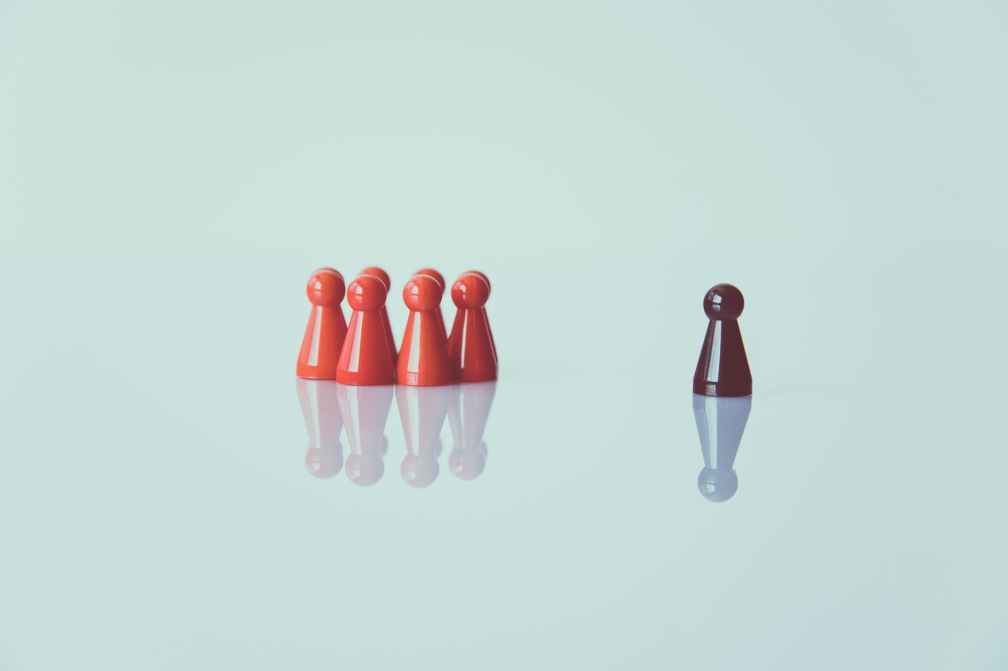
What Social Distancing Means for Humans

As COVID-19 spreads around the globe and the world’s governments try to keep the cases at bay, a new phrase has cropped up: social distancing. In a nutshell, it means keeping away from people to limit the spread of infection, particularly when transmitted through the air.

For many of us, this means staying at home when we’d normally be out and about – whether it be shopping, dining out, or simply going to work. Some governments have outright prohibited all non-essential travel (the definition of essential, of course, is up for debate), meaning that for many of us, the normal social contact we would have with other people is at an absolute minimum.

At first, the introvert in me would want to think of this as a good thing; who wants to have to interact with other people anyway? But as the days wear on, it becomes increasingly evident that, even for the most antisocial among us, human contact is an essential part of our nature.

You see, humans – like many, many other animals – are inherently social creatures. We thrive when we are in a community, and perish in isolation. There’s a great deal of study into the psychology of this, but the bottom line is that people need each other to stay sane.

If this is the case, then what happens when we are forced into isolation? Whilst many of us are in isolation with a few other people, there are nonetheless some of us – those who live alone – who now have no physical connection to other people for days, if not weeks, at a time. Even if you live with someone, the limited social interaction of just a couple of other people is no comparison to the wealth of stimuli that comes from being able to simply talk to different people, with different perspectives, throughout your day.

Even as a fairly hardcore introvert (I get easily exhausted interacting with people), my day is usually filled with human interaction and socialization, and I use alone time to recuperate. Now that I’m working from home, the conversations with my colleagues and clients are at a bare minimum, and I find myself at times bored to tears.

Perhaps the only good news is that this particular pandemic has hit us at a time when we’re still able to socialize to a reasonable degree remotely, through technology. In fact, for our children, who are so used to socializing virtually, I suspect this quarantine is having a significantly lesser impact that it has had on adults who grew up having to interact in person. Through FaceTime, social media and online servers, we’re able to at the very least get the input from others that create intellectual stimulus, even if we aren’t benefiting from the more visceral reactions of being able to physically see, hear, and speak to others in person.

I have regular virtual meetings for my work, as does my wife; my son is taking online classes from school through which he can directly interact with his teachers. I can call, text, or message people anytime I like. I can still interact.

But none of this replaces the need we have for physical human interaction, and I worry that society as a whole may soon face a terrible choice: do we maintain our physical health at the expense of our mental health, or do we venture out and about, risking exposure to a potentially deadly virus, just to stay sane?

There are no easy answers at a time like this, but with COVID-19 seeming unlikely to disappear anytime soon, there may be some drastic changes that will have to be made, simply in order to protect the survival of human society. And what happens when the next viral outbreak comes? What happens when a plague of considerably greater deadliness comes around? Without sounding too apocalyptical about it, humanity may have never faced a greater threat to our overall societal well-being.

What are your thoughts? How will we survive this, mentally and physically? And what do you think the long-term prospects for our culture and civilization are?

Thoughts on COVID-19

There’s pretty much only one thing on people’s minds these days. I’ve seen anxiety, panic, hysteria, ignorance, apathy and dismissiveness around COVID-19, but there’s no denying that it’s here, and it’s something that needs to be addressed. (Indeed, it is already being addressed by most governments and businesses around the world.)

In a not-so-funny way, the overwhelming presence of COVID-19 is like a mental illness: a shadow across the mind that can’t be ignored, a thought that presents itself constantly before all others. Every thing you do, every action you take, you can’t help but wonder if you’re furthering your exposure to the virus.

I saw a co-worker go home sick yesterday. Just before he left, he mentioned to a fellow team member – whether in jest or not, I don’t know – that he thought he might have coronavirus. In my mind, that was an unacceptably irresponsible thing to do. Not because people shouldn’t know if he did, but because the way he presented the information – to a peer, in casual reference, and not to a manager or leader – led to a rapid spread of anxiety and panic throughout the entire team.

One of the things I’ve seen over the past few days is that in times of uncertainty, duress, and unprecedented fear, people want to be told what to do. They need reassurance. They need a strong, unwavering and certain leader who sets the record straight, tells the truth that people need to hear, and confronts the feelings of panic and hysteria that are brewing in people’s minds. I saw this at work when no leader was there to tell people how to react to a co-worker potentially having the virus; and I see it in the egregious panic-buying that is going on across the United States at virtually every supermarket in the country.

This level of conscientious command is missing entirely from the United States’ leadership currently. Within the past two weeks, the president has noted that the coronavirus will disappear “like a miracle”, that things were “getting much better in Italy”, and more or less downplayed any effect the virus will have on the US and its economy. Instead of actually leading, it feels more like panic and ignorance from the one person who, in theory, ought to be able to bring things together.

But at the same time, perhaps this isn’t quite such a bad thing; after all, mass hysteria and panic can be what allows democracies to turn into dictatorships. Capitalizing on people’s fear – justified or not – is an easy path to rationalize unchecked executive actions, and in times like this it becomes easier to abuse the power given to those in positions of high authority. So far all I’ve seen from the leadership of the country has been denial and scientific ignorance, which under the circumstances is probably about all that could have been expected.

What the spread of COVID-19 has demonstrated, however, is that the world at large is woefully unprepared to handle the proliferation of such an infectious and easily-communicable disease, and that perhaps it never can be. The world is incredibly fortunate that COVID-19 is not more fatal than it is, although current estimates might nonetheless be too low; were a disease as fatal as, say, ebola to become as transmissible as COVID-19, the world would be in a dire state. Even so, to contain the spread of a disease like this would mean shutting down all physical communication between states and countries, and in a global economy this could put many countries at risk of starvation as their imports dwindle, and poverty as their exports cease.

As the disease progresses, however, one thing that’s come to light is that there are very few places that have yet to suffer, and in this regard there is perhaps a chance for many of the world’s countries to unite in combatting this contagion. If out of hardship some positivity could be derived, then we should look to that light, rather than focus on the devastation left behind.

Or, like what seems to be happening in the United States, we could could become isolationist and leave the rest of the world to suffer in solitude. And in doing so, I think far more people will die.

From a global scale to a single individual, the spread of COVID-19 is a frightening prospect, and how we handle it as people will determine how we handle it as a society. If there is no leadership to be found from the government, then we’ll need to rely on our own resources: read scientific publications, seek out original research, take the precautions recommended by the World Health Organization and the CDC, and most of all, look after your own mental health. Don’t allow fear to drive you, but don’t ignore your own anxieties either; information is your best weapon.

The Isolationism of Depression

I’m sitting in a brightly lit, crowded and noisy room. People bustle around me, eating, drinking, talking and laughing, and here I am in the middle of it, ignoring it all. I have noise-canceling headphones in, and the most I hear is a faint whisper of spoken word, the slightest hint of movement out of the corner of my eye, and the distraction of someone jostling me as they try to get by. Otherwise, I’m in a world of my own, oblivious to the people around me, focused on the music in my ears and the screen in my eyes.

In many ways, this is a perfect analogy for depression. I know there are things going on in the world around me, but I can’t connect to them. I know there are people who might be watching me, trying to talk to me, but I can’t pay attention. I don’t hear anything but my own focus, don’t see anything but myself. In the same way that the sounds around me are muted and distant, so are the feelings of people around me, and even the brightness of the day is somehow more subdued than it used to be.

Depression is very isolationist. It really doesn’t want me to interact with people, or do my job, or pay attention to my family. All depression really wants is to escape into a lost, solitary world, a place where no one sees me, and I don’t have to see them. Where no one hears me, and I can’t hear them.

This is a place I’m intimately familiar with. I’ve often felt huddled in a corner, looking out on the world from a place of dark loneliness; I frequently lapse into periods of nonexistence, where I’m not certain if I’m dreaming or not, if I’m in bed or at work. When depression steals over me, it mutes the whole world in both color and sound, and it’s all I can do to stay cognizant enough to make it from place to place, from moment to moment, until I finally get to retreat into the soft warm covers of my bed once more.

I’ve been told I get very self-centered when I get depressed. I think this is probably accurate; it’s difficult to assess others’ problems or empathize with their troubles when nothing seems to matter. When the darkness creeps over me, I just stop caring about anyone else. Perhaps it’s a survival instinct; perhaps I’m just trying to stay sane enough to live the day out. The same is true of duties and responsibilities; I’m having a really hard time focusing at work, convincing myself that any of it matters at all. I want nothing more than to go home, go to sleep.

Sometimes depression is a deep, overriding despair. These are the times when I can’t even get out of bed, never mind take a shower, or brush my teeth, or make it to work on time. This is when the world is black, I can’t see past my own feet, and everything is spiraling out of control to a point where there seems no way out.

Other times, however, depression is a kind of blank limbo, neither feeling nor unfeeling. I do things as though nothing were wrong, going through the motions of an otherwise normal day, but there’s no connection internally; no meaning to any of it. Do I speak up at that meeting or not? It really doesn’t matter. Do I go shopping after work? Who cares? Should I watch a movie or fall asleep? Same difference.

That’s kind of where I am right now. I haven’t written more of The Redemption of Erâth in a good few weeks. I haven’t written more music. I haven’t done … well, anything, really. I just keep plodding on, step after step, day after day, getting up and going back to bed with nothing in between. Leaving the house, going to work, having dinner with friends … all of it, nothing. It doesn’t mean anything.

I hate losing touch with reality like this. I don’t want to just go through the motions. In fact, I think I’d rather be utterly incapacitated with despair than well enough to do things, but ill enough for it to all mean nothing. I’d rather feel something than nothing, even if that something is misery.

Mostly, though, I’d rather just sleep the day away. Then I wouldn’t have to sit in this brightly lit, crowded and noisy room. Then I could just be on my own, in my little isolationist bubble, and feel nothing.

The night isn’t far away.