Selfishness Is Killing the World

Those of you who’ve been with me for years know that I’m not usually one to get overly political, but with the way current events are unfolding, I can’t stay silent. I see so much hurt and pain in the world, and particularly in the United States where I live, and the longer I think about it, the more I can only come to the conclusion that this is the result of jealousy, greed, and selfishness.

Let me explain why.

COVID-19

Let’s start with what the world started 2020 with: COVID-19. As news about a novel, highly infectious and deadly virus spread, so did a lot of fear about exactly how to deal with this new disease. Later, rather than sooner, the United States chose to shut down to try and limit the spread of the virus, and millions of people found themselves without work, income, insurance, and possibly even without homes.

This isn’t an easy decision to make, of course. Being laid off by something invisible, something intangible, that you can’t see or feel, might well feel like a personal attack, and I can understand the resistance, the frustration, and the anger that would likely arise in these scenarios.

But those with the loudest voices against the shutdown have not been those who are suffering. It hasn’t been those who are without a job. It hasn’t even been those who are critically ill and dying of this new disease. It’s those who think that no one should be allowed to tell them what to do, how to work, and how to interact with their fellow human beings.

What infuriates me about this is that the mandate to wear masks, to stay home, to not go out to enjoy yourself, is about protecting other people. The biggest argument I hear against these precautions is that ‘it won’t affect me’, or ‘I need to get a haircut’, or ‘I lost my job’. How freaking selfish can a human being be? It was never about you! It was about keeping people you don’t know, people you’ve never met, from dying.

People have chosen to ignore these restrictions, have protested, have taken up arms and defended businesses from law enforcement to show that they aren’t going to be pushed around. For fuck’s sake – no one was trying to! We were trying to stop millions of human beings from dying, you selfish pricks!

Sorry for ranting there. But the point is that the spread of COVID-19 has been largely propagated by pure, utter selfishness, a complete absence of basic sense and care for our fellow humans. In countries where it is endemic to care for each other, where people actually look out for one another even if they don’t know them, the spread of COVID-19 was reduced significantly sooner, and significantly faster. Nowhere is perfect, but in the United States, it is simply appalling to consider that we have such disregard for other people’s lives.

Moving on.

Karens and the Age of Self-Entitlement

A recent meme that has been popularized across the internet is the concept of a ‘Karen’ – a middle-aged, self-entitled white woman who believes that the world should revolve around her. I think this is a grossly unfair assessment of this demographic, but the concept – that of someone who truly just doesn’t understand that there are other points of view in the world – is becoming increasingly pervasive across the country.

I also don’t believe this to be a generational device; I’ve seen Millennials, Gen Xs, Baby Boomers, all equally guilty of this sort of behavior. It’s at the root of everything I wrote about COVID-19, frankly – the idea that your personal wishes, desires and needs are somehow more important than those of anyone else. It’s easy to mock and make fun of the genders, the haircuts, the look and feel of a ‘Karen’, but the truth is that this sickening attitude is visible at all levels.

Perhaps one of the reasons that it’s become focused on the middle-aged white woman is because of the stereotypes involved; when a man pushes forward his own agenda without regard for others, he’s usually considered ‘strong’, or a ‘leader’ (look at our leader today). When a woman does it, she’s a ‘bitch’.

Regardless, the belief that is at the root of this behavior seems to be that if you want something, no one is allowed to stop you from getting it. I want that double-mocha frappucino; I want that haircut; I want that man to leave me alone.

I think this stems from a deep misrepresentation of what it means to live in a ‘free’ country. Freedom does not mean freedom to act like a selfish toddler; it does not mean ‘me first’; it does not mean I’m more important than others. In fact, I think a great deal of this behavior stems from a bizarre jealousy of the attention given to those who, ironically, don’t enjoy those same freedoms.

Think of it this way: when a parent favors one sibling over another, the other will often act out – not maliciously, but out of a desire for equal attention. This happens when the siblings are on equal footing, of course, but if one genuinely requires additional attention – perhaps they are ill, injured, or have special needs – the remaining sibling can begin to actually blame the other for their own deficit in attention. If allowed to continue, that sibling can eventually come to believe that they are the marginalized party – even though they have literally every option open to them, when their brother or sister may not.

This is one thing to expect this in children; however, to see this in grown-ass adults is, frankly, sickening. When a man complains that women are taking all the good jobs because of ‘egalitarianism’, he’s ignoring the thousands of years of marginalization and inequality that women have only begun to crawl out of – often with little to no help from men at all. When a white person argues that ‘nobody cares about the whites’, and that ‘all lives matter’ (god how I hate that phrase), they are willfully dismissing the centuries of slavery, persecution and cultural destruction that black people have suffered – and, clearly, have not yet escaped.

George Floyd and Black Lives Matter

This is where things get truly, devastatingly enraging for me – and should for you too. This sense of jealousy, this cultural selfishness and retaliation that is at the heart of phrases such as ‘blue lives matter’ and ‘all lives matter’ is like poison injected straight to the heart of society. Let me break it down for you:

All lives do not matter equally in the eyes of society.

If they did, Black Lives Matter would not be a thing. If all lives were truly held equal, from the streets to the highest level of government, no one would have to argue that their own lives matter. This problem would not exist.

When I see someone reply on Facebook to a Black Lives Matter comment with ‘all lives matter’, what I see is someone who is willfully or ignorantly blind to their own racism. You just don’t get it, do you? Claiming ‘all lives matter’ in response to Black Lives Matter is literally minimizing the horrific injustices that black people suffer every single day.

Nowhere is this more evident than in the most recent egregious act of police brutality that killed George Floyd. An unarmed, unresistant black suspect was pinned by the neck for over eight minutes by a white cop until he passed out and died. Anyone who can wholeheartedly argue this didn’t happen because of race is at best an utter fucking ignoramus, and at worst a cruel, evil-hearted outright racist. If George Floyd was white, he would still be alive.

What makes this worse is the fallout from the act itself. Rightly so, black people the country – and world – over took to the streets, in some cases with fully-justified rage in their hearts – to protest. To say ‘enough is enough’ (isn’t is sad how often we hear these words – racism, school shootings, police brutality – it never ends), to make their voices heard, to demand justice, not just for George Floyd, but for black people everywhere.

And then, just as these people step forward with their earned right to rage and anger, white people appropriate the protests. White people begin riots. White people step in and say hey – you’re not allowed to protest without us. ‘What about the whites?

Jesus Christ – shut the fuck up! This isn’t your day. This isn’t your time in the spotlight, it’s not your fifteen minutes of fame. The president of the country calls the original protestors – the black ones, mind you – thugs. I’ve heard no equal condemnation from anyone over the white rioters, the ones who are arguably causing the most damage – both physically and societally.

For fuck’s sake, white people – can’t anybody else have something without us coming in and sabotaging it? Can’t black people have a moment – just one fucking moment – to have their voices heard uninterrupted?

This is the time for white people the world over to shut their mouths, silence their complaining, and just listen. Listen to what we’re being told. Listen to black people about the injustices they suffer. Listen to the fear they live with daily – to how when they’re pulled over by a cop, they fear they won’t see their family for dinner. Just. Fucking. Listen.

And yet, I just know we won’t. When Trump called Floyd’s brother, he spoke. He spoke, and spoke – and didn’t give the man even a moment to speak in return. The highest power in the country isn’t listening – how can we expect anyone else to?

This really isn’t hard, people. Please – for the sake of George Floyd, for the sake of black people, for the sake of gay people and women and minorities the world over – just shut the fuck up and listen. I know it’s going to be hard to hear – no one wants to learn they’re an intrinsic part of a cultural system that abuses power and privilege, where being born white gives you a real, tangible advantage.

But if we don’t take even just a moment to hear others out – and take to heart what they say – this world can never heal from the damage that has been wrought to it over decades, centuries, and millennia. This isn’t about apologizing; it isn’t about making things right. There is no making things right. The past will never be changed, and nothing could ever be done to atone for the centuries of persecution and violence done to so many.

This is about moving forward in peace. And that peace can only come through an acknowledgement of what we have done – every one of us. Don’t sit there and think your exempt because you’ve ‘never had a racist thought’, or because you ‘have black friends’; this starts with you. It starts by every single one of us privileged whites, us privileged men – we who run the world – taking a knee, a step back, a seat, and saying: speak, and I will listen. I will not judge you, but myself. I will answer for the sins of my forebears, and I will give you the spotlight, because you deserve it.

So please, I implore you – shut up. Just … shut up. For once in your life, listen to what’s being said, to what’s being asked for. I think you’ll find that, once you get past the fear and the violence and the hate, you’ll find that actually giving black people an equal voice isn’t so hard.
What Would It Take to Make a Good Video Game Movie?

I’ll happily admit to being a fairly casual gamer. I don’t have a console, I’m not the first person in line at GameStop when a new title is released, and I typically idle the minutes and hours away with mindless entertainment like Angry Birds on my phone.

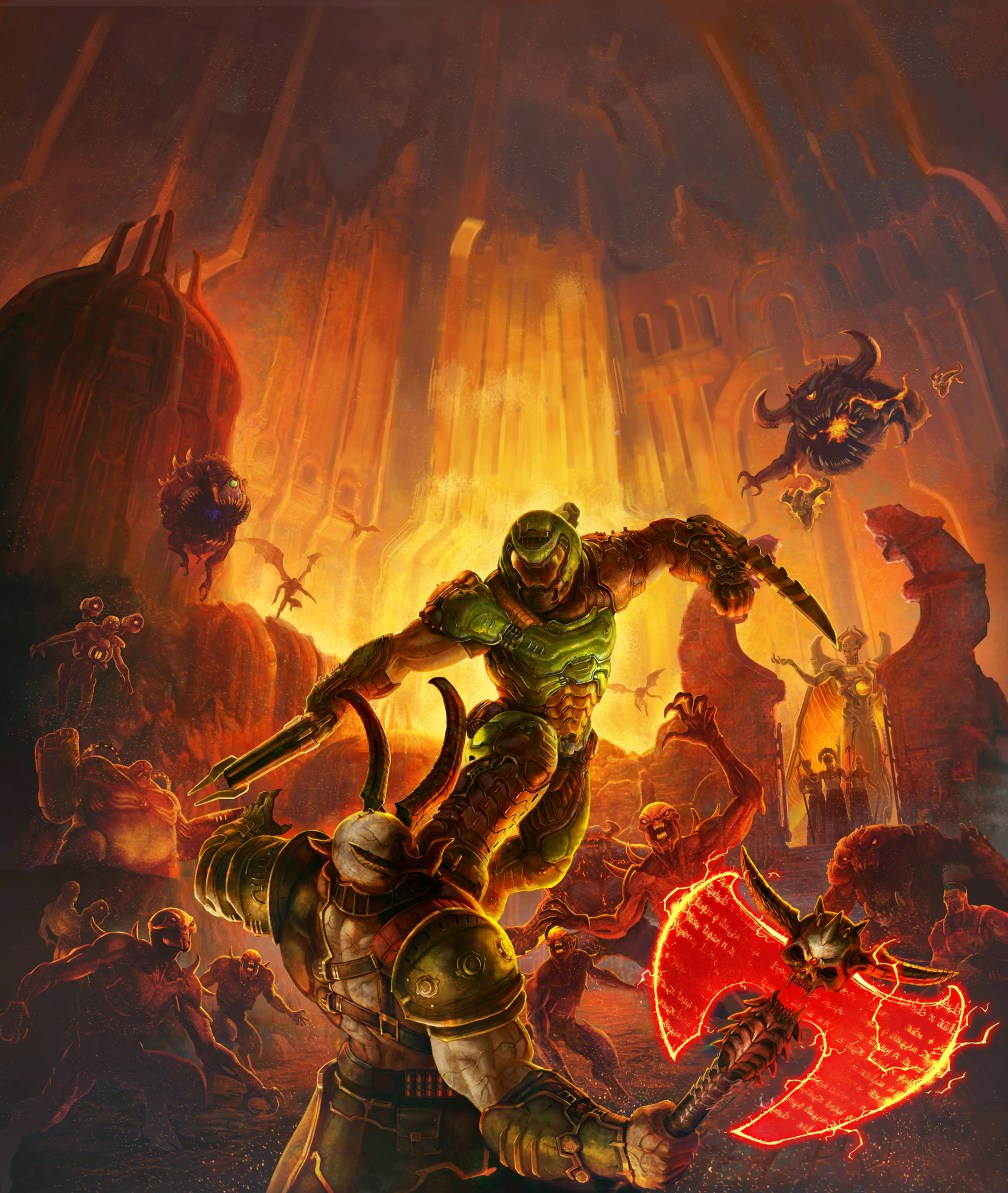
That being said, there are a couple of more ‘serious’ games I enjoy playing from time to time; particularly ID Software’s titles such as Doom and Quake (I’ve been playing those games since the late ’90s), and one of my all-time favorite PC games back in the day was Max Payne, mainly because of the heavy emphasis on plot and storytelling. I recently finished playing through Doom (2016), and although the story was minimal the combat mechanics were fun, and the whole 15+ hours of gameplay were hugely entertaining.

Sometimes, though, I want the experience of a solid video game without the effort of having to, you know, actually play it. I guess I’m not the only one to think this, because throughout the years there have been endless adaptations of video games to film. Sadly, most of these have met with spectacular failure, both at the box office and critically. This led me to wonder: why are so many video game adaptations terrible, and what might it take to make one that is actually good?

Strong Source Material

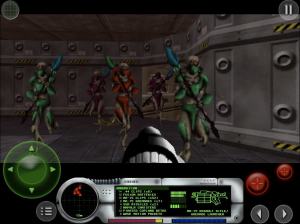
The original Macintosh FPS, Marathon, was exceptionally plot-centric.

Not all video games are created equal. Whilst early PC titles such as Quake, Doom, Myst and others may have broken boundaries in terms of 3D graphics, gameplay mechanics and multiplayer options, most of them were pretty thin on plot. It was mostly just find the bad guy, kill the bad guy, repeat. There were some exceptions to this; I recall playing a early Bungie-developed game called Marathon, which not only was groundbreaking from a physics modeling perspective and introduced LAN-based multiplayer, but also because the plot featured so heavily in the game that certain levels were impossible to complete unless you interacted with the story.

It wasn’t until I played Max Payne in the early ’00s, however, that I realized just how strong a video game story could be. With graphic novel-inspired cutscenes and a strong emphasis on character development, I ended up playing the game through dozens of times just to relive the story.

It stands to reason, then, that in order to make a successful adaptation, you need something to adapt in the first place. A strong plot and compelling characters are necessary for any story, and unfortunately, many video games lack these elements.

An Understanding of Adaptations

One of the biggest points of contention when a non-filmic source material is adapted to film is the authenticity of the writers’ efforts to maintain what was in the original story. Take Peter Jackson’s efforts with The Lord of the Rings: to many, it represents a masterpiece of western cinema, and a fitting adaptation to an equally timeless and epic set of books. To others, however, Jackson took too many liberties with the source material, from omitting characters to changing plot devices, and even creating scenarios that never occurred in the books at all.

In the books, Narsil was reforged right at the beginning; in the movies, not until the end.

However, I believe the critics of these films are missing the point of an adaptation. It isn’t meant to faithfully replicate every scene in the book on celluloid; to do so would be uninventive, slow-paced, and frankly boring. An adaptation should take the core, central elements of a story and rework them into the new format – that being a 2-3 hour film that you sit and watch. If that means changing characters, motivations and plot points, then so be it – it’s an adaptation, not a replication.

I think that this balance is something many video game adaptations miss the boat on. In some cases, they try too hard to match the original material, and in others they deviate too far from it. Sometimes they pander too heavily to the fans, and in others they try too hard to make it accessible to people who’ve never experienced the original game. There’s a fine line between these two extremes, and a successful adaptation should be able to satisfy the original players’ desire for familiarity, whilst creating a world that can be experienced easily by someone who’s never heard of it before.

A Strong Cast

This is probably more essential for films in general, but it’s just as relevant for video game adaptations as it is for any other type of movie. A strong cast is vital to the success of a movie, because as viewers we need to feel invested in the characters, their motivations and relationships, and the chemistry between them is important.

The chemistry between these characters was unmistakable.

Now this doesn’t mean the cast need to necessarily be famous or well-known; perhaps one of the best examples of chemistry in film is the original Star Wars from 1977; no one knew who Mark Hamill, Carrie Fisher or Harrison Ford were at the time, but their on-screen chemistry is what arguably makes the movie. Compare this to the lackluster connection between Hayden Christensen and Natalie Portman in the prequels; it didn’t matter that Portman was arguably more up-and-coming at the time, because they simply didn’t seem to have any real connection.

There are examples of video game adaptations that bagged well-known actors and yet failed on the chemistry; Doom (2005) has both Karl Urban and Rosamund Pike (the latter of which would go on to nominated for an Oscar), but the relationship between them as brother and sister falls flat at every turn. This is in part due to a failure to develop the relationship through the plot (the two share almost no screen time), but also because the two actors just don’t seem to ‘click’.

Homage to the Original Game

Certain games are known for inventing, developing, or innovating certain types of gameplay features. Doom brought us the BFG – a massively overpowered weapon that can decimate almost any enemy in a single shot; Max Payne was one of the first games to introduce ‘bullet time’ – a feature where gameplay slows down during battle sequences, allowing the player to see individual bullets flying past. And there are movies where these concepts are adapted well, of course – and others where they aren’t.

In the 2008 adaptation of Max Payne, we see Mark Wahlberg make his way through a very noir New York city – just as in the original game – but the limited use of bullet time was frustrating. This was one of the cornerstones of the game, and although it features at certain points in the film, it never felt like it was as important an aspect as it should have been. There are other aspects of the original game that were modified as well, including some of the key character motivations and climactic scenes.

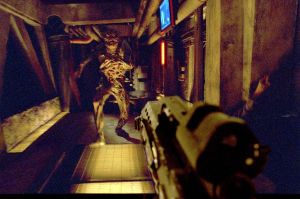
The first-person sequence was one of Doom’s best assets.

On the flip side, a film that I felt did this well was, again, Doom (2005). Not only did it bring us the BFG in a way that could never have been done in a game (when fired, it takes out massive chunks of wall and ceiling, a mechanic that would be exceptionally difficult to recreate in a game), but it also boasts an incredible first-person scene that bears all the classic hallmarks of a FPS game, including using multiple weapons to defeat multiple demons in a non-stop, long-take action sequence.

Not all video game movies are bad, and not all are as bad as some people make them out to be. That being said, the highest-rated game adaptation on Rotten Tomatoes is Angry Birds 2, and it holds a he level of something like say, John Wick (83%, 89% and 90% for each film respectively), which bears all the hallmarks of a video game movie without actually being one.

I think the key thing is a successful blend of many of the smaller elements that work in various movies – faithfulness, strong casting choices, and an understanding of how to make a good adaptation. Who knows? Perhaps one day we’ll see a game adaptation that truly checks all the boxes, and I know I’ll be first in line to see it when it does come out!

What’s It Like to Not Be Depressed?

The fact that probably very few people will ever see this post doesn’t help, of course, but I’m very, very depressed at the moment. As in, to the point where I can barely function day-to-day, and the smallest of chores seem overwhelmingly impossible. I can’t even watch TV or play video games to zone out, because they seem pointless and inane. And for some odd reason I’m having trouble sleeping during the day, so all that’s left is to stare blankly at the wall.

I’m not necessarily concerned; I’ve been here before, and I’ll be here again, and it’s something I know all too well will pass in time. But that knowledge doesn’t alleviate the immense weight that is bearing down on me, making me feel like my life is meaningless, worthless, and destined to end in a pitiful whimper of existisitential boredom.

I think a part of my depression is coming from a deep social isolation as the world locks its doors and I stay home day after day; even for an introvert having limited human contact is psychologically harmful, and I’ve gone from a job where I interact with dozens of people a day to absolutely no one (at least not in person). It also doesn’t help that I’ve been riding a bipolar high for the past few weeks, and I know that this is a natural aspect of the downside of that high.

As I often do during these periods of affliction, I wonder what it must be like to not be depressed. And I don’t mean what it’s like to be happy, because I know happiness; I know joy, and the buzz of the bipolar high and the anxious, burning desire to create. But even in the whirlwind of emotions that come with that high, there’s a trace to depression. There’s a knowledge that the deep, dark despair is just on the other side of the coin, a hair’s breadth away and waiting eagerly to consume me. I can’t ever, ever escape depression, even at my happiest, and I wonder: what must it be like to simply not have these feelings?

I imagine, I suppose, that it must be a little bit like being high, or really, really drunk. A subconscious thread of uncaring, of believing that a better day awaits tomorrow. Sure, you might get sad, you might even feel depressed, but it’s because of something that happened, and eventually you work out how to handle that problem, put it behind you, and move on.

I wonder if living without depression is easy. I mean, I can understand that everyone faces struggles in life, but maybe it just boils down to the age-old glass-half-full mentality: perspective is everything. Is life a road with obstacles to be navigated, or is life all obstacles, and you somehow have to find a road between them? Imagine believing that there’s a road; imagine knowing that there’s a destination, and that it’s good. Imagine, if you can, a world where current events are just a stumbling block, and that the world might actually return to normal. Imagine a world of hope, and not one of despair.

You see, that’s the problem with depression. It’s all-consuming. There is no escaping it. Therapy, counseling, medications … they all do their part to alleviate the symptoms, but in the end it’s always there, underlying everything you think, say and do. I’ve lived with this for nearly twenty years, and despite my mental state’s mutations and changes, it’s one thing that has remained ever-constant.

I wish I could not be depressed. And I don’t mean now, in this moment, the feelings of drudgery and despair that are filling my head because of whatever chemical shift happens to be occurring in my head at the moment; I mean, I wish I could know what it’s like to just … not have to live with it. I suppose, really, what I’m asking for is to know what hope is.

Oh, fickle hope – between that and despair the world teeters. Some of us cling to one, and the rest can’t escape the other.

And in the end, what is there to do but trudge wearily through the snows of life? We can believe that there is sun to be found over the horizon, or we can believe that we will die before the day breaks; it doesn’t really change the realities of the world. The world is indifferent; the world doesn’t care.

But to think that the difference between hope and despair is a choice … that’s a belief I can’t hold. Ask yourself, truly: regardless of your own personal outlook, could you choose to be the other way? If you are depressed, can you choose to be happy? And if you’ve never known the cold, wretched clutches of despair, can you choose to feel that iron grip on your heart?

They say life is about choices, but I don’t know if there is such a thing. After all, you can’t ever know what the other outcome would have been, so what difference does any choice really make? I don’t know if there was ever a choice I made that led me to where I am now, how I feel; in the end, life is just what happens to you, and you can try to make the most of it all you like, but in the end – how much does it really matter?

Like I said, I’m very, very depressed at the moment. I’m not looking for sympathy, or consolation; really, just a way to say what I’m thinking. I know these feelings will pass, but even as I know that, I know they’ll one day return. Is life happy with bouts of depression, or depressed with bouts of happiness?

Who knows; who cares. All I know is that tomorrow is another day; that isn’t a statement of hope, nor of despair – it just is. I’ll probably make it through it, just like I did today. How I’ll feel at the end of it … that’s really anyone’s guess.

Here’s to hoping it isn’t in despair.