The Devil’s Details: I Can Tell Where You’re From

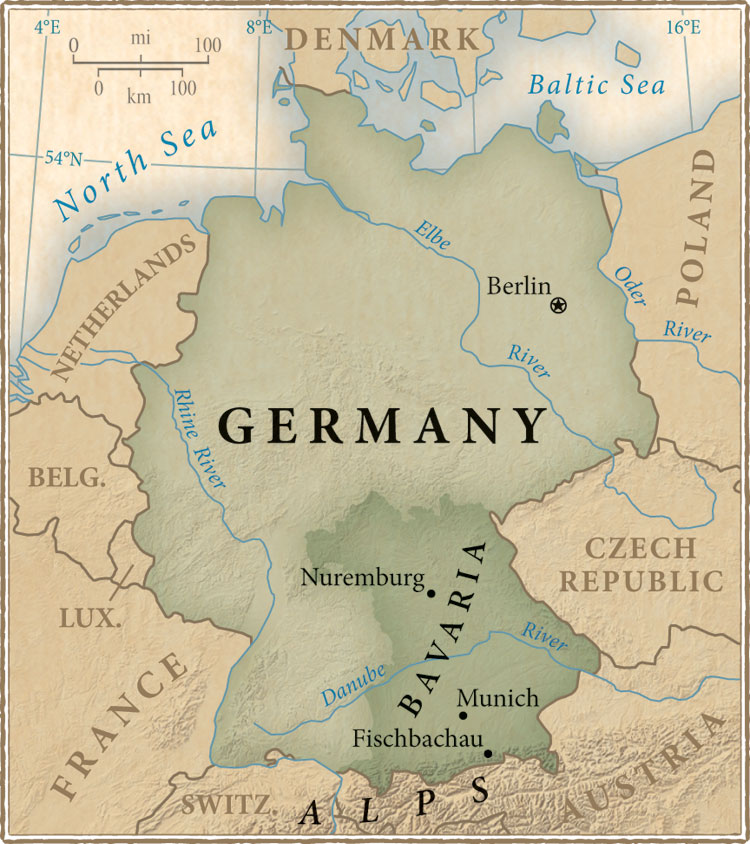
GERMANY88888Whenever reading in your native language (be it English, French or Bengali), you rarely take heed of the specific grammatical and syntactical idiosyncrasies of your mother tongue. However, once you start learning another language, it becomes immediately obvious that there is a plethora of linguistic subtleties that are extremely difficult to master.

What often happens (especially early on) is that you attempt to apply your native tongue’s sentence structure to this new language, often resulting in amusing results:

Kann ich ein Plätzchen haben, bitte?

Can I a cookie have, please?

Even more interesting, however, are the figures of speech and idioms that are simply unique to your language:

J’ai une pêche d’enfer.

I have a peach from hell.

Where this really gets interesting, however, is that when you read text written by a non-native, not only do you pick up on the phrases that just don’t quite translate, but given the syntax and specific choice of wording you can actually start to identify what their native language actually is. I was reading an article the other day written in English, with no reference at all to who wrote it or where they were from. However, as I continued to read, I became convinced that this was someone from Eastern Europe – possible the Czech Republic or Hungary.

Of course, I haven’t been able to substantiate this, but it’s funny how certain things show through, no matter how hard you try to homogenize yourself.
The Redemption of Erâth: Book 2, Chapter 2

Chapter 2: Isles of the Cosari

What now awaited Brandyé was a thing beyond his imagination. Who these men were remained unknown, but where they had come from was now clear, for before him lay a creation of a size and nature that he had never heard spoken of, even in his grandfather’s wildest tales.

It was a water vessel – so much was clear, for it lay half upon the beach, and half in the shallows of the sea. But it was as unlike the craft that had borne him from Consolation as a pebble is to a mountain. The vessel’s hull rose some ten or more feet above his head, and atop that he saw a great mast, towering high towards the clouds, and from which hung vast drapes whose purpose he could not fathom. To the rear of the craft stood another mast, though shorter than the first, and the tapered bow ended in a carving of some fanged beast that reminded him uneasily of the fierundé.

There were perhaps some dozen men on and around this great craft, and Brandyé could see many more animals – small deer, foxes, a kind of wild pig, and birds that resembled pheasants. Each was bound in a […]

Read the complete chapter here.

The Redemption of Erâth: Book 2, Chapter 1

Chapter 1: The Black Sea

The mouth of the Tuiraeth was many miles behind, left to empty itself into the ugly and dead sea, and Brandyé Dui-Erâth was alone, and cold. Some way inland from the sea he had found meagre grass, and running water, and here he lived amongst the hard stone and moss. Ever restless, he wandered aimlessly along the coast, not wishing to look upon the dark waters, yet unwilling to lose sight of the coast for fear of becoming lost himself.

How he might become lost he knew not, however, for he knew not where he was. He was far from the Perneck and the last trace of what he had for all his life known as home, and was indeed as exiled as the Fortunaé could have desired. Comfort was nearly forgotten, now but a stray memory of firelight and tea and rich tales. His chin grew thick with bristles, though he knew it only by touch, for there were no mirrors to be found, nor even a pool of calm water.

He had tried to bathe in the rain once, but it had been dreadfully cold and biting to the skin, and left him with a redness that […]

Read the complete chapter here.