Tales of Despair: The Light at the End of the World

I have spoken of My Dying Bride before in this series, but their canon of despair is vast, and bears revisiting. Here is a tale of utter wretchedness, loneliness, bitterness and despair.

Imagine, for a moment, the abyss of complete isolation. Alone, upon an isle, lost at the end of the world. The sole companion – a light, that burns for no man.

Now consider the wretchedness of the memories of her, of the love that completed you, that made your heart whole, and the bitter knowledge that she is forever gone. Gone, to the winds, dust to the ground, and your fate is to live forever alone, never to be redeemed. Such have the gods done to you.

And the dreams, and the thoughts of madness. Sometimes, the sight of home behind closed eyes, the green trees and the laughter; sometimes, the waking to madness, the knowledge that such a past is forever gone. And sometimes, the bird visits; taunts, tells of life, and raises hope – only to dash it, like the water upon the rocks.

And then, just as the torment becomes the day and the night, to be expected forevermore – the gods bring mercy, and hope beyond hope! They make an offer: to spend one, single night with the woman, the long lost love. But oh, there is a price; this one night would seal the fate of eternity alone, until the ending of life.

Would you take it? Would you throw your hopes to the rocks, for one night with her?

The agony, the soul-crushing blackness, to wake the morning, and to find – after that one, oh-so-brief night – that she is gone. And gone, now and then, for ever, and ever. The doom, the screams, the despair.

Such is the terrible fate of the man who tends the light at the end of the world.

An isle, a bright shining isle

stands forever, alone in the sea.

Of rock and of sand and grass

and shade, the isle bereft of trees.

Small.  A speck in the wide blue sea.  ’Tis the last of all the land.  A dweller upon our lonesome isle, the last, lonely man?

By the Gods he is there to never leave, to remain all his life.  His punishment for evermore, to attend the eternal light.

The lighthouse, tall and brilliant white, which stands at the end of the world.  Protecting ships and sailors too, from rocks they could be hurled.

Yet nothing comes and nothing

goes ’cept the bright blue sea.

Which stretches near and far

away, ’tis all our man can see.

Though, one day, up high on

rock, a bird did perch and cry.

An albatross, he shot a glance.

and wondered deeply, why?

Could it be a watcher sent?

A curse sent from the gods.

who sits and cries and stares at him,

the life that they have robbed.

Each year it comes to watch

over him, the creature from above.

Not a curse but a reminder of

the woman that he loved.

On weary nights, under stars,

he’d often lay and gaze.

Up toward the moon and stars.

The sun’s dying haze.

Time and again, Orion’s light

filled our man with joy.

Within the belt, he’d see his love,

remembering her voice.

The twinkle from the stars above,

bled peace into his heart.

As long as she looks down on him,

he knows they’ll never part.

One day good, one day bad.

The madness, the heat, the sun.

Out to sea, he spies upon land.

His beloved Albion.

Cliffs of white and trees of green.

Children run and play.

“My home land,” he cries and weeps,

“why so far away?”

Eyes sore and red.  Filled with tears,

he runs toward the sea.

To risk his life, a worthy cause,

for home he would be.

Into the sea, deep and blue,

the waters wash him clean.

Awake.  He screams.  Cold with sweat.

And Albion a dream.

Such is life upon the isle,

of torment and woe.

One day good.  One day bad.

And some days even hope.

The light at the end of the world

burns bright for mile and mile and mile.

Yet tends the man, its golden glow,

in misery all the while?

For fifty years he stands and waits,

atop the light, alone.

Looking down upon his isle

the Gods have made his home.

The watcher at the end of the world

through misery does defile.

Remembers back to that single night

and allows a tiny smile.

(His sacrifice was not so great,

he insists upon the world.

Again he would crime,

Again he would pay

for one moment with the girl.)

Her hair, long and black it shone.

The dark, beauty of her eyes.

Olive skin and warm embrace,

her memory never dies.

’Twas years ago, he remembers clear

the life they once did live.

Endless love and lust for life,

they promised each would give.

Alas, such love and laughter too,

was short as panting breath.

For one dark night, her soul was kissed,

by the shade of death.

(Agony, like none before,

was suffered by our man)

who tends the light now burning bright

on the very last of land.

(Anger raged and misery too

like nothing ever before.)

He cursed the Gods and man and life,

and at his heart he tore.

A deity felt sympathy

and threw our man a light.

“Your woman you may see again

for a single night.

But think hard and well young man,

there is a price to pay:

to tend the light at the end of the world

is where you must stay.

Away from man and life and love.

Alone you will be.

On a tiny isle.  A bright shining isle

in the middle of the sea.”

“I’ll tend the light, for one more night

with the woman whom I love,”

screamed the man, with tearful eyes,

to the deity above.

And so it was that very night,

his lover did return.

To his arms and to their bed,

together they did turn.

In deepest love and lust and passion,

entwined they did fall.

Lost within each other’s arms,

they danced (in lover’s hall.)

Long was the night and filled with love.

For them the world was done.

Awoke he did to brightest light,

his woman and life had gone.

To his feet he leapt.  To the sea he looked.

To the lighthouse on the stone.

The price is paid and from now on

he lives forever alone.

Fifty years have passed since then

and not a soul has he seen.

But his woman lives with him still

in every single dream.

’Tis sad to hear how young love has died,

to know that, alone, someone has cried.

But memories are ours to keep.

To live them again, in our sleep.

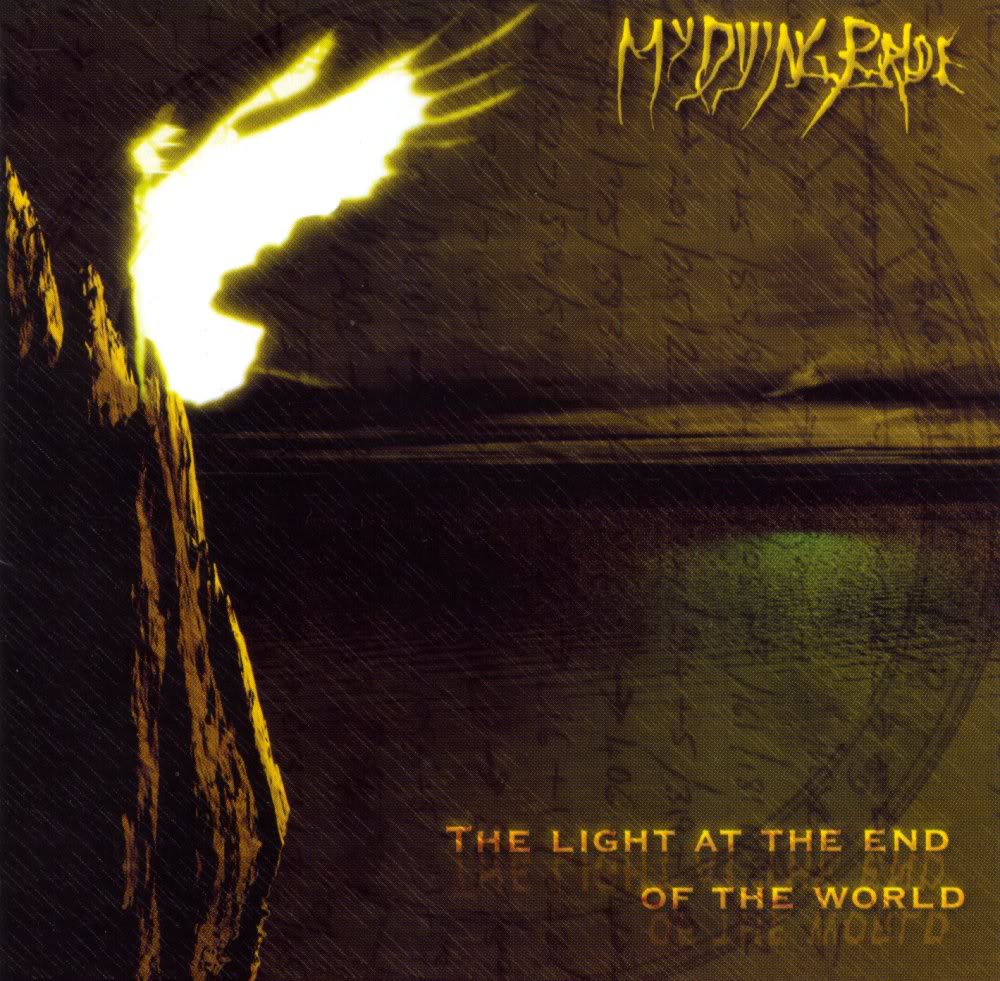
My Dying Bride – The Light at the End of the World

Tales of Despair: The Music that Ended his Life

All great composers have died in despair, whether they saw fame in their lives or not. They have died deaf, they have died blind, they have died young and old, rich and poor. In times past their music lay forgotten, and they themselves were left behind, pop artists of the past, ever replaceable.

This man died some long time ago, and his was a tragedy beyond most. He passed, throughout his life, from jubilant exaltedness to raging despair, writing a phenomenal number of works, doubting himself at every one. As he grew older he grew beyond his time and his world, and the music that he wrote for himself – for he rarely had the grace to write other than at others’ commissions – was unpleasing to his listeners. His most successful works during his life were stupefying inanity, poor jokes written for great men of little intellect.

Paraded as a child, he spent little time at any one home, and the racing of his travels fostered a miserable wanderlust in him, an inability to settle for the rest of his life. Drawn away from his mother for great periods, he became hypochondriacal, eventually taking to self-medicating with antimony. He was only twenty-two when his mother died, and was thrown into grief from which he never recovered; he was by now so poor that they didn’t even have the money to call a doctor, something that would haunt him for the rest of his short life.

For nearly a decade, he moved from job to job, never able to settle or to find an income that would support he and his family, which now included his wife and their children. Even in his familial life he was not free from grief and despair; the couple watched in hopeless horror as their first child lived for only two months. They produced a healthy boy not long after, but his future siblings lived, all but one, not more than six months. While it is one type of horror for a child to die after birth, as did their daughter, Anna, it is of a deeper grief entirely to raise a child for six months, watch them grow, sit, smile and laugh – and then have that child taken from you just as you thought the worst was past. Their final child together, Franz, lived to adulthood, but he would never know – he would only know this boy for four months.

His father died when he was thirty-one, and he was suddenly the head of his family and of his home, and was without a job, without money and without hope. Sometimes he would produce a work that was taken with success; this would be followed by great periods of utter poverty. Near the end of his life he grew increasingly ill, suffering from malnutrition, poisonous medication and anxiety, and he grew paranoid of all those around him. When he was asked to write a piece commemorating the death of a wife of a person he had never met, he labored over the score in his illness and grew ever worse.

His wife, seeing his despair, begged him to cease writing such dreadful music, and for a time he ceased, and as his despair lifted, so did his health. It was not to last, however – whether from over-enthusiasm at the prospect of regaining a little of his health, or a fractured mind bent on his destruction, we shall never know, but in his final months he turned back to the writing of this requiem – and died before he could complete it.

It was eventually completed by one of his students, and performed at a benefit concert for his widow. He would never know, buried in a common grave, but he was to rise in renown within a very short period, and even those works of his that were spurned became famous. His wife would remarry, though he heart remained always with him; she and her second husband, whom she would also outlive, worked together to write his biography. It would have been of comfort to him, certainly, to know that his wife and children were not to die in the terrible circumstances he had left them in, and that both of his sons would receive one of the best musical educations of the time.

He would have been equally proud, no doubt, could he have known that the unthanked labour of his short life would one day rank among the most celebrated music in the world, performed, heard and loved to this day. It is unquestioned, still, that his Requiem remained his crowning achievement.

Wolfgang Amadeus Mozart (1756 – 1791)

Music I Love: “War Requiem”, Britten (1962)

Benjamin Britten (1913-1976), though a life-long pacifist (he remained a conscientious objector throughout World War II), was nonetheless touched by that war, as were almost all others who lived through that time. Two of his closest friends were killed in combat, and a third, Piers Dunkerley, having survived the storming of the Normandy beaches, killed himself fifteen years later, two months before he was due to be wed. It was with these thoughts, among others, that Britten took to the composing of his War Requiem, which is undoubtedly the crowning achievement of his musical career.

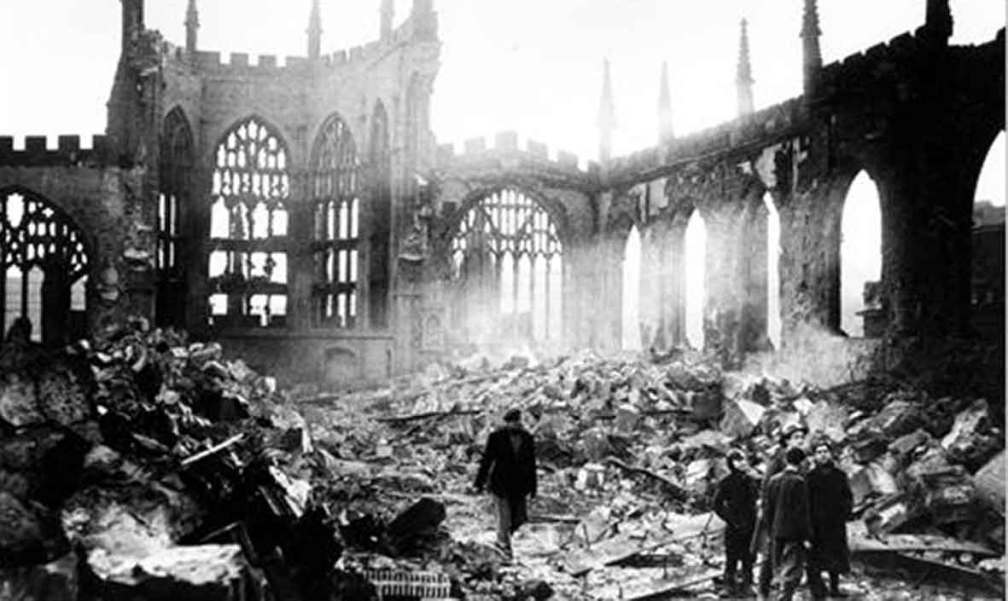
The War Requiem was commissioned for the reconsecration of Coventry Cathedral, a fourteenth-century church destroyed by German bombs in 1940. Given no other brief, Britten was allowed the freedom to tell such a story as he wished through his music, and the result was a monumental, moving and epic ode to the dead and the fallen in war. Britten paired the traditional Latin Mass for the Dead, sung by choir and soprano, with the heart-wrenching poetry of Wilfred Owen, performed by tenor and baritone.

The Requiem begins with the discord of the tritone – the two most musically distant notes in Western music – whispered in by the main orchestra and choir. This is a musical theme that forms the foundation of the entire work, its dissonance and subsequent resolution a parallel for the horror of war and the final peace of death. In the opening Requiem Aeternam, the full orchestra and choir, along with the second orchestra and soloists, and the organ and boys’ choir, are juxtaposed against each other, but never sound together. In fact, the separation of these elements within the Requiem persists until the closing of the whole work, with the entirety of the massive orchestral body coming together for the In Paradisum, before dissolving into a final Requiem Aeternam, and Britten’s own touch – the final words of the Requiem, sung to the same terrible discord as the opening, and resolving only to a perfect chord on the last note, are Requiescant in Pace – Rest in Peace.

Throughout the work, we are taken on a trip of sadness, horror, rage and joy, with the monumental climax of the Libera Me shuddering the very foundations of the church in which it was first performed. Yet by far the most chilling, shivering and touching aspect of the War Requiem is the poetry of Wilfred Owen, interspersed between the major sections of the Requiem and accompanied by the sparseness of a chamber orchestra:

What passing-bells for these who die as cattle?

Only the monstrous anger of the guns.

Only the stuttering rifles’ rapid rattle

Can patter out their hasty orisons.

No mockeries now for them; no prayers nor bells;

Nor any voice of mourning save the choirs, –

The shrill, demented choirs of wailing shells;

And bugles calling for them from sad shires.

What candles may be held to speed them all?

Not in the hands of boys but in their eyes

Shall shine the holy glimmers of goodbyes.

The pallor of girls’ brows shall be their pall;

Their flowers the tenderness of patient minds

And each slow dusk a drawing-down of blinds.

Anthem for Doomed Youth – Wilfred Owen, 1917