The Constant Toil of Inner Turmoil

At the start of the year, as I do every year, I made a commitment to write more frequently, regularly, and consistently.

As I do every year, I failed.

I mean, I did try. I wrote seven posts here in January … then two in February … then one in March …

I really meant to try and recover the lightning-in-a-bottle success I had on here in 2012, but I was writing three to four posts a week at that point. I had themes – Thought of the Week, Tales of Despair, Movie Night – and I stuck to it. I would write late into the night, getting little to no sleep, but it was worth it for the engagement and interaction with people in the WordPress community.

Now, I barely make it to 9:00 PM most nights. I go to bed early, and fall asleep in front of reruns of Family Guy and Futurama. I don’t write. I don’t do much of anything.

In 2012, I was unmedicated, and starting to really see the effects of my burgeoning bipolar disorder. When I was depressed I would go through phases of drab nothingness, of course, but it was alternated with periods of virulent productivity. I wrote, and I wrote, and I wrote.

I don’t know if I can go back to that, of course; the medications take edges off in many ways. The catatonic depression is largely gone, but so is the mania that led to so much work. Instead, I go through life in a kind of gray fog, not quite sure of what to do with myself.

I do have plans; I do want to finish the Redemption of Erâth series. I want to write more young adult novels. I want to blog, and interact.

It’s just so frigging hard.

It’s my son’s spring break this week, and I took the week off many moons ago in the assumption we’d be going somewhere or doing something. We’re not, so I really now have a week at home to lounge around and do nothing.

Or maybe …

Let’s see what I can accomplish with a week of little-to-no responsibility. A week with nothing to stop me writing my heart out. A week of productivity.

I may get no further than this.
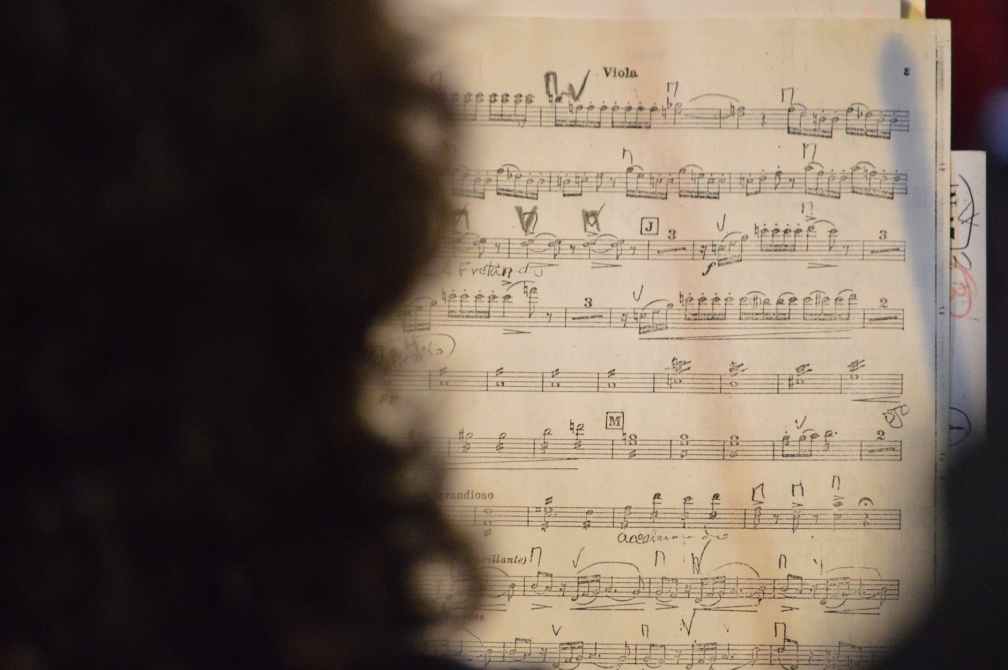
Music I Love: Symphony No. 4 in F minor, by Tchaikovsky

Work: Symphony No. 4 in F minor, Op. 36
Composer: Pytor Illyich Tchaikovsky
Year: 1878

Movements:

  1. Andante sostenuto – Moderato con anima
  2. Andantino in modo di canzona
  3. Scherzo (Allegro)
  4. Finale (Allegro con fuoco)

I’ve written before about my love for Tchaikovsky’s music – in particular the emotional drama of his sixth symphony, the Pathétique. Growing up on a musical diet of classical- and romantic-era compositions, Tchaikovsky represented to me the pinnacle of angst and turmoil, with his grandiose themes and bombastic orchestrations. Even after I discovered the high-octane energy and gothic tragedy of rock and metal, Tchaikovsky remained a staple of my musical journey, and one I frequently return to when I’m feeling emotional, dramatic, or simply in need of something more refined and cultured than blast beats.

In fairness, I could write lovingly about almost any of Tchaikovsky’s compositions – from the pomp and flair of his first piano concerto to the subtle tensions of his Romeo and Juliet fantasy overture – but one work that stands out to me, for its thematic inventiveness, intricate orchestration and Mozartian way in which the material is combined in the finale, is his fourth symphony in F minor. From the militaristic brass of the introduction to the dizzying scales of the finale, this is one of Tchaikovsky’s most musically memorable works, along with the Nutcracker suite and the 1812 Overture.

It’s also one of his leanest symphonies – even the first movement, at nearly twenty minutes long, doesn’t outstay its welcome. The material is presented, developed and recapitulated in equal measure, with each theme weaving seamlessly into the next, and yet distinct and separable all the same. As is usual for Tchaikovsky, he leans heavily on the brass instruments to carry the weight of the music, but the dancing woodwinds and dashing string scales bring a levity to what might otherwise have been overly heavy material.

The second movement, a traditional slow movement, is lyrical and sparse, a delicate balance of strings and woodwinds presenting new material whilst harkening back to the quieter moments of the first movement. The scherzo is utterly unique, played almost entirely on pizzicato strings and scattered flutes and oboes, with a short melodious middle and a recap that builds to a false crescendo before fading out into the blasting opening of the finale.

And what a finale! Crashing cymbals and screaming strings back percussive, staccato horns and trumpets at full blast in F Major – a joyous, bombastic retelling of the first movement’s dark and ominous opening notes. Furious flurries of string and woodwind scales move things forward with relentless drive, until a rising passage of frantic trumpets leads back to the original opening theme from the first movement – an unexpected and brilliant connection of the start and end of the symphony. And when the finale’s main theme triumphantly returns with double-time brass chords to close out the movement and the work, it’s impossible not to be flush with excitement and sheer enthusiasm for the breakneck pace of the music.

Tchaikovsky undoubtedly suffered from a great deal in his lifetime, and some of his works indicate a strong possibility of bipolar disorder; if so, this certainly represents a period of manic joy – a kind of feverish ecstasy, a blinding brightness that no despair can overcome, and an enduring sense that anything, any wrong, can be overcome with enough positivity.

I listen to this symphony when I need to feel energy; I listen to it when I need to feel calm. I listen to it when I need a reminder that not all in the world is doom and gloom – and, simply, when I want a break from the turn-it-to-eleven mentality of heavy metal.

This is one of Tchaikovsky’s underrated masterpieces, and I highly encourage you to seek out a good recording today.

The Vividness of Mid-Afternoon Dreams

Perhaps because of my bipolar disorder, or perhaps because of the medications I take to quell its symptoms, I like to sleep. Like, a lot. When I’m not working, I find it very difficult to make it through a day without having at least one (if not two or three) naps. (To be honest, even when I am working I get so tired after lunch that it’s hard to be productive anyway.)

Also perhaps because of my disorder, or the meds, I dream when I sleep. What’s particularly funny about these dreams, though, is that they are (mostly) benign, never frightening, and vivid as hell. Like, Wizard of Oz Technicolor vivid.

For example, just yesterday I dreamed that I was in the loft in my house, but for some reason my house was on the edge of a cliff bordering the sea. While I was sleeping (because in my dream, I was taking a nap), the cliff started to crumble, and the house started to slide into the ocean. It really wasn’t a big deal, but kind of threw me for a loop.

The best part was that when I woke up (in the dream) and looked out of the window to see my house sliding down a cliff, I thought to myself, this isn’t very realistic – I bet I’m dreaming. But then I went downstairs, and when I passed the bathroom I saw the toilet gurgling and flooding as the water from the ocean started flooding the house. And that’s when I started to worry, because it seemed like a detail too intricate to be dreamt. Maybe my house really was drowning.

This is an example of a particularly fantastic dream, but more frequently my dreams are much more bland; sometimes I’ll simply dream of a day a work where nothing of much interest at all happens, or I might dream of eating a meal that wasn’t bad, but just not really good, either.

I suppose I should consider myself lucky that I don’t have nightmares – the vividness of my dreams would not translate well. And the most vivid of my dreams are usually from those mid-afternoon naps, snuggled deep in the blankets (or on the couch with my cat) where the world outside is cold but in my head everything is toasty warm.

When I’m feeling particularly depressed, I actually look forward to these hallucinatory dreams – it’s like a fugue state, where everything and nothing is real, all at the same time. During these times, I slip into sleep like a warm comforter, just waiting for the dreams to come. When I’m not depressed I don’t necessarily deliberately look for the escape, but I certainly don’t avoid it, either.

Sleeping – and dreaming – is an integral part of my life, and something I couldn’t imagine being without. It’s an odd thought, really, because I think most people don’t really remember their dreams – or care to have them. I find them a necessity, though, in some ways to maintain my sanity; without dreams, I’d probably wonder if the real world was even real at all.

What are your most vivid dreams, and do you remember them well?