Revisiting The Lord of the Rings

It’s hard to think that The Fellowship of the Ring first came out in theaters nearly nineteen years ago. It’s even harder to think of a world in which these masterpieces of cinema didn’t exist, and nobody knew what they were in for before their first-ever watch. It’s particularly difficult to imagine that Peter Jackson et al had the most immense difficulty getting these films green lit, filmed, produced, and realized, in an era where CGI was only just starting to take hold of blockbusters and our only experience of motion capture was Jar Jar Binks.

I want to revisit these films in light of their imminent release in 4K, as I am (like many fans the world over) simply dying to see scenes such as wandering the halls of Moria, or the battle of the Pelanor Fields, in even higher quality than ever before. I’m even more excited for the news that remastered editions are coming next year, but 4K will have to do for now.

Like the best of cinema, The Lord of the Rings trilogy is an epic visual feast, from the bright and colorful renditions of the Shire to the overwhelming sight of ten thousand soldiers on horseback running down an even greater number of orcs, and every scene and shot is filled with visual magic – both practical and CGI.

Given that we’re discussing these films in the context of their technological improvement (upscaling, re-rendering, etc.), it’s worth noting that the timing of these films was perhaps a key to their visual success: the burgeoning rise of computer-assisted imagery was vital to Peter Jackson’s vision, yet an enormous number of shots were achieved through much simpler – and much cleverer – practical effects. When comparing these films to later blockbusters – including The Hobbit prequels – it really is the seamless blend of practical and digital effects that allowed this movie to achieve the visual successes that it did. When we see great panning shots around the stone city of Minas Tirith, or witness the breaking of the dam above Isengard, we’re actually watching 100% practical shots, achieved with excessively large miniatures (‘bigatures’, as Jackson’s team would come to call them), enhanced only by the subtle CGI addition of things such as people wandering the streets, or orcs being thrown into cascading rivers.

At the time, audiences were used to CGI being used for very obvious, impossible to visualize effects; think the liquid metal of Terminator 2, or the tracking shot of the bug in the opening to Men In Black. Most other blockbusters of the time – even huge visual-effects-laden hits such as Independence Day – relied primarily on practical effects, sometimes superimposing multiple practical shots with green screen. It was much less common – and at times disastrously obvious – when CGI was used to render entire landscapes, create inhuman characters, or add dazzle to otherwise normal shots.

This means that Jackson was, at the time, at a crossroads of technology; anything was possible with CGI, but it still wasn’t alway the best choice. To create creatures such as Gollum – which, as opposed to Jar Jar Binks, was necessitated by the original source material – Jackson had no choice but to rely on motion capture and an army of digital artists to create his vision. But to create many of the epic landscapes and cities, he relied on something much simpler: the majestic and wildly varied countryside of his native New Zealand. So much of the grandiosity of The Lord of the Rings comes not from CGI, but from the real-life locations in which he chose to film. When we watch Gandalf, on the back of an eagle, soaring high over snow-drenched peaks, we’re watching a small blip of CGI against a completely real world.

In some ways, these are the scenes I’m most looking forward to seeing in 4K: not the crazy, CGI-laden battles of ghosts and oliphants, but the sweeping, majestic landscapes that deserve to be seen in the highest possible quality.

Of course, style is nothing without substance, and whilst there are small moments that detract from the overall interpretation of Tolkien’s original vision (I’m looking at you, Legolas-surfing-down-a-staircase-on-a-shield), the faithfulness of the adaptation, and the clear love Jackson had for the source material, make for one of the most thrilling, and emotional, stories to be put to film. When The Lord of the Rings first came out, many people were concerned at its runtime, and what seemed to be incredibly slow pacing. And arguably, they are a long, slow set of movies; it’s nearly forty minutes into the film before we even leave the Shire, and there’s still half an hour of film to go after the destruction of the One Ring. But this pacing reflects the detail of the film, which in turn reflects the detail of the world-building that Tolkien put so much effort into.

Die-hard purists will complain that the reluctant king trope Aragorn plays in the films is contrary to the original story, or bemoan the loss of Tom Bombadil in the opening chapters, but the other thing Jackson had an uncanny knack for (which he has yet to replicate to such a degree) was knowing what worked well, and what wouldn’t work well, when translated to film. As slow as the films are, they are a masterpiece nonetheless in tension, character- and world-building, and even in the extended editions, nothing is present without reason. Sure, Aragorn doesn’t set out from Rivendell with Andúril in hand, knowing he is to be crowned king, as he does in the books, but this would have worked against the audience’s empathy for him had Jackson stuck hardcore to the text. Modern audiences expect character arcs, and arguably Tolkien was less a master of character-building than he was world-building.

Even when Sam (albeit temporarily) abandons Frodo in the passages above Cirith Ungol (a thing that never happens in the books), it works to the emotional tension of the film, serving as a breaking point, and moment of darkness before moving into the final climax of the film. These changes, I would argue, are for the better – at least in the telling of the story cinematically – and these three movies remain to this day my favorite works of art ever committed to film.

I can’t wait to see them in 4K, and when the remastered versions come out next year, I’ll be first in line!

What are your favorite moments from The Lord of the Rings trilogy? Do they stand the test of time, visually and content-wise? Let me know!
Wild Mood Swings

I am getting tired. Tired of so much, in the world, in life, and in my thoughts; but most of all, I’m getting tired of not knowing where my head is going to be next month, next week, or even tomorrow. Frankly, living with bipolar is an exhausting experience, and although I’ve mostly just dealt with it until now, I have to admit that I’m running low on energy – not just energy to live and do things, but energy to cope.

It’s one of the reasons, if not the most prominent one, why I don’t attend to this blog like I did years ago. I feel bad about it, but feeling bad was never much of a motivator for me, so I continue to neglect my daily writing in favor of sleep, TV, and sleep.

Historically, long periods of low mood, energy and motivation have formed a large part of my life, from my teenage years through my adulthood and to present day; I’m no stranger to depression. Often this manifests as wanting to stay in bed, feeling hopeless, and an inability to cope with the most basic of daily functions (e.g. showering, brushing teeth, etc.). I’ll spend day after day not even watching TV, and just staring at the ceiling, waiting for sleep to take me to twisted dreamscapes where I can escape from reality – if not entirely pleasantly.

But more recently, I feel I’m struggling with a new level of exhaustion: one that wears my mind down from an excess of actual mood swings. If my normal depression is akin to the tiredness of a marathon runner nearing the end of the slog, my current state of mind is closer to that of a sprinter after a day’s worth of races: running full tilt, then stopping, then starting again, over and over with no end in sight.

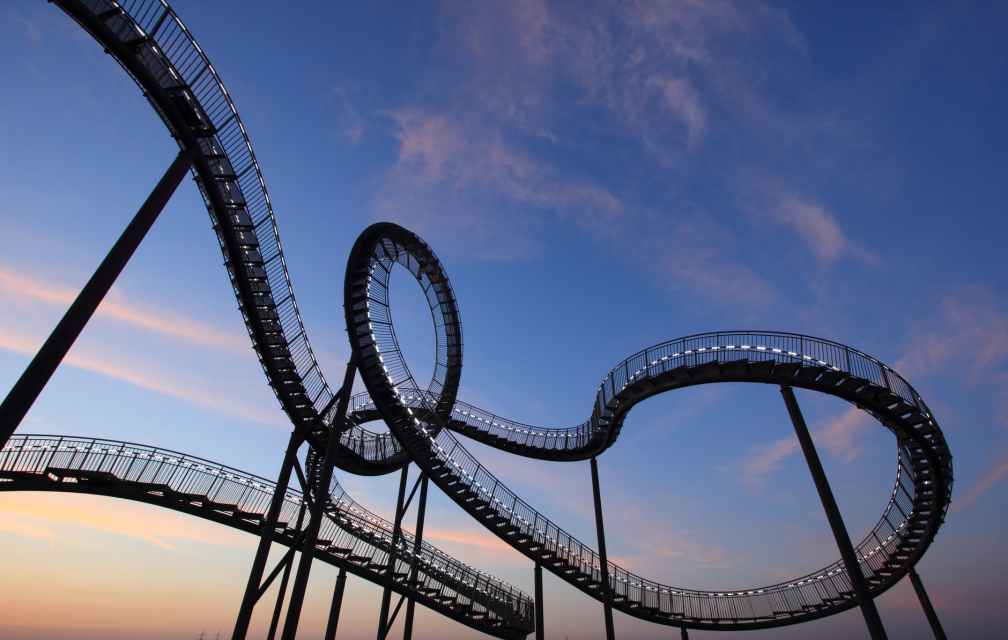
It’s like being on a non-stop rollercoaster. It’s like falling endlessly. It’s like … well, there are likely dozens of metaphors I could choose from, but the point is that I feel like my brain is about to leak through my eyes and ears, a complete and total meltdown from being forced to cope with a rapid cycle of ups and downs in a very short period of time.

Only a month ago, I was suffering from one of the worst depressions I’ve known in recent years. I couldn’t work, I couldn’t play, I couldn’t get out of bed, and I was sorely tempted to begin self-harming again after over a decade clean. Last week, I finished the last pages of my new manuscript after several days of hours-long writing stints. I went from catatonic to manic within a period of only a few days.

I don’t think this is good for me. It’s left me with a whole new level of exhaustion that I’m entirely unused to, and I honestly don’t know how to cope. It was my birthday over the weekend, and I spent it mostly in the loft watching Lord of the Rings and writing emails to people I haven’t contacted in months, or even years. I don’t know what I’m doing.

I wake up every day before 6 AM, but I want to pass out by 7 PM. This is also new; I normally sleep in like crazy, and stay up late.

I wonder if it’s to do with the new medication my psychiatrist started me on; I wonder if it’s to do with the strange weather (70°F in November, what’s with that?). I wonder if it’s … I don’t know anymore.

In any case, I’m done writing young adult/new adult for the time being, which means maybe – just maybe – I’ll find some time to return to The Redemption of Erâth for you all, as I started on book four almost eighteen months ago and never really got too far into it. In the meantime, I’ll see if I can start posting here a little more regularly, as I always want (and always fail) to do.

Many thanks!

Where to Focus Attention (?)

There are a lot – and I mean a lot – of things in the world that vie for our attention on a daily basis. From the moment we wake up to the moment we go to sleep (if we’re lucky enough to be able to sleep, what with everything grabbing for our attention), there are a million and one different foci demanding we consider them first, and if I’m honest, it can feel incredibly overwhelming at times.

For example, right now I’m writing a blog post, having spent around an hour pre-scheduling photo posts for the next couple of months. But here are a few of the things I could/should/would have been doing instead:

  • Clean the back yard
  • Go shopping
  • Write more of my novel
  • Finish the symphony I started four months ago
  • Spend time with my wife
  • Eat lunch
  • Have a shower
  • Read about racism
  • Read other blog posts
  • Read a book of any kind

And I could go on. There never seems to be enough time in the day to get everything done, and you could be forgiven for thinking that you’ll likely spend the rest of your life not doing things that you could have been doing instead of whatever you are doing at the moment.

This becomes an overwhelming mental burden, and comes with a great deal of guilt associated with the things you don’t actually manage to get done. When I was younger, I used to break down and often actually collapse in a pile on the floor, unable to cope with the demands of life, and totally incapacitated from the pressure of trying to decide what to do next. In fact, I’ve ended up building a life around the concept of actually just doing whatever I want to do, rather than worrying about what I might have to do, just to avoid this sense of crushing turmoil.

I don’t necessarily think this is a healthy way to look at life, but it’s the only way I can often make it through the day. I actually had a conversation about this (closer to an argument, if I’m being honest) with my son the other day, with respect to the different views my wife (his mother) and I have on this subject. My wife is the kind of person that just does; if something needs doing she’ll just get it done, regardless of whether there are things she might rather do instead. Perhaps to a fault herself – sometimes she’ll get so caught up in getting one thing done that she lets other things slide out of focus, even if they might have needed doing, too.

On the one hand, this mentality of doing what I want to do is what’s allowed me to write three fantasy novels and a YA novel whilst working a full-time job and dealing with depression, bipolar breaks and general mental ill-health; I’ve often spent a great deal of time writing that I could have been doing dishes, working in the yard, or any number of other inane – but important – tasks. On the other hand, it’s what’s led me to still not understand how to do my taxes, or keep my car clean and well-serviced, or check the sump pump in the basement before a storm.

And this is all relating to the little things in life – the things that we all have to do just to survive each and every day. Never mind the big things, like tackling social injustice and racism and misogyny and poverty in third-world countries; how can I possibly find a way to commit to acting on these kinds of things, when I can’t even remember to brush my teeth in the morning? There are things in the world – great big things – that give me great cause for concern, such as climate change and the deaths of hundreds of thousands from COVID-19, but dwelling on them seems a fruitless endeavor when I struggle to find clean socks because I never got around to doing my laundry. All that happens is I once again get overwhelmed, depressed, and end up wanting to sleep it all away.

I don’t know if there’s an easy answer to finding balance in this respect; after all, if we all spent our lives only doing what had to be done, we’d want to shoot ourselves out of tedium. Yet if everyone only ever did what that wanted to do, none of the actual important things in the world would ever get accomplished – like finding a vaccine for COVID-19, or putting a human being on Mars. (The US president seems to do what he wants all the time, and look where that got us.)

Of course, there are days that I feel better than others, where I can put aside the wants in favor of the musts; at the start of quarantine, I think I might have been going through a manic phase and was cooking every night, cleaning up after myself, getting my work done, blogging at the same time, and actually managing to balance all the things in life that I wanted and needed to do. But those phases never last (at least for me), and eventually I come around to a point again where I either just want to write or play video games, or else watch South Park and drink myself into oblivion.

Perhaps finding more a structure in life would help some; I know there are people who set aside time for their passions and hobbies, but after that time is up they return to the grindstone of work and chores. Something in me – something childish, perhaps – rebels against that notion, arguing that creative pursuits can’t be contained or boxed in; that when the inspiration strikes, you have to attend to it no matter what. In reality, of course, I recognize that most of the time inspiration doesn’t strike, and I end up just twiddling my thumbs waiting for something to come to me; wasted time that could’ve been spent productively, if not enjoyably.

Maybe the problem is that, after two-plus decades, I still don’t really want to be an adult. Adulting is hard, filled with inane tasks and boring, challenging responsibilities, and I’d much rather spend what time I might have on this earth enjoying life (ironic, I know, for someone plagued with depression). Whether that be writing, listening to good music, or just dozing in the middle of the day, I just can’t face the idea that if I did all the boring, important stuff, I wouldn’t have time left for the stupid, fun stuff.

How do you cope? How do you make time for what you enjoy doing, without it coming at the expense of what you know must get done? Or, like me, do you kind of just … not care?