Are Infodumps Ever Okay?

The lofty standard to which I hold The Redemption of Erâth is, naturally, Tolkien’s own epic fantasy, The Lord of the Rings. I look to it for inspiration, for guidance, and even, at times, for stylistic advice. It’s an important tome, and influences many of the things that happen in my own work.

I started The Redemption of Erâth as literally a background novella, a short story detailing the history of the world of Erâth, its various Ages, and how it came to be the place of Darkness that it is in the novels themselves. It is, I suppose, the literaly definition of an infodump; it’s purely informational, with little plot or story, and even fewer main characters. It isn’t story; it’s a history book. It might still be interesting to read, and certainly enhances the enjoyment of the main series itself, but is by no means necessary.

However, in the books themselves—ConsolationExile, and now Ancients & Death, there is a lot of background information that is, if not strictly necessary, at least important to know in order to understand the full impact of the events that take place. In Consolation, much of this takes the form of the ancient legends and tales that Brandyé’s grandfather, Reuel, tells him on winter nights before the hearth. In Exile, there’s a bit of a concentrated backstory element in Chapter 12, The Tale of the Illuèn. It’s essentially a retelling of the fall of Erâth as detailed in History of Erâth. And now, in book three, there’s an entire chapter without characters—only a narrator explaining the major events in the great War of Erâth.

These chapters sometimes feel like roadblocks. As Kirkus Reviews pointed out for Exile:

“The different set pieces of history and myth enrich the story, almost to the point of distracting from the plot, which hovers in place during hefty infodumps.”

—Kirkus Reviews

They go on to say it isn’t all bad, but it still leaves me wondering if—and how—such information can be related to the reader—and if it’s even necessary. Could the plot simply move forward without these chapters?

But then I’m reminded of The Lord of the Rings. The second chapter of The Fellowship of the Ring is entitled The Shadow of the Past, and is essentially the same thing: Gandalf relating to Frodo much of the history and events that are important to understand in order to grasp just why the destruction of the One Ring is so vital to the surival of Middle Earth. Tolkien could have arguably just set off with the Ring, having Frodo figure things out over the course of his journey, but instead he chose to pause the story almost before it’s begun, just to make sure the reader is clear on what’s going on.

So when I ask myself if those infodumps in The Redemption of Erâth are a distraction, I think back to my inspiration. If Tolkien thought it was okay, then it’s good enough for me. I might not do it as well as he does, but I just hope it doesn’t stall the plot so stiffly that the reader puts the book down. After all, aren’t epic battles and tales of the fall of kingdoms interesting in their own right?

What do you think? Is it ever okay in a book to just spit out a bunch of background, or should it be more subtely weaved into the story?

Help Me – I Need to Read

I have a terrible, dreadful confession to make: as a writer, I don’t read.

Isn’t that horrible? It seems I’ve fallen into the same fate as so many adults, who make excuses and come up with priorities, but who ultimately just don’t read. As a child, as a teenager, even as a young adult, I read voraciously. Not necessarily widely—although I definitely read the classics, my passion was for Star Trek, Star Wars and later Stephen King. Oh, I’ve read countless of those stories, but I haven’t read any Neil Gaiman; I haven’t read any Anne McCaffrey; I haven’t even read … well, I can’t even think of another author.

Continue reading

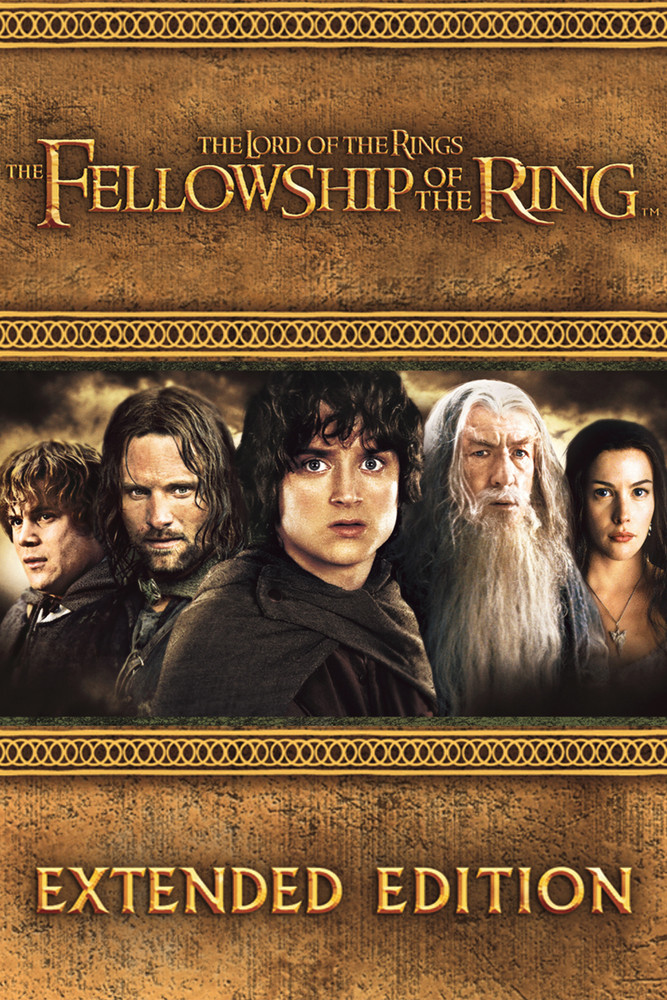
Movie Night: The Lord of the Rings – The Fellowship of the Ring (Part 2)

Part two leads off from the Council of Elrond, through the passage over Caradhras and the mines of Moria, the stay with the elves in Lothlorien, and ultimately the sacrifice of Boromir and the breaking of the fellowship.

Frodo carries on the journey begun in the Shire, and more than ever, we see him begin to realize the danger and power of the ring. Even after Gandalf utters the ring’s inscription in the tongue of Mordor, Boromir of Gondor still tries to convince the council to allow his country to use it as a weapon. Gimli attempts to destroy it to no avail, and even when, through the tension, the council agrees that it must be destroyed at Mount Doom, a bitter argument breaks out over who is to be responsible for its destruction. We see Frodo, watching from the background, witness the mounting enmity through flames reflected in the ring itself. It is in the midst of this that he realizes his fate: he is to carry the ring to its final destruction, or his.

One Ring to rule them all,
One Ring to find them,
One Ring to bring them all
and in the darkness bind them.

This is a thought that is reinforced throughout the remainder of the film; the fear Frodo has in allowing others to touch the ring (first seen when Boromir retrieves the fallen ring in the snow of Caradhras) bears witness to this, and it is reinforced when he talks with the Lady Galadriel in Lothlorien. Having witnessed the loss of Gandalf in Moria, and bearing the guilt of that loss with him, he realizes he can no longer bring peril to the remainder of the Fellowship: his decision is made.

You are a Ring-bearer, Frodo. To bear a Ring of Power is to be alone.

It is of course not until the end of the film that Frodo finds the courage to do so; it takes the betrayal of Boromir, and the evidence of the ring’s maddening effect on those around him, to finally convince him. We see him leave; see Boromir find his redemption, and accept his king; we see Merry and Pippin captured by the uruk-hai. The stage is set for the following two films.

It is not the first time Little Satis and I have watched The Lord of the Rings (not even the extended edition), but each time he observes further details, and now is pointing out things I had not seen myself, or at least had not noticed. He made the distinction tonight between the goblins of Moria, the orcs of Mordor, and the uruk-hai of Saruman. Apparently the uruk-hai are seen only in the first two films; the assault on Minas Tirith is made by a combined army of orcs and men, but there are no uruk-hai. He thought perhaps this was the failing of Sauron; the uruk-hai were fewer, but were stronger. Had he had an army of ten thousand uruk-hai to storm the white city, the outcome might have been quite different.

I can’t wait to see what other things he notices as we continue with The Two Towers; watching with an eight-year-old is certainly a rewarding experience!