The Perils and Potentials of Pastiche

When I was a young composer in high school, I thought the pinnacle of musical genius to aspire to, the composer to emulate and copy and write like, was Beethoven. I had a deep love also for Sibelius, and Liszt, and Dvorák, and sought to write music along their styles, too. Little did I realize as I was cutting my compositional teeth that I understood their music’s beauty, without understanding its importance.

It wasn’t until I got to college and had my first compositional tutoring session that my world collapsed. I proudly placed in front of my professor the culmination of my childhood work – a full-length orchestral symphony that could’ve been written by Schubert – and watched in mounting horror and deepening shame as he methodically tore it apart. It was, in a word, a pastiche.

I had never heard the term before, and had never been presented with its concept as a negative thing; I had never been exposed to the idea that imitating art is not in fact worthwhile, but instead misguided flattery and a twisting of influence into something derivative and necessarily ‘less-than’.

It crushed my spirit.

But from the ashes of my early compositions rose something far, far better, and I am to this day indebted to my early composition professor for what he taught me about originality. You see, I had been laboring for years under the impression that the best works of art I could create would be in the same style as my influences. It never occurred to me to think otherwise; after all, shouldn’t I be writing the music I wanted to hear? And if what I wanted to hear was Dvorák’s ‘New World’ symphony, then shouldn’t I rewrite it with my own notes?

What I learned instead was the ability to see a work of art for its context, and not just its enjoyability. The dissonances and unsettling cross-rhythms of Beethoven’s ‘Eroica’ symphony are beautiful, uplifting and inspiring, yes – but they are far more important than that, because they represented a moment in musical history when people heard something they had never heard before. But Beethoven didn’t simply create a symphony that was entirely atonal or arhythmic; he wrapped these special moments in a musical tapestry that in other ways harkens back to Mozart, and Haydn, and Bach before them. It was new, but it wasn’t unfathomable.

And this is where I learned the difference between pastiche and originality. You see, I could write a symphony that would sound like Beethoven’s tenth … but why should I? Where’s the value in recreating something that won’t have sounded ‘new’ for 250 years?

Instead, I started working on a style all my own, borrowing from what I enjoyed in others’ music and molding it into a shape that was recognizable, yet (almost) entirely new. I wrote clarinet solos; I wrote elegies for voice and string quartet. I wrote a 14-minute musical essay on the canon form for full orchestra. (To this day this remains one of my favorite compositions.)

And this is something I’ve learned to translate from music into writing, as well. When I started writing The Redemption of Erâth, I more or less wanted to write a story that would read like Tolkien. I realize now that this was misguided (I have nowhere near the mastery of the English language to even place in the same league as Tolkien), and as the series has progressed, I feel I’ve begun to develop my own linguistic style.

When I wrote my young adult novel, 22 Scars, however, I refused to read anything in a similar genre. This story was important to me, and it was important that I write it in a way that really could only have come from me. With short, often incomplete sentences, multiple points of view, and little to no emotion in third-person scenes, I was able to create a literary world that (hopefully) embodies the spirit of numb depression, draws the reader in and puts them squarely in the shoes of a suicidally depressed teen with a tragic upbringing.

The tonal difference between The Redemption of Erâth and 22 Scars is distinct, to say the least; I suspect most people would not assume they were the work of the same author. But there’s a reason for that; the entire world of Erâth is derivative of Tolkien’s Middle-Earth, and so it makes sense that the tone of those stories would match. The world of 22 Scars, however, is bleak, numb, and highly personal – it is my world.

Now, this isn’t to say necessarily that all pastiche is worthless; I believe there is a value in being able to recreate the style of your favorite artists whilst recognizing that what you’re creating isn’t necessarily meant to stand on its own without context. For my second YA novel, The Broken, I needed to write a few songs to get in the heads of the band members described in the book. However, these songs would be from the early- to mid-nineties, and to write songs that I would write today wouldn’t have fit. Instead, I listened to a lot of Rage Against the Machine, Korn, and even through to System of a Down and Slipknot, and wrote five songs that, to my ear, could have been the bastard children of these bands.

If I were to write a soundtrack to a period film, I would want that soundtrack to sound like it came from that era. The same rules apply. I wouldn’t bill that soundtrack as art in its own regard, but rather to be considered against similar works of the era.

Ultimately, I think that there is a fine line between influence and pastiche. It’s fine to be influenced by other artists, but the moment what you create could have been made by that same artist, you’ve lost the most important thing in art: your own soul.

Thought of the Week: Poor Drummers

_origin_Bundziniekikas-iedvesmo-3

Yeah. I have a big kit.

Let me preface this by saying that I am a music snob. I require my music to have depth, meaning and thought. Though my tastes lean heavily towards metal and anything before 1900, I am not closed to other styles of music per se; I simply find that most styles of music are…how to put this tactfully…banal. (Somehow despite this, I find jazz unpalatable. Sorry.)

Britney who?

Britney who?

This is why I find myself disliking ‘artists’. I don’t like Britney Spears’ music. I don’t like Justin Timberlake’s music. I’m impartial to Madonna’s. Why? Because their music either isn’t theirs, or is utterly trite. Although their style isn’t aligned with my personal tastes, I do like The Black Eyed Peas; I do like Eminem. I grudgingly like Oasis. I’d like Kelly Clarkson if she stopped writing about breaking up with her boyfriends. Their music comes from a different place; it comes from passion, or from beliefs, but most importantly, from them. Marshall Mathers has written or co-written every one of his songs. The Black Eyed Peas are a self-made band, both performing and writing together. Oasis are…well, Oasis.

So what do I admire? I admire composers. This is probably because I am a composer myself. I see (and know) the sweat and the tears that go into writing a good – good – song, be it vocal, metal, orchestral or anywhere in between. I was raised listening to Bach and Beethoven and Liszt and Tchaikovsky, and the ingenuity these people had – the extraordinary creativity – astounds me to this day. Ultimately this is what drew me to metal, because I see that same drive, passion and compositional talent there as well. Some metal is formulaic, or course, and some of it is banal – as is some of any genre of music. But by and large, there is a great difference in mentality.

Still, in all areas of music there are people who go uncredited, under-appreciated and unseen. In pop, it is usually the original songwriters. In classical music, it’s ironically often the performance artist. In avant-garde experimental music, it’s everybody.

And in rock, metal and any other band-based style, it’s the drummer.

Poor drummers.

As any drummer will tell you, the drummer is the core of the band, the foundation and backbone without which the entire thing would collapse in on itself. The drummer is a technically better and more proficient musician than any other part of the band. Singers only have one thing to do; guitarists have two (strumming and fingering); bassists have nothing to do; but a drummer has to deal with four separate limbs doing four separate things, at the same time, in time with each other – and sometimes singing as well. Just think about that for a moment.

These poor guys and girls are chronically underrepresented and unseen. The bands themselves, of course, would bow down to their drummer (or they should, anyway), and go out of their way to allow the drummer the spotlight on stage (think epic drum solos), but outside of the arena no one seems to care about them.

So to rectify that, here are ten of my favorite, most respected drummers:

  1. Martín López – Opeth

Not only is Martín my favorite drummer, he’s from my favorite band, so that kind of makes him a double-favorite. All the members of Opeth are musically talented, but Martín’s knack for seeming to hit more than four pieces of kit at a time boggles my mind. Perhaps he plays with his face. Check him out:

~

  1. Joey Jordison – Slipknot

If anyone epitomizes the hardcore drummer, it’s Joey Jordison. He can freaking play drums upside-down in a cage. And he wears a terrifying mask. And his kit is bigger than lower Manhattan. Oh, and he’s in Slipknot. Did I mention that?

~

  1. Nicko McBrain – Iron Maiden

First of all, yes – that’s his real name. That right there is enough to make him awesome. The second thing that makes him awesome is that he plays barefoot. Really – watch them live sometime! He’s been the steady tub-thumping time-keeper for Iron Maiden for – count ’em – thirty-one years, and he’s as perfect today (age 60!) as the day he joined Maiden.

~

  1. Bill Ward – Black Sabbath

We wouldn’t have Iron Maiden without Black Sabbath, and Bill’s role in the distortion-drenched blues of the band’s formative years is undeniable. Listen to him play War Pigs and tell me he isn’t amazing:

~

  1. Evelyn Glennie

I had the opportunity to see Evelyn Glennie in concert once, and it was one of the most profoundly astonishing performances I’ve ever seen. She’s not strictly a drummer, playing instead a vast range of percussion instruments, but her talent is unmatched. Oh, and she’s deaf.

~

  1. David Gray – Akercocke

The drummer of any black metal band probably deserves to be up here, but for sheer technical ability there is no substitute for Akercocke. Stylistically they’re about as extreme as black metal gets, yet still willing to push the boundaries of the genre. As for David Gray…see for yourself.

~

  1. Dave Grohl – Nirvana (not his own band!)

Before Dave Grohl was Dave Grohl, he was the drummer for Nirvana. Kurt Cobain killing himself was arguably the best thing that could have happened to Dave (I might be struck by lightening for that), so it’s a little unfair to call him an ‘unrecognized’ drummer. However…he’s a really nice guy, but I still reckon he’s better behind the kit than in front of it.

~

  1.  Mike Portnoy – Dream Theater

Mike Portnoy will probably be remembered as the guy who pissed off the world’s entire prog-rock audience by leaving Dream Theater for, of all things, Avenged Sevenfold. Urgh. Nonetheless, he is a superb drummer, as any footage of any Dream Theater concert anywhere and any time will demonstrate (is that three kick drums I see?):

~

  1. Doktor Avalanche – The Sisters of Mercy

Okay, so Doktor Avalanche isn’t a drummer, but for someone who doesn’t play drums, he plays drums pretty well. He’s very precise – almost like a machine. A machine…that plays drums. What an invention – if only it’d been around in the 80s!

~

  1. Shane Rout – Abyssic Hate

It’s not likely you’ve heard of this drummer; it’s not likely you’ve heard the music of Abyssic Hate; it’s not likely you’ll ever find it on iTunes. Shane Rout is (possibly was) a misanthropic megalomaniacal nut, but the impressive thing (if there is one) is that he was the whole band. He once said that 99.9% of humans should be exterminated, and that the point of his music was for people to be “entranced by the sounds they hear, and blow their head off with a shotgun.” Pleasant guy. I haven’t seen any updates about him in seven years, so it’s quite possible he’s dead.

~

Who are you favorite drummers? Who do you feel is criminally unrecognized? Let me know!

Satis Logo with ©

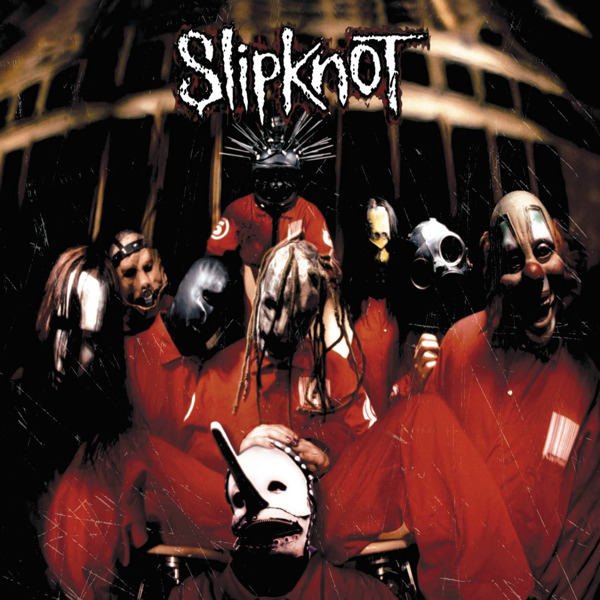
Music I Love: “Slipknot”, Slipknot (1999)

Slipknot

There’s frankly not a whole lot to be said about this seminal album that hasn’t already been discussed ad infinitum in every possible media avenue in existence, but that doesn’t stop this from being one of my absolutely favorite albums of all time. I once wrote a dissertation about the expression of emotion through music, and Slipknot featured pretty heavily.

Slipknot were a nine-member (sadly now only eight) band from Des Moines, and to read through any of their lyrics, they had some issues:

Insane – am I the only motherf***er with a brain?

I’m hearing voices but all they do is complain

How many times have you wanted to kill

Everything and everyone – say you’ll do it but never will

Eyeless – Slipknot, 1999

It’s hard to recall the impact these – and the rest of the album’s – words had back in 1999. From the opening few seconds of (sic) you are bludgeoned by a frenetic, nearly incoherent rage, an insatiable fury that could stand up to an atomic blast and win. I can’t think of anything in the realms of rock or metal – or music in general – that even came close to such a level of energetic hate. In particular was the subject of this vitriol; unlike previous “angry” bands like Rage Against the Machine, there were no targets for Slipknot’s hostility, no politics; here was a terrifying group of people with not pity or mercy.

It’s scary enough to be facing an uncontrollable madman, never mind a vicious and calculating psychopath.

Which is ironic, because Corey Taylor and Joey Jordison et al. are, in conversation, a bunch of pleasant guys, albeit many with disturbing or traumatizing pasts. In a way, the band became cathartic for them: a way to express the inexpressible, to release the rage that had built up in them.

Another disturbing aspect of this burgeoning phenomenon was the use of grotesque and terrifying masks and costumes, furthering the disassociation of these people and their music from reality. By dehumanizing themselves, they created a heightened level of terror – an image of demons, quite possibly directly from the pits of hell.

So controversial was their debut album that it was considered likely that the group would either disband or kill each other before ever recording another album. Instead, they released Iowa in 2001, shattering their first album’s popularity by reaching #3 in the US Billboard 200. If Slipknot was an explosion of raw fury and rage, Iowa was a more refined hatred, a feeling of a more calculated and targeted ire, which of course was all the more disturbing; it’s scary enough to be facing an uncontrollable madman, never mind a vicious and calculating psychopath.

Their style and emotion became ever more refined with Vol. 3: The Subliminal Verses, and – if such a thing is possible – a more mellow kind of anger with All Hope Is Gone. However, none of their succeeding albums can come close to the untamed fury of their first album. It’s raw, abrasive, offensive and uncomfortable, and it is because of these qualities that it is such an outstanding work. There is nothing I have come across in the history of music recording that comes so close to the very embodiment of demonic rage and hate; it is likely as far as music can get whilst still remaining coherent.

Slipknot can be cathartic for me, too; whenever I’m feeling stepped on, maddened or infuriated, a play through this album is more than enough to get it all out. Like they said:

Who the f*** are you?  F*** you!

Better suck it up ’cause you bled through

Better get away from me

Stay the f*** away from me

Eyeless – Slipknot, 1999

SLIPKNOT-1