Mental Wellness, Decisions, and Living in the Moment

For those of you who’ve been following me for a while, you may be aware that I’m not … entirely well, mentally. Clinically, I suffer from bipolar type 2, meaning I am often depressed, but pass through phases of unusual energy, activity, and productivity. Internally, that feels like I can’t trust myself from day to day to know how I might feel at any given moment, and that’s given rise to a sense of despair in and of itself, only because I feel like I really don’t know myself very well at all.

In some ways, it’s easier to deal with my condition when I’m severely depressed, because it’s a familiar old feeling. Somehow there’s a comfort in despair, in misery and loneliness, in knowing that nothing will ever change. It’s difficult, of course; but comforting. During those depressive phases, I sleep too much, get nothing done, can’t clean the house or even take care of myself to a large degree. It’s a huge stressor on my personal and professional relationships, and the worst part is that it’s often triggered when I forget to take (or run out of) my meds, at which point I spiral into a downfall of self-pity in which I continue to not take my meds. It can take weeks, if not months, to emerge from these cycles of despair, and when I’m down in it – to quote Trent Reznor – there’s really nothing to be done to bring me out of it except the slow progression of time.

Because of the frequency of these depressive episodes, I’ve taught myself to try and take life not even one day at a time, but literally one moment at a time; where I might be laughing at a joke one moment, I could turn into a stone wall of misery the next. It’s a rollercoaster, to put it mildly, and the only way I know how to cope with it is to not think about it. I dissociate from my own internal sense of self, and simply allow myself to feel – whatever feelings those might be, in the moment, for the moment. What’s to come is unknown, and what’s happened is forgotten in the past; there is only the present, ticking away one second at a time.

While this works well enough as a coping mechanism for when I’m depressed, it becomes a hinderance to a functional adult life when I’m not. Most people (I guess), by the time they reach middle age, have some semblance of a sense of self; they know who they are, what they like and don’t like, and how they might react to any given situation. I … do not. Living life perpetually in the moment is not as liberating as it might sound, because I really, truly don’t know how I feel about anything. If something seems like a good idea in the moment, I’ll probably go for it – even if, in hindsight, it was a terrible decision. And I can’t remember how I felt about it after the moment’s gone, nor can I predict how I might feel about it in the future. It’s a hazy mist of indecisiveness that leads me to sometimes rash decisions, and sometimes a crippling inability to make a decision.

For example: I am trying to apply to graduate school to continue my education that I left behind almost twenty years ago. This is the longest-term, biggest decision I have ever made in my life, and I still don’t know how I feel about it. Some days I’m anxiously excited to hear about my application, to know if I’m going to get in to my chosen college and be able to pursue a new career. Other times, I feel terribly overwhelmed, and questioning whether I’m making the right choice at all. I worry that I made a decision in the heat of a manic episode, and now I’m going to be dealing with the fallout for the rest of my life.

This is what I deal with every single day. What I have energy for today, I will lack tomorrow. What I feel happy about today, I will regret tomorrow. And what I did yesterday is a mystery, unknown to me why I did it or how I felt about it.

It’s a difficult way to live, but now, almost four decades into my life, I really just don’t know how else to exist. I might splurge on an excessive expense because I feel like it, and pay it off on my credit card for the next two years. I once bought a car on a whim because I wanted a new one. As a teenager, I put my hand through a window because I was annoyed at something.

But, despite it all, I know I am capable. I have written books, albums and symphonies. I have completed projects that some people only dream of starting. I know I have a strong person within me; I just can’t find him most of the time. And when I do, it feels fraudulent, a kind of self-reflected imposter syndrome. Yet, I persevere, because – at the end of the day – I don’t know how else to live.

Just one single day at a time.
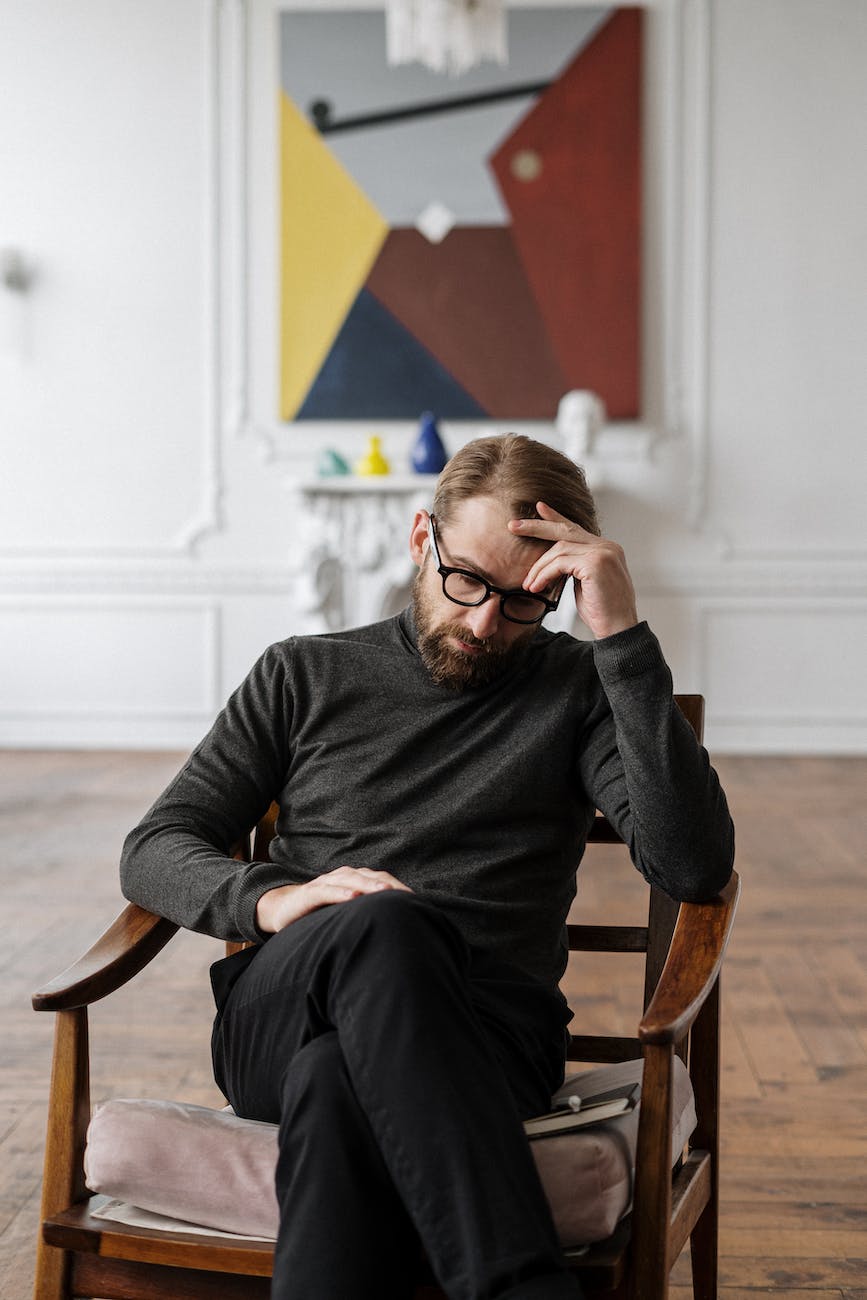
Society and the Folly of Mental Wellness

There are so many aspects to mental health, it’s hard to keep track of them all. I suppose it’s no different with physical health, and all the various ailments that can affect one’s body; the same is true of the mind. For example, I suffer from deep depressions and bouts of manic creativity, and if I go off my meds I lose all sense of … well, sense. My official diagnosis is bipolar type 2, but the longer I live with it, the more I wonder if it’s just a way to describe to the medical profession behaviors that otherwise are difficult to understand.

What exactly defines “well”, anyway? In the physical body, it might be determined as “free of disease”, which is laughable, since we’re all dying slowly anyway. Diseases – diagnosable, defined differences from the “normal” human body – just expedite the process. If I smoke, or drink, or eat sugar and fatty foods, am I physically well? These things lead to diseases – cancer, liver failure, diabetes or heart disease – that ultimately will kill us all. Am I well only until one of those diseases becomes evident? Cancerous cells pop up all the time, and are usually destroyed by the body’s immune system before being detectable; am I only diseased if I doctor diagnoses me? And if I never go to a doctor, am I therefore physically “well”?

The follies of wellness, I think, extend to the mind as well. This isn’t to say mental illness isn’t a real thing – it absolutely is. But the definition of what makes one “well” is at best ridiculous to consider, especially considering the social stigma against being “unwell”. We’re so bombarded across media and society with messages of stuff that will make us happy, that I think we can start to confuse happiness with wellness.

If someone who experiences auditory hallucinations, and day-to-day seems to be a completely different person, never goes to a psychiatrist, they may never be diagnosed with schizophrenia. Does that mean they don’t have it? And what if they are just as happy as someone who doesn’t have those symptoms? Are they therefore unwell at all?

It’s interesting to me to consider – especially as someone who is so often “unwell” – where the line is between well and unwell, and I think the distinction is in what society determines to be acceptable behavior. And as I write about social acceptance, I realize that my own definition of “well” may be skewed. You see, when I’m severely depressed, I become unable to function. I lie in bed all day, sleeping and wishing for an end to everything I experience.

But what do I mean by “function”? After all, I’m still existing, and to an extent I’m coping with my disease to the best of my ability to do so. If I had a stomach virus, I’d be doing exhibiting exactly the same behavior. My ability to “function” is really determined by my ability to function within the context of wider society. If I go out to a supermarket and collapse in a corner, or walk down the street with tears streaming down my face, howling incoherently at the sky, I’d probably be considered mentally “unwell”. (Who are we kidding – I’d probably be locked away.) But if I do those things in the privacy of my own home, where nobody sees it and nobody knows, is it then acceptable?

This, I believe, is the true folly of mental wellness. The idea that we have to behave a certain way in public, in society – that we have to behaviorally conform to society’s standards of “normal” – is itself one of the biggest problems with coping with mental illness. The worst part of it is that society’s “normal” is an idea that we must strive for happiness, that happiness is somehow a state of being, and if we achieve it, we have somehow succeeded in life, and are mentally “well”.

Happiness is a fleeting moment of emotion. It’s no different than sadness, or anger, or excitement. It doesn’t last – it isn’t supposed to. If we were happy all the time, we’d stop recognizing it as anything good. I think you can be mentally ill and still be happy – and you can be perfectly well, and still be sad and depressed.

The work that needs to be done is to normalize the behaviors of the mentally “unwell”; to recognize that crying in public is not shameful, and that being unable to smile for days on end isn’t a sign to avoid social contact altogether. Society’s perception of mental illness is strongly negative, because it’s hard to sell sadness. Nobody wants to admit that sometimes it’s okay to feel bad, and that negative emotions are just as valid as positive ones.

So with all that being said, you might wonder – why do I take medication for my bipolar at all, then? Why not just force society to accept me at my worst, as well as at my best? Why do I care about my behavior enough to want to change it with chemicals in my brain?

The answer is probably more complicated than it might seem, and I’ll admit that a part of it may be to do with social conditioning. I’ve been led to believe that an overwhelming abundance of negative emotions is a bad thing, and that I shouldn’t feel that way. That I needed to change how I act, and I can’t change how I act if I don’t change how I feel. But deeper than that, there’s probably a sense of insecurity – that I want people to like me. And I’ve learned that people don’t like the way I behave when I’m unmedicated. In particular, the people I care about – my wife, my child – don’t like me when I’m unmedicated. When I’m less depressed, less angry, less volatile, they like me better.

But more importantly, I like me better. There came a point – a few years ago, actually – where I realized that I didn’t like myself. I didn’t like who I was, and the way I was acting. It just felt … awful. I wanted to change who I was, to an extent, and I wanted to change how I acted, and having struggled to do so on my own for decades, I realized I needed help. And most importantly, I realized that I was emotionally damaging people I really cared about, and that felt worse than anything. I didn’t want to feel that way anymore – despite often enjoying being depressed.

I think that this is the ultimate litmus test of mental wellness: how do you feel about yourself? Forget society, and its expectations; forget what people tell you about what you “should” feel, or be; are you content with yourself? If you are – truly, truly are – then you are probably just as “well” as anyone else. But if you’re not, then I encourage you to seek support. It’s incredibly difficult to change yourself on your own, and there are people in the world whose job it is to help.

So in summary – don’t seek happiness; seek self-contentment. Don’t change yourself to suit society; change yourself to suit yourself. Don’t seek to remove depression from your life; seek to remove the damage it causes to the people you love.

After all, happiness is fleeting – but so is sadness. Life is about riding the rollercoaster all the way around, not just stopping at the top. And most of all, when that change seems impossible – when it feels like all hope is gone – reach out for help. We’re never alone in the struggle of life.

You’re not alone.

Those of Us Who Live for Emotion

Everyone in this world lives with emotion (well, maybe the psychopaths don’t, but most everyone else does). We laugh, we cry, we feel anger and despair, and for the most part, we learn as young adults to handle these emotions, to live with them, and – to one extent or another – integrate them into our lives in a way that doesn’t (usually) override our ability to function as human beings.

But not everyone truly feels emotions the same way. Some of us fall more into the logical spectrum, whilst others are run by their emotions, making decisions based entirely on ‘feel’, ‘gut reactions’ or instincts. And, of course, some of us find ways to defend ourselves from emotion, because we’ve been so deeply affected in the past.

Having worked in the same place for the past ten years, most of the people I know are of course work colleagues. I know many of them well, and most of them well enough to know – to some degree – what kind of an emotional person they are. There are private people and people who wear their hearts on their sleeves, but you can usually tell what kind of an emotional person someone is by the way they express themselves, the emotions they choose to show (or that they can’t control), and the way in which their decision-making process is influenced.

It’s likely you know people like this, too. Think of all the people you daily say “how’s it going” to. Then think about the ones that, without fail, will always answer “fine” – whether they’re fine or not. Then think about the ones that are actually more truthful – that will tell you when things aren’t fine.

There’s no right or wrong way to be, of course – these are just people at different points on the emotional spectrum. Personally I fall into the former category, but I know plenty of people who will gladly share their whims and woes if asked. An easy mistake to make with this, however, is to assume that those people who don’t easily show their emotions simply don’t feel them as strongly – or at all. Nothing could be further from the truth.

Using myself as an example, it’s been a really long time since I could say I’ve truly felt any deep emotion of any kind – joy or despair, laughing or crying, these things kind of just don’t happen to me. I tend to live life day in and day out by just sort of moving from task to task and place to place, making decisions in the moment based on whatever seems right at the time. If you were to ask me how I felt and I were to answer truthfully, the answer would probably actually just be, “I don’t really know.”

Of course, a large part of this is probably my bipolar medication, which is, well, literally supposed to diminish the extremes of emotion I feel day to day. Prior to being medicated, I do remember times of uncontainable rage, pits of black despair, mountains of eagerness to work, and bouts of inexplicable tears. But even then, these were the rarer instances, and most of the time I wouldn’t allow myself to truly feel anything.

And I think this is a telling perspective, in some ways. I think there are some of us who actually feel so deeply that we deliberately protect ourselves from such emotion, by either avoiding things that make us feel deeply, or simply not letting it in at all. This can be a positive thing, to some arguable extent (I’ve never cried at a funeral), but it can also be detrimental: when discussing the recent Black Lives Matter protests with others, I can see how worked up they get about it, how deeply, deeply hurt they are by the injustices suffered by black communities across the country. And whilst I can inarguably see just how terrible things really are, it doesn’t make me as sad or angry inside because I just can’t allow myself to be hurt so deeply. I sort of wish it did, but I don’t know how.

Sometimes I envy people who can simply allow themselves to feel. When presented with those things in life that absolutely should trigger deep emotions (deaths, births, successes and failures, tragedies and triumphs), I kind of just … don’t feel anything. I can look at the event and think that it’s good, or bad, or whatever, but I don’t really deeply feel it, and … it makes me sad, but (of course) not really enough.

There is one thing that this lack of deep emotion does for me, though, and it’s that it allows me to understand conflicting perspectives in a way that I often see others to struggle with. Take something very simple but very relevant: Trump supporters. Most of the people I know are pretty liberal, and many of them simply cannot fathom how anyone could still support someone like Donald Trump after the toxicity, outright lies and falsehoods, and total lack of care that have so far defined his presidency. Yet for me, despite not agreeing with these people, I find myself in a position where I can actually understand some of their rhetoric, their mentality and their decisions. Because I’m not clouded by my own emotions (most of the time), I can see others’, and understand (to some degree) why they feel they way they do.

In the end, although I envy those who feel deeply, I don’t think I’d trade it for how I am already; I like being able to identify with and understand a multiple of perspectives, even if it means that the true depth of others’ feelings fall into more of an intellectual and logical empathy than a true “I feel what you feel” kind of thing. It allows me to get along with more people than I might otherwise be able to, and of course, it means I very rarely feel deeply enough to hate.

Of course, the reverse is that I rarely feel deeply enough to love, either … and that hurts.

How do you approach emotion? Are you a feeler, or a thinker? And do you find you have to feel what someone else does to empathize with them, or can you empathize from a logical perspective?