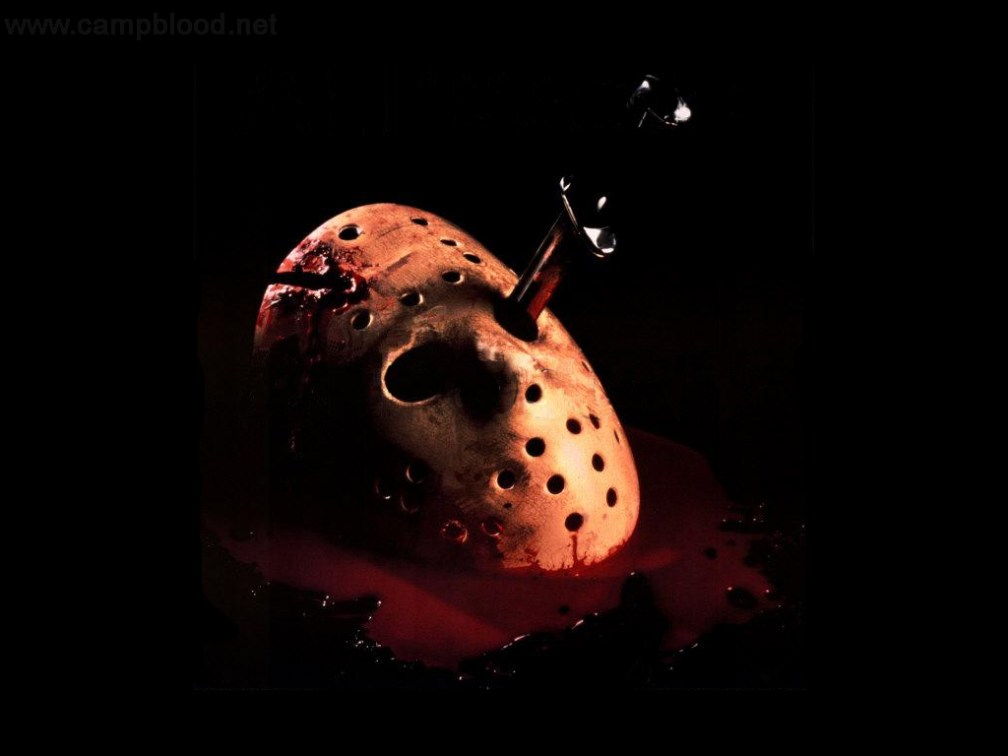
Tales of Despair: I Know What You Screamed Last Friday the 13th on Elm Street

Having recently (and finally) signed up for Netflix, I’ve been on a bit of a horror binge. So far, I’ve worked my way through Friday the 13th parts 1-7.

Let me explain. I have a fascination with horror that goes back a long way (and may in fact be in some small way related to the problems I have today). When I turned eight years old, I wanted a sleepover party with a few of my best friends. My little brother had been born only five days before, and I was a little jealous of the attention he was getting.

As a treat for the sleepover, my dad took us all to a video store to pick out a movie for us to watch. Being, of course, eight years old, I was looking for Star Wars or Indiana Jones or some other such adventure, and while most of my friends were of a similar mind, one in particular had a different idea. He’d heard about this thing called ‘Friday the 13th‘ from his older brother, who said it was awesome. The video cover certainly didn’t look awesome.

To cut a long story short, I to this day have images from that movie burned into my brain, and I had nightmares for the following two years. I still don’t understand why my dad let us rent it.

It was another eight years before I tried my stomach at horror again. And slowly, I acclimatized myself to their style. From The Relic to Alien to I Know What You Did Last Summer, I took them all in, and ultimately came to enjoy the darkness, the suspense, and the horror. (It’s also quite possible that this shift in taste came about as a result of my ever-increasing depression.)

However, I never returned to Friday the 13th, until now. And watching them in hindsight, I of course am able to laugh at them, for what at first I took for their cheesiness, their stereotyped killers, and the abundance of dumb teenagers.
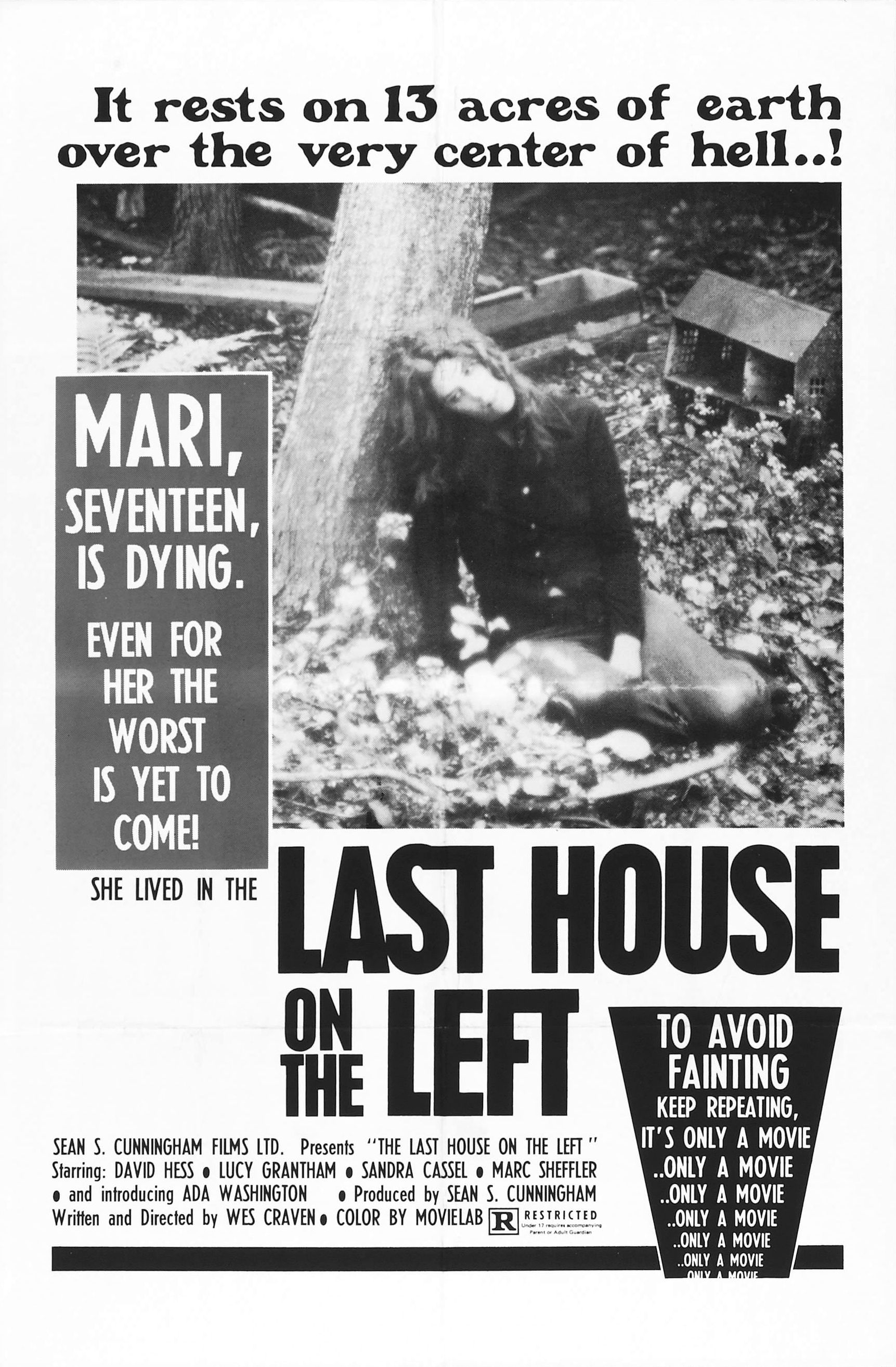
Original Poster for The Last House on the Left.

But upon further inspection, I now realize the importance of these movies in the history of horror and slasher movies. There was already a history of gore and horror going as far back as the early 1960s, but it was Wes Craven’s The Last House on the Left (1972) that really set the bar. A tale of two teenagers kidnapped, raped and murdered, it was relentless in its portrayal of some of the vilest human behavior ever committed to film. Its canon of visceral horror extends to forced sex, cold-blooded shootings, a manual evisceration, and of course, a chainsaw.
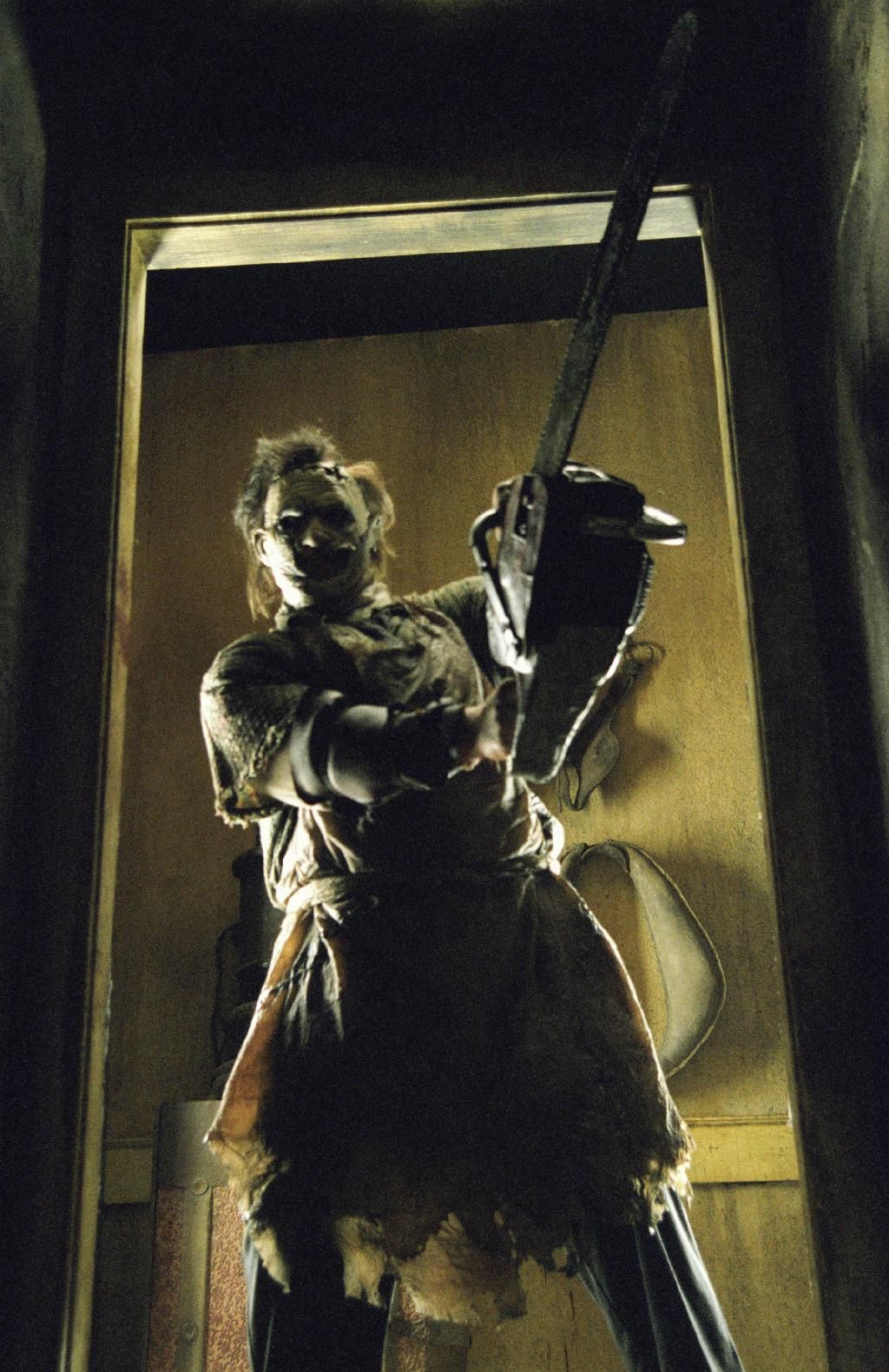
Leatherface, from The Texas Chainsaw Massacre.

Soon following this was The Texas Chainsaw Massacre (1974), which arguably invented the masked killer motif. Upon arriving on a deserted farm, a group of teenagers is one-by-one savagely attacked by the terrifying Leatherface, a fathomless killer who covers his face with human skin. Two further key developments in this film is the now-standard group of teenagers who are sequentially murdered with only one escaping, and the apparently motive-less killer. We are never given any insight into Leatherface’s intentions, reasons or history. He simply is, and this makes him of course all the more terrifying.

Throughout the 1970s these experimental horror films continued to develop, until in 1980, a seminal new slasher was released, featuring unprecedented gore: Friday the 13th. This followed on the trend of the group of teenagers, and placed them in the setting of an innocent and innocuous summer camp, albeit with a dark past. Several aspects of this film have now become such standard memes that they are recognized worldwide, and form the plot of Wes Craven’s immensely popular Scream series.

Throughout all of the Friday the 13th movies (with the exception of Friday the 13th Part 4), we are never given a view of the killer’s face. Ingeniously, Sean S. Cunningham chose only to show the killer’s feet, leaving the viewer completely incapable of empathizing with the killer, and painting him in a terrifying, mysterious light. This is vitally important to the plot in the first film, and plays an important scare factor in the sequels.

A further theme throughout the films is that of sex. In ever Friday the 13th film there is at least one, if not several, sex scenes, typically graphic. In each, the couple in question are murdered either during, or shortly after, copulation. This gave rise to the memorable quote from Scream:

There are certain rules that one must abide by in order to successfully survive a horror movie. For instance, number one: you can never have sex.
Scream – the film that rebooted the slasher movie.

Also present in most Friday the 13th films is the conclusion featuring a drawn-out chase between the killer and the sole remaining victim (usually a female). Often this involves the victim making their way into an inescapable position (for example going upstairs, where there are no exits), yet somehow escaping nonetheless.

Slasher films gradually faded from the mainstream after the 1980s, until Wes Craven (remember him? Last House on the Left – the one that started it all) rebooted the entire genre with Scream (1996). This led to a resurgence of imitators such as I Know What You Did Last Summer, and even the comedy spoof Scary Movie.

Of course, there have been many other styles of horror besides slasher films; Alien set the stage for graphically violent science-fiction horror, while Jaws, all the way back in 1975, rebooted the ‘Creature Feature’ genre of the 1950s and 1960s. However, there is arguably no genre that has spawned so great a canon of sequels (Friday the 13th has twelve – where’s the thirteenth?) and imitations, some classic (Halloween), some not so much (Cheerleader Camp). Even bizarre films such as Child’s Play followed suite from Friday the 13th, and in many ways, the past thirty years of horror owes its existence to these terrifying films.

And let’s not forget Nightmare on Elm Street

Why, hello, Freddy…

Tales of Despair: Cup of My Blood

In a dark, cold apartment, two young men stare at the small box in front of them. One, at least, is clearly very afraid. The box must never be opened, one says. We must, the other replies. And so they do.

Moments later, a man and a woman burst in. One man is found in a closet – burned to ash. The other, cowering in the bath. The woman takes the box, and in cold blood kills him.

Jack Fender used to be a renowned photographer, famous for his stark black and white style, and the subtle eroticism of his work. Used to. Three years ago, his wife – his soulmate and his muse – committed suicide. Now he shoots soft porn. Locked off and dead to the world, Jack wanders around in a haze, filled with the dark visions of his wife’s final moments. Then one day, nearly run down in the street, he witnesses the fatal car crash of the woman who took the box. With her dying breath, she bids him to take it, and never to look upon it. And he does.

Jack locks the box away; turns back to his empty life. Continues to pile the cash from his porn shoots on a shelf, never spending a dime. His previous life made sure he doesn’t need to. He puts the box out of his mind – until dark and disturbing visions begin to appear before him. Those around him – the few he interacts with, that pretend to care about him – are certain he’s going insane.

And then – emptying his mind late one night at the pool – he meets Iona. And she listens to him. She speaks to him. And finally, she breaks through to him. They become close, and they begin to love…and after so long, his muse returns. Slowly, his creativity returns, and he begins to feel that he might finally be able to leave the demons behind him.

Janina Gavankar as Iona.

Little does he know that the demons are, in fact, yet to come, lying in wait. As the darkness closes in around him, he begins to realize that Iona may not be all she seems – and the powers of evil are intent on the contents of the box. As everything he knows comes crashing down, he discovers the box holds an ancient and unimaginably powerful relic: the holy grail. And the terrible visions that continue to fill his mind hold an even darker secret from his past.

Cup of My Blood is not a great movie. Mediocrely acted, poorly color-graded and uncomfortably scripted, it is a low-budget B-movie in every possible sense of the word. Yet the editing is strong, and it manages nonetheless to be both visually striking and stylistically unsettling. It is graphic, violent and disturbing, mysterious and frightening, and ultimately charts an artist’s descent into madness in the face of unspeakable horror. Had it had a bigger budget and better actors, it could have been a significant film. As it stands, it’s a visceral depiction of sex and death, haunted by despair.

Some of you may find this film disturbing or upsetting; some of you may simply laugh at it. Either way, approach it with caution: it isn’t as simple as it appears.

Tales of Despair: Paranorman

Spoiler Alert: If you haven’t seen Paranorman yet, read no further!

I know what you’re thinking: isn’t Paranorman that stop-motion kids’ movie that came out earlier this summer? You know, the one with funny-looking zombies and plenty of goofs?

Yes, it is…sort of.

I took Little Satis to see it the other day – a kind of day-before-school treat – assuming it would be a good bit of fun. Something like Corpse Bride, I thought, or The Nightmare Before Christmas (goulish animation seems to be the exclusive realm of Tim Burton). I wasn’t expecting to find a movie that was surprisingly dark, genuinely scary, and ultimately heartbreaking.

Norman talks to dead people, and unsurprisingly, most people – including his parents – think he’s a freak. The only person who listens to him is the fat kid, who shares his torment.

The town he lives in, Blithe, is renown for the trial and execution of an evil witch some three hundred years ago. Soon, strange goings-on begin, and Norman is confronted by a crazy man claiming to be his uncle, telling him he must read from a book at the witch’s grave before sundown, or the dead will rise. Needless to say, the old man dies, Norman doesn’t make it in time, and a host of zombies – the seven folk who had sentenced the witch to death – rise from their graves: cursed by her to wander forever, undead. Norman, the fat kid and his unwilling older sister are now faced with delivering the town now not only from the hordes of zombies, but from the evil of the witch herself.

The darkness in this movie, however, comes not from the ghostly story or ghoulish characters, but rather from Norman himself; the creators of Paranorman made the (brave) decision to create a main character – in a children’s movie, no less – who is drowned in misery and depression. Norman passes through his life numb, bearing the torment of those around him, and never considering that there could be any other way of life. The thought of tossing a stick for a dog to fetch – the concept of fun – is entirely lost on him.

And of course, it could be no other way, for the ending of the story was as emotional as it was surprising. Gradually, we learn that the seven undead executors, far from being evil, are merely seeking rest – relief from the torment of living dead for over three hundred years. And when Norman hunts desperately to discover where the witch’s grave could be, he discovered a terrible, tragic truth: the demonic witch, scourge of the town and held as evil for three hundred years, was only an eleven-year old girl. For nothing more than appearing to control fire, she was hunted, trialled, and executed.

I was blinking back tears by the end of a movie I had expected to be thoughtless entertainment (after all, it wasn’t Pixar). But the misery, the tragedy of so young a girl, ripped from her parents by ignorant, fearful men and put horribly to death…it was so unexpected, and so sad, that my heart went out to her. In my throat was caught my heart when the girl’s ghost, finally spent of her rage, collapses to her knees and utters…

I want my mommy.

This was no children’s movie, despite what its producers would have us believe. It was something special – something that speaks to the bullied, the tormented and the abused in all of us. I am glad I saw it – and glad Little Satis did to, despite it all. The world is a dark place sometimes, and our children need to learn this: it will make them appreciate the light all the more.