
 First of all, I had considered titling this The Wright and Wrong of Wrevising Your Writing, but it seemed a little too kitsch. What do you think?
Secondly, I have no intention of defining right and wrong. I’m not that daft.
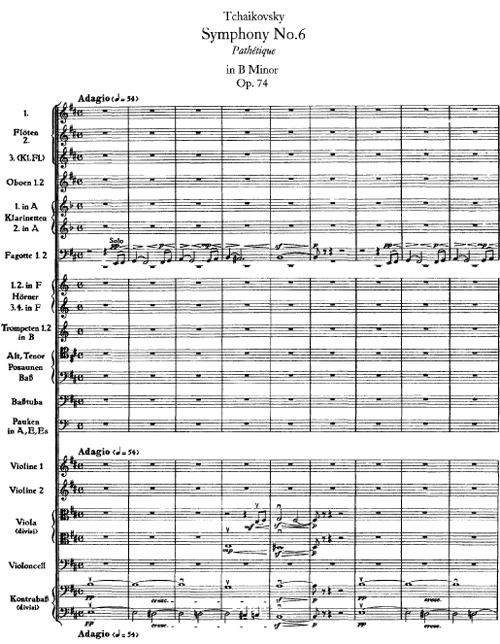
Johannes Brahms (1833-1897) is one of my favorite composers. His four symphonies are of course the best known of his works, the first in particular, opening with its dramatic C minor chords and booming timpani, inspiring pathos and doom in all their forms. However, far more than these massive works I prefer his chamber music, and in particular his works for piano and strings. In his life, Brahms wrote three piano trios, three piano quartets, and one piano quintet. That we know of.
His first piano trio, in B, is one of the most beautiful pieces of music I’ve ever heard, and is a constant player for me. The opening theme is serene and grand, and simply leads onward from there. The scherzo is tense and jittery, with the third movement being the sound of utter beauty. The finale, with its ambiguous tonality, draws on the agitation of the scherzo but adds in a extra melodic element to it.
Here’s the thing: it isn’t what he originally wrote. The piano trio was written and published in 1954, when Brahms was twenty-one. The piano trio we hear and listen to today was written and published in 1891, when he was fifty-eight, and it is almost completely different. In fact, it’s unique that we even know of the two versions, because Brahms spent his entire life revising and rewriting his works, never satisfied with the results. The tragedy of this was that, upon completion of his revision, Brahms would burn the original manuscript, leaving us with no trace of the process of his genius.
This is a shame, for having heard both versions, I actually find myself preferring the simpler innocence of twenty-one-year-old Brahms to his more mature and darker fifty-eight-year old self. I am given to wonder what the first editions of his other works might have been like. Sometimes there is a charm and quality in the passion of the first draft – Black Sabbath’s debut album, recorded on an eight track for £500, is a masterpiece.
My son makes up stories. Mostly in his head at the moment, but he enjoys it. Recently he started inventing back stories for the bounty hunters in Star Wars, which I thought was pretty cool, and not something I had given much thought to. When we discussed it, we realized that a particular detail of his invention couldn’t possibly have happened, because Boba Fett ended up alone on Jabba’s skiff over the Pit of Sarlaac, and so couldn’t have been involved in a smuggler’s ring previously. At first he disagreed with me, and I let him have his way. But a few hours later, he came to me and asked, “Dad…is it okay if I change the history I made up about the Star Wars bounty hunters?”
I thought this was incredibly insightful; having only just invented this history hours before, there was already a danger to him of changing that history – as though it would be telling a lie. If we decided to change our minds and say that it was actually Buzz Aldrin that first walked on the moon, there would be an outcry. “Lynch them!” people would cry. And they would be right.
But then what of fictional history? The natural answer would be, of course you can change it – it was made up in the first place! But look at what happened when George Lucas changed the history of Star Wars, with his revisions of Episodes IV, V and VI, and the release of Episodes I, II and III. Some of the scenery in the original movies was entirely changed. Whole scenes were added, which again changed the meaning of some of the story. Han Solo fired first! In the later films, we learn details that very nearly contradict the original movies entirely, and people have had to greatly stretch the meaning of some of the character’s dialogue in order for it to all fit. And look at what poor George got for his efforts.
So where does that leave us? As a fiction writer, you’ll often find yourself modifying some of your back story so that it makes more sense in the context of the main plot. Heaven knows, half of what I created in the Appendices of The Redemption of Erâth has already been flatly contradicted by the story I’m now writing. And I can’t imagine anyone would question me for that.
So when does it stop being okay to change your story’s history, or even the story itself? I’m sure J.K. Rowling wasn’t 100% happy with every word she wrote; even I can see some passages that leave something to be desired. But would we let her rewrite the book? Is it merely when the book becomes published that we lose the right to change it? Isn’t still in its essential nature our work? Why shouldn’t we be able to change it as we see fit?
I don’t have an answer to this; Brahms got away with it, and George Lucas didn’t. Peter Jackson felt the need to turn the ten hours running time of The Lord of the Rings trilogy into fifteen hours, and most people are okay with that (though not, perhaps, with watching it all). It seems funny how the public become so possessive of another person’s work – as though we owe it to them to stand by the work we created. Is this fair?
Let me know what you think in the comments!
Satis

 Satis Writes