Thought of the Week: Character-Driven Fiction

I spent some time today (possibly wasted time—hard to say) going back through books one, two and what’s finished of three and counting the number of named characters in each book. Total so far? Ninety-three.

Nearly one hundred names in two and a half books seems pretty extreme; it means at least two newly introduced names per chapter, at least. Of course, not nearly all of these characters are important, and sometimes they are named merely for the sake of convenience (e.g. keeping track of who’s talking in dialogue). Of these ninety-three characters, twenty-four of them I’ve counted as ‘primary characters’; that is to say, characters without whom the book or the events within could not exist. Among these are:

  • Brandyé Dui-Erâth: the primary protagonist and hero of the story
  • Elven Dottery: his closest friend, and secondary protagonist from Exile onward
  • Elỳn: an Illuèn (race of Light), who features primarily in Brandyé’s dreams in the first book
  • Sonora: Elven’s sister, and catalyst for many of the events in Consolation

I ended up creating a mind map of all the characters, because I’m at the point where I’m starting to reuse certain names, simply because I forgot that I already used them before. This is what it looks like at the moment:

Mind map of the characters in The Redemption of Erâth, with partial connections shown.

Mind map of the characters in The Redemption of Erâth, with partial connections shown.

This is something I actually had to separate off from the mind map I’d created for the entire book series, which included a lot of other information such as races, themes, locations, etc. This mind map is actually so large that I feel it’s now less than helpful:

Mind map of the entire book series!

Anyway, the point of this is to say that I’m starting to feel a little overwhelmed by all these characters rearing their little heads and telling me their names. It makes me realize, though, that not all great fiction necessarily relies on a great number of characters. And that makes me despair, slightly.

How many people were in The Lord of the Rings?

How many people were in The Lord of the Rings?

Now when it comes to characters, there exist absolutely phenomenal stories with very large numbers of characters. According to Middle-Earth in Statistics, there are nearly 1,000 named characters throughout Tolkien’s extended worlds, including The Lord of the Rings, The Hobbit and The Silmarillion. A huge number of these are there merely in passing, but nonetheless exist and were created by Tolkien at some point. Similarly, according to (the wonderfully reliable) Yahoo Answers, there are 772 named characters throughout the Harry Potter seriesWar and Peace purportedly has over 600 in a single novel.


“Without Pip, Estella, Joe, Miss Havisham and the others, there would be no story at all.”
 

Miss Havisham—one of the most unforgettable characters in literary history.

Miss Havisham—one of the most unforgettable characters in literary history.

However, one of my favorite works of fiction ever, Charles Dickens’ masterpiece Great Expectations, has only eighteen characters worth mentioning (according to SparkNotes). How did an enormous epic such as Great Expectations manage to reach its conclusion with such a comparably small number of characters? How did Dickens manage to keep the reader interested in so few people over such a long novel?

To my mind, the answer lies not only in the development of the characters, which Dickens does masterfully, but in the narrative itself, and the fact that in Great Expectations, the entire story is the story of the characters. It’s a life tale. Without Pip, Estella, Joe, Miss Havisham and the others, there would be no story at all. No one of them could be removed without severely affecting the outcome of the story, or potentially rendering it utterly impossible.

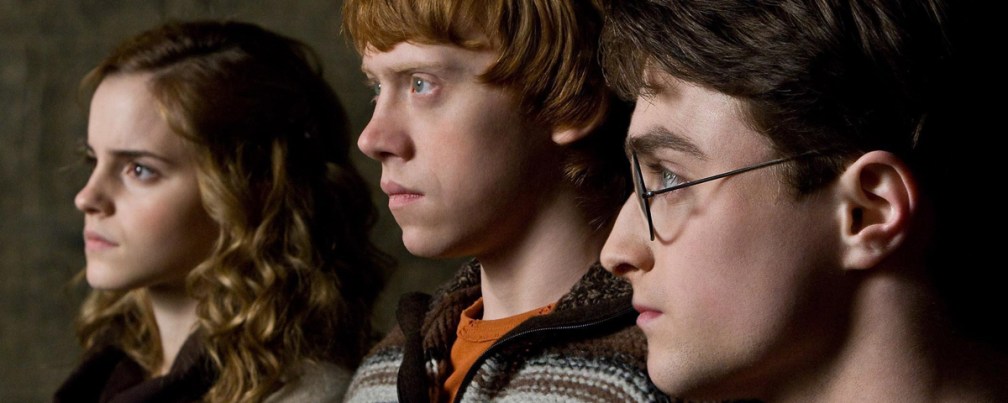
As much as I love the Harry Potter series, the same can’t truthfully be said, and this is evidenced by the film series: so many characters from the books were excised, condensed or changed that in some places things seem almost utterly different. Did Harry really need Hermione and Ron? Arguably not—the relationship between the three central characters, whilst important, doesn’t necessarily drive the story. Harry could have been attributed the characteristics of his two friends, and the battle against Voldemort and evil would have remained relatively unchanged.

Frodo and Sam—who really needed the other more?

Frodo and Sam—who really needed the other more?

To a lesser extent, the same could be said of The Lord of the Rings. Did Frodo really need Sam? Arguably, Merry and Pippin were more crucial to the plot than the relationship between these two main characters, for they encouraged the Ents to war, without which Helm’s Deep likely would have fallen.

And it makes me wonder about the direction of my own story. In some ways, The Redemption of Erâth is, like Great Expectations, the story of a single man’s life, from childhood to old age (much of which we have yet to see). But I’m starting to wonder if the story is too plot-driven; how much does the plot rely on the relationships between the various people of the world I’ve created? As far as I can see (and bear in mind, I can see a little further than you, the reader, at the moment!), there are only three people in the entire story that absolutely must exist for the story to be; much like Harry Potter only ‘needs’ Harry and Voldemort, or The Lord of the Rings only ‘needs’ Frodo and Sauron. At least I have more than that, but when I think about a masterpiece like Great Expectations, I realize that every one of those eighteen characters absolutely must be there, or the story fails. And it makes me wonder—where does my own story lie?

Which do you think is better—character- or plot-driven fiction?


Featured image from http://www.fanpop.com/clubs/harry-ron-and-hermione/images/7724592/title/trio-hbp-photo.

Satis Logo 2014

Movie Night: Harry Potter and the Half-Blood Prince

Year: 2009

Director: David Yates

Production Company: Warner Bros.

Leads: Daniel Radcliffe, Emma Watson, Rupert Grint

Screen Shot 2014-10-15 at 1.12.59 PMContinuing on with our journey into the Potterverse, Little Satis and I sat down to watch the sixth installment of the Harry Potter movie franchise (having concluded the book sometime in the spring) for this week’s movie night. I’m not quite sure what took us so long to get around to it, given our only rule was to have read the book before watching the movie, but when all is said and done, life often gets in the way.

In it, we watch as Harry Potter, played excellently as always by the remarkable Daniel Radcliffe, embarks on his sixth year at Hogwarts, where he excels at potions thanks to a well-annotated textbook from the mysterious Half-Blood Prince. Meanwhile, the sinister Death Eaters are wreaking havoc on both the magical and muggle worlds as they follow the now-returned Lord Voldemort in his conquest to control all of…well, England? The world? I guess it was never terribly clear in the books, either.

You get a GIF!

You get a GIF!

The film seems to have two strong focal points, in keeping with the book: Dumbledore’s (Michael Gambon) insistence that Harry continue to learn more about the young Voldemort and his early rise to power, and the emotional traumas of being young and in love (Hermione and Ron, Harry and Ginny, etc.). Herein, however, lies unfortunately the film’s greatest weakness, which it shares with most of the Harry Potter film franchise. In trying too hard, I feel, to keep to the letter of the book, the film rushes its pace along, and never truly gives enough weight to the emotions and feelings of its lead characters. As the books in the series grew ever longer, trying to compact the content into a two-and-a-half hour movie became increasingly difficult, and the pacing suffers as a result. For an example of how to do an epic book conversion well, see Peter Jackson’s The Lord of the Rings: whilst many would say the films are too long, you certainly can’t fault them for taking their time over character development.

Ooh…and another!

Ooh…and another!

Then there are the small incidents that were never in the book at all, and the most egregious of these is the burning down of the Burrow. Not only did it not happen in the book, it was entirely unnecessary, leads to difficulty with setting in the following movies, and leaves a gaping plot hole: if the Death Eaters are capable of knowing perfectly well where Harry Potter is at any given moment, why didn’t Voldemort simply apparate there himself and kill him?

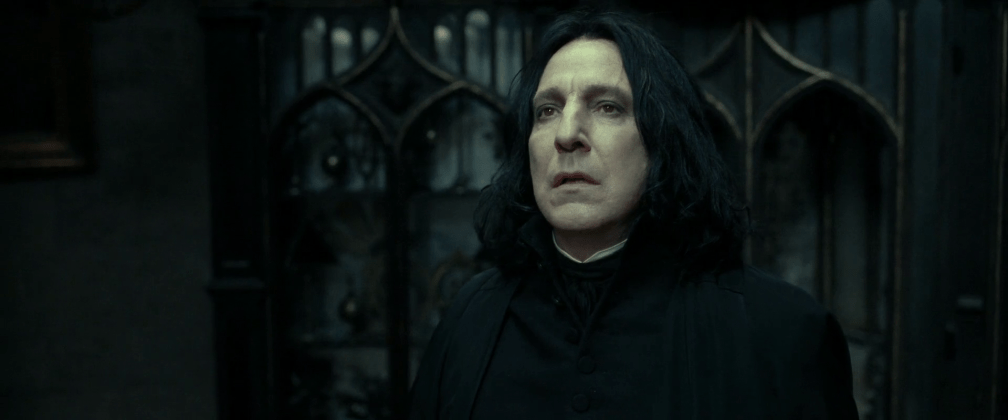
Having said all of that, it was still an immensely enjoyable film, and the shock of the conclusion – even knowing it from the book – was handled superbly. Alan Rickman’s portrayal of the duplicitous Severus Snape was spot-on as always, continuing to make him (even though we haven’t finished reading Harry Potter and the Deathly Hallows yet) my favorite character in the Potterverse.

The brilliant – and secretive – Severus Snape.

The brilliant – and secretive – Severus Snape.


★ ★ ★ ★ ☆ 

Satis Logo 2014

Thought of the Week: On the Staying Power of Dreams

Don’t forget – you can claim your free copy of The Redemption of Erâth: Consolation just by emailing satiswrites@icloud.com and telling me which digital format you’d prefer (ePub, Kindle, PDF, etc.)!

***

I dreamt of Harry Potter the other night. I certainly wasn’t expecting to, but I’m hardly surprised: Little Satis and I are two-thirds of the way through Harry Potter and the Deathly Hallows, and had to skip a few nights’ reading due to my working late. I guess we’re both getting a little obsessed.

Yes, I understand Snape somehow redeems himself…but I don't know how, so don't spoil it!

Yes, I understand Snape somehow redeems himself…but I don’t know how, so don’t spoil it!

I don’t remember the dream terribly well anymore (you know how dreams tend to get fuzzy after a while), but it involved me being at Hogwarts and chasing after Severus Snape with the sword of Gryffindor. It was entertaining, to say the least. Hogwarts was (in my dream) a glorious old castle hung with red and gold drapes – something straight out of a medieval-set film – and I do recall marching into a great dining hall, the sword at my side, tall and confident and pointing my wand straight at Snape. I don’t remember what happened after that, but I suspect he probably cursed me into oblivion.

Strictly speaking, I understand that humans probably dream every night – multiple dreams each night, too – but we simply don’t remember them. If we’re surprised during our sleep, shocked awake, as it were, we’re more likely to remember them. Even so, the power of our dream images tends to fade rapidly, dwindling into oblivion in only a few minutes.

Every once in a while, though, there are dreams that stay with us for a very long time – sometimes even forever. A year or two ago I had a dream for the plot of a book. I even dreamed the title: The Girl Who Killed Herself in Apartment 615. I wrote down some of the details that I could remember, and I still believe I could turn this into a compelling novella, should I ever be done with The Redemption of Erâth and A Gothic Symphony. I remember a few specific scenes in particular – nothing too graphic, actually, but specifically being in an apartment or flat in a high-rise building and looking up at a glass balcony, which was part of the apartment above yet somehow descended into my own apartment. There were pillows and discarded clothes strewn everywhere, and out of sight amongst the detritus was the dead girl. The entire thing was utterly surreal, and the story would take place in a bizarre, hellish alternate reality. Some of the chapter/section titles are The Dream that Won’t Wake UpPassing Time in the Four Pits, and The Sculpture that Changed. Weird, huh?

My dream house? Maybe with trees all around…

My dream house? Maybe with trees all around…

By far the most vivid, longest-lasting dream I’ve ever had, though, was over ten years ago. I remember scenes from it today as though I just woke up: it was of a house, lost deep in the woods. My family and I had been walking through a forest, and though the woods were innocuous enough, the entire setting was after a nightmarish apocalypse. We weren’t in the woods for fun, but for survival. We then came across an old, abandoned mansion. The closest thing I can come to describing it is a sort of Munster’s house, complete with a little tower at the top, spiked trimming on the eaves and dusty wooden floors inside. I remember going up to the top of the tower, a little room with windows all around, and looking out at the surrounding trees. I then remember looking back down the stairs, and all of a sudden a great, overwhelming darkness came flooding up the stairs and engulfed me entirely, strangling and drowning me…and then I woke up.

I can still see that house in my mind, sharp as it has ever been. I’ve convinced myself that this house must exist somewhere – it was incredibly eerie to wake up from. I haven’t found it yet, though if you know where it is, let me know – I’ll buy it, for any cost!

What dreams have stayed with you?

Featured image from http://worldaccordingtoshia.blogspot.com/2013/02/i-should-be-dreaming.html.

Satis Logo 2014