Barbara Thorson struggles through life by escaping into a fantasy life of magic and monsters.
IMDb
I’m not a super big fan of graphic novels (which isn’t to say I don’t like them, I just don’t have much experience with the medium), so it came as a pleasant surprise to realize the origin of this charming, sad and rewarding tale came from illustrated pages (and quite acclaimed ones, as I understand it).
Not that this should – or did – affect my take on the film itself, which stands strong in its own right. Masterfully crafted – somewhat in the style of Peter Jackson’s take on The Lovely Bones, with a seamless blend of intimate personal shots and grandiose, epic CGI giants – the visuals nonetheless serve only as a backdrop to an intense and rewarding story of love, despair, loss, grief and renewal.
Going into the movie with no previous knowledge of the story, and having seen it billed as ‘fantasy’ with glorious posters of villainous-looking giants, it genuinely wasn’t clear to me for a large portion of the film whether the titular creatures were real, or merely in the imagination of the protagonist, played ably by Madison Wolfe. When the truth is finally revealed, it’s done in a truly heartbreaking manner, and by the end of the movie I wasn’t crying ugly tears, you were.
Unfortunately, this touching story of growing up with tragedy seemingly flopped hard on release, with IMDb showing it making less than $500K globally on a budget of almost $15M. One of the reviews there implicates a terrible marketing campaign, which I mostly agree with; I was expecting the movie to be an action/adventure giant-killing romp, when in fact all of that serves only as the scenery for a touching growing-up drama.
Despite the poor reception, for me this was a flawless piece of cinema, albeit in a somewhat niche category, and I would wholeheartedly recommend it to anyone interested in the sadder side of things.
My wife watches a lot of TV. Not bad TV – proper shows like The Sinner, and Prodigal Son (a lot of crime dramas, actually). I don’t; and not because I don’t like TV. I watch a lot of bad TV – mostly reruns of Family Guy and South Park. But it’s just a huge commitment for me to start watching a show that asks me to get invested in the characters. I was also burned badly by Lost and Heroes, so I tend to just avoid TV altogether unless it’s something I can mindlessly zone out to.
But my wife loves getting invested in shows and characters, and particularly loves British TV dramas; I think they tend to be more realistic and showcase the human nature side of things more than most US television. One show she’s been particularly into recently is No Offence, a somewhat tongue-in-cheek police procedural set in Manchester. At one point whilst Googling the show during its playback (I was in the room and partially paying attention), I mentioned that the show’s creator and screenwriter had also worked on another renowned British show, Cracker, known for its realistic and often dark portrayal of police work and criminal psychology, and for its deeply flawed and broken characters.
What struck me, though, was that in researching this writer, Paul Abbott, I discovered that he himself suffered from an abusive and broken past. Amongst other things his mother and father both left them, leaving his pregnant seventeen-year-old sister to raise the family; he was raped when he was thirteen, ended up trying to kill himself, and was ultimately admitted to a mental hospital.
They say write what you know, and in Abbott’s case this certainly seems to hold true. Not necessarily the police part, although I’m sure he had plenty of exposure to the legal system growing up, but the repeated traumas of his youth.
I think many authors look for ways to express their pain through their work, and the same holds true of artists, and generally creators of all kinds. It can be a kind of catharsis, a way of exorcising demons that would otherwise take hold and control our lives. When I listen to Korn’s Jonathan Davis’ solo album Black Labyrinth, I’m struck by how personal the album is; whether he’s hinting at things or outright stating “I deal with things inside that would make anyone else go insane”, it’s an album full of pain.
All of us are molded and defined by the events of our lives, but often there are one or two key aspects that carry forward throughout our days. For me, it’s depression; even though I don’t always feel depressed these days, and my bipolar is largely kept at bay with medication, depression will always be a defining characteristic for me – something deeply integrated into my psyche and personality, and something that defines who I am.
When it comes to my creativity, this naturally comes out. In The Redemption of Erâth, the entire story is largely an analogy for depression, from the darkness of the world to the inescapability of fate that brings people together only to tear them apart again. It remains to be seen if depression can be conquered, or if it will win over the world of Erâth.
There are so many different traumas that we suffer through, and of course different people will react to the same type of trauma differently; what inconveniences some can destroy others, and where some will blank it from their minds to cope and survive, others can never escape the pain. Creativity – art – can be for those people a powerful way of dealing with that pain, a way of externalizing it so that it hurts – hopefully – just a little bit less.
I’ll happily admit to being a fairly casual gamer. I don’t have a console, I’m not the first person in line at GameStop when a new title is released, and I typically idle the minutes and hours away with mindless entertainment like Angry Birds on my phone.
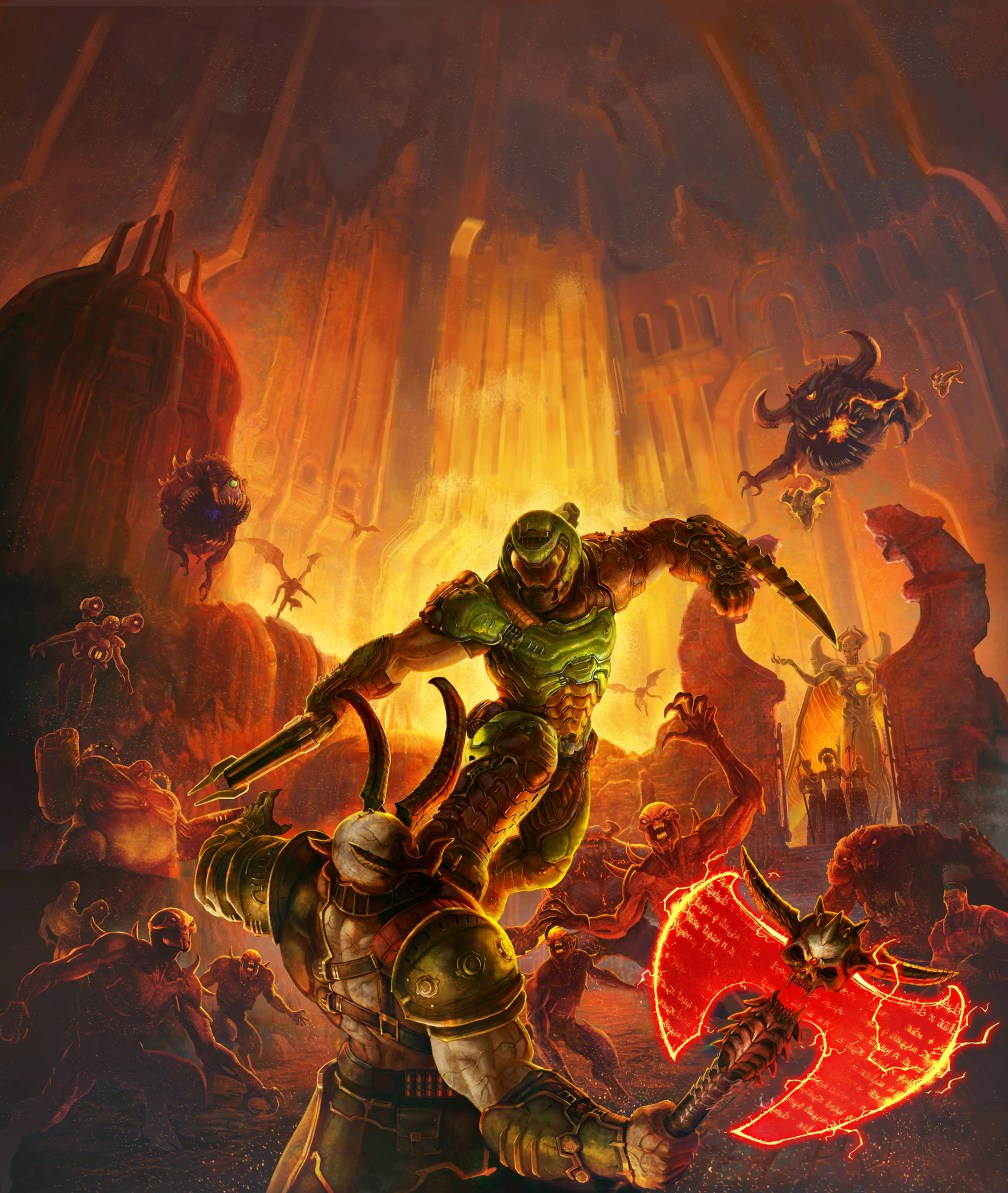
That being said, there are a couple of more ‘serious’ games I enjoy playing from time to time; particularly ID Software’s titles such as Doom and Quake (I’ve been playing those games since the late ’90s), and one of my all-time favorite PC games back in the day was Max Payne, mainly because of the heavy emphasis on plot and storytelling. I recently finished playing through Doom (2016), and although the story was minimal the combat mechanics were fun, and the whole 15+ hours of gameplay were hugely entertaining.
Sometimes, though, I want the experience of a solid video game without the effort of having to, you know, actually play it. I guess I’m not the only one to think this, because throughout the years there have been endless adaptations of video games to film. Sadly, most of these have met with spectacular failure, both at the box office and critically. This led me to wonder: why are so many video game adaptations terrible, and what might it take to make one that is actually good?
Strong Source Material
The original Macintosh FPS, Marathon, was exceptionally plot-centric.
Not all video games are created equal. Whilst early PC titles such as Quake, Doom, Myst and others may have broken boundaries in terms of 3D graphics, gameplay mechanics and multiplayer options, most of them were pretty thin on plot. It was mostly just find the bad guy, kill the bad guy, repeat. There were some exceptions to this; I recall playing a early Bungie-developed game called Marathon, which not only was groundbreaking from a physics modeling perspective and introduced LAN-based multiplayer, but also because the plot featured so heavily in the game that certain levels were impossible to complete unless you interacted with the story.
It wasn’t until I played Max Payne in the early ’00s, however, that I realized just how strong a video game story could be. With graphic novel-inspired cutscenes and a strong emphasis on character development, I ended up playing the game through dozens of times just to relive the story.
It stands to reason, then, that in order to make a successful adaptation, you need something to adapt in the first place. A strong plot and compelling characters are necessary for any story, and unfortunately, many video games lack these elements.
An Understanding of Adaptations
One of the biggest points of contention when a non-filmic source material is adapted to film is the authenticity of the writers’ efforts to maintain what was in the original story. Take Peter Jackson’s efforts with The Lord of the Rings: to many, it represents a masterpiece of western cinema, and a fitting adaptation to an equally timeless and epic set of books. To others, however, Jackson took too many liberties with the source material, from omitting characters to changing plot devices, and even creating scenarios that never occurred in the books at all.
In the books, Narsil was reforged right at the beginning; in the movies, not until the end.
However, I believe the critics of these films are missing the point of an adaptation. It isn’t meant to faithfully replicate every scene in the book on celluloid; to do so would be uninventive, slow-paced, and frankly boring. An adaptation should take the core, central elements of a story and rework them into the new format – that being a 2-3 hour film that you sit and watch. If that means changing characters, motivations and plot points, then so be it – it’s an adaptation, not a replication.
I think that this balance is something many video game adaptations miss the boat on. In some cases, they try too hard to match the original material, and in others they deviate too far from it. Sometimes they pander too heavily to the fans, and in others they try too hard to make it accessible to people who’ve never experienced the original game. There’s a fine line between these two extremes, and a successful adaptation should be able to satisfy the original players’ desire for familiarity, whilst creating a world that can be experienced easily by someone who’s never heard of it before.
A Strong Cast
This is probably more essential for films in general, but it’s just as relevant for video game adaptations as it is for any other type of movie. A strong cast is vital to the success of a movie, because as viewers we need to feel invested in the characters, their motivations and relationships, and the chemistry between them is important.
The chemistry between these characters was unmistakable.
Now this doesn’t mean the cast need to necessarily be famous or well-known; perhaps one of the best examples of chemistry in film is the original Star Wars from 1977; no one knew who Mark Hamill, Carrie Fisher or Harrison Ford were at the time, but their on-screen chemistry is what arguably makes the movie. Compare this to the lackluster connection between Hayden Christensen and Natalie Portman in the prequels; it didn’t matter that Portman was arguably more up-and-coming at the time, because they simply didn’t seem to have any real connection.
There are examples of video game adaptations that bagged well-known actors and yet failed on the chemistry; Doom (2005) has both Karl Urban and Rosamund Pike (the latter of which would go on to nominated for an Oscar), but the relationship between them as brother and sister falls flat at every turn. This is in part due to a failure to develop the relationship through the plot (the two share almost no screen time), but also because the two actors just don’t seem to ‘click’.
Homage to the Original Game
Certain games are known for inventing, developing, or innovating certain types of gameplay features. Doom brought us the BFG – a massively overpowered weapon that can decimate almost any enemy in a single shot; Max Payne was one of the first games to introduce ‘bullet time’ – a feature where gameplay slows down during battle sequences, allowing the player to see individual bullets flying past. And there are movies where these concepts are adapted well, of course – and others where they aren’t.
In the 2008 adaptation of Max Payne, we see Mark Wahlberg make his way through a very noir New York city – just as in the original game – but the limited use of bullet time was frustrating. This was one of the cornerstones of the game, and although it features at certain points in the film, it never felt like it was as important an aspect as it should have been. There are other aspects of the original game that were modified as well, including some of the key character motivations and climactic scenes.
The first-person sequence was one of Doom’s best assets.
On the flip side, a film that I felt did this well was, again, Doom (2005). Not only did it bring us the BFG in a way that could never have been done in a game (when fired, it takes out massive chunks of wall and ceiling, a mechanic that would be exceptionally difficult to recreate in a game), but it also boasts an incredible first-person scene that bears all the classic hallmarks of a FPS game, including using multiple weapons to defeat multiple demons in a non-stop, long-take action sequence.
Not all video game movies are bad, and not all are as bad as some people make them out to be. That being said, the highest-rated game adaptation on Rotten Tomatoes is Angry Birds 2, and it holds a he level of something like say, John Wick (83%, 89% and 90% for each film respectively), which bears all the hallmarks of a video game movie without actually being one.
I think the key thing is a successful blend of many of the smaller elements that work in various movies – faithfulness, strong casting choices, and an understanding of how to make a good adaptation. Who knows? Perhaps one day we’ll see a game adaptation that truly checks all the boxes, and I know I’ll be first in line to see it when it does come out!




 Satis Writes