Tales of Despair: Mostly Hopeless

Douglas Adams is dead.

As it happens, he’s been dead for quite some time, given that he suffered a fatal heart attack after working out almost exactly eleven years ago, which is a shame. Let this be a lesson to you, though, and never, ever do any exercise of any kind, or you’ll probably die too.

Douglas Adams left us with a veritable treasure trove of magic, a whole lot of unfinished work, and a perfectly unsatisfying ending to The Hitchhiker’s Guide to the Galaxy series of novels. Like most artists, Douglas suffered from spells of depression and despair, a trait he shared with his long-time (and still very much alive) friend, Stephen Fry. This is something that creeps into his writing, inevitably, and it’s fascinating to consider the emotional turmoil in his life through the lens of the Hitchhiker series.

I’ve always found the connection between creativity and despair to be fascinating. Finnish rock band HIM (His Infernal Majesty), throughout their career, have released album after album of music almost entirely about the pain and heartache of failed love, except for a large gap of time between 2003 and 2005, when the lead singer finally found himself in a stable relationship. Funny how the creativity there stopped for a bit.

Yet beyond even this, the connection between art and depression seems all the stronger in the realm of comedy. Countless comedic artists have used the laughter of their medium to help survive against the inside torture of personal despair. Woody Allen, Jim Carrey, Spike Milligan, David Walliams…the list goes on. Often, their wittiest and best-loved work comes from the darkest times in their lives. Occasionally, though, the unhappiness leaks through and stains their work in a way that transcends the humor, and bares the sadness in their soul. This is not black humor – this is depression.

The Hitchhiker’s Guide to the Galaxy began life as a radio comedy in the late seventies, ending up translated into a plethora of mediums, including film and TV, but perhaps best known as a series of novels. The five books in the series are The Hitchhiker’s Guide to the Galaxy (1979), The Restaurant at the End of the Universe (1980), Life, the Universe and Everything (1982), So Long, and Thanks for all the Fish (1984), and Mostly Harmless (1992).

The Hitchhiker’s Guide to the Galaxy, the original tale in the world of Arthur Dent, is a voyage of essentially pure silliness, introducing us to such wizardry as the infinite improbability drive, the person who designed Norway’s fjords, Deep Thought, and of course, 42. The Restaurant at the End of the Universe, published only a year later, essentially continued this same plot line, and in fact the titular restaurant features only briefly at the beginning of the story, before meandering away to discover the universe is run by a single man in a shack in the rain, and abandoning Arthur Dent and Ford Prefect on prehistoric earth.

The Restaurant at the End of the Universe is possibly the beginning of a downward slide for the author and the tale; despite the wit and humor throughout, the themes of abandonment and confusion lend the story a sense of frustration – a feeling that despite all effort and will, the world will never quite make sense. The fact that the book ends with what appears to be Arthur’s resignation to his fate, rather than a desire to escape it, is one of the first signs we get in the ongoing tale that things may just not quite pan out for our characters.

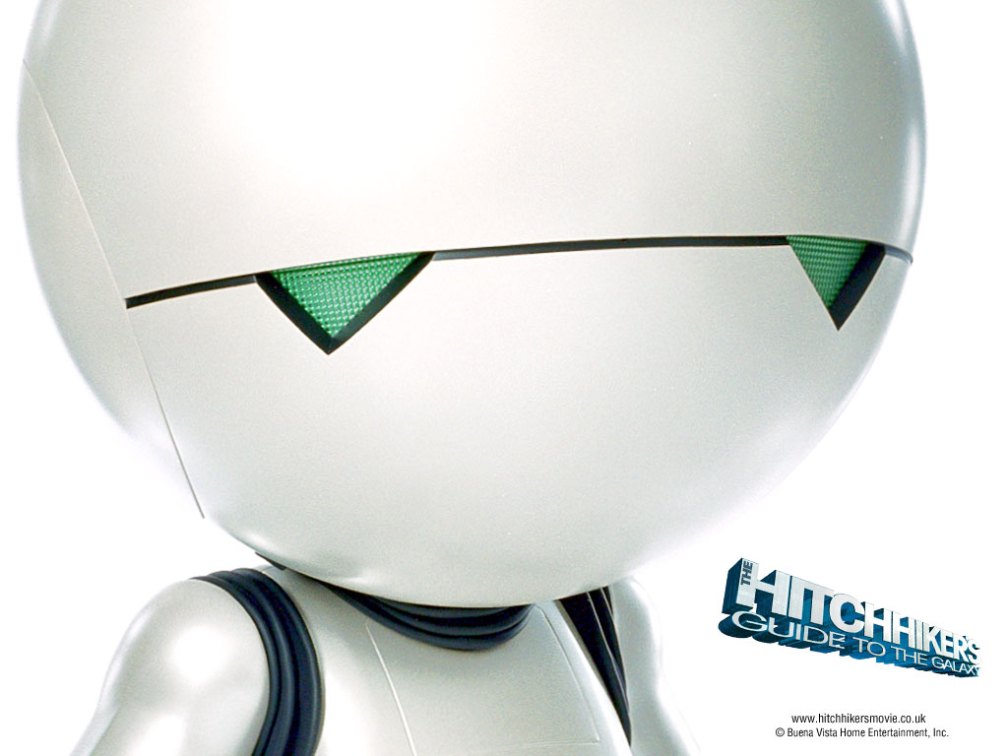
The third tale, Life, The Universe and Everything, seems to pick itself up out of the lethargy at the end of Restaurant, involving quite of bit of intrigue and action, and ultimately ending with Arthur saving the entirely of the universe from ultimate destruction.  The fourth tale, So Long, and Thanks for All the Fish, brings the story out of the haze that had surrounded the previous two books, and allows Arthur to actually find the love of his life, in the form of Fenchurch (rather amusingly named after the train station in which she was conceived). The whole book, from start to finish, feels imbued with a feeling of warmth and hope, from the fact that earth was replaced by dolphins to the touching and bittersweet ending in which Marvin, decrepit and ancient, is able to see god’s last message to creation just before he finally expires. It perhaps no coincidence that the publication of this book arrived at the same time that Douglas met and fell in love with his future wife, whom he would be with until his death, seventeen years later.

Then we have a break. Eight long years before the next Hitchhiker book. And oh my, what a tragic difference. Mostly Harmless opens with Arthur having lost Fenchurch, and the entire tale from there on follows his desperate and impossible search throughout time and multiple universes to find her again. The story is filled with despair, doom and tragedy, to such an extent that the sense of loss begins to overpower the humor.

In the years since the publication of So Long, Douglas endured a drawn-out and troubled relationship with his wife-to-be, including several separations, which even resulted at one point in their engagement being called off. Ultimately, the two rejoined and were married in late 1991, but perhaps the damage was done, and the material for Mostly Harmless already planted firmly in Douglas’ head.

In the end, we are treated to a lost love, a plot to destroy earth in every possible universe, an unwanted child and insolent teenager, and even an unintended assassination attempt. Even the one, brief moment of happiness we are allowed, when Arthur takes up as a sandwich-maker on a small, backwater planet, is torn apart when Random arrives, followed not long after by Ford Prefect. In the end – right at the very end – earth is destroyed, taking along with it every main character in the series. And this is how it ends – not with a bang, but a silent whisper into the night.

Every time I read the series (I am lucky enough to have all five stories combined into one giant anthology, and I find I have to read them from start to finish), I am left with the unnerving sensation that I am surreptitiously paralleling Douglas’ own personal traumas, and being led down the path to despair whether I would go there or not. Mostly Harmless does not relent, and in this the seams begin to show. The book’s humor lies entirely in the writing, while the plot itself is allowed to descend into ever-greater bleakness.

It was for a long time assumed Douglas intended to, at some point, write a sixth installment (it turns out a sixth was written, though not by him, and so far I haven’t read it). Even without any further knowledge of what Douglas would have intended for this new tale, it is interesting to contemplate the very fact that he had been planning it; almost by definition, resurrecting the destroyed characters and throwing into yet a further adventure would have felt like a return to hope – we haven’t abandoned them entirely.

As it is, however, we are left sad, miserable and unsatisfied, and in relation to those other famous tales of despair in the world, this makes it almost the very definition of a tragedy. In some ways, I am reminded of Tchaikovsky’s Symphony Pathétique, with its manic third movement and utterly desolate fourth movement; so the Hitchhiker series feels in the realm of literature.

And in the end, of course, it should have been no other way.

Rediscovering the Lost and the Forgotten

My wife and I have moved several times in our life together (four times in the last eight years), including the most recent move which was overseas, when we returned to the United States. As anyone who’s moved house before knows, a year between moves sounds like a lot, but it isn’t. We still have boxes from our first move (all the way back in 2003) that we still haven’t unpacked. I’m a little worried now to discover what’s in them.

One of the effects of this is that you quickly learn what it is you can and can’t live without. Pots and pans and food end up being useful, and so end up getting unpacked pretty quick. Those old summer clothes you really thought you were going to slim back down into but never quite got around to it – they get unpacked second, of course. The kid’s toys are way down on the priority list (depending on who’s writing the list).

But then there are things that you actually never needed in the first place, and of course this realization doesn’t hit you until you drag a box out of the basement corner, scrape off the dust and mold, and then marvel at the things inside that you’d forgotten ever existed. For us, this tends to mostly be old papers, tax records and files; all the stuff they say is important and then is never needed again.

And then, there are the things that you can’t live without, use day to day, and still never come out of their box. These are the things that have insinuated themselves into the glass and metal of my iPhone and Mac, and left their earthly shells behind to wither with the spiders. For me, these are music, movies and books. I have genuinely not noticed the lack of my CD collection, since I still listen to every song each and every day. My DVDs are old, and looked a little mournful as I pulled them out of their box, as though they really just wanted to roll over and die. And as for my books…

Well, that felt like a different matter. For the past few years, I have been almost exclusively reading books on my iPad, and whilst it has certainly had its benefits (the carry-on luggage is ten pounds lighter!), I do find myself missing the feel of paper under my fingers, and the satisfying sense of progress that comes from holding more pages in your left hand than in your right. None of this exists in the digital world – one of the reasons I’ve immensely enjoyed reading Harry Potter with my son from the actual ‘books’ his grandfather gave him for Christmas.

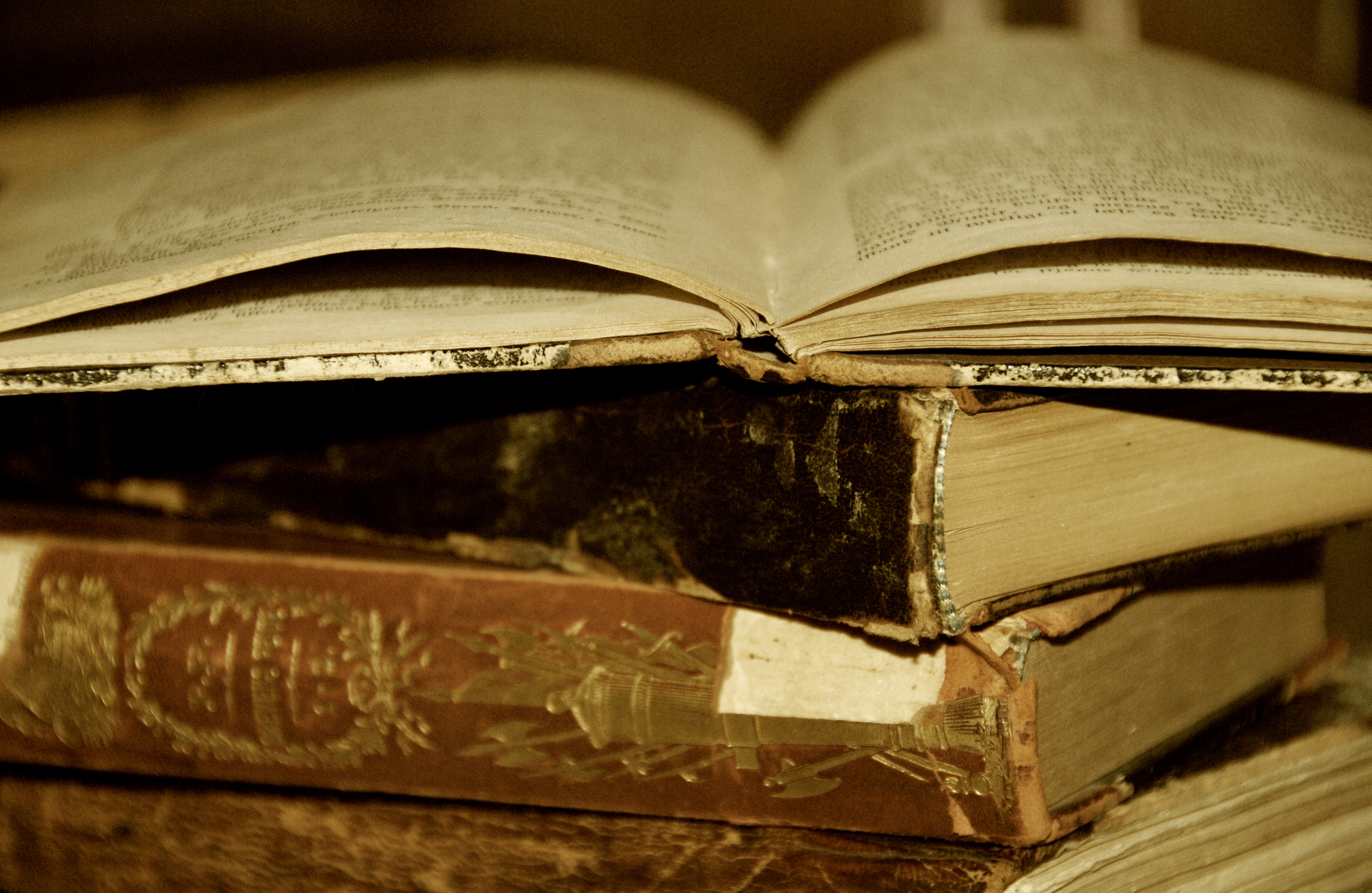
And so it was with a deep nostalgia that, the other day, I pulled the top off a box and rediscovered the hundreds of books that had followed me around from home to home and country to country, and had never been looked upon once in all that time. There were a lot of Stephen King novels in there; in fact, it felt like half of them by weight were his vast tomes, though it was certainly less than half by numbers. I was forcibly reminded of my long-passed Star Trek addiction: ultra-nerd sci-fi pulp fiction brain fodder. I even unearthed the complete Hitchhiker’s Guide to the Galaxy, which is fortunate because I had been considering buying it on my iPad.

But, hidden amongst the trite and the trash, I found a few, small gems: works of beauty, intricacy and genius that had completely slipped my memory until I held the torn cover in my hands and felt the memories come rushing back into my mind. Of these, there were five that I had loved so much, and and since forgotten, that I wanted to share them.

Jonathan Livingston Seagull

Richard Bach – 1970

What a magical book this was. There really is nothing like it I can think of; it tells the story of a young seagull (yes, seagull) who is taken by the art of flying, and becomes scorned and shunned by his fellow gulls. Eventually, he finds solace as an outcast, and the tale traces his life from his youth to old age…and beyond. The writing is pure poetry, and coupled with the stunning black and white photographs that are dotted throughout, this book is simple a marvel.

The Big Sleep

Raymond Chandler – 1939

For me, this is the original and ultimate detective novel. Everything, ever, that has come since – whether it’s Patricia Cornwell or Stieg Larsson or just film noir in general – came after this. I know this isn’t actually true, but I don’t care. It has guns, girls, sex, drugs, violence, hard-boiled attitudes and plot twists every three pages. I don’t think you could really ask for more.

Garfield Thinks Big

Jim Davis – 1997

Um…yep. Exactly what it sounds like.

Dinotopia

James Gurney – 1992

A more beautiful book – in both story and illustration – does not exist. If Tolkien had written a tenth of the words, added talking dinosaurs and lush, extravagant color pencil illustrations, he would have created something like this. The story is pure fantasy, in the most lyrical of ways; a tale of shipwreck and isolation, of wonder and discovery, of coming-of-age and eventually of redemption. They made a TV series that frankly wasn’t all that good at all, but this is a story I would love to see rendered in Peter Jackson CGI on a fifty-foot screen. Oh, yes please…

Goodnight, Mr. Tom

Michelle Magorian – 1981

This is possibly one of the most depressing and disturbing children’s stories I have ever, ever read, but it is beautiful nonetheless. Willie, a world war two evacuee and son of a neglectful and abusive mother, is sent to live in the countryside with old Mr. Tom, who never wanted to have him anyway. To be honest, there’s little else to say – the story grows wonderfully from there – but there is a twist of the darkest, darkest nature and if you haven’t read the book, I wouldn’t dare spoil it for you. All I will say is I still get misted up to this day simply thinking about it.

Anyway…wow. What a trip. If you haven’t heard of or read some of the books above, I would whole-heartedly suggest you do so now. If you must, read them on your Kindle or iPad – all but Dinotopia. Do yourself a favor there and go out and buy (do not borrow this book from your library, you will not return it) a real, hardcover untouched copy of this book and read like a priceless work of art.

What about you? What books are out there that you’ve loved and left? What are the tales of magic that touched you years ago and have faded from your own memory? I’d love to know!

Movies I Am Already Looking Forward to This Year

I am not a great fan of movies that are billed as “the most original since…” or “brilliant ★★★★” (how I loathe those stars). I don’t particularly care for gut-wrenchers that seem to exist solely to beat your spirit to the ground with an iron rod. And I wouldn’t go out of my way to catch an avant-garde, indie film whose creators lost sight of the story amidst their obsession with being different.

What I do enjoy are films that have a strong story, strong characters and strong directing. Actors are neither here nor there; I’ve rarely seen a good movie ruined by a poor actor, and never seen a bad movie saved by one. Cinematography is important, but must take second place to the story. Explosions, too, are important, but must also be a passenger to the story. Effects in general should serve the story, and not the other way around. This is why Hugo was amazing, and Transformers was not.

My favorite films include Alien, Angel Heart, Corpse Bride, The Crow, The Da Vinci Virus (not Code), The Dark Knight, Donnie Darko, Dracula (Francis Ford Coppola’s version), Ginger Snaps, The Goonies, The Hitcher (with Rutger Hauer, not Sean Bean, love him though I do), Jacob’s LadderThe Lord of the Rings Trilogy, Love Actually, The Lovely Bones, The Muppets’ Treasure Island, Ring (Hideo Nakata’s version), Sin City, Star Wars (yes, all of them), This Is Spinal Tap and WALL•E.

An odd mix, perhaps, but it sets the scene, I suppose. Some of these have spectacular visual effects; Coppola in particular impressed me by using absolutely no digital effects at all in his Dracula. Jackson impressed me just as much with his almost entirely digital Lord of the Rings. Both of these were based on exceptionally good story material. In fact, I like to think the same could be said of each of the above. And so that is why the following films are the ones I am looking forward to seeing the most this year (knowing, of course, that some might change):

April 13: The Cabin in the Woods

Can’t say I know much about this; critics are being very wary of giving anything away, and this in itself is intriguing me. It reminds me of the glory days of Hitchcock (or even E.T. The Extraterrestrial for that matter) when nothing but actually seeing the movie would tell you anything about it. People are calling it art-horror, and I’m good with all of that. [IMDB]

April 27: The Raven

An interesting play into the fictional history genre; detectives seek out Edgar Allan Poe to help them capture a murderer inspired by his own writing. I love Poe; I love John Cusack; I love period films. Period. [IMDB]

May 11: Dark Shadows

I’ll be honest – I didn’t even look this one up. It’s based on a TV series, apparently. Tim Burton and Johnny Depp…enough said (no Helena Bonham Carter though, disappointingly). [IMDB]

June 8: Prometheus

Ridley Scott has done an excellent job of keeping the nature of this movie a secret, and even the tantalizing images and trailers that are leaking out are giving nothing away. Remember the first one in my list of favorite films? Yep. [IMDB]

June 15: Brave

Disney and Pixar’s thirteenth outing is a must-see for me because I have an eight-year-old, and…well, just because. Pixar are gods in my eyes, and this goes way beyond the animation; WALL•E was a dangerously unorthodox love story, as was Up, which followed it. This one looks like an interesting departure from the usual tales, however – as someone pointed out to me, it is the first Disney/Pixar release to feature a female lead. I also like Scotland. [IMDB]

June 15: Abraham Lincoln, Vampire Hunter

I’m not sure how this film ever got green-lit, but I’m glad it did. Like The Raven, we’re looking at fictional history, and this time it just looks plain silly. Tim Burton at the helm again (he’s busy this year!), and Abe looks awesome wielding an axe! [IMDB]

July 20: The Dark Night Rises

Pretty predictable, I guess – first summer blockbuster of the year, and probably going to outsell every other single film in the history of anything, ever. Batman Begins was good. The Dark Knight was astonishing, and unexpected. I was brought to the edge of my seat, and was so glad that Christopher Nolan didn’t back off, and pushed the story all the way off the edge and into darkness. I’m anxious to see if The Dark Night Rises falls somewhere between the two, or becomes simply the most amazing action movie of all time. [IMDB]

August 3: Total Recall

I don’t think they could possibly top Arnold Schwarzenegger and Sharon Stone, but still…I’m just going to have to see it, for the hell of it. Along with Robocop next year. [IMDB]

October 5: Frankenweenie

A return to the magic of Tim Burton animation. I can’t wait. [IMDB]

October 29: Cloud Atlas

This movie looks impossible, in concept at least. The characters are spanned across time and space, and are yet connected to each other in way that has not been revealed, and will probably rent the fabric of the universe when it is. Oh, and I should mention: Tom Hanks, Hugo Weaving, Susan Sarandon, Halle Berry and Hugh Grant. I realize I said actors were neither here nor there…but these ones are all here. [IMDB]

December 7: Les Misérables

If they do to this what they did to Chicago, we’re in for a treat. [IMDB]

December 14: The Hobbit: An Unexpected Journey

I have been looking forward to this movie for ten years, and it can not come soon enough. In a way, though, I’m glad I still need to wait another 274 days; no matter what happens this year, no matter how terrible things might get, finishing 2012 with The Hobbit will make it all okay. This is magic of another kind. [IMDB]

And that’s it. Maybe more will come out, and there might be some I’ve somehow missed. I don’t really keep up on these things; these are just the ones Zite told me about. Perhaps you’d like to share the films you’re most excited to see this year?

Note: The further away the movies’ release dates are, the less accurate these dates will be. The ones I’ve given are as stated on the IMDB as of writing.