Selfishness Is Killing the World

Those of you who’ve been with me for years know that I’m not usually one to get overly political, but with the way current events are unfolding, I can’t stay silent. I see so much hurt and pain in the world, and particularly in the United States where I live, and the longer I think about it, the more I can only come to the conclusion that this is the result of jealousy, greed, and selfishness.

Let me explain why.

COVID-19

Let’s start with what the world started 2020 with: COVID-19. As news about a novel, highly infectious and deadly virus spread, so did a lot of fear about exactly how to deal with this new disease. Later, rather than sooner, the United States chose to shut down to try and limit the spread of the virus, and millions of people found themselves without work, income, insurance, and possibly even without homes.

This isn’t an easy decision to make, of course. Being laid off by something invisible, something intangible, that you can’t see or feel, might well feel like a personal attack, and I can understand the resistance, the frustration, and the anger that would likely arise in these scenarios.

But those with the loudest voices against the shutdown have not been those who are suffering. It hasn’t been those who are without a job. It hasn’t even been those who are critically ill and dying of this new disease. It’s those who think that no one should be allowed to tell them what to do, how to work, and how to interact with their fellow human beings.

What infuriates me about this is that the mandate to wear masks, to stay home, to not go out to enjoy yourself, is about protecting other people. The biggest argument I hear against these precautions is that ‘it won’t affect me’, or ‘I need to get a haircut’, or ‘I lost my job’. How freaking selfish can a human being be? It was never about you! It was about keeping people you don’t know, people you’ve never met, from dying.

People have chosen to ignore these restrictions, have protested, have taken up arms and defended businesses from law enforcement to show that they aren’t going to be pushed around. For fuck’s sake – no one was trying to! We were trying to stop millions of human beings from dying, you selfish pricks!

Sorry for ranting there. But the point is that the spread of COVID-19 has been largely propagated by pure, utter selfishness, a complete absence of basic sense and care for our fellow humans. In countries where it is endemic to care for each other, where people actually look out for one another even if they don’t know them, the spread of COVID-19 was reduced significantly sooner, and significantly faster. Nowhere is perfect, but in the United States, it is simply appalling to consider that we have such disregard for other people’s lives.

Moving on.

Karens and the Age of Self-Entitlement

A recent meme that has been popularized across the internet is the concept of a ‘Karen’ – a middle-aged, self-entitled white woman who believes that the world should revolve around her. I think this is a grossly unfair assessment of this demographic, but the concept – that of someone who truly just doesn’t understand that there are other points of view in the world – is becoming increasingly pervasive across the country.

I also don’t believe this to be a generational device; I’ve seen Millennials, Gen Xs, Baby Boomers, all equally guilty of this sort of behavior. It’s at the root of everything I wrote about COVID-19, frankly – the idea that your personal wishes, desires and needs are somehow more important than those of anyone else. It’s easy to mock and make fun of the genders, the haircuts, the look and feel of a ‘Karen’, but the truth is that this sickening attitude is visible at all levels.

Perhaps one of the reasons that it’s become focused on the middle-aged white woman is because of the stereotypes involved; when a man pushes forward his own agenda without regard for others, he’s usually considered ‘strong’, or a ‘leader’ (look at our leader today). When a woman does it, she’s a ‘bitch’.

Regardless, the belief that is at the root of this behavior seems to be that if you want something, no one is allowed to stop you from getting it. I want that double-mocha frappucino; I want that haircut; I want that man to leave me alone.

I think this stems from a deep misrepresentation of what it means to live in a ‘free’ country. Freedom does not mean freedom to act like a selfish toddler; it does not mean ‘me first’; it does not mean I’m more important than others. In fact, I think a great deal of this behavior stems from a bizarre jealousy of the attention given to those who, ironically, don’t enjoy those same freedoms.

Think of it this way: when a parent favors one sibling over another, the other will often act out – not maliciously, but out of a desire for equal attention. This happens when the siblings are on equal footing, of course, but if one genuinely requires additional attention – perhaps they are ill, injured, or have special needs – the remaining sibling can begin to actually blame the other for their own deficit in attention. If allowed to continue, that sibling can eventually come to believe that they are the marginalized party – even though they have literally every option open to them, when their brother or sister may not.

This is one thing to expect this in children; however, to see this in grown-ass adults is, frankly, sickening. When a man complains that women are taking all the good jobs because of ‘egalitarianism’, he’s ignoring the thousands of years of marginalization and inequality that women have only begun to crawl out of – often with little to no help from men at all. When a white person argues that ‘nobody cares about the whites’, and that ‘all lives matter’ (god how I hate that phrase), they are willfully dismissing the centuries of slavery, persecution and cultural destruction that black people have suffered – and, clearly, have not yet escaped.

George Floyd and Black Lives Matter

This is where things get truly, devastatingly enraging for me – and should for you too. This sense of jealousy, this cultural selfishness and retaliation that is at the heart of phrases such as ‘blue lives matter’ and ‘all lives matter’ is like poison injected straight to the heart of society. Let me break it down for you:

All lives do not matter equally in the eyes of society.

If they did, Black Lives Matter would not be a thing. If all lives were truly held equal, from the streets to the highest level of government, no one would have to argue that their own lives matter. This problem would not exist.

When I see someone reply on Facebook to a Black Lives Matter comment with ‘all lives matter’, what I see is someone who is willfully or ignorantly blind to their own racism. You just don’t get it, do you? Claiming ‘all lives matter’ in response to Black Lives Matter is literally minimizing the horrific injustices that black people suffer every single day.

Nowhere is this more evident than in the most recent egregious act of police brutality that killed George Floyd. An unarmed, unresistant black suspect was pinned by the neck for over eight minutes by a white cop until he passed out and died. Anyone who can wholeheartedly argue this didn’t happen because of race is at best an utter fucking ignoramus, and at worst a cruel, evil-hearted outright racist. If George Floyd was white, he would still be alive.

What makes this worse is the fallout from the act itself. Rightly so, black people the country – and world – over took to the streets, in some cases with fully-justified rage in their hearts – to protest. To say ‘enough is enough’ (isn’t is sad how often we hear these words – racism, school shootings, police brutality – it never ends), to make their voices heard, to demand justice, not just for George Floyd, but for black people everywhere.

And then, just as these people step forward with their earned right to rage and anger, white people appropriate the protests. White people begin riots. White people step in and say hey – you’re not allowed to protest without us. ‘What about the whites?

Jesus Christ – shut the fuck up! This isn’t your day. This isn’t your time in the spotlight, it’s not your fifteen minutes of fame. The president of the country calls the original protestors – the black ones, mind you – thugs. I’ve heard no equal condemnation from anyone over the white rioters, the ones who are arguably causing the most damage – both physically and societally.

For fuck’s sake, white people – can’t anybody else have something without us coming in and sabotaging it? Can’t black people have a moment – just one fucking moment – to have their voices heard uninterrupted?

This is the time for white people the world over to shut their mouths, silence their complaining, and just listen. Listen to what we’re being told. Listen to black people about the injustices they suffer. Listen to the fear they live with daily – to how when they’re pulled over by a cop, they fear they won’t see their family for dinner. Just. Fucking. Listen.

And yet, I just know we won’t. When Trump called Floyd’s brother, he spoke. He spoke, and spoke – and didn’t give the man even a moment to speak in return. The highest power in the country isn’t listening – how can we expect anyone else to?

This really isn’t hard, people. Please – for the sake of George Floyd, for the sake of black people, for the sake of gay people and women and minorities the world over – just shut the fuck up and listen. I know it’s going to be hard to hear – no one wants to learn they’re an intrinsic part of a cultural system that abuses power and privilege, where being born white gives you a real, tangible advantage.

But if we don’t take even just a moment to hear others out – and take to heart what they say – this world can never heal from the damage that has been wrought to it over decades, centuries, and millennia. This isn’t about apologizing; it isn’t about making things right. There is no making things right. The past will never be changed, and nothing could ever be done to atone for the centuries of persecution and violence done to so many.

This is about moving forward in peace. And that peace can only come through an acknowledgement of what we have done – every one of us. Don’t sit there and think your exempt because you’ve ‘never had a racist thought’, or because you ‘have black friends’; this starts with you. It starts by every single one of us privileged whites, us privileged men – we who run the world – taking a knee, a step back, a seat, and saying: speak, and I will listen. I will not judge you, but myself. I will answer for the sins of my forebears, and I will give you the spotlight, because you deserve it.

So please, I implore you – shut up. Just … shut up. For once in your life, listen to what’s being said, to what’s being asked for. I think you’ll find that, once you get past the fear and the violence and the hate, you’ll find that actually giving black people an equal voice isn’t so hard.

Wearing White Shoes

This post discusses subjects such as racism and misogyny.
If this triggers you … you probably ought to keep reading.

I read an article last week published in the New York Times by poet and essayist Claudia Rankine. With the provocative title of I Wanted to Know What White Men Thought About Their Privilege. So I Asked., she discusses her experiences as a black woman traveling for work and observing frequent – and yet often unintentional – racial bias against her from white men. She recounts one instance in which two white men cut in front of her in line, only for one to comment to the other, “You never know who they’re letting into first class these days.” Another in which a group of white men again try to cut in line, and juxtaposes the actual response of both passengers and crew with the reader’s imagined response had that same group of men been women, or black.

Her article is well-written, thoughtful, and, I suspect, more carefully and deliberately worded than anything I could hope to achieve. Or would need to.

You see, I had never heard of Claudia Rankine. In fact, I originally started this article slightly differently: “… a poet named Claudia Rankine …” was how I was going to introduce her to my readers. I might have even published this post with this phrasing, had I not wanted to know if she had a doctorate or not. A very short Google search revealed more of you probably know of her than don’t. And after having read one essay of hers in the New York Times and spent all of three minutes looking her up, I’ve come to start to realize the extent of my whiteness. I probably will never fully grasp it.

… white privilege is … the simple fact that I don’t have to consider everything I do or say through the filter of my skin color.

You see, the very fact that I’ve never heard of a prize-winning, Yale-teaching poet is itself an aspect of this whiteness. Had she been white, or a man, might I have heard her name a little louder? Might I have inadvertently paid more attention?

Moreover, the fact that I can write and publish my own thoughts on prejudice without fearing insult or injury to my readers is symptomatic of the same thing. As I read Rankine’s article, it occurred to me that she was able to craft her language in such a way that sold a message – and sold it well – without once making me feel guilty – and therefore more likely to disengage. Engaged readers are the key to spreading a message, and I suspect – as she may do – that the New York Times has a lot of white readers.

Of note – although I didn’t spend more than about twenty minutes looking into it, I couldn’t find a demographic split for the New York Times by race; gender, income, age … but not race.

In a dextrous and subtle way, Rankine was able to open my eyes a little more to just what being black means – and to the fact that they’ll never really be fully open. In doing so, she helped me to recognize the way in which my own behaviors – both learned from and encouraged by (typically white) others – are affected by the simple fact that I’m white.

It also made me want to consider my own position on disparity and privilege, because as a white male it’s not something I often think about. My thoughts here are in no particular way well-educated, backed by research or experience, but they’re still my thoughts, so here goes.

Actually, back up a second. Read that last paragraph again.

What if I were black? How might readers’ opinion of my lack of evidence be different?

I believe I’m starting to understand that this is really what white privilege is. The simple fact that I don’t have to consider everything I do or say through the filter of my skin color. I just don’t have to worry.

But to really get it, to understand, it takes a good deal of empathy, and it’s incredibly hard to empathize with a feeling so alien that to you, it doesn’t even make sense. How can I ever understand what it’s like to live every waking moment being first and foremost judged by my skin color? How can I comprehend the conflict of wondering if my successes are going to be judged as leniency for the sake of political correctness, my failures as expected because I’m black?

I want to try something for a moment, and I’d like you to try it with me. I’d like you to close your eyes, clear your mind, and try to remember the scariest, most terrifying thing that’s ever happened to you personally. Try to picture it, remember it, and let that old feeling flow through you. It might not be comfortable, but hold on to that thought.

Got it?

What was it? Was it something physically harmful, like a car crash? Was it a painful accident you thought you might not recover from? Or was it a threat from another person – explicit or otherwise?

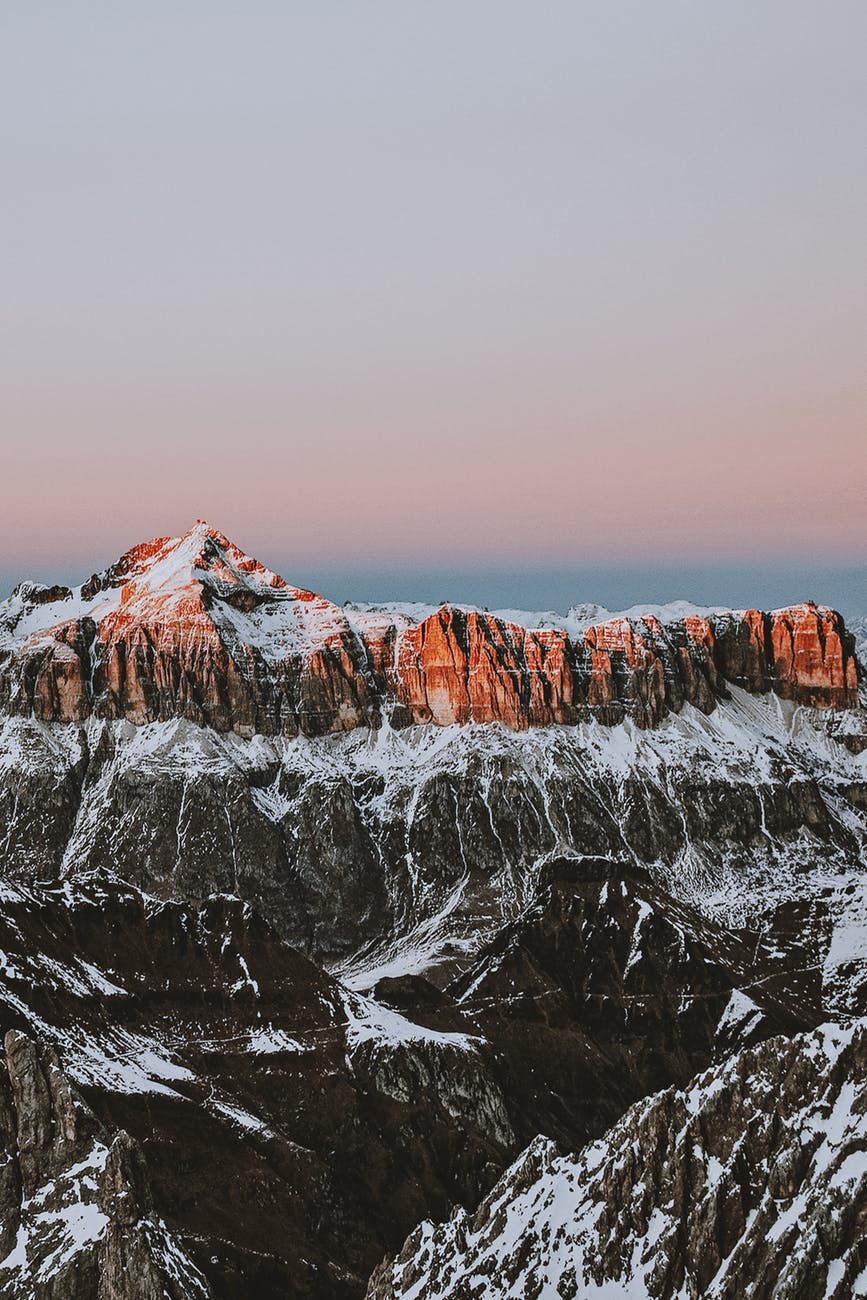
The Italian Dolomites, where my ten-year-old brain thought it was going to die.
Photo by eberhard grossgasteiger on Pexels.com

My answer came to me easily: climbing in the Dolomite Mountains in northern Italy, hanging on to a rope and nearly falling off a cliff. I’ll never forget just how close I felt to death – the surge of adrenaline, the churn of my stomach, the powdery dryness of my hands.

This experience reeks of privilege, when I think about it. The privilege of money. The privilege of travel. The privilege of being able to have such an experience in the first place. And the odds are, if I weren’t white, I probably wouldn’t have had that opportunity.

But what about you, reader? If you’re black, or asian, or female … what was your most terrifying experience? I wonder if it involves someone threatening or hurting you for your perceived identity – your appearance, as it were.

Here’s the thing: I wonder if segregation might almost be impossibly connected to how humans perceive each other. It’s really, really difficult to comprehend that we share the planet with eight billion other individuals, without finding some way to distinguish between them. The first, simplest way is gender – penis or vagina, two choices. Suddenly you’ve just eliminated half the world as people you have to identify with. Next up – skin color. Man, it’s so easy to just ignore everyone who isn’t the same color as me

Human society is built on these premises – despite promises of equality for all, humans are not all equal. There are rich humans, poor humans, white and black humans, gay humans and bisexual humans and hip-hop humans and death metal humans. We pretty much have to break down society into digestible numbers in order to have one at all.

The problem, perhaps, arises when one group begins to dominate the others. When men dominate women, white people dominate black people; even able-bodied people dominating disabled people. To truly live in a fair and equal world, we need to understand that we are different – but that those differences can’t continue to be leveraged to control or manipulate our positions in society.

There have been times when I, as a white male, have walked through predominantly non-white neighborhoods and felt afraid. I felt out of place, a minority, and in danger because of the color of my skin. I’ve experienced a little taste of this. But I knew that I’d soon be in a place where I would certainly feel much safer: somewhere surrounded by white people.

But this little taste helps me understand that some people in the world feel that way everywhere. I get a little scared when I get pulled over by a cop. I have a little taste of what it might feel like to be black and get pulled over by a cop. I get a little scared walking to my car at night. I have a little taste of what it might feel like to be a woman walking to her car at night. My female colleagues carry their keys between their fingers every night, and we don’t even work in (to me) a particularly unsafe area.

How do we teach our children to understand each other?
Photo by Bess Hamiti on Pexels.com

When we teach children about empathy, we often tell them to ‘walk in another’s shoes’. But I don’t know if I’m terribly fond of that analogy; the only shoes that really fit you are yours. Instead, I think we should teach children to ask questions: why does this person feel this way? What might make me feel the same? And most importantly, how can I tell them that whilst I can’t know how they feel, I understand that they do.

At the end of Rankine’s New York Times article, it struck me that, in writing about her experiences with confronting racial bias, she didn’t really come to a conclusion as to what could be done to solve it. I wondered if she’d had to edit it for length, or if she simply didn’t have a solution.

But now it dawns on me that perhaps there isn’t a fix. Perhaps society isn’t broken, just … off-balance. I once witnessed gender bias first hand at work. Afterward, I was talking to the woman who had been essentially dismissed by a male colleague and she voiced her frustration about it.

I don’t know why she thought to share it with me specifically; perhaps she needed to vent, or perhaps she thought she could trust me. But when she was done, I realized that as she’d been speaking, I’d already begun building defenses for our male colleague. I’d started thinking up reasons other than gender bias for his behavior. And somehow in a moment I realized that none of that mattered, because she still felt slighted as a woman. He could have had the best intentions in the world for interrupting and dismissing her, but he was only able to do it at all because he was a man.

So I just said, “That must really suck.”

I realize it isn’t terribly eloquent, but I’ll never forget her reaction: all she said was, “Thank you.”

Empathy isn’t about feeling the same as someone else; it’s about acknowledging that they feel that way in the first place. It’s about understanding your part in how they feel, intenional or otherwise. I believe empathy is a sorely-needed key to unraveling racial, gender, and all other forms of bias, because it allows to realize that understanding others comes not from shared experiences, but from shared emotions.

Of course, none of this changes who I am. I’m still a middle-class white male in rural northern New Jersey, and I will continue to benefit from that identity for the rest of my life. I will benefit from it not because I want to, but because society will offer me help in ways that it simply doesn’t to others. I will get fewer speeding tickets; I will make more money; I will never wonder if I was endorsed for or denied a promotion because I’m not white. All of this will happen whether I ask for it or not, unless we start to recognize what equality really means.

Equality does not mean women should be paid more because they are women; it means they shouldn’t be paid less for equal work. Equality does not mean colleges accepting lower grades for minorities to boost their campus diversity; it means accepting students based on the merits of their work and individuality, and not their skin color.

I don’t know if we’ll ever live in a truly equal world. I doubt I can do a whole lot to change that. But if I can recognize my own biases and privileges, and not shy away from it under the guise of white guilt, then at least I can understand my part in the world’s inequality – and maybe make the world better for just a few people.