
Man, I’m a Slow Writer … and It’s Time to Get Back to It

I started my writing journey over 12 years ago in 2011, when a friend and I decided – almost as a joke – to participate in that year’s National Novel Writing Month (NaNoWriMo). Over the course of that November, I churned out nearly 50 thousand words, which would eventually become the prelude to my (still) ongoing fantasy series, The Redemption of Erâth. By 2014 I had wrapped and published the first volume, Consolation (then through a vanity press because I was naive and knew no better). Two years later came the second volume, Exile, and in 2018 I followed this with the third book, Ancients & Death.

From that fateful 2011 November onward, I also began blogging; at first like a madman, with hundreds of posts a year. Now, I’ve posted exactly 17 posts in 2023, and possibly even fewer than that in the years preceding. The point is, I’m a slow, and sometimes non-existent writer, and that bothers me. I didn’t completely abandon writing after the third novel in 2018; in the interim, I’ve published two other standalone books under my real name: 22 Scars (2017) and The Broken (2021). But I really haven’t done an awful lot of writing since then.

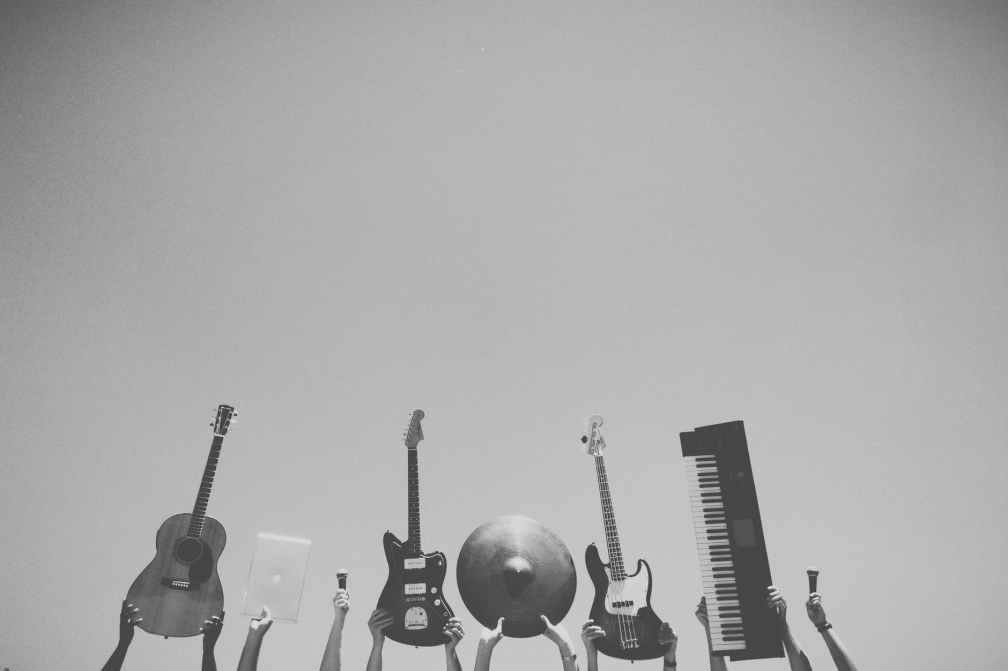
I haven’t been completely idle, of course; I’ve made a return to my first creative love, music, for example. For the novel The Broken, about a rock band in the 90s, I actually took the time to write and record their (fictional) three albums in their entirety. I also completed three other albums of orchestral/rock music, and most recently completed writing a Requiem for orchestra and choir. I’m even now applying to graduate school to return to the field of music (assuming I’m lucky enough to get a spot), and the future, despite the past having had little written word in it for the past few years, is looking bright.

But despite that, I feel that I’ve somewhat abandoned my passion as a writer, and that feels … well, kinda crappy. So I have an intention – one that I have every year, of course, around this time – to pick up the virtual pen once more and start blogging, novelizing, and just generally getting words written and out of my head.

The fourth book of The Redemption of Erâth, The Fall of Thaeìn, is more than halfway complete, so one of my goals this year is to finish and publish this work. I also feel that it’s been a fair time since I wrote any contemporary fiction like 22 Scars or The Broken, and recent reviews – not to toot my own horn, but indicating that they’re pretty okay – have inspired me to look for new topics to write about, as well.

I also want to return to a regular blog schedule, through which I can get random thoughts out of my head, and continue to practice the art of writing. This post will (hopefully) mark the first of many more to come this year (although history has shown that I rarely follow through on these commitments).
The Perils and Potentials of Pastiche

When I was a young composer in high school, I thought the pinnacle of musical genius to aspire to, the composer to emulate and copy and write like, was Beethoven. I had a deep love also for Sibelius, and Liszt, and Dvorák, and sought to write music along their styles, too. Little did I realize as I was cutting my compositional teeth that I understood their music’s beauty, without understanding its importance.

It wasn’t until I got to college and had my first compositional tutoring session that my world collapsed. I proudly placed in front of my professor the culmination of my childhood work – a full-length orchestral symphony that could’ve been written by Schubert – and watched in mounting horror and deepening shame as he methodically tore it apart. It was, in a word, a pastiche.

I had never heard the term before, and had never been presented with its concept as a negative thing; I had never been exposed to the idea that imitating art is not in fact worthwhile, but instead misguided flattery and a twisting of influence into something derivative and necessarily ‘less-than’.

It crushed my spirit.

But from the ashes of my early compositions rose something far, far better, and I am to this day indebted to my early composition professor for what he taught me about originality. You see, I had been laboring for years under the impression that the best works of art I could create would be in the same style as my influences. It never occurred to me to think otherwise; after all, shouldn’t I be writing the music I wanted to hear? And if what I wanted to hear was Dvorák’s ‘New World’ symphony, then shouldn’t I rewrite it with my own notes?

What I learned instead was the ability to see a work of art for its context, and not just its enjoyability. The dissonances and unsettling cross-rhythms of Beethoven’s ‘Eroica’ symphony are beautiful, uplifting and inspiring, yes – but they are far more important than that, because they represented a moment in musical history when people heard something they had never heard before. But Beethoven didn’t simply create a symphony that was entirely atonal or arhythmic; he wrapped these special moments in a musical tapestry that in other ways harkens back to Mozart, and Haydn, and Bach before them. It was new, but it wasn’t unfathomable.

And this is where I learned the difference between pastiche and originality. You see, I could write a symphony that would sound like Beethoven’s tenth … but why should I? Where’s the value in recreating something that won’t have sounded ‘new’ for 250 years?

Instead, I started working on a style all my own, borrowing from what I enjoyed in others’ music and molding it into a shape that was recognizable, yet (almost) entirely new. I wrote clarinet solos; I wrote elegies for voice and string quartet. I wrote a 14-minute musical essay on the canon form for full orchestra. (To this day this remains one of my favorite compositions.)

And this is something I’ve learned to translate from music into writing, as well. When I started writing The Redemption of Erâth, I more or less wanted to write a story that would read like Tolkien. I realize now that this was misguided (I have nowhere near the mastery of the English language to even place in the same league as Tolkien), and as the series has progressed, I feel I’ve begun to develop my own linguistic style.

When I wrote my young adult novel, 22 Scars, however, I refused to read anything in a similar genre. This story was important to me, and it was important that I write it in a way that really could only have come from me. With short, often incomplete sentences, multiple points of view, and little to no emotion in third-person scenes, I was able to create a literary world that (hopefully) embodies the spirit of numb depression, draws the reader in and puts them squarely in the shoes of a suicidally depressed teen with a tragic upbringing.

The tonal difference between The Redemption of Erâth and 22 Scars is distinct, to say the least; I suspect most people would not assume they were the work of the same author. But there’s a reason for that; the entire world of Erâth is derivative of Tolkien’s Middle-Earth, and so it makes sense that the tone of those stories would match. The world of 22 Scars, however, is bleak, numb, and highly personal – it is my world.

Now, this isn’t to say necessarily that all pastiche is worthless; I believe there is a value in being able to recreate the style of your favorite artists whilst recognizing that what you’re creating isn’t necessarily meant to stand on its own without context. For my second YA novel, The Broken, I needed to write a few songs to get in the heads of the band members described in the book. However, these songs would be from the early- to mid-nineties, and to write songs that I would write today wouldn’t have fit. Instead, I listened to a lot of Rage Against the Machine, Korn, and even through to System of a Down and Slipknot, and wrote five songs that, to my ear, could have been the bastard children of these bands.

If I were to write a soundtrack to a period film, I would want that soundtrack to sound like it came from that era. The same rules apply. I wouldn’t bill that soundtrack as art in its own regard, but rather to be considered against similar works of the era.

Ultimately, I think that there is a fine line between influence and pastiche. It’s fine to be influenced by other artists, but the moment what you create could have been made by that same artist, you’ve lost the most important thing in art: your own soul.

When Characters Derail the Plot

My characters have a pesky habit of doing things I didn’t expect them to – especially when they’re talking to each other. Frankly, it’s kind of annoying and I wish they’d quit it, but they never listen to me any more than they listen to each other. It makes it very difficult to plan a conversation that advances the plot, because they don’t care which way the story goes, especially if they haven’t said their piece yet.

When I’m writing more plot-driven fantasy, like The Redemption of Erâth, it’s mildly infuriating because there are plenty of dialogue scenes that are required to explain a plot point or give some back story. It’s fine when it’s mostly one character relating events that happened to them, but when I need characters to come to a realization or change the nature of their relationship (fight, fall in love, etc.), they just don’t do what I want or expect.

When I’m writing heavily character-driven fiction, such as my YA novel 22 Scars (as C.M. North), it becomes a major pain in the ass, because the entire story hinges on people in the book saying the things that they need to say to get to the next plot point … and sometimes, they just don’t.

The problem is in keeping the back and forth of the dialogue realistic. It just doesn’t work out to have conversations like this:

Character A: “Relinquish her, you fiend!”
Character B: “Never, sir! Prepare to die!”
Character A: “Prepare thyself!”
*Fight begins because really that’s what this was all getting at in the first place*

My dialogue tends to go more like this:

Character A: “Relinquish her, you fiend!”
Character B: “Never, sir! Prepare to die!”
Character A: “Oh. That’s a rather intense threat. Maybe we should talk about this.”
Character B: “Speak what thou wilst.”
Character A: “Well you see, it looks like you aren’t treating my friend here with all that much respect, and I think you’d find yourself in a significantly happier relationship if you took a moment to listen to what she has to say.”
Character C: “I’ve been telling you all along, I’m not unhappy, I just want to be heard! You come home every day from pillaging and burning villages and you track mud all over my tapestries, and I just want you to appreciate what I do for you!”
Character B: “Hm. I think I could do that.”
Character A: “Now, isn’t that better?”

Okay, so this isn’t a great example, but it serves to illustrate how my characters, especially in dialogue, tend to take on a life of their own and drive the direction of the story in ways I never anticipated.

It makes overall plotting difficult, and I’m not a pantser. I structure my stories meticulously before beginning to write, and when I’m writing narrative passages, action sequences or even just single-character scenes, things tend to flow pretty smoothly. As soon as these characters have to interact with each other, though, things go bat-shit crazy. I have a scene I’m working on at the moment where a young man confronts his abusive father, and it’s ended up at a point where the young man is threatening the father with the broken neck of a bottle. I didn’t think that was going to happen, and I can’t see a way out of it without sending the father to the hospital, which is really going to derail the plot, because it’s going to require a police report, possibly a trial, and a whole lot of nonsense that isn’t relevant to the story. I just needed them to have a fight – the bottle was never supposed to be part of the scene, but I’ll be damned if the kid didn’t just up and snatch it.

Anyway, the point is that I find writing dialogue difficult, but perhaps not for the reason most people do. I don’t have too much difficulty writing believable dialogue, but rather the opposite: in making it too realistic, I can’t control its direction very well.

For those of you who write, what’s your experience in writing dialogue? Can you manage to convey the points necessary within your control, or do you find that, like me, the characters tend to do what they want?