The Redemption of Erâth: History of Erâth – The Third Age (Part I)

The ending of the War of Darkness marked the ending of the Second Age of Erâth. The world was much weakened by the losses of war, but there was also gladness in the hearts of men, at least for a time, and the darkness of the Duithèn left their lands.

So began the Third Age of Erâth, at the end of which the events described in this book occur. The Third Age lasted for some three and a half thousand years, and saw the fall of all but a few kingdoms of men, and the origins of Changelessness, as brought about by the Sarâthen. Yet the powers of Darkness were not defeated entirely, and were able through the diminishing of the Illuèn to eventually regain their strength.

(i) The Fate of Darkness

The Undeath of Goroth

With the demise of Goroth, in whom the Duithèn had vested so much power, the race of Darkness was greatly weakened, and went into the West. Yet they were not destroyed, for it is not in the power of Men to kill those of the race of Darkness. Many other changes there were also, and while darkness did not leave the lands of men […]

Read the complete section here.

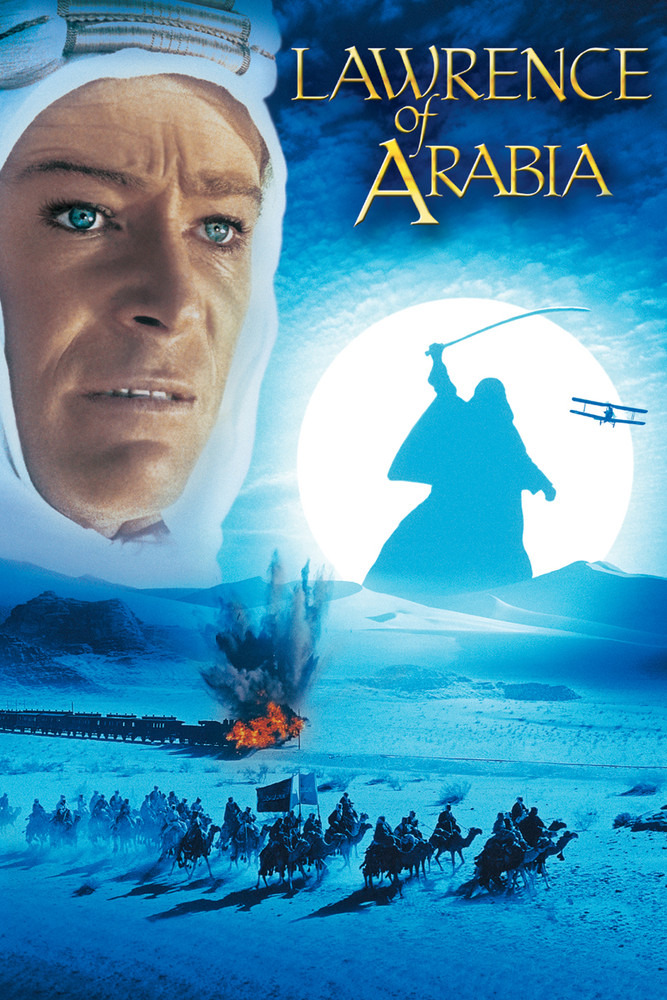
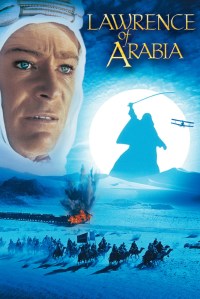
Movie Night(s): Lawrence of Arabia

Yesterday, for one single night in anticipation of the fiftieth anniversary of its original theatrical release (December 10, 1962), select theaters across the country screened a special, digitally restored showing of the incredible, timeless epic tale of a war-torn country, and the englishman who brought about its victory.

I speak, of course, of Lawrence of Arabia. And I didn’t see it.

It was all my wife’s fault, of course. She was working late, trying to get home in time to put Little Satis to bed so I could go out by myself (oddly, no one I knew wanted to go spend four-and-half hours in a movie theater), and naturally, something came up. In the middle of experiments they were kicked out of the darkroom and not let back in again until 8:00 PM. The film had already started.

I wasn’t angry (of course); I understand how difficult and stressful her work is. But still – come on, it was a once-in-a-lifetime sort of thing! Maybe. So I did the only thing that made any sense: I trundled my way to iTunes, and bought the exact same, digitally restored, full 1080p HD four-hour-long movie. But geez, all I had to watch it on was a 40-inch television. How can that possibly compete with a 50-foot cinema screen?

Now would be a good time for some first-world-problem jokes.

The advantage, however, is that I am now able to share this incredible movie with Little Satis, who otherwise would have never had the chance to see it. We began watching it last night, continued tonight, and will (try to) finish it tomorrow. Did I mention that it’s four hours long?

I haven’t seen this movie since my childhood. My dad and I watched it over a period of several weeks on video, watching about half an hour at a time. This was a good idea. I’ve been watching it with Little Satis in stretches of an hour and a half. Not such a good idea.

Nonetheless, I’ve been impressed at how well he’s been sticking it out. He’s eight; I was about ten when I first watched it with my father. He has a reasonably good attention span, but I keep forgetting the nature of these younger generations. I was raised on a cultural diet of classical music and sixties movies, and ultimately enjoy a slow-paced movie. Lawrence of Arabia is certainly that. It’s one of those films that demands your attention, and refuses to reward you unless you listen to every word, and take in every sight. This is hard to do for an eight-year-old.

Nonetheless, he has been engaged. David Lean manages to draw up incredible suspense throughout the film, in a way that almost sneaks up on you – you don’t even realize you were on the edge of your seat until you’re allowed back down. An early scene that comes to mind is when Lawrence and his guide stop to drink at a well. A casual mention that the well is owned by a rival tribe is all it takes to set you on edge; when a speck appears on the distant horizon, you know something is going to happen. David doesn’t patronize the audience; this scene is agonizingly drawn out, as Lawrence and his guide wait, motionless, to discover who is approaching them at such a gallop, from such a distance. The shock, the final moment when the tension is released, doesn’t come until his guide is shot dead.
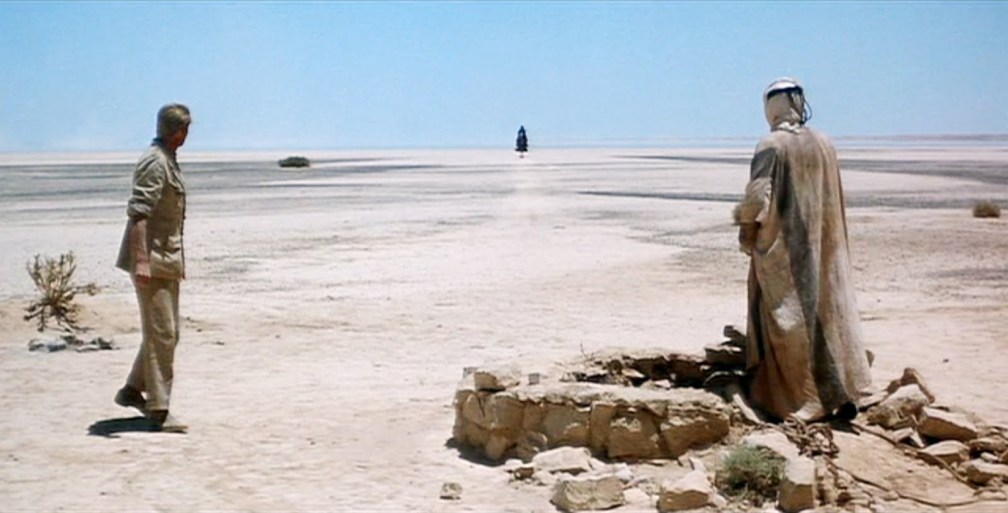
Lawrence and Tafas at the well, awaiting the mysterious rider.

Understandably, Little Satis’ curiosity picked up when the plot began moving along. After consulting with Prince Feisal, Lawrence begins the epic journey of leading an army of just fifty men across the impassable Nefud Desert, and once again we are tortured along with the men as they pace continuously along, stopping only for a few short hours in the noon sun. At one point, one of the men falls from his camel, and is not noticed until they are off the worst part of the desert (God’s Anvil, as it’s referred to). Against the advice of Sherif, a native Bedouin, Lawrence returns to save him. This leads later to one of the most heartbreaking moments in the movie, which I will spare for those few who haven’t yet seen it.
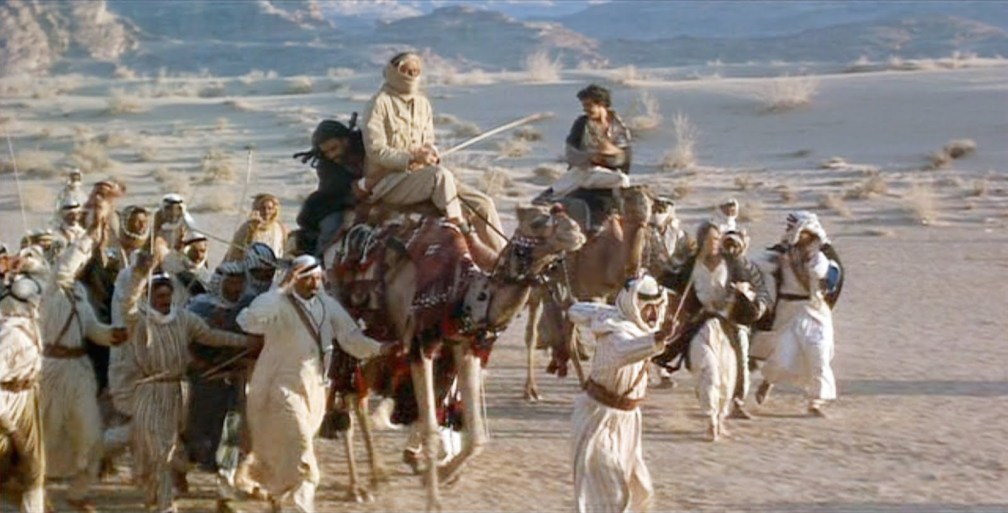
Lawrence and Feisal’s army, emerging from the Nefud Desert.

There are, of course, elements of the film that seem dated, if not outright preposterous today. An example is that, while an enormous effort was spent in creating as vivid and realistic portrayal of Arabia as possible (and one that stands to this day), casting Alec Guinness as a Bedouin prince just does not make sense. He is a great actor, and he is fantastic in this movie, but he is not a Bedouin prince.

These few points, however, do not detract from the film, and there are moments that are so gripping and intense that they can only prove the timelessness of this film. When Lawrence finally arrives back in Cairo, having taken Aqaba and lost a good friend on the return journey, he drags his young Arab friend into the British military headquarters, insists they treat him as their equal…and finally breaks down completely. Just thinking about it gives me shivers; well done, Peter O’Toole.

One of the things to me, though, that stands out about this film (and many others of its era) is the lack of pretentiousness. The audience is expected to work for this movie. We need to listen to every word, read every facial expression, and assume nothing. I recall this from watching early James Bond movies – before they became solely about blowing stuff up. And there is delightfully poignant and witty dialogue to be had; one of my favorites is a simple little line when Lawrence talks Auda abu Tayi into fighting with them to conquer Aqaba:

Thy mother mated with a scorpion.

Equally, when Lawrence talks of the frightening implications of having killed a man, summed up in a simple, excruciatingly delivered line:

No…something else. I enjoyed it.

It would be wrong to call this a masterpiece of modern cinema; it is a masterpiece of all cinema, to be remembered as one of the most ambitious and epic films ever made. We haven’t quite finished it, but I hope that Little Satis will have got as much out of it as I did at his age by the time we are.
Tales of Despair: I Know What You Screamed Last Friday the 13th on Elm Street

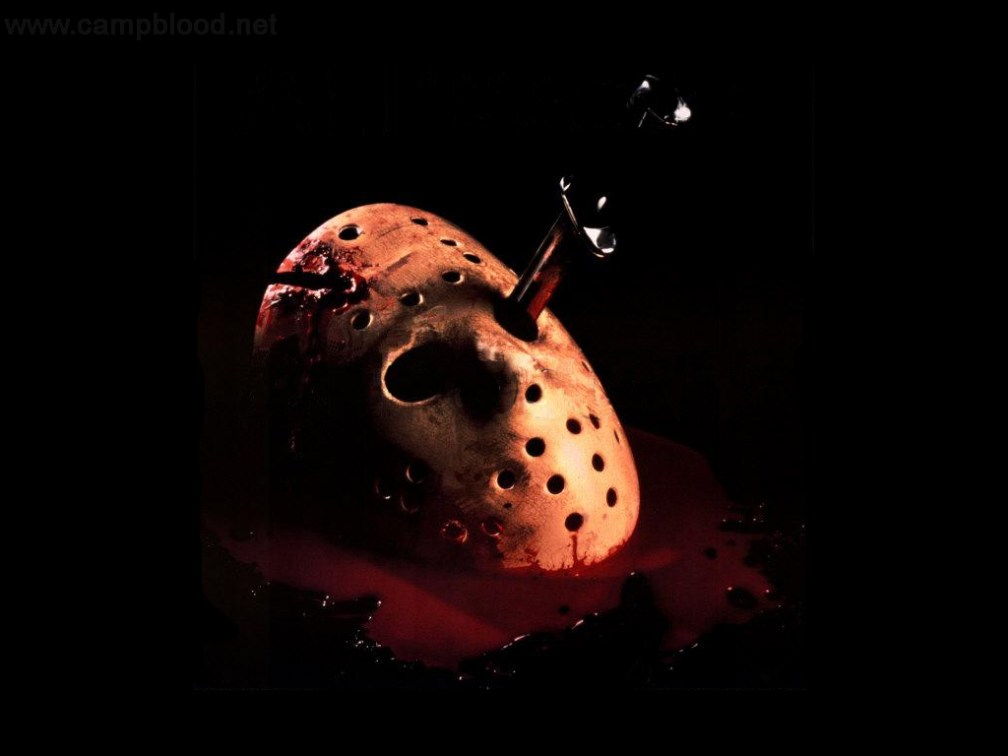
Having recently (and finally) signed up for Netflix, I’ve been on a bit of a horror binge. So far, I’ve worked my way through Friday the 13th parts 1-7.

Let me explain. I have a fascination with horror that goes back a long way (and may in fact be in some small way related to the problems I have today). When I turned eight years old, I wanted a sleepover party with a few of my best friends. My little brother had been born only five days before, and I was a little jealous of the attention he was getting.

As a treat for the sleepover, my dad took us all to a video store to pick out a movie for us to watch. Being, of course, eight years old, I was looking for Star Wars or Indiana Jones or some other such adventure, and while most of my friends were of a similar mind, one in particular had a different idea. He’d heard about this thing called ‘Friday the 13th‘ from his older brother, who said it was awesome. The video cover certainly didn’t look awesome.

To cut a long story short, I to this day have images from that movie burned into my brain, and I had nightmares for the following two years. I still don’t understand why my dad let us rent it.

It was another eight years before I tried my stomach at horror again. And slowly, I acclimatized myself to their style. From The Relic to Alien to I Know What You Did Last Summer, I took them all in, and ultimately came to enjoy the darkness, the suspense, and the horror. (It’s also quite possible that this shift in taste came about as a result of my ever-increasing depression.)

However, I never returned to Friday the 13th, until now. And watching them in hindsight, I of course am able to laugh at them, for what at first I took for their cheesiness, their stereotyped killers, and the abundance of dumb teenagers.

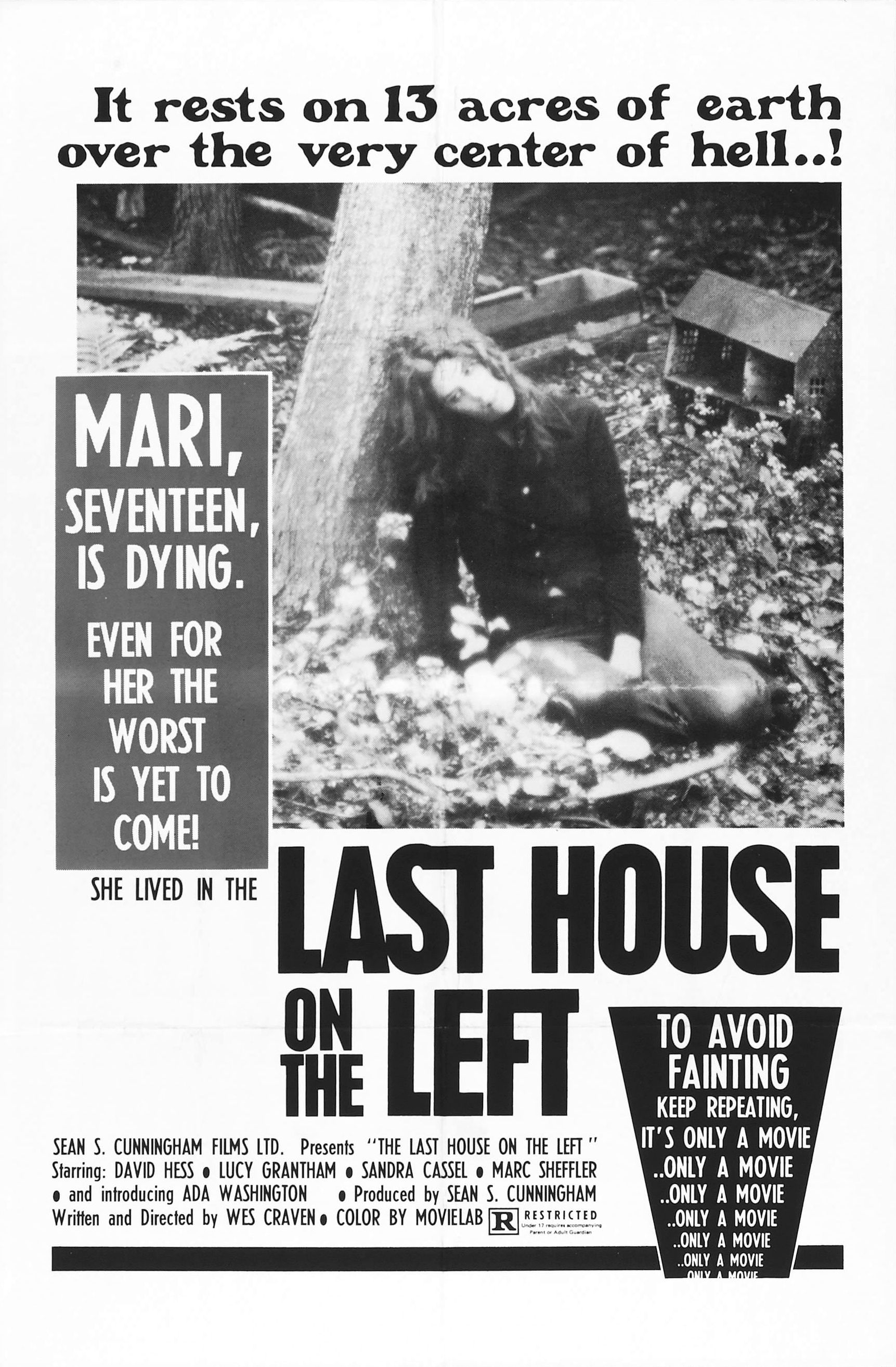
Original Poster for The Last House on the Left.

But upon further inspection, I now realize the importance of these movies in the history of horror and slasher movies. There was already a history of gore and horror going as far back as the early 1960s, but it was Wes Craven’s The Last House on the Left (1972) that really set the bar. A tale of two teenagers kidnapped, raped and murdered, it was relentless in its portrayal of some of the vilest human behavior ever committed to film. Its canon of visceral horror extends to forced sex, cold-blooded shootings, a manual evisceration, and of course, a chainsaw.

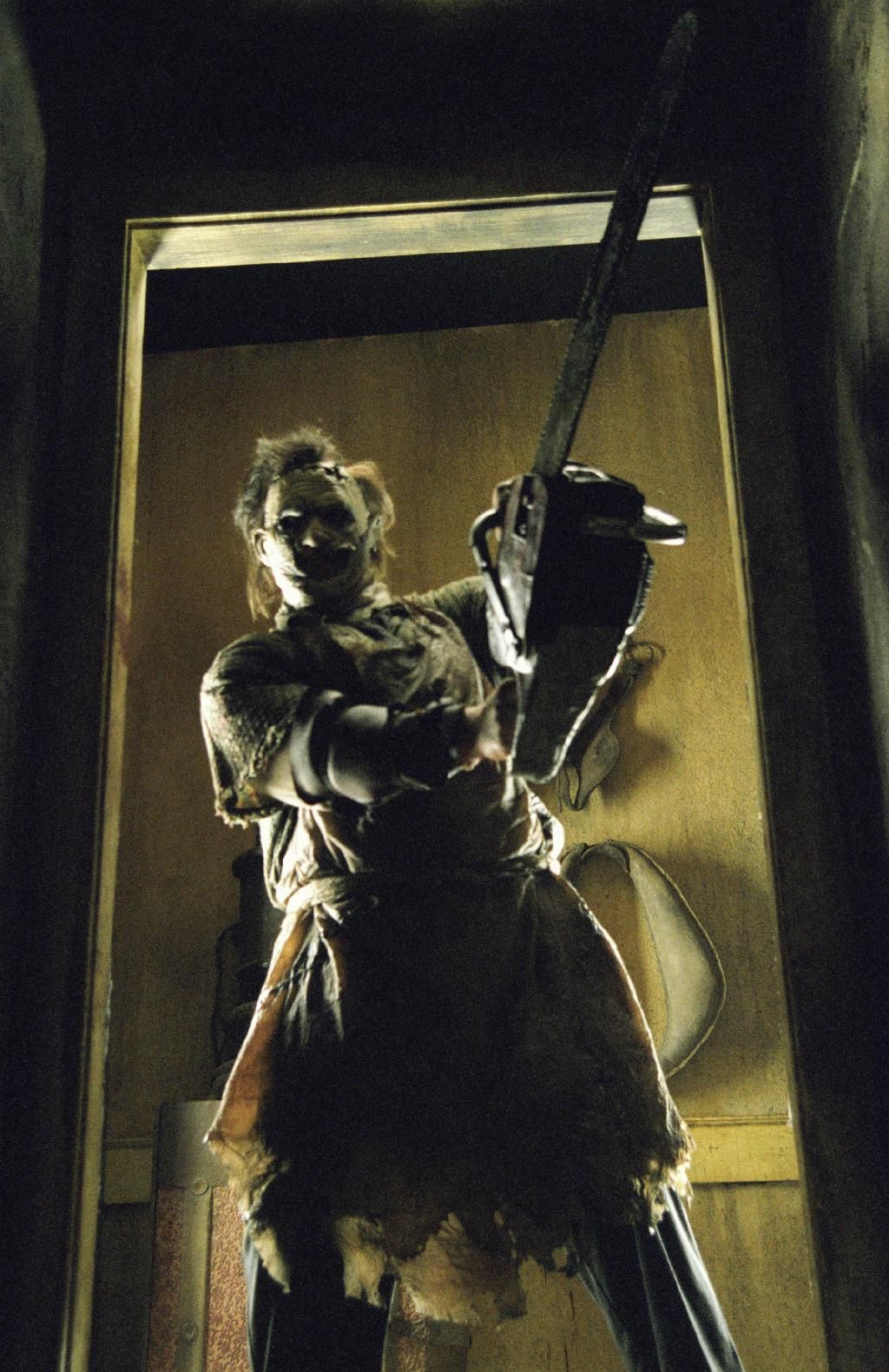
Leatherface, from The Texas Chainsaw Massacre.

Soon following this was The Texas Chainsaw Massacre (1974), which arguably invented the masked killer motif. Upon arriving on a deserted farm, a group of teenagers is one-by-one savagely attacked by the terrifying Leatherface, a fathomless killer who covers his face with human skin. Two further key developments in this film is the now-standard group of teenagers who are sequentially murdered with only one escaping, and the apparently motive-less killer. We are never given any insight into Leatherface’s intentions, reasons or history. He simply is, and this makes him of course all the more terrifying.

Throughout the 1970s these experimental horror films continued to develop, until in 1980, a seminal new slasher was released, featuring unprecedented gore: Friday the 13th. This followed on the trend of the group of teenagers, and placed them in the setting of an innocent and innocuous summer camp, albeit with a dark past. Several aspects of this film have now become such standard memes that they are recognized worldwide, and form the plot of Wes Craven’s immensely popular Scream series.

Throughout all of the Friday the 13th movies (with the exception of Friday the 13th Part 4), we are never given a view of the killer’s face. Ingeniously, Sean S. Cunningham chose only to show the killer’s feet, leaving the viewer completely incapable of empathizing with the killer, and painting him in a terrifying, mysterious light. This is vitally important to the plot in the first film, and plays an important scare factor in the sequels.

A further theme throughout the films is that of sex. In ever Friday the 13th film there is at least one, if not several, sex scenes, typically graphic. In each, the couple in question are murdered either during, or shortly after, copulation. This gave rise to the memorable quote from Scream:

There are certain rules that one must abide by in order to successfully survive a horror movie. For instance, number one: you can never have sex.

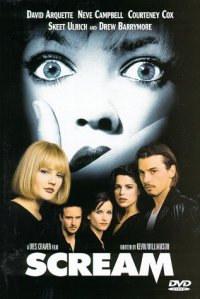
Scream – the film that rebooted the slasher movie.

Also present in most Friday the 13th films is the conclusion featuring a drawn-out chase between the killer and the sole remaining victim (usually a female). Often this involves the victim making their way into an inescapable position (for example going upstairs, where there are no exits), yet somehow escaping nonetheless.

Slasher films gradually faded from the mainstream after the 1980s, until Wes Craven (remember him? Last House on the Left – the one that started it all) rebooted the entire genre with Scream (1996). This led to a resurgence of imitators such as I Know What You Did Last Summer, and even the comedy spoof Scary Movie.

Of course, there have been many other styles of horror besides slasher films; Alien set the stage for graphically violent science-fiction horror, while Jaws, all the way back in 1975, rebooted the ‘Creature Feature’ genre of the 1950s and 1960s. However, there is arguably no genre that has spawned so great a canon of sequels (Friday the 13th has twelve – where’s the thirteenth?) and imitations, some classic (Halloween), some not so much (Cheerleader Camp). Even bizarre films such as Child’s Play followed suite from Friday the 13th, and in many ways, the past thirty years of horror owes its existence to these terrifying films.

And let’s not forget Nightmare on Elm Street

Why, hello, Freddy…