The Virtue of Voices

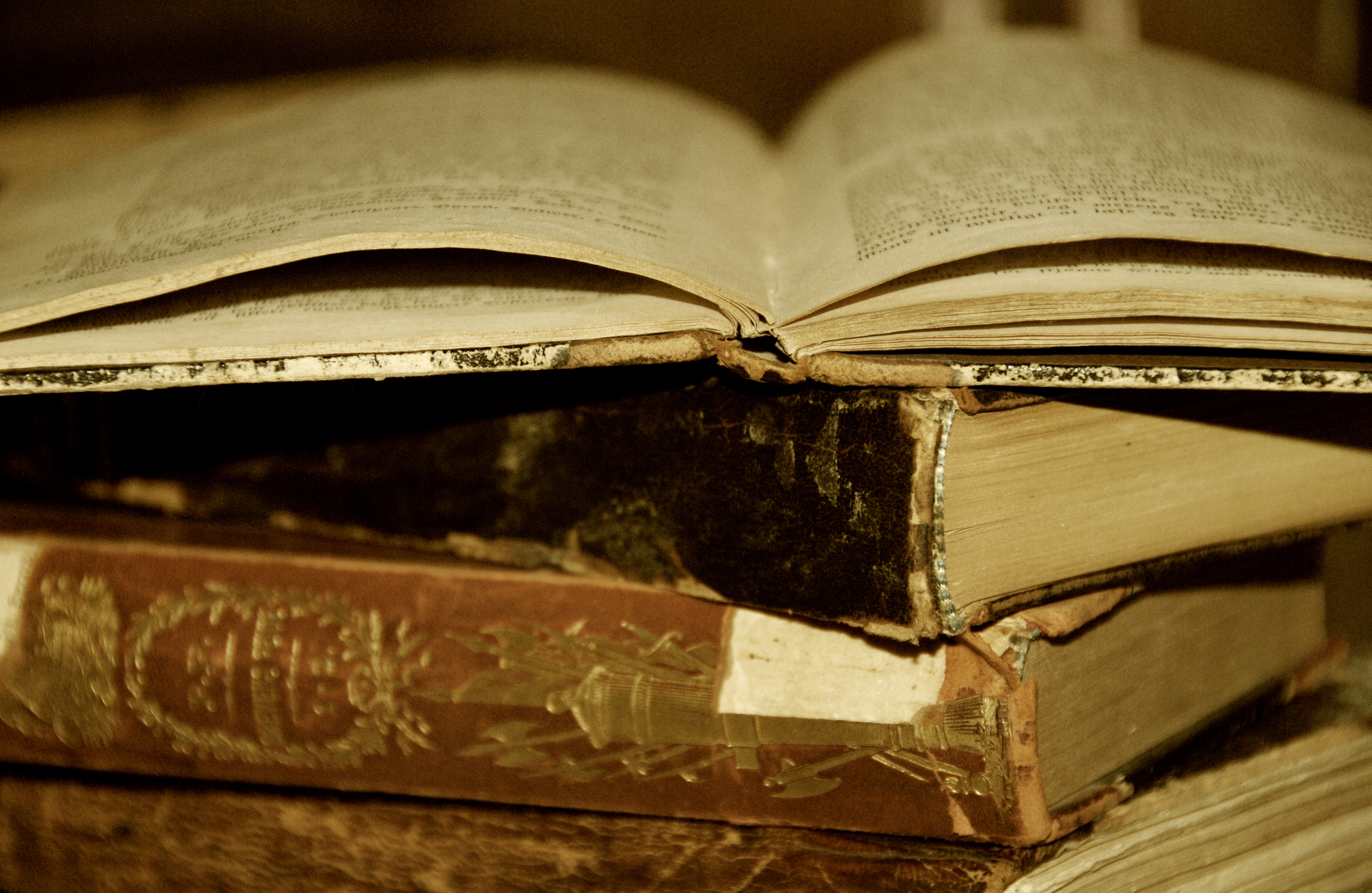
My iPad told me it is World Book Night tonight, and Emily Temple on Flavorwire thinks it would be nice if everyone read a book to someone else, instead of to themselves. As an exuberant fan of the spoken tale, I really couldn’t help sharing my own thoughts on this, which is that it’s pretty great. One could argue a spoken story is like the best conversation in the world: you get to say your piece, and everyone actually listens to you.

I remember so very, very fondly the stories and tales I would hear in bed every night from my father growing up. Often it would be a book; Curious George, and then Shel Silverstein, and then The Famous Five. My father had a wonderful, even-paced baritone, his skewed northern accent a lilting lullaby to my young ears (before you get too worked up, not all my memories of you are fond, dad!).

My mother read to me when I was older; Great Expectations was our treat together, and though I often didn’t understand all the words, Dickens’ imagery through her voice simply flowed through me, and I saw every detail of Satis, the house where Miss Havisham lived pent up for so many years (yes…that’s where my blog handle comes from).

Even my older sister, one camping trip in the Italian Dolomites, read me a story which I had forgotten the name of; a magical tale of wishes that came true, and the lessons the children learned from this. I particularly remember the divining rod that found the stream, and how the water that gushed out flooded the farm. I only just now, decades later, rediscovered what it was: The Wish Giver, by Bill Brittain. I thought I had lost this book forever, but its memory – from a single, spoken telling – has stayed with me ever since.

The thing that was missing, though, from many of these tellings, were the voices. Certainly, my mother would get quite excited, and Magwitch got quite a growl to him. I always knew when a character was speaking when my father read to me, but not always which character. There was an exception to this, however, and this was when my father would invent a story. This happened rarely, but was magic when it did: a Story With No-No Book. These were the dark tales, and the grim, and quite suddenly, when the words of the page were no longer there, the voices were all that was left, and it was thrilling. Often these stories would be mysterious, and more than any written book I would be terrified, not daring to know what was going to happen to the hero, who always seemed oddly to share my own name.

And now, of course, I am reading to my own son. Sometimes we share a Story with No-No Book. More often we are reading from a real book (or an eBook). And what I remember from my own childhood has stayed with me: the voices are everything. The narrator may tell the tale, but the characters make it. The Secret Garden was full of (terrible) Yorkshire accents. Treasure Island was full of pirates who sounded just like Robert Newton (except for Squire Trelawney, who sounded like something out of Little Britain). Gandalf was unashamedly my impression of Ian McKellen. It gets to the point where my son not only knows who is speaking when, but will actually call me out if my accent slips even a bit (you try keeping Harry, Ron and Hermione’s voices all distinct).

Even so, with all these wonderful voices (and mind you, it gets pretty difficult to remember what an Ent sounds like a book and a half later), sometimes there’s one character, here or there, that really steps beyond the page and truly, truly comes to life. I’ve only done this a few times myself; the Witch-King of Angmar was so sepulchral and creepy I gave myself shivers as I read his lines. Reeta Skeeter, in Harry Potter and the Goblet of Fire, somehow came out with a wonderful lisp, at once sugary and sinister.

Not all voices come out well, of course. Sometimes I’ve had to change a voice halfway through the book, realizing it didn’t fit the character (or that my poor throat couldn’t handle quite that much gargling). Sometimes I just can’t remember what someone is supposed to sound like. Willy Wonka was great in the Chocolate Factory, but somehow went all wrong in the Great Glass Elevator. I attribute it to his being in space for too long.

So what is the upshot of all this? Nothing really…just to say that, if you are going to read to someone aloud, get the voices. It’s all about the voices. Dig deep in your mind, or pull from the latest movie version, but give those characters the life they deserve. Hell – read aloud to yourself! Go on – read the next chapter of whatever book is in your hand aloud. I can guarantee you two things: you won’t miss a word of the story, and your characters will quite suddenly become more alive than they ever had been before.

What are your favorite memories of reading and being read to?

Rediscovering the Lost and the Forgotten

My wife and I have moved several times in our life together (four times in the last eight years), including the most recent move which was overseas, when we returned to the United States. As anyone who’s moved house before knows, a year between moves sounds like a lot, but it isn’t. We still have boxes from our first move (all the way back in 2003) that we still haven’t unpacked. I’m a little worried now to discover what’s in them.

One of the effects of this is that you quickly learn what it is you can and can’t live without. Pots and pans and food end up being useful, and so end up getting unpacked pretty quick. Those old summer clothes you really thought you were going to slim back down into but never quite got around to it – they get unpacked second, of course. The kid’s toys are way down on the priority list (depending on who’s writing the list).

But then there are things that you actually never needed in the first place, and of course this realization doesn’t hit you until you drag a box out of the basement corner, scrape off the dust and mold, and then marvel at the things inside that you’d forgotten ever existed. For us, this tends to mostly be old papers, tax records and files; all the stuff they say is important and then is never needed again.

And then, there are the things that you can’t live without, use day to day, and still never come out of their box. These are the things that have insinuated themselves into the glass and metal of my iPhone and Mac, and left their earthly shells behind to wither with the spiders. For me, these are music, movies and books. I have genuinely not noticed the lack of my CD collection, since I still listen to every song each and every day. My DVDs are old, and looked a little mournful as I pulled them out of their box, as though they really just wanted to roll over and die. And as for my books…

Well, that felt like a different matter. For the past few years, I have been almost exclusively reading books on my iPad, and whilst it has certainly had its benefits (the carry-on luggage is ten pounds lighter!), I do find myself missing the feel of paper under my fingers, and the satisfying sense of progress that comes from holding more pages in your left hand than in your right. None of this exists in the digital world – one of the reasons I’ve immensely enjoyed reading Harry Potter with my son from the actual ‘books’ his grandfather gave him for Christmas.

And so it was with a deep nostalgia that, the other day, I pulled the top off a box and rediscovered the hundreds of books that had followed me around from home to home and country to country, and had never been looked upon once in all that time. There were a lot of Stephen King novels in there; in fact, it felt like half of them by weight were his vast tomes, though it was certainly less than half by numbers. I was forcibly reminded of my long-passed Star Trek addiction: ultra-nerd sci-fi pulp fiction brain fodder. I even unearthed the complete Hitchhiker’s Guide to the Galaxy, which is fortunate because I had been considering buying it on my iPad.

But, hidden amongst the trite and the trash, I found a few, small gems: works of beauty, intricacy and genius that had completely slipped my memory until I held the torn cover in my hands and felt the memories come rushing back into my mind. Of these, there were five that I had loved so much, and and since forgotten, that I wanted to share them.

Jonathan Livingston Seagull

Richard Bach – 1970

What a magical book this was. There really is nothing like it I can think of; it tells the story of a young seagull (yes, seagull) who is taken by the art of flying, and becomes scorned and shunned by his fellow gulls. Eventually, he finds solace as an outcast, and the tale traces his life from his youth to old age…and beyond. The writing is pure poetry, and coupled with the stunning black and white photographs that are dotted throughout, this book is simple a marvel.

The Big Sleep

Raymond Chandler – 1939

For me, this is the original and ultimate detective novel. Everything, ever, that has come since – whether it’s Patricia Cornwell or Stieg Larsson or just film noir in general – came after this. I know this isn’t actually true, but I don’t care. It has guns, girls, sex, drugs, violence, hard-boiled attitudes and plot twists every three pages. I don’t think you could really ask for more.

Garfield Thinks Big

Jim Davis – 1997

Um…yep. Exactly what it sounds like.

Dinotopia

James Gurney – 1992

A more beautiful book – in both story and illustration – does not exist. If Tolkien had written a tenth of the words, added talking dinosaurs and lush, extravagant color pencil illustrations, he would have created something like this. The story is pure fantasy, in the most lyrical of ways; a tale of shipwreck and isolation, of wonder and discovery, of coming-of-age and eventually of redemption. They made a TV series that frankly wasn’t all that good at all, but this is a story I would love to see rendered in Peter Jackson CGI on a fifty-foot screen. Oh, yes please…

Goodnight, Mr. Tom

Michelle Magorian – 1981

This is possibly one of the most depressing and disturbing children’s stories I have ever, ever read, but it is beautiful nonetheless. Willie, a world war two evacuee and son of a neglectful and abusive mother, is sent to live in the countryside with old Mr. Tom, who never wanted to have him anyway. To be honest, there’s little else to say – the story grows wonderfully from there – but there is a twist of the darkest, darkest nature and if you haven’t read the book, I wouldn’t dare spoil it for you. All I will say is I still get misted up to this day simply thinking about it.

Anyway…wow. What a trip. If you haven’t heard of or read some of the books above, I would whole-heartedly suggest you do so now. If you must, read them on your Kindle or iPad – all but Dinotopia. Do yourself a favor there and go out and buy (do not borrow this book from your library, you will not return it) a real, hardcover untouched copy of this book and read like a priceless work of art.

What about you? What books are out there that you’ve loved and left? What are the tales of magic that touched you years ago and have faded from your own memory? I’d love to know!

Douglas Adams on Tea

Yesterday, I ate a small chocolate egg and it gave me a throat infection. It isn’t very nice, and put a bit of a damper on the last day of our friends’ visit from England.

In fact, it seemed a little weird that the egg should make me sick, so I consulted with my biologist wife, who confirmed that I likely had a virus/bacteria already colonizing the wetlands of my esophagus, and the sugar from the egg was like rain after a drought – they just ate it all up, and then made lots of nasty germ babies.

Anyway, the upshot of it is that I’ve been eating very little, and drinking lots and lots and lots of tea. I like tea; I usually poison myself with coffee most days, but only because it gives me a swifter kick up the ass. Tea is good at night, and good in the morning, and…well hell, it’s good pretty much all the time.

All this thinking about tea, coupled with our delightful British friend who drank somewhere between five to ten cups a day while she was here, got me thinking of what Douglas Adams had to say on the subject, and since it felt pretty relevant right now, I thought I’d share it with you all.

As a side note, I have no idea how copyright plays into this; I’ll give all due credit, and if someone asks me to take it down, so be it.

Tea

One or two Americans have asked me why the English like tea so much, which never seems to them to be a very good drink. To understand, you have to make it properly.

There is a very simple principle to the making of tea, and it’s this – to get the proper flavour of tea, the water has to be boilING (not boilED) when it hits the tea leaves. If it’s merely hot, then the tea will be insipid. That’s why we English have these odd rituals, such as warming the teapot first (so as not to cause the boiling water to cool down too fast as it hits the pot). And that’s why the American habit of bringing a teacup, a tea bag, and a pot of hot water to the table is merely the perfect way of making a thin, pale, watery cup of tea that nobody in their right mind would want to drink. The Americans are all mystified about why the English make such a big thing out of tea because most Americans HAVE NEVER HAD A GOOD CUP OF TEA.  That’s why they don’t understand. In fact, the truth of the matter is that most English people don’t know how to make tea anymore either, and most people drink cheap instant coffee instead, which is a pity, and gives Americans the impression that the English are just generally clueless about hot stimulants.

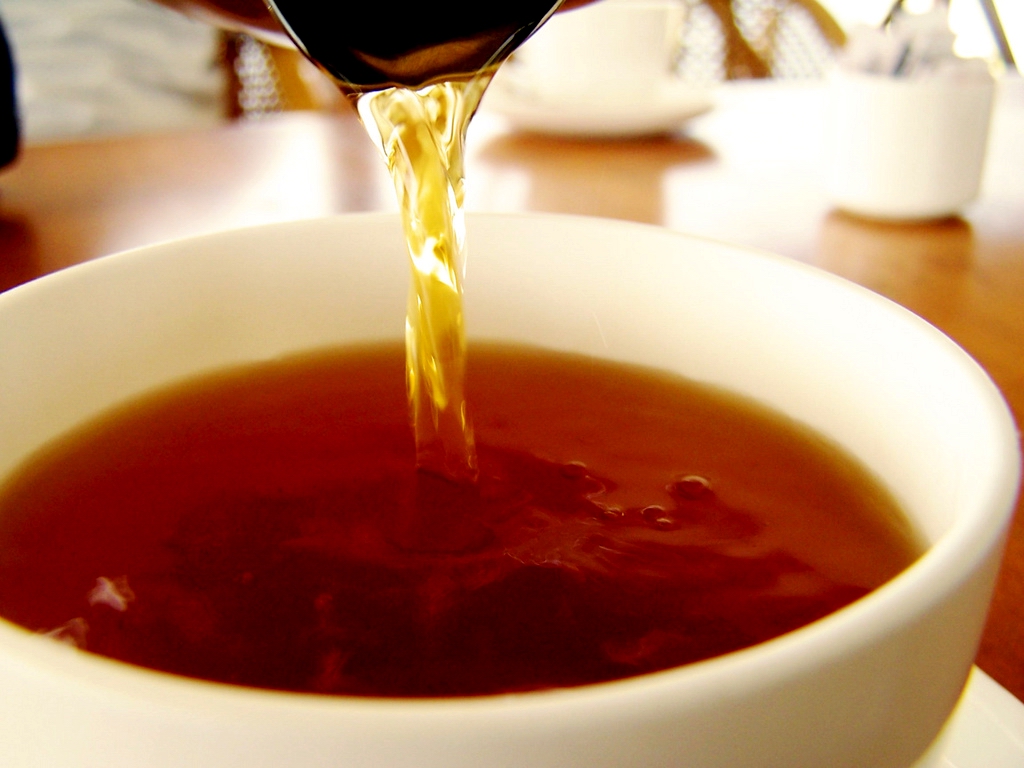
So the best advice I can give to an American arriving in England is this: Go to Marks and Spencer and buy a packet of Earl Grey tea. Go back to where you’re staying and boil a kettle of water. While it is coming to a boil, open the sealed packet and sniff. Careful – you may feel a bit dizzy, but this is in fact perfectly legal. When the kettle has boiled, pour a little of it into a teapot, swirl it around, and tip it out again. Put a couple (or three, depending on the size of the teapot) of tea bags into the pot. (If I was really trying to lead you into the paths of righteousness, I would tell you to use free leaves rather than bags, but let’s just take things in easy stages). Bring the kettle back up to the boil, and then pour the boiling water as quickly as you can into the pot. Let it stand for two or three minutes, and then pour it into a cup. Some people will tell you that you shouldn’t have milk with Earl Grey, just a slice of lemon. Screw them. I like it with milk. If you think you will like it with milk, then it’s probably best to put some milk into the bottom of the cup before you pour in the tea*. If you pour milk into a cup of hot tea, you will scald the milk. If you think you will prefer it with a slice of lemon, then, well, add a slice of lemon.

Drink it. After a few moments you will begin to think that the place you’ve come to isn’t maybe quite so strange and crazy after all.

* This is socially incorrect. The socially correct way of pouring tea is to put the milk in after the tea. Social correctness has traditionally had nothing whatsoever to do with reason, logic, or physics. In fact, in England it is generally considered socially incorrect to know stuff or think about things. It’s worth bearing this in mind when visiting.

Taken from “The Salmon of Doubt”, published 2002 by Macmillan

Original text written May 12, 1999

© Completely Unexpected Productions Ltd. 2002

And that’s how I’ve been drinking my tea for the past few days. Thank you, Douglas.