One Week To Launch!

In one week, the third book in The Redemption of Erâth series, Ancients & Death, will be released in full!* To celebrate, I’ll be hosting a week-long launch event here and on Facebook, complete with giveaways, guest authors, riddles, and more.

I really couldn’t be more excited. I started writing Ancients & Death nearly two years ago, and it’s finally done, trimmed, edited and (hopefully) ready for you all to read! It’s been over six years since I started the journey to Erâth, and there are a lot of adventures yet to come.

For now, to make it easier to dive into the world of Erâth, I’ve reduced the price of the first two novels, Consolation and Exile, to just $0.99. Additionally, you can actually get the first novel entirely free if you head over to voraciousreadersonly.com and sign up – it’ll be one of the suggested reads if you select Fantasy as a preferred genre.

So swing by Amazon or Apple Books and pick up a copy today – you never know if you might just find your new favorite epic fantasy story between the covers!

* Because of how Amazon deals with print copies, you can technically pick up a paperback copy already. If you’re interested … !

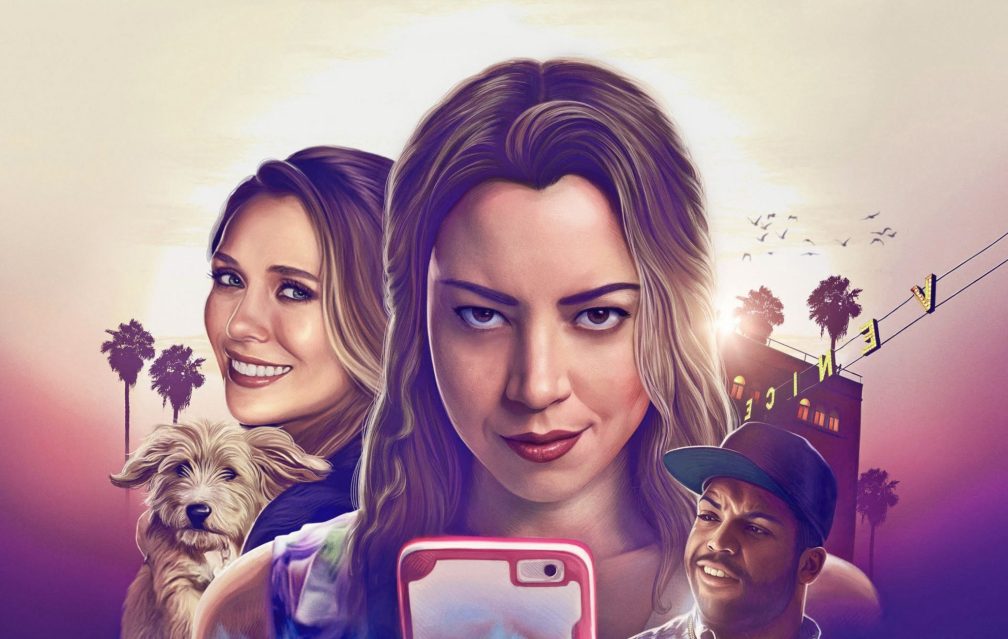
Movie Night: Ingrid Goes West

Year: 2017
Genre: Drama
Cast: Aubrey Plaza, Elizabeth Olsen, O’Shea Jackson Jr.

An unhinged social media stalker moves to LA and insinuates herself into the life of an Instagram star.

When I first saw previews for Ingrid Goes West, I was both intrigued and put off; it wasn’t clear what kind of movie it was supposed to be, and whilst I was attracted to the idea of Aubrey Plaza, who I knew from The Little Hours, playing a somewhat deranged stalker, the whole concept of of sunny LA Instagram star-based pop culture references was somewhat disenchanting.

In the end, I’m glad I ended up watching it with Mrs. Satis, because that isn’t really what it’s about. Instead, it’s really about the psychological addition to technology, and the false personas we create when hiding behind the anonymity of online forums.

This is perhaps where things goes spectacularly right – and terribly wrong. Ingrid Goes West‘s biggest asset is also its greatest flaw, and that’s its timeliness. Set in 2017, it really couldn’t be any more 2017 if it tried, and whilst highly topical, it’s immediately dated as well. Ingrid uses an iPhone 6s Plus, which is already three years out of date, and whilst there is an in-story explanation for this, it also points to the film’s era – which will be out of date by the time you read this review.

The acting is, if not Oscar-worthy, perfect for the story and the cast; Plaza’s titular Ingrid is at its best a cringe-inducing, awkward social mess, unable to communicate outside of social media and obsessed – dangerously so – with people who give her even a modicum of attention. Olsen’s Taylor Sloane is, whilst well-played, somewhat more two-dimensional – despite this being exactly the point of the character. The supporting cast are never superfluous, even at their extremes (Billy Magnussen’s character Nicky could ostensibly be autistic, but then becomes simply sinister), but their behaviors border on the unbelievable, especially toward the end.

Speaking of the ending, it left me wanting from a moral message point of view. We watch the downfall of a socially inept twenty-something as she is one-by-one ostracized by everyone she attached herself to, and (spoiler) witness her livestream an attempted suicide. And whilst the story naturally wanted to leave us with some hope, the result is internet fame – by the time she wakes up in hospital she discovers her post as trended, and millions of people are now fans, supporting her and giving her the love and attention she always dreamed of.

To me, this is simply a poor note to end on. The insinuation is that suicide – even as a cry for help – is a justifiable action so long as it gets you what you want. And for Ingrid, it does. I’d have rather seen her saved by her would-be boyfriend but without the infamy of a viral livestream; it would have shown her that there are real people in the world who care for her, without pandering to the idea that our lives only mean something if people watch it.

In the end, though, I was satisfied by the mental anguish and drama portrayed, and the fact that it does at least attempt to show that online infatuation is not the same as real-life love. Ingrid Goes West is certainly no comedy, and at its best serves a role in highlighting the difficulty in blending the real and online worlds we immerse ourselves in daily.

8/10 would watch again.


Cognitive Dissonance & Fighting the Mind

One of the difficulties for me as an author is the deep-seated belief that I cannot be successful. As odd as it sounds, I find myself unable to comprehend the success of authors such as J.K. Rowling or Stephen King. There’s a disconnect in my mind between sitting down day after day, week after week, typing word after word, and the multi-million dollar revenue of someone whose words are devoured lovingly by millions of people across the world. (Not that money necessarily equals success, but you get the point.)

Cognitive dissonance is a strange phenomenon, and one I’m all-too familiar with. In essence, the concept is that an individual person can hold two contradictory beliefs, and can’t come to terms with the conflict. An example would be that one believes sea levels are rising, but also believes climate change is a hoax.

A more practical example in my life is my medication. Sometimes I run low, and I don’t have time to get it refilled. In my mind I know it’s bad to run out of medication, so I stop taking it … so I don’t run out.

People have a lot of cognitive dissonances in their lives, and often are unaware of them until forced into a position where they have to consider both sides of the argument. With writing, for me, I used to simply not believe that people like King and Rowling were real. Despite reading (and enjoying) their words, I simply couldn’t attach the words to an individual, to a person like me or you.

When I started writing myself – seriously writing, writing tens of thousands of words and ordering them into something called a novel – it helped my cognitive dissonance a little. When I wrote the final words to The Redemption of Erâth: Consolation (“And so it was that, unknown to him, Darkness followed behind and laughed.”), I realized that it was actually possible for a single person to write over 100,000 sequential words. And when I published it – not the disastrous 2014 publication through iUniverse, but rather when I republished it myself in early 2016 – and people started to read it, it connected the dots just a little more.

But I still find myself in a place of dissonance nonetheless, be it less than before. I liken my fantasy work to Tolkien, in terms of scope and style, and it is a pipe dream for me that my books might one day be adapted for the big screen. I would absolutely love to see my fierundé rendered in high-quality CGI, blood sunsets descending behind dark storm clouds, the sweeping devastation of a world on fire on a fifty-foot screen. I wonder if it will happen in my lifetime, or if, like Tolkien, the fame of my works might come after my death.

Or perhaps what I write is doomed to obscurity for all eternity, like so many others. Perhaps I will never get more than a handful of reviews, and my readers will dwindle as interest slowly wanes.

I believe that I can write just as much as just as well (at my best, perhaps) as the literary giants of the world. I also believe that I will never be recognized for my writing. I believe such a thing is, quite literary, impossible. That it has in fact never happened (to anyone), and therefore cannot happen to me. Stephen King and J.K. Rowling and Tolkien, for all I know, don’t actually exist.

This dissonance is something I have to fight daily, in my writing, in my mental health, and in my everyday life. It’s a strange phenomenon, and it’s frustrating as hell.

What dissonances do you have? What exists, that you can’t quite believe? Let me know below!