Tales of Despair: The Music that Ended his Life

All great composers have died in despair, whether they saw fame in their lives or not. They have died deaf, they have died blind, they have died young and old, rich and poor. In times past their music lay forgotten, and they themselves were left behind, pop artists of the past, ever replaceable.

This man died some long time ago, and his was a tragedy beyond most. He passed, throughout his life, from jubilant exaltedness to raging despair, writing a phenomenal number of works, doubting himself at every one. As he grew older he grew beyond his time and his world, and the music that he wrote for himself – for he rarely had the grace to write other than at others’ commissions – was unpleasing to his listeners. His most successful works during his life were stupefying inanity, poor jokes written for great men of little intellect.

Paraded as a child, he spent little time at any one home, and the racing of his travels fostered a miserable wanderlust in him, an inability to settle for the rest of his life. Drawn away from his mother for great periods, he became hypochondriacal, eventually taking to self-medicating with antimony. He was only twenty-two when his mother died, and was thrown into grief from which he never recovered; he was by now so poor that they didn’t even have the money to call a doctor, something that would haunt him for the rest of his short life.

For nearly a decade, he moved from job to job, never able to settle or to find an income that would support he and his family, which now included his wife and their children. Even in his familial life he was not free from grief and despair; the couple watched in hopeless horror as their first child lived for only two months. They produced a healthy boy not long after, but his future siblings lived, all but one, not more than six months. While it is one type of horror for a child to die after birth, as did their daughter, Anna, it is of a deeper grief entirely to raise a child for six months, watch them grow, sit, smile and laugh – and then have that child taken from you just as you thought the worst was past. Their final child together, Franz, lived to adulthood, but he would never know – he would only know this boy for four months.

His father died when he was thirty-one, and he was suddenly the head of his family and of his home, and was without a job, without money and without hope. Sometimes he would produce a work that was taken with success; this would be followed by great periods of utter poverty. Near the end of his life he grew increasingly ill, suffering from malnutrition, poisonous medication and anxiety, and he grew paranoid of all those around him. When he was asked to write a piece commemorating the death of a wife of a person he had never met, he labored over the score in his illness and grew ever worse.

His wife, seeing his despair, begged him to cease writing such dreadful music, and for a time he ceased, and as his despair lifted, so did his health. It was not to last, however – whether from over-enthusiasm at the prospect of regaining a little of his health, or a fractured mind bent on his destruction, we shall never know, but in his final months he turned back to the writing of this requiem – and died before he could complete it.

It was eventually completed by one of his students, and performed at a benefit concert for his widow. He would never know, buried in a common grave, but he was to rise in renown within a very short period, and even those works of his that were spurned became famous. His wife would remarry, though he heart remained always with him; she and her second husband, whom she would also outlive, worked together to write his biography. It would have been of comfort to him, certainly, to know that his wife and children were not to die in the terrible circumstances he had left them in, and that both of his sons would receive one of the best musical educations of the time.

He would have been equally proud, no doubt, could he have known that the unthanked labour of his short life would one day rank among the most celebrated music in the world, performed, heard and loved to this day. It is unquestioned, still, that his Requiem remained his crowning achievement.

Wolfgang Amadeus Mozart (1756 – 1791)
Tales of Despair: Mostly Hopeless

Douglas Adams is dead.

As it happens, he’s been dead for quite some time, given that he suffered a fatal heart attack after working out almost exactly eleven years ago, which is a shame. Let this be a lesson to you, though, and never, ever do any exercise of any kind, or you’ll probably die too.

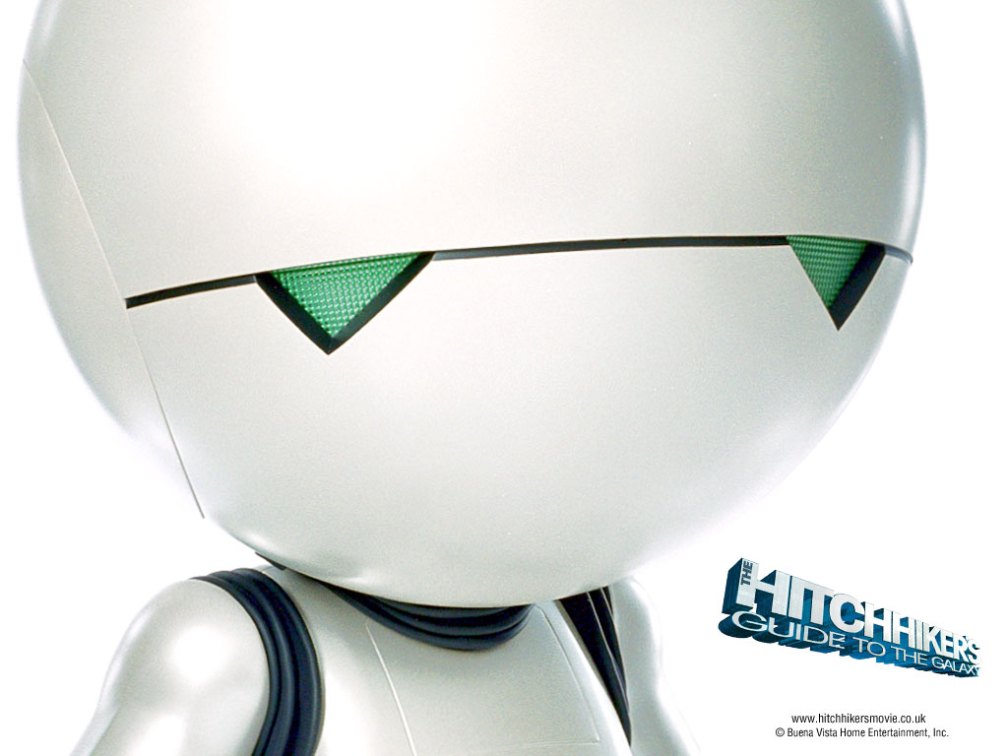
Douglas Adams left us with a veritable treasure trove of magic, a whole lot of unfinished work, and a perfectly unsatisfying ending to The Hitchhiker’s Guide to the Galaxy series of novels. Like most artists, Douglas suffered from spells of depression and despair, a trait he shared with his long-time (and still very much alive) friend, Stephen Fry. This is something that creeps into his writing, inevitably, and it’s fascinating to consider the emotional turmoil in his life through the lens of the Hitchhiker series.

I’ve always found the connection between creativity and despair to be fascinating. Finnish rock band HIM (His Infernal Majesty), throughout their career, have released album after album of music almost entirely about the pain and heartache of failed love, except for a large gap of time between 2003 and 2005, when the lead singer finally found himself in a stable relationship. Funny how the creativity there stopped for a bit.

Yet beyond even this, the connection between art and depression seems all the stronger in the realm of comedy. Countless comedic artists have used the laughter of their medium to help survive against the inside torture of personal despair. Woody Allen, Jim Carrey, Spike Milligan, David Walliams…the list goes on. Often, their wittiest and best-loved work comes from the darkest times in their lives. Occasionally, though, the unhappiness leaks through and stains their work in a way that transcends the humor, and bares the sadness in their soul. This is not black humor – this is depression.

The Hitchhiker’s Guide to the Galaxy began life as a radio comedy in the late seventies, ending up translated into a plethora of mediums, including film and TV, but perhaps best known as a series of novels. The five books in the series are The Hitchhiker’s Guide to the Galaxy (1979), The Restaurant at the End of the Universe (1980), Life, the Universe and Everything (1982), So Long, and Thanks for all the Fish (1984), and Mostly Harmless (1992).

The Hitchhiker’s Guide to the Galaxy, the original tale in the world of Arthur Dent, is a voyage of essentially pure silliness, introducing us to such wizardry as the infinite improbability drive, the person who designed Norway’s fjords, Deep Thought, and of course, 42. The Restaurant at the End of the Universe, published only a year later, essentially continued this same plot line, and in fact the titular restaurant features only briefly at the beginning of the story, before meandering away to discover the universe is run by a single man in a shack in the rain, and abandoning Arthur Dent and Ford Prefect on prehistoric earth.

The Restaurant at the End of the Universe is possibly the beginning of a downward slide for the author and the tale; despite the wit and humor throughout, the themes of abandonment and confusion lend the story a sense of frustration – a feeling that despite all effort and will, the world will never quite make sense. The fact that the book ends with what appears to be Arthur’s resignation to his fate, rather than a desire to escape it, is one of the first signs we get in the ongoing tale that things may just not quite pan out for our characters.

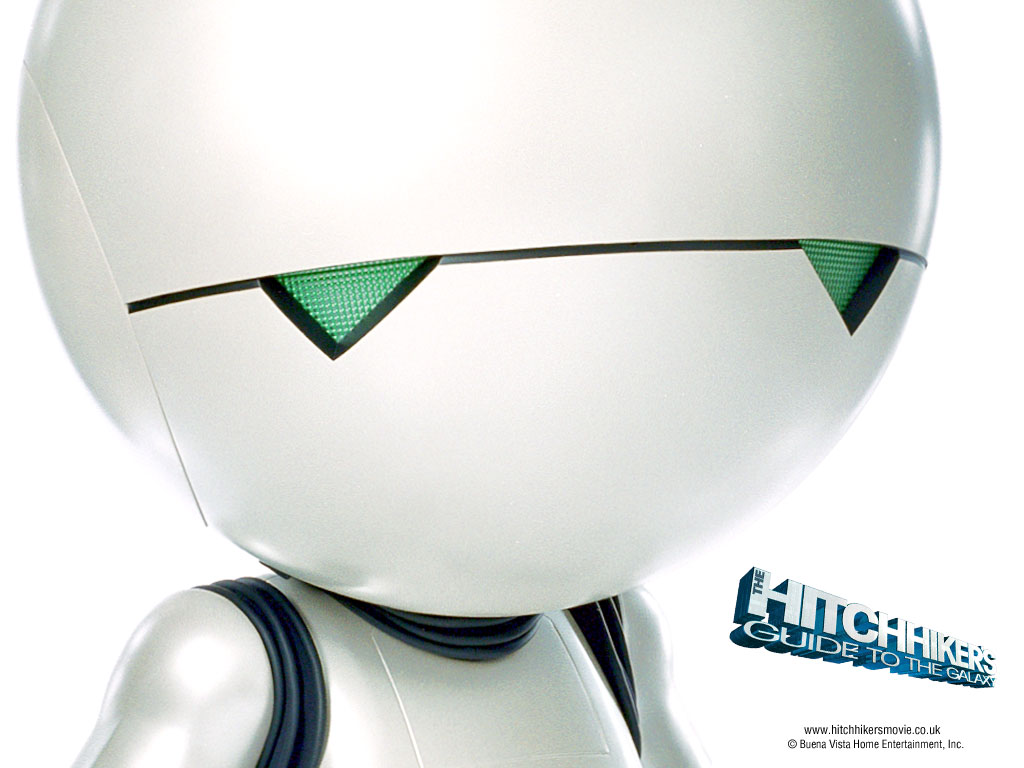
The third tale, Life, The Universe and Everything, seems to pick itself up out of the lethargy at the end of Restaurant, involving quite of bit of intrigue and action, and ultimately ending with Arthur saving the entirely of the universe from ultimate destruction.  The fourth tale, So Long, and Thanks for All the Fish, brings the story out of the haze that had surrounded the previous two books, and allows Arthur to actually find the love of his life, in the form of Fenchurch (rather amusingly named after the train station in which she was conceived). The whole book, from start to finish, feels imbued with a feeling of warmth and hope, from the fact that earth was replaced by dolphins to the touching and bittersweet ending in which Marvin, decrepit and ancient, is able to see god’s last message to creation just before he finally expires. It perhaps no coincidence that the publication of this book arrived at the same time that Douglas met and fell in love with his future wife, whom he would be with until his death, seventeen years later.

Then we have a break. Eight long years before the next Hitchhiker book. And oh my, what a tragic difference. Mostly Harmless opens with Arthur having lost Fenchurch, and the entire tale from there on follows his desperate and impossible search throughout time and multiple universes to find her again. The story is filled with despair, doom and tragedy, to such an extent that the sense of loss begins to overpower the humor.

In the years since the publication of So Long, Douglas endured a drawn-out and troubled relationship with his wife-to-be, including several separations, which even resulted at one point in their engagement being called off. Ultimately, the two rejoined and were married in late 1991, but perhaps the damage was done, and the material for Mostly Harmless already planted firmly in Douglas’ head.

In the end, we are treated to a lost love, a plot to destroy earth in every possible universe, an unwanted child and insolent teenager, and even an unintended assassination attempt. Even the one, brief moment of happiness we are allowed, when Arthur takes up as a sandwich-maker on a small, backwater planet, is torn apart when Random arrives, followed not long after by Ford Prefect. In the end – right at the very end – earth is destroyed, taking along with it every main character in the series. And this is how it ends – not with a bang, but a silent whisper into the night.

Every time I read the series (I am lucky enough to have all five stories combined into one giant anthology, and I find I have to read them from start to finish), I am left with the unnerving sensation that I am surreptitiously paralleling Douglas’ own personal traumas, and being led down the path to despair whether I would go there or not. Mostly Harmless does not relent, and in this the seams begin to show. The book’s humor lies entirely in the writing, while the plot itself is allowed to descend into ever-greater bleakness.

It was for a long time assumed Douglas intended to, at some point, write a sixth installment (it turns out a sixth was written, though not by him, and so far I haven’t read it). Even without any further knowledge of what Douglas would have intended for this new tale, it is interesting to contemplate the very fact that he had been planning it; almost by definition, resurrecting the destroyed characters and throwing into yet a further adventure would have felt like a return to hope – we haven’t abandoned them entirely.

As it is, however, we are left sad, miserable and unsatisfied, and in relation to those other famous tales of despair in the world, this makes it almost the very definition of a tragedy. In some ways, I am reminded of Tchaikovsky’s Symphony Pathétique, with its manic third movement and utterly desolate fourth movement; so the Hitchhiker series feels in the realm of literature.

And in the end, of course, it should have been no other way.

Tales of Despair: The Road and the Unhappy Ending

There are so many creations in the realm of literature and art that draw inspiration from despair that they have, in some areas, grown a cult of their own. Entire genres are dedicated to these themes, and as far back as Shakespeare people have been fascinated by fate and the tragic ending. Macbeth is a perfect example of a tale which is very much doomed from the start – from the very beginning, we know there is no hope left for this man, and we follow him powerlessly to his doom.

In most areas of art, the artist is mostly, if not entirely, in control of their work. This allows a great freedom to take the story where it leads, regardless of the end. As a storyteller, it is with great relish – though also with great pain – that we can put our characters through a hell they sometimes don’t survive. Tolkien allowed Frodo to be scarred, physically and mentally, for the rest of his life. Orwell provided no escape for Winston Smith, and in the end he was powerless to stop himself from being reintegrated into the society he so hated. Stephen King is a master of the ability to push the darkness of a tale past the point of no return, whether it is Louis Creed graphically losing his son early in Pet Semetary and eventually driving him to insanity, or Paul Sheldon losing his entire leg to Annie’s madness in Misery. These are things that can’t be recovered from; for these characters, there will be no happy ending.

Yet there is one artistic medium in which it is much more difficult to avoid the inevitable ending upturn, and that is film. Particularly in the large-budget Hollywood industry, revenue is all-important in recouping the cost of developing the film, and the story ultimately falls to the demands of the crowd. In the end, most people just don’t go to the movies to feel bad.

What ends happening is that, with the exception of those few movies that are actually based upon novels (see the Stephen King examples above), it is almost impossible to find a movie that is willing to commit to the permanent destruction of their characters, and refuse to relent even at the very last moment. As scary as horror movies are, someone always survives. As moving as dramas are, someone always wins an insurmountable struggle.

Occasionally, you will come across a movie that goes halfway, and doesn’t quite provide quite the satisfying ending you might expect. Donnie Darko does this well – certainly not a happy ending, but one that somehow resonates nonetheless with a just fate. There are bittersweet endings, such as in Toy Story 3, with a conclusion we know is coming from the very beginning, yet somehow don’t want to face.

But there are very few movies that have the guts to go the full distance. In the end, there are few that can claim this credit as a stand-alone film (American Beauty springs to mind as an exception), but even in novel adaptations, the temptation to veer from the story can be overwhelming.

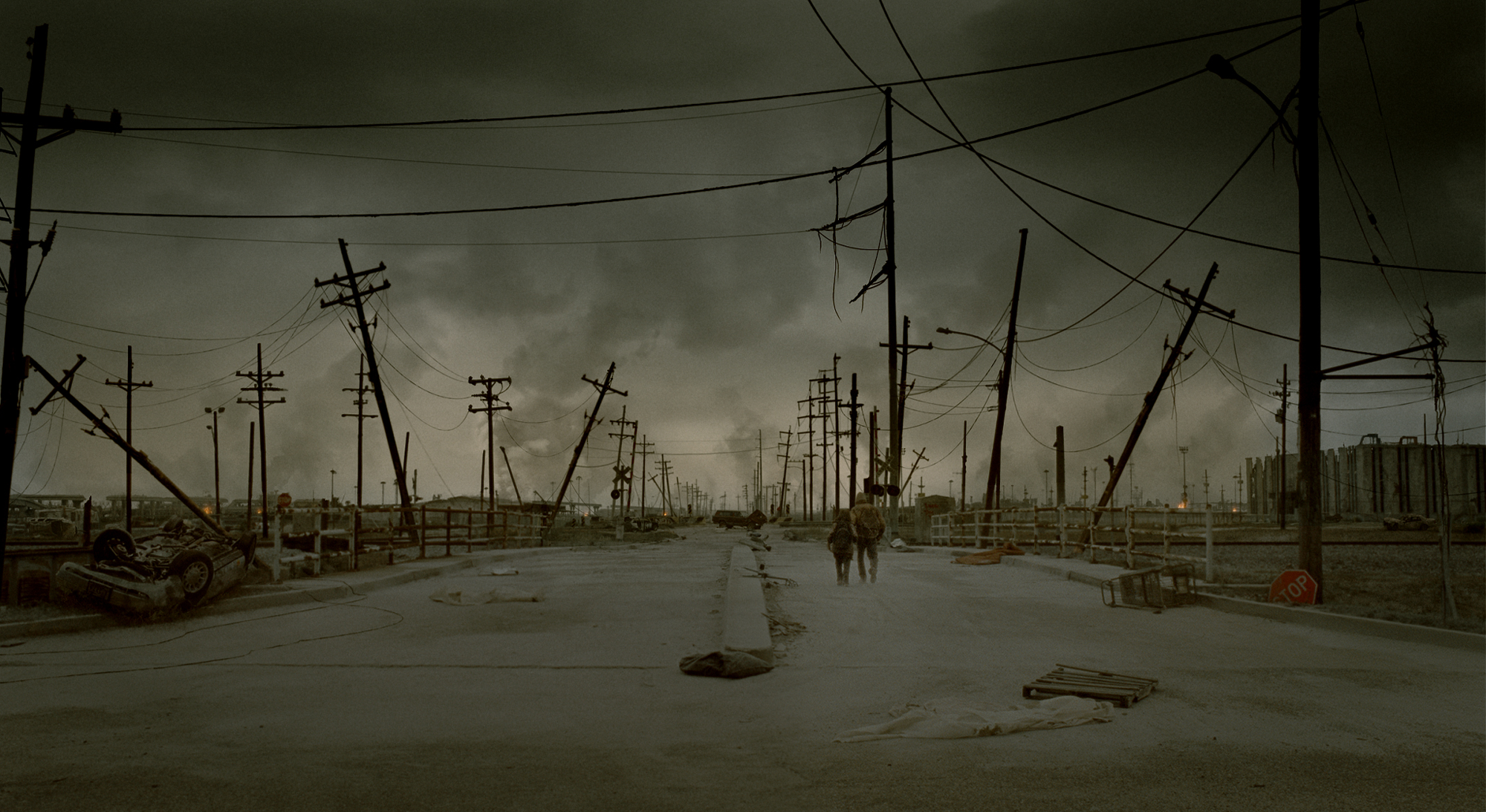
The Road, however, is not one of these. It is in every possible way as bleak and terrible as the novel it was based on, and doesn’t stray from its course even at the final stage. In a way, the shattered world in which our characters live give us little reason for hope form the outset, but a vast canon of apocalypse tales (thank you, John Wyndham) has taught us that at least some sort of redemption awaits at the end. At first, we want to believe that salvation may, in fact, lie at the coast, despite there being no evidence other than the father’s words. When the father becomes ill, we expect this as the twist, the seat-edger. What happens from there, however, is the push too far that casts the whole story into despair. There is no redemption, and even as we watch the boy watch over his father’s body, there is still some tiny hope that maybe we’re wrong, and that he’ll come back.

This ending has earned The Road the dubious accolade of being my favorite movie I would never want to see again. I fell in love with it visually from the very first scene, and the impeccably executed plot was riveting. But as a father, the ending cut a little too close to home, and I watched the credits roll through a pretty thick veil of tears. I want to watch this again…but perhaps not any time soon.

In the end, of course, we are allowed at least a brief reprise from despair in the form of the family that take the boy in. Yet they are a poor substitute, and the genuine love and caring the boy has lost in his father is irreplaceable. Ultimately, the closing message seems to suggest that kindness itself is irrelevant; in a world such as this, there is truthfully survival – or death.