Tales of Despair: The Suffering of Artists

This is a slightly different take on Tales of Despair this week; rather than focusing on a particular artist, I want to address the nature of despair and depression in art – why is it that darkness forms such a large part of the things we create? What is it that drives the most wonderful among us to the brink of despair?

There was once a young boy who grew up in an idyllic family environment; a boy who enjoyed life and love to paint and draw. And then, when he was only seven years old, his parents divorced. No one spoke to him about it. No one asked him how he felt. His father promised not to remarry, and did. He had another child, and the boy felt replaced. His mother remarried, and was beaten, and abused, and hospitalized. The boy watched each time. The adults, they didn’t see him. They didn’t care.

He continued to draw, and to paint. His work grew dark. He learned to play, and his music was dark. He took drugs, and it took his mind away, and relived the pain for a short moment.

And when he left his home, he avoided people; he made few friends, and they shared his misery. Some of them played too, and they began to play together. Out of the depths of depression, the music they made lifted him; he wrote about his pain, and he sang it to the world. And the world – they drank it deeply, and said he was a great artist. They said he was the voice of a generation; they said he would change the world.

And he didn’t care for what they said. Each word of praise demeaned his writing, abused his art. His music hated the world, and they were too dumb to see it. And he lost the joy his music brought him, and he began to despair. He sank, and was consumed by the black, and knew the world, for him, was ended. One April day, he locked himself away, and killed himself.

He was twenty-seven, and his name was Kurt.

His death was untimely, and it is accepted as a tragedy. Yet it is a tale that is told, over and over again, throughout history and the world of creators.

We suffer, we despair, and the rest of the world asks, why? Of course, the rest of us understand it all too well; insight grants us the pain of doubt, the fear of rejection, the knowledge that all goodness comes to an end.

Yet, why is it that so many of us, so many of those who create, are so afflicted? Hands up if your are a happy artist. In this imaginary crowd, you may well be in the minority. Is it intrinsic, or wrought by outside influence? Do we create because we despair, or do we despair of our creations?

Perhaps it is some of both. When I write, I am lifted, as Kurt was, to a higher plane, a place where words and music float and flow, and the terrible visions in my mind find their way to paper and into sound in the air, and I am relieved of their pain. But when I come down, I look upon my creations, and I am filled with loathing: they are ignorant, they are plagiarism, they lack all subtlety, and are but a poor shadow of the great.

Perhaps the need to create is driven by the hopeless desire to express the inexpressible – how could anyone understand the absolute certainty that the things we create, that bring such value to so many, are inherently worthless? How could anyone understand what it’s like to be consumed by blackness, until your very vision is tinted and the world turns to grey? There are no words, no colors, no sounds that can explain how no bodily wound can equal the agony of a mind turned upon itself.

And yet we persist, we continue to try. We paint with blacks and reds; we write with heavy words that drag down the soul; we play in minor keys and descending notes, recreating the descent into the final, endless darkness.

And eventually, we may join the Kurts, the Vincents, the Ernests and the Sylvias and Virginias; and how could anyone understand the comfort of knowing that, in a world that is chaos and destruction and uncontrollable evil, we have at least the power to bring about our own ending.

We are doomed to create, and doomed to suffer; may we be at least also be doomed to see the beauty in the work of our fellow creators, if never in our own.

Tales of Despair: Expectations of Misery

In 1860, a fifty-year-old novelist sat down to write what he later came to call his favorite story; the best he wrote. It was a story of mystery, of abuse, of abandonment and heartbreak; a story of joy and misery, and of despair. It had the gravely misleading title of Great Expectations.

Charles Dickens (1812 – 1870) was no stranger to abuse, neglect and misery. From a wonderful and idyllic childhood, he was thrust brutally into the world of child labour at only twelve years of age, when his father was imprisoned for debt. He worked desperately, in filth and dust, ten hours a day, for six shillings a week: this would be the equivalent of £17 ($26) today. This would indelibly mark him for the remainder of his life, and it was only his own internal strength that kept him alive during this bleak time.

The influence of this impoverished upbringing made itself known throughout so many of his novels, from A Tale of Two Cities to Oliver Twist. Along with this misery grew an unfortunate dislike for women – born from his mother, who even after her husband’s debt was paid, would not let young Charles leave the blackening warehouses.

And in Great Expectations, we see all of this come alive. This is a story of innocence destroyed, and the greatest tragedy is that it is destroyed willfully, wantonly, malevolently, the desolate outcome of a scarred and heartbroken woman, whose sadness turned bitter, and then turned to hate.

And so from the outset, from the first page, we are shown that poor, little Pip, who has never done wrong to anyone – who feels a great guilt for stealing a single pie to feed a terrifying and starving convict – is destined for a life of torment and shame, wherein his very innocence is the thing that leads those around him to take such destructive advantage of him.

There is, awfully, no expectation of greatness in the story. Poor Pip, throughout his childhood, is torn, lost in blind admiration for the cold Estella, ashamed of his own upbringing, and bearing the agony of the emotional torture Miss Havisham and Estella put him through, daily. All the while, he lives in mortal fear of the escaped convict, haunted by nightmares that he might return, might kill him, and destroy his family.

Even his family is a failure for him. His sister, resentful that Pip should be burdened upon her, treats him as a dog, punishing him for the slightest of transgressions. Worse, she treats her own husband equally, and the household is home to misery.

As Pip grows older, and enters into a mysterious fortune, promised to him upon his twenty-first birthday, he fights desperately to become the gentleman he is certain will win Estella’s heart, never knowing that Miss Havisham, in her cruelness, has ensured from her youngest years that Estella has no heart to give. We know this, and we feel the agony that Pip relentlessly pursues this impossible dream.

As the tale progresses, we learn that even Miss Havisham, for all her cruelty, is herself only the victim of trauma herself; the wedding dress, tattered and faded, that she wears for the remainder of her life, is that which she had worn the day she was to be wed; the day her fiancé stole, and killed, her own heart.

And the greatest, most heart-wrenching tragedy of all, is that the one, the only person that would show Pip kindness – the only person who has ever truly loved him – is himself the victim of torment from none other than Pip himself. In his shame of a common upbringing, Pip shames his own father-figure, the simple, honest Joe. Joe, who bears Pip’s harsh words year upon year, and never once voicing complaint against him.

Great Expectations is, for me, the single greatest work of literature of the past two hundred years. I realize that it was merely popular fiction at the time it was written, but its tale of lost love and despair has transcended the years, and is as inspiring as it is heart-wrenching.

Tales of Despair: The Darkness of Crows

A young man and a woman live, poor, in the slums of Detroit, deeply and madly in love with each other. They harbor a love of the gothic and the dark, and they plan to wed on Halloween, October 31.

The eve of their vows, there is an attack: their apartment broken into, she is raped, beaten and stabbed. He walks in – desperate, he cries out for her, and she for him. Moments later, he is executed before her eyes. Later, under the blinding glare of flashing blue and red, she dies. The girl she cared for and the cop who found her look at each other, and in a moment, their lives are forever changed.

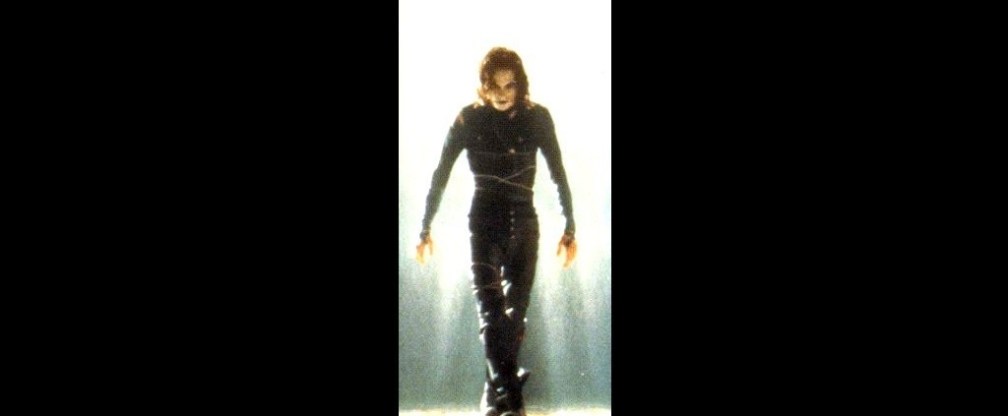
So begins The Crow, the 1994 film that changed the lives of goth kids around the world, and ended the life of Brandon Lee. I was one of those goth kids, and I first saw The Crow in the bitterest depths of my depression, when I believed all hope had gone. I watched it every night for a month, and shed tears each and every time. There are some, I’m sure, that will see this film as little more than the comic book-inspired action movie that it claims to be, but for me there has always been – and will always be – a far greater depth.

Eric Draven, murdered in cold blood before his beloved’s eyes, is raised from the grave one year later by a solitary crow, his strength and guide in his resurrected afterlife. He has returned, and seeks but one thing: retribution for the tragedy wrought upon his fiancée. One by one, he hunts down the four men who ended their lives, and returns their favor to them.

All the while, Sarah, daughter of a drug-addicted prostitute, has learned to live, and rely, on her own, seldom seeing her mother other than for money for food. Her only companion is the defeated and washed-out cop, Albrecht. Gradually, she comes to know of Eric’s return, and seeks him in the ruins of their old apartment. Though they meet, their friendship cannot be rekindled – he is not living.

There is a tone of utter despair to this film, complete futility; even as he takes revenge upon the monsters that destroyed his life, Eric knows it serves little purpose, for the past cannot be changed. In returning, he has brought nothing but hurt to all those around him, inspiring hope in Sarah and then equally crushing it. From the outset, we know that, even should he succeed, he has still lost: his life remains forever gone, and his beloved forever dead.

There is, naturally, a final dramatic battle between good and evil, ending with the beautifully gruesome death of “Top Dollar” atop a ruined cathedral, and the inspiration of hope with the redemption of Sarah’s mother and the reunion between Eric and his long-lost, ghostly Shelley. The most touching scene for me, however, is the meeting between Eric and Albrecht, in Albrecht’s apartment late at night. Albrecht lived Shelley’s dying moments, and through his eyes Eric lives it also. In a touch, every hour of pain and torment fills Eric’s mind, and he recoils, aghast.

What touches me most about this scene, however (I’m tearing up just writing about it!) is what we learn about Albrecht. Against his career, against his home life, against everything he held dear, he remained with this dying girl, this complete stranger, staying by her side and with her hand, until she died. Knowing it was inevitable.

This movie is infused with darkness and despair, gothic tragedy and loss, and yet holds a human compassion beyond many that I have seen before or since. It was everything I needed, and the tears I shed were a sweet, sweet relief.

It is yet a further, well-known tragic addition to this film that Brandon Lee, son of Bruce Lee and Linda Lee Cadwell, died whilst filming when real bullets were substituted for blanks. As such, the film has become as much a eulogy to this bright and emerging actor as it is a piece of dark, gothic cult art. They say no parent should bury their child, and this film – a piece of trite entertainment, comparatively – proved the most terrible loss a person could ever bear.

R.I.P. Brandon Lee
1965 – 1993