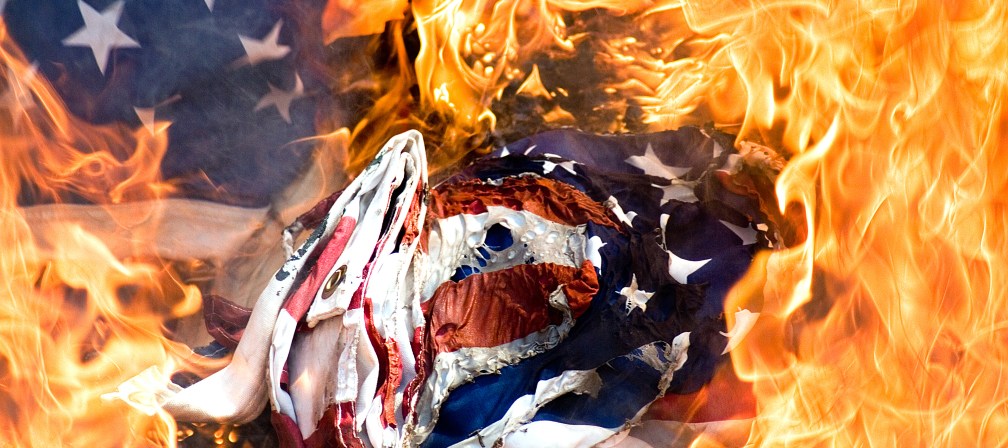
The Mind of Violence

I wish I could say this was a happy post. I wish I had good tidings to bear, or that perhaps I could recount the extensive traveling I’ve done in the past week, from Toronto to the Grand Canyon. I wish I could talk about anything other than what I’m going to.

But I can’t. This week there were three mass shootings in the United States: Gilroy, Dayton, and El Paso. Between them, at least thirty-two people were killed. Coincidentally, it marks the thirty-second shooting this year in which at least three people died. For all I know, by the time you read this there will have been another.

The worst part, though, is not the shootings. It’s not the deaths. The worst part – of which I’m guilty myself – is the crass, apathetic reaction of the country, the total lack of surprise, and the disaffection that accompanies these tragedies. Even as it crossed my newsfeed, I couldn’t stop my own thoughts: “Guess it happened again.”

I just kind of switched off. I didn’t want to, couldn’t, internalize yet another instance of senseless violence, of brutal slayings and now-childless parents. I couldn’t react in horror … because there was no horror left.

This kind of violence has become so frequent and commonplace that I’ve started to become completely desensitized to it. It’s just part of the background of living in the United States. Of course, many of us continue to go about our days, saying it could never happen to us, but the truth is that the odds are stacking against us, and one day it will be you under fire at a concert, or a Home Depot, or at your school.

But until that day comes, we all just continue to sit back, watch it happen, and condemn the shooters on one hand whilst continuing to silently approve the system that allows these things to happen at all.

By system, of course, I don’t only mean the ease-of-availability of firearms, or the payouts to the NRA, or the heavy-handed police brutality that leads to so many unnecessary deaths; it also includes the indoctrination that violence is a part of free speech; it includes the incessantly hypocritical reactions from politicians and leaders; it includes the simple fact that no other developed nation has anything close to the level of outright violence that has become second-nature to our country.

Violence has become something less than a tragedy; human life commoditized. It’s one thing to suggest that society is desensitized to violence through TV and popular media – realistically, I think most people are aware enough to know that TV violence is not a suggestion that such things are okay. It’s the frequency of real-world violence that desensitizes the masses to just how horrific such things actually are. And when we look at the culprits of the most recent mass shootings, none of them were ‘foreigners’, or ‘immigrants’ (I use these terms loosely, as we are all immigrants at some point or another) – there were young, disaffected white men who somehow came to believe that it was within their right to end the lives of other people.

It’s difficult to learn why these people do such things, as they are often killed themselves during their rampages. We talk to their families, interview their friends, and learn that they were ‘good people’, and that ‘no one suspected a thing’.

I call bullshit.

There are a lot of angry people in the world, and a lot of reasons to be angry. I get it. I’ve been filled with fury, with anger and with hate at times in my life. I’ve sought to place blame on everyone other than myself. I’ll readily admit that I’m far from a perfect member of society, even if I can’t imagine hating so much that I’d want to actually kill other people. The mind of violence is hard to understand.

But the biggest problem is that these people – disgruntled, prone-to-violence, hate-filled people – are allowed to purchase weapons whose sole purpose is to kill other humans. A lot of people argue that guns don’t kill people, people kill people – but people without guns kill far fewer people than those armed with them. Perhaps we can’t change how or why these people think the way they do, but there’s absolutely no reason we can’t stop them from accessing devices intended to end life.

Weapons of any kind are a holdover from a medieval culture where feudality and territorialism were the law; when if you didn’t have a sword or an axe, your neighbor might steal your sheep and murder your family.

Aren’t we past those days?

Aren’t we supposed to be living in an enlightened society, one where understanding and tolerance are meant to be the gold standard to which we aspire? If so, then what purpose do weapons serve at all? I can understand the desire to hunt, the desire to kill food for yourself – there’s a deep-rooted instinct in some of us to see and taste the blood of a fresh kill. But there is no reason in the world to need to kill another human being – even under threat, if that person has no weapon to threaten you with, you have no reason to kill them in self-defense.

The worst of it is the people marauding around proclaiming weapons as a part of free speech – that taking away their weapons takes away their freedom.

Again – I call bullshit.

We live in a society with tens of thousands of rules – laws, as they’re called – imposed upon us. These laws are entirely arbitrary, save for the concept that by enforcing these laws, we create for ourselves a safer, more tolerant and livable society. I’m not allowed to drive faster than 65mph on the highway – if I do, I get punished. I’m not allowed to steal from my neighbor’s house – again, I would be punished.

So then why do we continue to provide access to things that allow us to break the laws imposed upon us by our society? Why do we make cars that can drive at 130mph? Why do we sell lock-picking kits, when any conceivable use for them is illegal? And why on earth do we sell handguns and automatic rifles when anything you could do with them is against the law?

Free speech can only extend so far. It cannot be allowed to extend to hate speech; it cannot be allowed to extend to discrimination and bigotry. And it cannot be used as an excuse to provide access to dangerous, violent weapons. It isn’t a violation of your freedom to take away your guns; it’s a violation of our human rights to allow you to keep them.

Tell me I’m wrong.

Of a Great Person

About a month ago, the world lost a soul. Not a celebrity; no one famous. One of thousands who die daily for no reason other than it was their time to go. It was no global catastrophe, no tragic demise; simply the passing of someone who lived their life simply, selflessly, and straight to the very end.

Death is oddly easy to come by, yet so far from easy for the people who knew the deceased. Funerals, wakes, memorials and services and wreaths and tombstones … all these efforts are done not for the person no longer with us, but for the people left behind. And it kind of sucks, because the last thing you want to do when you lose someone is worry about funeral arrangements and burial costs. Mounting bills and gathering family last-minute hardly fills the void left by the departed in your heart, but these processes perhaps hold some value, because they’re a painful reminder that in the dead’s absence, life goes on. The world doesn’t stop turning. Work gives you a few days off, and then it’s back to the grind.

So before I discuss what I think was important about the departed, I need to recognize my wife’s strength, resilience, competence and willfulness as she laid her father to rest. She mourned and wept, and amidst it all simply made shit happen. No one asked her to, and she didn’t need to be asked; there was little doubt as to who would bear the heaviest burden of actually giving her father the rest he deserved in the best way possible. Her family attended what she arranged.

This strength didn’t grow in a vacuum. My wife has led a difficult, troubled and at times traumatic life, but her strength grew from the person who raised her: her father. For whatever suffering she’s dealt with, her father almost certainly dealt with just as much. From a lonely childhood to war service and the mental breakdown of his wife early in their marriage, he suffered and fought for fairness and justice like no one I’ve ever known, and he did it entirely for his children – his legacy.

You see, whenever someone dies, you can’t help contemplate their importance; you can’t help but wonder what impact they left on the world, and if their life really mattered much – or at all. These are – on the surface – easy questions to answer when said deceased was known to the world at large; the world is immeasurably worse off for the loss of Robin Williams, or Chester Bennington, or [insert celebrity here], because of course these people made an impact on our psyches and left indelible impressions in our emotions. We miss what these people could have brought to the world, and reminisce about what they left behind. We feel like we know these people, and their deaths definitely leave a void behind.

But what about the residual importance of those deaths that are a little closer to home? What about when our father, or our brother – uncle, or grandparent – dies? What if they spent their life toiling in a factory making communications circuitry? What if they sacrificed any possibility of renown for the happiness of their own children? What if they were, ultimately, forgettable to all but their closest family?

I say this makes them not less important, but all the more so.

This argument, of course, comes down to how one chooses to measure the importance of a person’s life, but I think it’s fair to say that an individual’s significance can be told by the impact they made on others – the influence they had on the people who knew them. And in this argument, I believe that the true measure of influence is in its quality, not its quantity. It doesn’t matter that Robin Williams made millions of people passingly happy, whilst my father-in-law might have done so for fewer than a dozen folk in his life, because the depth of influence is immeasurably greater on the latter.

My wife’s father was quiet, humble and generally inconspicuous, and if you never had the chance to talk to him and get to know him, you would never guess the tragedy and trauma hidden behind his soft brown eyes. Many other men, I believe, would have walked away from similar circumstances given half a chance, and yet he spent years balancing a tenuous living and desperately fighting through courts to win his children back after their mother suffered a nervous breakdown early in their life. He abandoned career ambitions and sacrificed his personal life entirely to ensure that his children had the best life he could provide for them.

And that life he gave them formed the person who is now my wife. For as long as I’ve known her she’s idolized her father; looked up to him as an example of virtue and strength of character. She’s modeled her own life on many of his characteristics, and the upbringing of our son is a testament to his own work in raising her. He was her mentor, her confidant, her advisor and friend.

So in looking back on his life, does it matter that he was wounded in the Korean War saving others’ lives? Or that he build the communications systems that sent men to the moon? Does it matter that he was disowned by his Jewish family for marrying a Catholic woman? Or does it matter that, when the odds were stacked against him and the chips were down, he soldiered through to protect his children, because their own happiness was the only thing that mattered to him?

I like to think that the measure of a person’s importance is not in whether they influenced a million people or only one; it isn’t in whether a person goes down in history or is forgotten to the annals of time. It’s in the subtle influence they leave on those closest to them, and whether that influence was to their benefit or detriment. And in considering my father-in-law, the influence and legacy he left behind is in the person my wife became, and her siblings, and his grandchildren, and – perhaps one day – theirs.

And so I suggest that he was as great a person as any out there. He didn’t write books that changed the world; he didn’t leave behind a canon of film or music or scientific achievements. He left behind, quite simply, a strong, virtuous woman, who will remember him with love for the remainder of her own life. He changed her world, and I think that’s at least as important as any other.

He used to say that he just wanted to be remembered and thought of. I don’t know how he wanted to be remembered, or by whom, but I remember one thing clearly. A few years ago I had the opportunity to talk to him one-on-one, and I asked him simply what he wanted. What, I said, would make him happy?

His answer was to see his children happy. Nothing more, and nothing less. The same driving motivation to keep his children happy never wavered from the moment they were born until the moment he died.

If that isn’t a worthwhile legacy, I don’t know what is.

Why I’m Ashamed to Be an American

It’s probably pretty obvious why I’m writing this. In the space of a week, men across the country were given the thumbs-up to rape anyone they want with minimal consequences, a singer with everything going for her was murdered point-blank, and then there was Orlando.

Continue reading