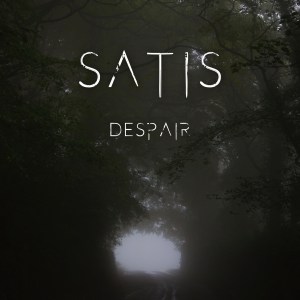
Despair (2023), by Satis

In the past, I’ve used the category “Music I Love” to discuss music that has been particularly important to me over the course of my life. Anything from Mozart to Metallica, I’ve often mentioned the significance of their emotional response in me, or how it meant something at a particular time of my life.

This time, however, I’m changing it up slightly. While this post is intended to highlight music that is indeed very important to me, this time the music I’m discussing is … my own!

It may not have been made entirely clear to everyone over the course of my blogging tenure, but my background and education is in music, not writing – specifically composition. And in recent years, I’ve taken the time to reinvest in that old, forgotten passion, and write some new music.

Back in 2019-2020, I began thinking that I would like to write an album that blended the best of classical orchestration with the gritty heaviness of metal music (my two musical loves). As I began to experiment with different ideas, I realized that I could write something of a heavy metal symphony; nothing so pretentious as Deep Purple’s Concerto for Group and Orchestra, yet more focused and structured around the orchestra itself than something like Nightwish, whose music – whilst evocative and generally excellent – tends to be “orchestrated” metal. I was looking to write music that could only exist with both contrasting elements; remove one, and the other isn’t sufficient to carry the music alone.

And so was born Despair; a five-track, hour-long album of metal and orchestra, exploring themes of darkness and misery through music. It took a long time – over a year – to complete the first draft, and a year further to fine-tune the sounds, hone the orchestration, and get it to a standard where I felt it was publishable.

And whilst the follow-up, an album soon-to-be-released called Shade Under Trees of Longing, has (in my opinion) a far superior production, I am nonetheless proud to announce that Despair is now live and available to stream through all your favorite platforms: Apple Music, Spotify, iTunes, and more!

New Music Is Available!

So … when I’m not writing, it seems, I’m writing music. Whilst The Redemption of Erâth has been on pause for a few months, I’ve been revisiting some music I created between 2019 and 2021 – an album of symphonic metal called Despair.

Recently, I upgraded the orchestral sample libraries I use, and re-recorded all five tracks of the album using EastWest’s phenomenal samples and sound engine. Whilst the final result may not sound exactly like a live orchestra, it’s (in my mind, at least) pretty damn close.

So without further ado, I present to you: Despair, a suite of orchestral heavy metal in five parts, channeling the deepest, darkest emotions of human nature!

1: Depression

Depression is the first track from Despair, opening with quiet strings and horns, building to crescendo before the crushing heaviness of the metal band comes crashing in. Segueing to a softer, melodic verse section, things eventually take off with pounding guitars and drums, intertwining a full orchestra through rises and falls until a heavier recapitulation brings us to the outro – soft and quiet again, building into a sudden wall of orchestral noise and a thundering drum punctuation that leaves on a cliffhanger, waiting for the next track.

2: Anger

Bursting in with furious strings and brass, Anger ups the pace and energy tenfold, a full orchestra blasting away until dropping out suddenly to allow for the metal band to take over with churning, grinding riffs. Never giving in to a slower beat, the song carries forward in a kind of scherzo-and-trio format, building to a climax before a middle section that leads again with devastating riffs, before recapitulating to the opening. Finally drawing to close with every instrument at full tilt, Anger is a crushing ode to unbridled fury.

3: Fear

Opening with a rumbling, unsettled bass line, Fear is deliberately the most disjointed piece of the suite, wavering between numerous time and key signatures throughout. There are moments of melody interspersed between longer passages of chromatic atonality, but the overall mood is one of anxiety and unsettled, indescribable fearfulness.

4: Grief

Almost entirely orchestral (the band comes in only briefly at the very climax of the piece), Grief takes us through a journey of pathos and heartbreak, with sweeping strings and devastating horn lines drawing influence from the raw emotion of the greatest of classical composers – Tchaikovsky, Beethoven, and more. From the soft, distant opening to the thundering timpani that bring the song to a heaving climax of sadness, Grief will tug at your heartstrings and (hopefully) give you chills at all the rights moments.

5: Despair

The epic conclusion and title track, Despair opens with a hammering timpani roll and huge, crashing chords from the band and full orchestra – nearly a full two minutes of opening to a 20-minute track that winds through many layers of instrumentation before coming to a quiet close halfway-through, only to burst back into life with grand horns and strings sustaining the melody over churning guitar riffs. Through a varied development we finally return to a grand reprise of the opening, announced with a huge gong crash, before moving on to the closing of the song, and the album, with a revisiting of the very opening of Depression, bringing the full album to a close.

Writing Music – Where to Compose?

Following my post the other week about composing, songwriting and producing music, I started thinking the other day that I might want to take a shift in my music back toward more ‘classical’ music – that is to say, I’ve always wanted to write a symphony. I actually did write most of one back when I was, like, fourteen, but it was awful and I never finished it anyway.

For a long time, I’ve considered whether or not I should try to write something in a more contemporary classical vein. I don’t mean like Beethoven or Brahms – I’ve done enough pastiche in my time – but something that is genuinely original, true to my own musical influences and style, and that could stand in its own right at a concert amongst other contemporary music.

A symphony is an opportunity to explore the textures and dynamics of an entire orchestra, which is something you don’t usually get the chance for in rock and metal (outside of those instances where bands are backed by an orchestra). I’ve always loved the sounds possible from flutes and violins and trumpets and timpani, and with over twenty different instrument lines to work with (consider that, despite there often being over a hundred instruments in a full orchestra, many of them play the same thing, such as the string sections), there’s an enormous range of complexity available.

But this is where things get complicated when it comes to actually writing the music. Conceptually, I understand the idea of composing at a piano and arranging the composition for orchestra. But I find that when I move to try and arrange/compose in a music production application such as Logic Pro X, I lose track of the harmonies, the melody lines, and I don’t end up with music that is as interesting or detailed as I think it could be.

So then I wonder – should I be composing in notation software again? I used to use notation software – Finale, in particular – exclusively, and whilst I still have a copy of the program on my computer, I’ve really not used it in over ten years. It doesn’t have the same level of sound quality for playback, but it helps me ‘visualize’ the music better, so I’m wondering if I should return to Finale for the composition of my new symphony.

I could, of course, always re-produce it in Logic afterward, but that ends up being nearly twice the effort. I did that with some old metal songs originally wrote in Finale, and it took frigging forever. In the end, though, the idea of composing is to get the damn notes down, so perhaps Finale is the way to go; when it comes to making a living, breathing recording of the music, I might just have to bite the bullet.

For those of you with experience with music production and notation software, what’s your preferred go-to?