Traveling without a Passport: Lessons Learned

Welcome home, all of us—it’s been an eventful two weeks! For the holidays, Mrs. Satis, Little Satis and I had planned (for quite some time, I should add) to travel back to our ‘home’ town of Sheffield, England, to visit the dear friends we left behind when we moved to the Garden State four years ago. In particular I was looking forward to seeing my best friend Ben, who is directly responsible for The Redemption of Erâth existing at all, and whose little boy had just turned one.

We were due to leave on Christmas day (cheap flights and all), and so during the typically frantic last-minute preparations, we got out all our travel documents on Christmas Eve, including passports (both Little Satis and I share a British and US passport). As a matter of routine, Mrs. Satis asked me to check the expiration dates of the passports—after all, sometimes you can’t travel if the passport is close to expiration.

Mrs. Satis’ passport: fine.

Little Satis’ passport: fine.

My passport: expired—one year ago. My other passport: also expired one year ago.
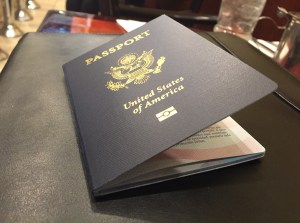
Please, for the sake of matrimonial harmony, don't let your passports expire …

Please, for the sake of matrimonial harmony, don’t let your passports expire …

Well, hell hath no fury like a wife whose husband neglected to renew both of his passports and didn’t find out until the night before he was due to travel. After a great deal of frantic online searching, it was discovered that there was absolutely nothing to be done; a call to a (very friendly) United Airlines representative assured us that it is absolutely impossible to fly internationally without a valid passport. I mean, it kind of makes sense (duh), but it was worth asking.

What to do? The next day (Christmas day), I drove Mrs. Satis and our son to the airport, and watched rather pathetically as they passed through security with their perfectly valid passports, and drove home to spend the first of several very lonely nights. It was, in typical ‘me’ fashion, an auspicious beginning to our holiday.

My intention was to go to the passport office in New York city the following morning, argue my case as miserably as possible, and hope that someone would take pity on me and issue me a new passport. I set my alarm for 5:00 AM, slept poorly, and just before I stepped out of the house, thought maybe—just maybe—I ought to double-check the opening times of the New York passport office. Yep—7:30 AM to 4:00 PM, Monday through Friday … except December 26.

Damn you, keyhole …

Damn you, keyhole …

Brilliant. I was now looking at spending the entire weekend alone, while my wife and son were galavanting around Sheffield, enjoying themselves with our friends and going to pantomimes. In my despair, I decided to feed my depression with pizza and stepped out that night, into temperatures well below freezing, to collect from our local trattoria. The moment the door shut (naturally), I slipped my hand into my jeans pocket to check that I had the house keys. Not normally an issue, because there was someone else in the house to let me back in.

Only tonight, there was no one. And the keys … were on the kitchen counter.

Luckily my car keys were still with me, so I was at the very least able to pick up the pizza, which was the only thing that kept me warm during the hour I waited for a locksmith to come and jimmy the door open. Two hundred dollars and a crowbar later I was back in the house, and I was pretty sure the holidays couldn’t get much worse. It was in this state of mind that I checked Facebook, and discovered a friend from work was out performing at a gig nearby. I rarely had the opportunity to see her sing, and here—home alone, with no one to tuck in—was the perfect opportunity. But did I dare leave the house again? Decisions, decisions …
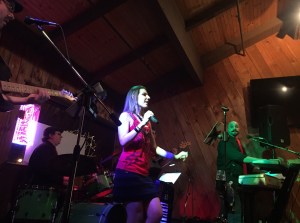
Mary and the Uptown Getdowns!

Mary and the Uptown Getdowns!

In the end I went, having quadruple-checked that the house keys were in my pocket before latching the door, and ultimately it was the right thing to do. Live music is a cheering pastime, and I stayed out until the end of their set, which went on until nearly midnight. Well-played, Mary.

As luck would have it, that was largely the end of my misfortunes; I spent Saturday and Sunday alone and got quite a bit done on recording The Redemption of Erâth: Consolation as an audiobook for Ben. Monday morning I was at the passport office at 6:00 AM (to find a line of fifty people already ahead of me), and to the surprising credit of the US government, a brand-new passport was in my hands by 1:00 PM. With hardly a pause I raced on to the airport, where my rescheduled flight was waiting for me (only $600 to change, too … ). By 1:00 PM the next day—only four days late—I was reunited with my family, and the vacation could begin.

The University of Sheffield, Firth Hall—where Mrs. Satis and I first met.

The University of Sheffield, Firth Hall—where Mrs. Satis and I first met.

With the exception of being unable to withdraw cash because my bank’s fraud team was a touch overzealous, the rest of the trip went off largely without a hitch. While I missed the pantomime (Peter Pan, at Sheffield City Hall), Mrs. Satis and I were nonetheless able to visit many of the places we remembered from our time there, including the University where we met and the Town Hall where we were married.

We even found time to drive up into the Peak District and visit Ladybower Reservoir in the Upper Derwent Valley, and despite the cold and frost it’s still one of the most picturesque places I know in the world.

Tea, rain, full English breakfasts and plentiful public transport … it was the full British experience, cut short by only a few days. Ben was absolutely giddy to receive his signed copy of The Redemption of Erâth: Consolation, including the first five chapters as audiobook for his (dubious) listening pleasure. Little Satis got to spend time with his (girl)friend since nursery school, and Mrs. Satis and I had enough time to reminisce about our time in Sheffield.

Ladybower Reservoir in the Upper Derwent Valley.

Ladybower Reservoir in the Upper Derwent Valley.

Sometimes I regret leaving, and sadly there was far too little time to do everything we wanted to, but it was ultimately a wonderful winter vacation, salvaged by, of all things, the US passport office. It would have been lonely indeed had I not been able to renew my passport.

Screen Shot 2015-01-07 at 6.46.37 PM

Thought of the Week: Character-Driven Fiction

I spent some time today (possibly wasted time—hard to say) going back through books one, two and what’s finished of three and counting the number of named characters in each book. Total so far? Ninety-three.

Nearly one hundred names in two and a half books seems pretty extreme; it means at least two newly introduced names per chapter, at least. Of course, not nearly all of these characters are important, and sometimes they are named merely for the sake of convenience (e.g. keeping track of who’s talking in dialogue). Of these ninety-three characters, twenty-four of them I’ve counted as ‘primary characters’; that is to say, characters without whom the book or the events within could not exist. Among these are:

  • Brandyé Dui-Erâth: the primary protagonist and hero of the story
  • Elven Dottery: his closest friend, and secondary protagonist from Exile onward
  • Elỳn: an Illuèn (race of Light), who features primarily in Brandyé’s dreams in the first book
  • Sonora: Elven’s sister, and catalyst for many of the events in Consolation

I ended up creating a mind map of all the characters, because I’m at the point where I’m starting to reuse certain names, simply because I forgot that I already used them before. This is what it looks like at the moment:

Mind map of the characters in The Redemption of Erâth, with partial connections shown.

Mind map of the characters in The Redemption of Erâth, with partial connections shown.

This is something I actually had to separate off from the mind map I’d created for the entire book series, which included a lot of other information such as races, themes, locations, etc. This mind map is actually so large that I feel it’s now less than helpful:

Mind map of the entire book series!

Anyway, the point of this is to say that I’m starting to feel a little overwhelmed by all these characters rearing their little heads and telling me their names. It makes me realize, though, that not all great fiction necessarily relies on a great number of characters. And that makes me despair, slightly.

How many people were in The Lord of the Rings?

How many people were in The Lord of the Rings?

Now when it comes to characters, there exist absolutely phenomenal stories with very large numbers of characters. According to Middle-Earth in Statistics, there are nearly 1,000 named characters throughout Tolkien’s extended worlds, including The Lord of the Rings, The Hobbit and The Silmarillion. A huge number of these are there merely in passing, but nonetheless exist and were created by Tolkien at some point. Similarly, according to (the wonderfully reliable) Yahoo Answers, there are 772 named characters throughout the Harry Potter seriesWar and Peace purportedly has over 600 in a single novel.


“Without Pip, Estella, Joe, Miss Havisham and the others, there would be no story at all.”


Miss Havisham—one of the most unforgettable characters in literary history.

Miss Havisham—one of the most unforgettable characters in literary history.

However, one of my favorite works of fiction ever, Charles Dickens’ masterpiece Great Expectations, has only eighteen characters worth mentioning (according to SparkNotes). How did an enormous epic such as Great Expectations manage to reach its conclusion with such a comparably small number of characters? How did Dickens manage to keep the reader interested in so few people over such a long novel?

To my mind, the answer lies not only in the development of the characters, which Dickens does masterfully, but in the narrative itself, and the fact that in Great Expectations, the entire story is the story of the characters. It’s a life tale. Without Pip, Estella, Joe, Miss Havisham and the others, there would be no story at all. No one of them could be removed without severely affecting the outcome of the story, or potentially rendering it utterly impossible.

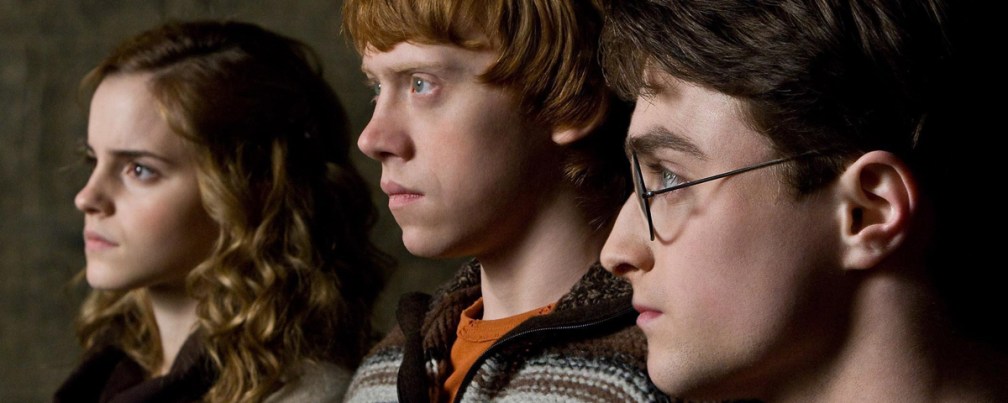
As much as I love the Harry Potter series, the same can’t truthfully be said, and this is evidenced by the film series: so many characters from the books were excised, condensed or changed that in some places things seem almost utterly different. Did Harry really need Hermione and Ron? Arguably not—the relationship between the three central characters, whilst important, doesn’t necessarily drive the story. Harry could have been attributed the characteristics of his two friends, and the battle against Voldemort and evil would have remained relatively unchanged.

Frodo and Sam—who really needed the other more?

Frodo and Sam—who really needed the other more?

To a lesser extent, the same could be said of The Lord of the Rings. Did Frodo really need Sam? Arguably, Merry and Pippin were more crucial to the plot than the relationship between these two main characters, for they encouraged the Ents to war, without which Helm’s Deep likely would have fallen.

And it makes me wonder about the direction of my own story. In some ways, The Redemption of Erâth is, like Great Expectations, the story of a single man’s life, from childhood to old age (much of which we have yet to see). But I’m starting to wonder if the story is too plot-driven; how much does the plot rely on the relationships between the various people of the world I’ve created? As far as I can see (and bear in mind, I can see a little further than you, the reader, at the moment!), there are only three people in the entire story that absolutely must exist for the story to be; much like Harry Potter only ‘needs’ Harry and Voldemort, or The Lord of the Rings only ‘needs’ Frodo and Sauron. At least I have more than that, but when I think about a masterpiece like Great Expectations, I realize that every one of those eighteen characters absolutely must be there, or the story fails. And it makes me wonder—where does my own story lie?

Which do you think is better—character- or plot-driven fiction?


Featured image from http://www.fanpop.com/clubs/harry-ron-and-hermione/images/7724592/title/trio-hbp-photo.

Satis Logo 2014

The Redemption of Erâth: Book 3, Chapter 7

Chapter 7: The Place of Men

White towers and spires of glass—countless and reaching to a one for the sky, the majestic edifices of Viura Râ cast sweeping shadows in the early morning sun, proclaiming this city above all others the home of wonder and invention for all of Erâth. Light glinted everywhere, so that the city seemed to sparkle and shimmer, and Brandyé’s heart lifted at such a sight of beauty. It seemed to him there could be no place in the world that spoke of such calm, of such wisdom, and such infinite grandeur.

And yet the city was not the only wonder to behold, for it sat on what seemed to be the very edge of the world: not two miles distant to the east, the ocean seemed to falter and end, tumbling eternally into a white abyss from which rose a obscuring mist and permitted no further view in that direction. Yet through this mist shone the sun nonetheless in all its glory, and its warmth combined with the cool sea breeze served to invigorate and refresh, and Brandyé thought that there was nothing that could possibly go wrong in a place such as this.

So he arrived at the city on the edge the world, the Eternal City, and his excitement could hardly be contained. He and the other ship’s laborers were the last to disembark, of course, and he spent their time waiting and shutting down the furnaces in endless conversation with any who would listen, talking of how he would find this Ermèn, and how he would find his place in the world, and all would be well. He felt that this was something he had been long awaiting, despite his lack of memory prior to the forests of Golgor, and when he finally stepped onto the solid earth of the city’s outskirts and away from the gently swaying decks of the ship, he was certain his heart would burst for sheer joy.

His euphoria was not long-lived, however, for once he left the ship he found himself very much alone in the busy and bustling crowd of the port, and knew not where to begin. His excitement gradually faded, and first confusion and then concern took its place. For a while he allowed the tide of the crowd to take him where it willed, past many enormous vessels equal—and even greater—in size than that which had borne him hither, and chaos reigned all around.

After some time Brandyé spotted the unmistakable sign of an inn, this one bearing the title of The Bottomless Flagon, and he pushed his way through the crowd to arrive at its front door, held wide by the many folk passing in and out of it. It was near lunchtime, as far as his nose could tell, and he rested his hand momentarily upon the small purse of coins Yateley had given him, now greatly depleted. He hoped it would be enough at least to buy himself one last meal, and entered the inn.

Continue reading