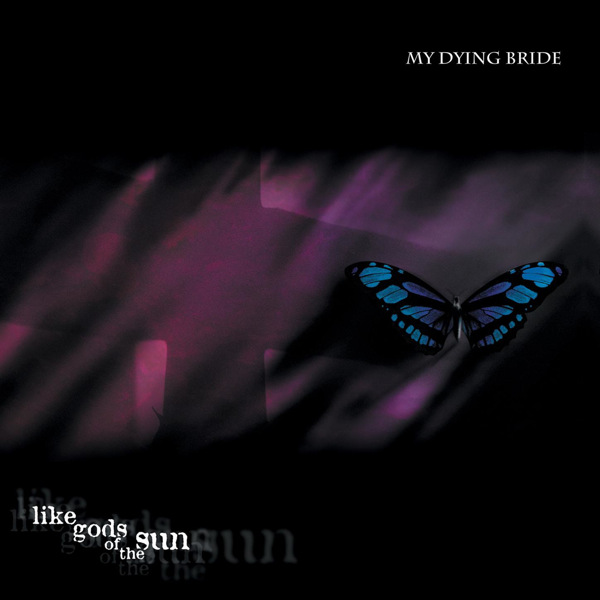
Music I Love: “Like Gods of the Sun”, My Dying Bride (1996)

There are four bands I could not live without, and the doom and despair of My Dying Bride is at the top of that list. For decades, they have been darkening the musical world with their unique brand of metal, and each of their albums has wrenched my heart and filled it with darkness.

They began their career in the early nineties, releasing the groundbreaking As the Flower Withers in 1992. Though the influence of eighties death metal is still apparent here, striking songs such as Sear Me and The Return of the Beautiful stand out as a preview for what was to come: slow, haunting and utterly crushing with the weight of darkness.

The follow-up, 1993’s Turn Loose the Swans, set the stage for the rest of their career. Gone were the fast death metal riffs, and for the first time we heard Aaron Stainthorpe’s wonderful, gloomy and heartbreaking voice, coupled with the dark growls of their death metal roots. What we were left with was the epitome of doom metal.

The Angel and the Dark River, in 1995, continued the melodic, atmospheric trend, and dispensed with growled vocals entirely. The violin, which had been a mainstay of their lineup since the very beginning, became ever more prominent, and the band were clearly leaping from strength to strength.

And then, in 1996, they released Like Gods of the Sun. To this day, this remains a masterpiece of doom metal, and it was here, on their fourth album, that we could see all the pieces finally come together. Crushing yet memorable, songs such as the title trackGrace Unhearing, and For You envelop the listener in a black, dark world of sound. Words of darkness and despair sweep around you, speaking of evil, pain and sadness:

Falling, drowning, deeper and forever

Choking, sinking, deeper into this ocean

Screaming, crying, for someone to save me

Reaching, hoping, calling to no one

Grace Unhearing – My Dying Bride, 1996

As we finally approach the ending of the album, the exceptionally dark It Will Come gives way seamlessly to the brilliant Here in the Throat. With its sudden change of rhythm halfway through, it pounds relentlessly onwards, drawing you inexorably towards the final, inevitable conclusion.

Except it doesn’t end there. After an album of doom, darkness and heaviness, something entirely other suddenly soothes its way through the speakers. Entering with haunting beauty – only synth and violin – the weeping, tragic For My Fallen Angel brings the album to the only close it could have possibly had. A three-stanza spoken poem, it swirls around you, and as the final notes linger, and then finally fade to silence, you feel as though there is nothing left in all the world, and you are left in eternal, silent darkness; a soothing, warm oblivion that will take you away forever.

This album was such a mirror for my own state of mind at the time that it has become inextricably linked to the darkest of thoughts for me. It played endlessly through sleepless, gothic, depressed nights, when candles burned down around me and the scent of blood rose in the air.

Tales of Despair: The Dancing Dead

Dance of Death, by Michael Wolgemut

There is little more terrifying than the thought of the dead risen; grim skeletons, grinning with their scythes and bearing down upon you, inescapable.

Death was everywhere in the fourteenth century. For a hundred years, France and England had been pitting their men against each other, drenching the earth with blood and filling graves with the mutilated bodies of the wounded. The crops grew poor, and the poor grew hungry; famine and disease were rampant. And most terrifying of all, a death that crept upon the young and old alike, one that grew great boils upon the skin and moved from person to person with frightening swiftness. The plague decimated nearly half of the European population during its time, and the lives of men hung by a thread.

It is against this background that the first records of the Totentanz, the Dance of the Dead, are known. In a cultural landscape dominated by murder, war, adultery and disease, people grew suddenly terrified of god’s wrath, knowing they could be struck down at any moment. In an effort to find reprise from the horrors of life, the vision of one, last moment of joy, even on the way to the end, swept across the lands: the final dance to the grave.

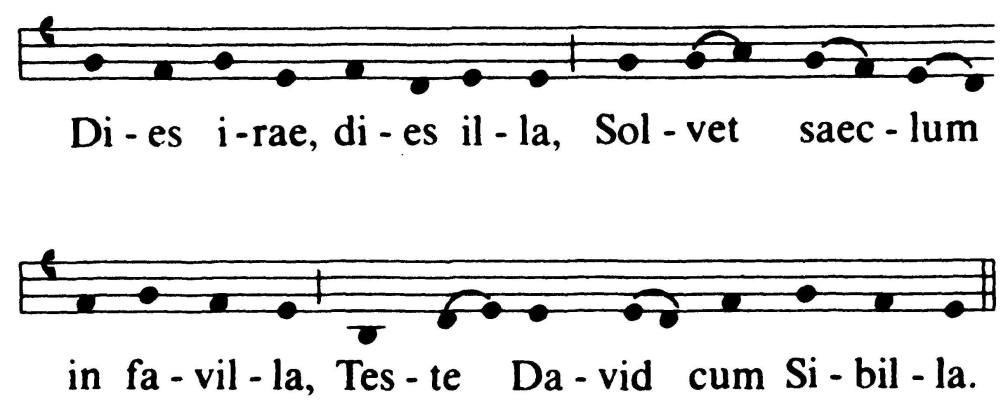
In these times, where salvation was futilely sought in the houses of god, the hymns of mass began to see the introduction of a new plainchant: the Dies Irae. This melody, full of gloom and storm, speaks of the wrath of god, the day of judgement and the ending of the world.

Original Dies Irae plainchant (c. 1260)

These sights and sounds of horrifying death endured, and nearly six hundred years later, were still incorporated into the art of the Romantic era. Franz Liszt (1811 – 1886) was one of these artists: an eccentric, infamous and exceptionally talented pianist and composer. He was the rock star of his day, sought after to perform, dazzling men and women alike with his superhuman pianistic wizardry (Liszt had enormous hands, and to this day some of his scores remain unplayable due to the stretches required).

Part of the original manuscript, in Liszt’s hand, for Totentanz for Piano and Orchestra.

Liszt was also a macabre individual fascinated by death and the medieval; he would often visit asylums, hospitals and even the dungeons of condemned prisoners, fasciated by those on the edge of death. Many of his works show the influence of these thoughts, but perhaps none more so than the dismal, thunderous and terrifying Totentanz for piano and orchestra. A set of variations on the Dies Irae plainchant, it begins with a rumbling, indiscernible piano, across which cuts the lowest instruments the orchestra has to offer, growling the Dies Irae with threatening ferocity. From there, we are swept away on a journey of madness and death, the pianist battling frantically against the inexorable march of the orchestra, flying to great heights and abysmal depths in an attempt to flee. At times, we are taken to one side, shown a moment of compassion, a moment of sadness, or even of humor – but always, we return to the rush and the doom.

Finally, the work builds to a frenetic climax, the pianist and orchestra verily trembling in fright, before plunging, without compromise or reprise, into the depths of the grave.

Liszt’s Totentanz is one of the most technically difficult pieces he ever wrote, and one of the darkest. Only some of his late compositions for piano, such as Nuages Gris, truly suggest a maudlin resignation to the ending of life, while many more of his compositions center around the country tunes of his native Hungary, and the sparkle and showmanship that gained him such fame that he wanted for nothing by his mid-forties.

Nonetheless, Liszt remained obsessed with death until the ending of his own life, in 1886. In his last years he suffered from many illnesses, some of which left him partially paralyzed and unable to play. His preoccupation with death increased with the knowledge that his own was fast approaching, and in July, he died in his bed. He has left us with a legacy of beauty, darkness and despair, and his works remain worthy of awe to this day.

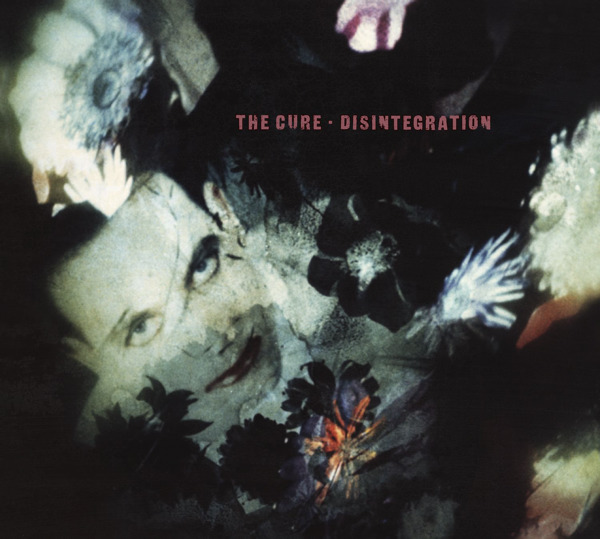
Music I Love: “Disintegration”, The Cure (1989)

So here’s a band I’m late to, having only got around to liking them in the last year. I know what you’re thinking (where the hell were you for the last thirty years?), but in my defense, I was raised on a diet of Schubert and Chopin, and in my rebellious teens began to blow my ears off with Metallica and Slayer.

The upshot is that, even though I knew I really ought to be into The Cure, I just somehow never got around to it. Life was saved by a happy coincidence involving Pandora and an unlimited iPhone data plan; it all started with The Sisters of Mercy in the car on the way to work, which turned into Depeche Mode in the car to work, which turned into Siouxsie and the Banshees, and naturally, The Cure. (Blondie and The Smiths somehow found their way in there too; did you ever notice that big hit Muse had a while ago, Uprising, has an awful lot in common with Call Me?)

Now see, I should have bloody known I loved Robert Smith and his miserable band of Brits back when I first watched The Crow, given that their song, Burn, features rather prominently (along with Ministry, which gives away the awesomeness of this movie).

But it wasn’t until very recently that I bought my very first ever The Cure album! I’m a little disappointment to say I bought it on a CD; long gone are the beloved days of actual records.

I pretty much knew it was going to have to be Disintegration. My wife personally loves Boys Don’t Cry, from their debut album, but being a good little goth, it’s just a little too upbeat for me. Disintegration is a lush, brooding and miserable head trip, from the opening acid-fuelled Plainsong, through to absolutely gorgeously despondent tracks such as Pictures of YouPrayers for Rain, and the title track.

Robert, being the good little goth he was, was in a thoroughly miserable and depressed state by 1989, upset by the fact that The Cure were popular, and consequently began using LSD to self-medicate (now, of course, we’re all stuck with valium). The result was one of their darkest records to date, and many of the lyrics reflect this. From lost love (a favorite meme of The Cure) to the anxiety of drugs, each and every track paints pictures in black:

“I think it’s dark and it looks like rain,” you said

“And the wind is blowing like it’s the end of the world,” you said

“And it’s so cold, it’s like the cold if you were dead,”

Then you smiled for a second

Plainsong – The Cure, 1989

Remembering you, how you used to be

Slow drowned, you were angels, so much more than everything

Hold for the last time, then slip away quietly

Open my eyes, but I never see anything

Pictures of You – The Cure, 1989

And I feel like I’m being eaten

By a thousand million shivering furry holes

And I know that in the morning I will wake up in the shivering cold

And the spiderman is always hungry

“Come into my parlour,” said the spider to the fly

“I have something.”

Lullaby – The Cure, 1989

This album has been on repeat for some time now, and it gets better every time. It takes me back to a time when the room was dark, and the candles were lit, and there was smoke in the air and the soothing sound of music, soft and dark, permeated the stillness. Of lying on the ground, of the scent of blood, and the trip as the floor begins to tilt beneath you.