Thought of the Week: My Own Gothic Symphony

Disclosure time: as a teenager, I walked through the halls of a deep, dark abysmal depression. Truth be told, I still do, although it’s changed and mutated to a point where I no longer do silly things like try to kill myself.

Of course, you already knew that.

You also know that I’m resuming work on my secondary novel (primary, in a sense – I began it over ten years ago), A Gothic Symphony. You can read the first few chapters already at agothicsymphony.wordpress.com. It’s a story of tragedy, depression and despair, and it’s a story that is deeply personal to me. You see, in many ways it’s my story.

All right, it’s about a girl and things happen to her that never happened to me…but they did happen to people I knew. Pretty terrible things, too. We can laugh at them now – did you really think you’d die from a bottle of baby tylenol? – but when you’re a teenager and the world has closed around you in darkness, it’s all terribly, terribly serious. This story is a way for me to keep in touch with the “me” that was, because that time of my life was, despite the torture and agony of living in blackness the whole time, extremely meaningful. It was when I found myself and my identity.

In fact, I was talking with the Lovely J only the other day about this, and how my depression became my identity. How it felt like being depressed was the only thing I was good at. This was silly, of course, because I was good at lots of stuff, but I was especially good at beating myself up about it, both figuratively and literally. This is something I still do to this day, in fact, though the physical beating myself up doesn’t happen much anymore.

You see, depression for me wasn’t a disease to be cured; it was a home to be found, a thing to aspire to. People who weren’t depressed were cattle. Or sheep. Some ungulate or another. Depression was my savior, and I walked the fine line between the comfort of misery and the lure of death. Many times my agony felt too much to bear, but more often it was the gut-wrenching pain of existence that, ironically, kept me going.

That really doesn’t make much sense, does it? Probably why I’m still going to therapy all these years later.

Music, also, was a huge part of my life. Depressing, miserable music. Music with delightful lyrics like:

“I’ll kill myself: I’ll blow my brains onto the wall!

See you in Hell, I will not take this anymore!

Now, this is where it ends, this is where I will draw the line

So scuze me while I end my life.”

Excuse Me While I Kill Myself – Sentenced, The Cold White Light (2002)

Ah, those were fun times. I still listen to Sentenced, by the way. Another one of those comforts of old times. Bands like Sentenced, My Dying Bride, Anathema, Marilyn Manson, HIM and Abyssic Hate (I’ve written about many of these previously) filled my dark world. They, too, kept me going.

Take that, everyone who says suicidal lyrics promote suicide.

All of this – the darkness, the nighttime living, the candles, the music, the hopelessness and despair – this was my gothic symphony. I wore black all day, I’d go out with black eyeliner and lipstick (bet you want to see those photos, eh?), I obsessed over spiders and vampires and anything that felt like it came from the bleakness of 1890s victorian England.

I self-harmed. A lot.

And all of these things are Amy’s gothic symphony, as well. I feel sorry for her, I really do; all of my misery, and anguish and pain are being channeled into her, and her only outlet is being read about by all of you. I had other avenues; other things that happened to me that, sadly, will not happen to Amy.

The thing is, what I lived through, and continue to live through; what Amy is going through as the pages of A Gothic Symphony unfold; none of this is unique. People live and die every day with the same torturous agony that I lived with, and at times still do. So while A Gothic Symphony is cathartic for me, it’s also a letter to everyone who’s ever felt the black claws of despair: there are people out there who know how you feel.

I know how you feel.

Featured image from http://dailywicca.com/2011/10/08/ceromancy-the-fine-art-of-candle-reading/.

Satis Logo with ©

Music I Love: “The Pale Haunt Departure”, Novembers Doom (2005)

The pale haunt departure

Novembers Doom hail from Chicago, making them one of the few fine doom metal bands not from Sweden. Their style is both crushingly heavy and hauntingly beautiful, and The Pale Haunt Departure is for me one of their finest releases.

The band was birthed to a whirlwind of lineup changes and EPs in the early 1990s, moving swiftly from a thrash/death metal band to a much eerier and doom-laden sound. In 1995 their first full-length album Amid Its Hallowed Mirth, paying homage to the sound of early releases by bands such as My Dying Bride and Anathema. This was followed by Of Sculptured Ivy and Stone, furthering the classic doom metal sound that they had set out with. In 2000 this was followed with The Knowing, but it was 2002’s To Welcome the Fade that introduced a more polished, faster and melodic sound, similar to contemporaries My Dying Bride, with whom they toured around the same time.

And then came The Pale Haunt Departure, bringing a much-needed maturity to their music, both compositionally and in production. Simultaneously shimmering and heavy, it balances fast-paced death metal with hauntingly beautiful acoustic moments deftly in a manner that reflects the progressive style of bands such as Opeth as much as it does traditional doom metal. In particular is the penultimate track Through a Child’s Eyes, a dismal ballad that brings shivers to my spine.

The album opens with title track The Pale Haunt Departure, eerie and dissonant choirs giving way to thundering drums and crushing guitars, blasting out of the gate at breakneck pace. This is followed by the epic Swallowed by the Moon, breaking in with a jarring counterpoint of acoustic strumming and deafening distortion before vocalist Paul Kehr’s refined death growls soar over the music. It is on this track that we also are introduced to his clean singing and unearthly, deep moaning. Autumn Reflection brings a change of pace, opening with delicate acoustic guitar work. When the heaviness sets in again it is at a much slower pace, trudging miserably on. Dark World Burden speeds us up again, before leading into the absolutely marvelous back half of the album. In the Absence of Grace, The Dead Leaf Echo, Through a Child’s Eyes and Collapse of the Fallen Throe merge seamlessly one into another, traveling through a world of utter darkness and misery.

One of the things that makes this album meaningful for me is the theme that threads throughout the songs: a father and husband, torn apart with guilt and misery as the darkness of his soul rips him away from all that he loves. There are moments that bring genuine tears to my eyes, where the words could have come from my own thoughts:

“Will you remember when I held you tight?

Will you remember the sound of my voice?

Once again the daylight fades, and I’m swallowed by the moon

Will this experience scar your fragile mind?

Will you remember when we would both laugh?”

Swallowed by the moon – Novembers Doom, 2005

A plaintive song to his child, begging forgiveness for the misery that he has brought, it haunts me every time I hear it. Equally powerful are the words of The Dead Leaf Echo, an acknowledgement of the utter failure as a husband:

“Since the day I let you believe, that a grand life I would provide

I am haunted by the failure you see before you, consuming the echo

To travel the road of our dreams, with my back against the wall

All I can do, is look the other way, and pretend that your face held a smile.”

The Dead Leaf Echo – Novembers Doom, 2005

So many times have these same thoughts crossed my mind that I cannot help but be drawn into this album, traveling its road of misery unto the very end. It’s something that will probably not be to everybody’s taste, but for me is the perfect draught of agony and misery.

novembers-doom32872


Satis Logo with ©

Thought of the Week: Rules in Fiction

A writing friend of mine recently shared a Facebook post about sticking to the rules in writing. I tried to share it but for some reason it wouldn’t let me, so I thought I’d write a short blog post about it instead.

The gist of the post was that in fiction, it’s important that the characters and situations abide by whatever rules are set up in the first place. Not necessarily the rules of the real world – if that were so, pretty much all fantasy would be out the window. Rather, each world that each author creates must have its rules that the characters must be bound to – whether they be rules of physics, of etiquette, or culture. Fiction is rife with examples of this, and the reason is simple: in a world where anything is possible, everything becomes mundane. We don’t want our characters to suddenly have superhuman powers because it’s convenient at that point in the story; we don’t want our spaceships to just instantly be somewhere else because it avoids the tedium of the journey.

Star Trek (a favorite of mine) is a wonderful example. From The Next Generation onward, they hired scientific consultants to make sure that the ideas they had obeyed – to an extent – the real-world rules of physics. Warp drive is one of them. If a spaceship could simply go as fast as it needed to, there’d be no fun in the adventure of getting there. Instead, they borrowed from Einstein and simply pushed the limits of the speed of light a little bit further. It turns out that the reason a ship can’t travel past warp 10 is because it would require an infinite amount of energy to do so. We aren’t bound by technology – we’re bound by the rules of the world around us.

Harry Potter is another good example. One would think that in a world of spells, curses and magic that pretty much anything could be possible. We can levitate objects, we can transform into cats, we can have light whenever we want because it’s convenient to do so – except, you have to be extremely skilled to be able to do such things. Wizards and witches are bound by the limitations of their own capabilities; Harry and his friends can’t do everything they want to, because they have yet to learn how. Even the most powerful of wizards can’t do anything, because some are better than others at various aspects of the wizarding world. Dumbledore can’t turn into a dog; McGonagall can’t predict the future (though of course, neither can Trelawney). Harry can’t stop Snape invading his mind, at least at first. (Truth be told, I haven’t read past The Order of the Phoenix, so forgive me if some of this is wrong).

From my musical background, I’m reminded of something the great Russian composer Shostakovich (I think) once said:

“The more I restrict myself in my writing, the better my music becomes.”

Alright, it’s a paraphrase and it might be from a different composer, but the point is the same. Restrict yourself as much as you can, and your writing will be the better for it.

~

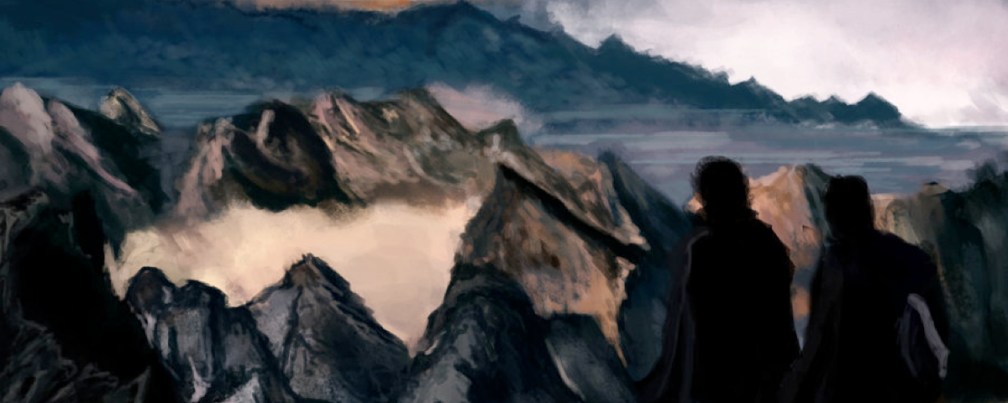
Featured image from http://www.deviantart.com/morelikethis/127027387?view_mode=2.

Satis Logo with ©