It’s Like Riding a Bike … Until It’s Not

For a while now, I’ve been wanting to make a return to music – in particular, music composition, and writing scores for orchestras, and pianos, and more. Factoring this in with the enormous amount of other creative work I want to do – writing the fourth book in “The Redemption of Erâth” series and continuing work on young adult novels – means it was unlikely I was going to really make a move on this in the near future, but the dream was always there.

And – foolishly – I assumed I would remember what to do when the time came.

It’s funny – it’s been more than ten years since I last focused my energies on creating music, and whilst I’ve certainly not forgotten the basic principles of playing music, there is a surprising amount that I have forgotten – and it makes me sad.

I (obviously) devour music as a listener; whether it be classical, rock or symphonic metal, I am always, always listening to music. And in my past, I was a somewhat accomplished pianist, played bass moderately well, and knew my music theory like the back of my hand.

And while I can still pick up a bass and pluck away, or tickle the ivories in a half-assed manner, there’s a huge amount that I no longer remember. It’s funny – it’s almost like the old, “I’ve forgotten more about making music than …”.

I recently set up a kind of office in my loft, with a nice, large desktop computer screen, electric keyboard to one side, and plenty of great music-writing software. And once the setup was complete, I fired up Logic Pro, downloaded some beautiful piano samples, and tried to play.

I couldn’t remember a single song.

Isn’t that weird? I know the keyboard, I know the layout, and can play in any key – but I can’t remember how to actually play anything. A few measures at most, and the rest is just gone.

Oh well, I thought – playing was never my main gig. So I opened up my music notation software that I haven’t used in a decade, and suddenly I couldn’t remember how to use it. As in, almost every single feature and capability of the application is a mystery to me. I’m going to need to relearn it.

They say playing an instrument is like riding a bike – you never forget how to do it. And whilst to an extent that isn’t entirely wrong, it certainly isn’t entirely true. I’ve just discovered that there is a huge knowledge gap in my mind when it comes to music, and it’s bothering me greatly; I used to know my arpeggios from my appogiaturas, and now I can barely remember what an ossia is. There’s literally terminology for musical notation that I’ve completely forgotten.

I’m confident I can relearn it, and it will eventually come back to me, but it’s disturbing to see what a lack of practice can do to something you once thought of as a part of your very being.

Is there anything you used to know well, that you feel like you’ve since forgotten?
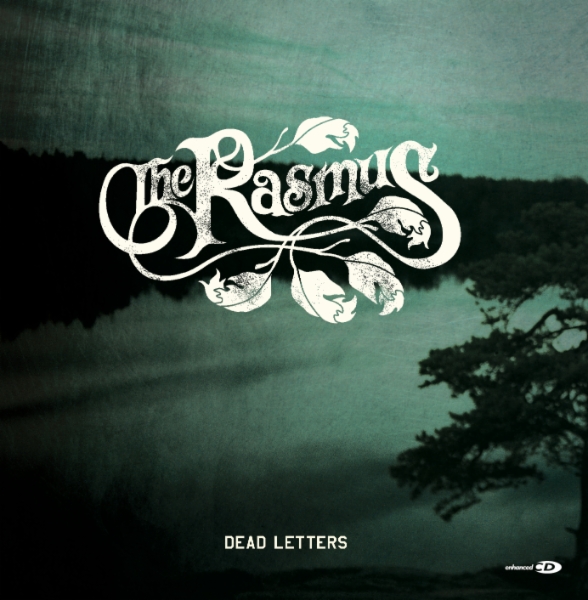
Music I Love: Dead Letters, by The Rasmus

Album: Dead Letters
Artist: The Rasmus
Year: 2003

Track Listing:

  1. In the Shadows
  2. Guilty
  3. First Day of My Life
  4. Still Standing
  5. In My Life
  6. Time to Burn
  7. Not Like the Other Girls
  8. The One I Love
  9. Back in the Picture
  10. Funeral Song

I discovered The Rasmus relatively late in life, having already lived through the angst of my teens and matured from adolescent depression into the full-blown mental illness of bipolar disorder, and I remember thinking to myself, damn – I wish I’d known about them when I was fifteen.

Despite getting their start in the mid-nineties, the Finnish rock group came to worldwide attention in 2003 with the release of their fifth album, Dead Letters. From a pop-rock beginning, Dead Letters takes a turn firmly into goth-rock territory, with dark and miserable lyrics reminiscent of their home-grown contemporaries, HIM.

Yet unlike HIM, whose music tends to drip melancholy and sadness, The Rasmus maintain a dark yet upbeat bounce throughout their work, whether on the syncopated beats of In the Shadows, the epic chorus of Guilty, or the metal-tinged riffs of First Day of My Life.

Above their previous – and some of their later – albums, though, the overall flow of Dead Letters is impeccable, with mid- to fast-paced songs taking over the first side, while the more mellow back half – with ballads like Not Like the Other Girls – leads into the raucous Back in the Picture, before petering out dramatically with Funeral Song.

This is an album that would have made a huge difference to me in my teen years, and even since then I’ve played it over a hundred times with relish, because its anthemic goth-pop tracks are everything I wanted to hear but didn’t know existed.

The Rasmus have continued to release excellent albums, from their excellent follow-up, Hide From the Sun to their U2-inspired eponymous release in 2012, but Dead Letters remains their defining album to this day, and will live on for me as an epitome of fun goth rock.

Music I Love: The Optimist, by Anathema

Album: The Optimist
Artist: Anathema
Year: 2017

Track Listing:

  1. 32.63n 117.14w
  2. Leaving It Behind
  3. Endless Ways
  4. The Optimist
  5. San Francisco
  6. Springfield
  7. Ghosts
  8. Can’t Let Go
  9. Close Your Eyes
  10. Wildfires
  11. Back to the Start

Anathema are an oddity of a band, and I love them for it. From their roots as a doom/death metal outfit in the early 1990s (in fact considered one of the “Peaceville Three” along with Paradise Lost and My Dying Bride, founding the British doom scene at the time), they’ve evolved over the past two and half decades into something much more spiritual and emotive.

Their big turnaround came after a seven-year break between A Natural Disaster (2003) and We’re Here Because We’re Here (2010), when they more or less reinvented themselves – not in terms of sound, but in terms of spirit. Where songs from the former album drag the listener on a journey of panic and despair:

Shadows are forming take heed of the warnings
Creeping around at four in the morning
Lie to myself start a brand new beginning
But I’m losing myself in this fear of living

Pulled Under at 2000 Metres a Second – A Natural Disaster

We’re Here Because We’re Here presents an entirely different shift of perspective:

Needed time to clear my mind
Breathe the free air find some peace there
I used to keep my heart in jail
But the choice was love or fear of pain and
And I chose love

Everything – We’re Here Because We’re Here

This spiritual optimism is carried forward throughout their subsequent albums, Weather Systems and Distant Satellites, and persists on their latest release, The Optimist. The irony here is that The Optimist is a sort of loose concept album based on the cover art for their 2001 effort A Fine Day to Exit – arguably their darkest and most depressing release ever.

Opening with a prelude track (which includes snippets of previous Anathema songs) that sounds like someone dragging themselves back to a car after trying to drown themselves in the ocean, we move seamlessly into the first song, Leaving It Behind, opening with a patter of electronic drumbeats before a dark storm of semi-distorted guitar washes over everything.

Yet not all is so gloomy; tracks such as Endless Ways and the title track are gentler, with soothing piano and soaring melodies, harkening back to the early days of their reinvention with We’re Here Because We’re Here and Weather Systems.

Anathema have settled on a sound that works for them; a distinct blend of acoustic, electric and electronic that is at once familiar and yet instantly identifiable. If there is a criticism to this album compositionally it is that the band relies heavily on ostinato, with endlessly repeating refrains over which the lyrics are sung in duet by both Vincent Cavanagh and Lee Douglas, alternating between Cavanagh’s angsty vocals and Douglas’ soulful melodies.

It’s hard for me to say this is my favorite Anathema album; to me, their best work remains in the past, when they were dark and depressing and matched my mood so well. That being said, this is the sound of a band at their peak maturity, knowing what works for them and running with it. Of their four “new” albums, The Optimist stands out head and shoulders above the others, and for good reason: it truly is an exemplary vision of spiritual indie rock at its best.