Thought of the Week: You Will Be Missed

On Wednesday last week, we received the news that you had died. Any death in the family is hard to process, and it has been especially difficult coming to terms with your parting, for we had not seen or spoken to you in almost two years.

We were heartbroken, of course, that day when we parted ways; you would not leave England, your home for all your life, and we could not stay. Our son – you remember him, I’m sure – cried awful tears when we had to leave, and you should know he cried the same when we learned you were now gone. We never stopped caring.

You were always there; through the tough times, all the fights and the stresses and the endless moving houses, you were always there for us. It felt at the time that you often had little to say, but I realize now that you didn’t need to. You were wise, and trusted us to figure things out – to make it work. And you know what? We did. All these years later, and we’re still a family. You’d be proud of us.

I have so many fond memories of you; we all do. Your wit was second to none, and I recall seeing, in your youth, your agility that would put an acrobat to shame. You were beautiful, always, even as you grew older; I never told you, but I always thought your beard (yes, you had a beard!) was pretty darn cute. Even in spite of your solitary nature, in spite of your natural aloofness, you were always open to a hug and a cuddle, just when it was needed. So many times I was forlorn, and your company would pull me from the depths.

I have missed you over these past few years, and even though I knew I might not see you again, there was always a hope – and it is the loss of that hope that hurts more than anything. In your old age, I wanted to see you one last time, sat warm before the fire, dozing. I wanted to look into your eyes and learn from your wisdom, your intelligence born from a childhood on the streets.

And now, I will never get that chance. You will live forever in our memories, but we will have now only the photographs to remember you by. I would have you know, friend, that every moment with you was a joy, and we could not have asked for a better relative. You will be missed, and never replaced.

We love you.

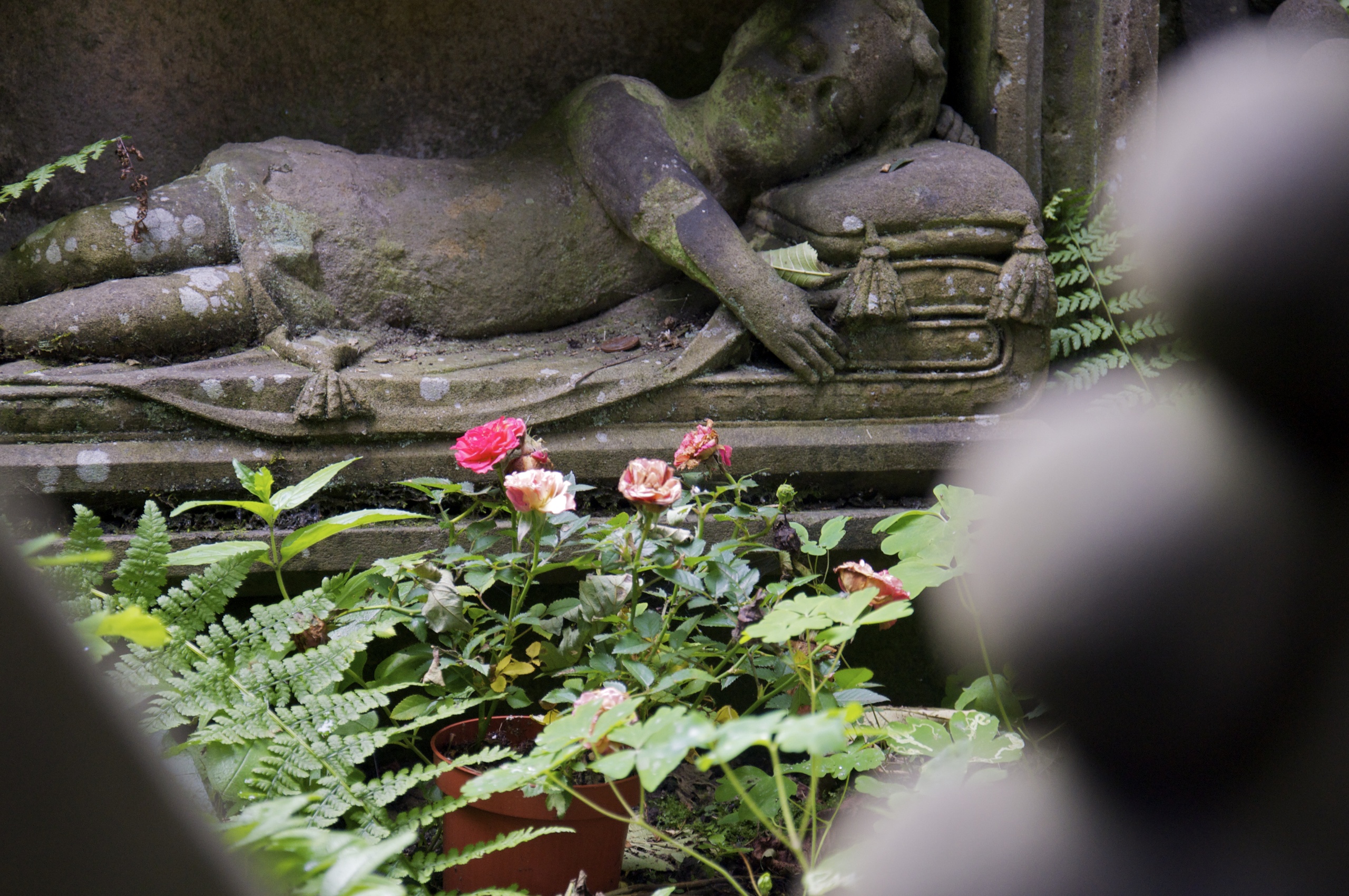
R.I.P. Shelby W.
1996 – 2012
Tales of Despair: Standing on the Edge, and Daring to Jump

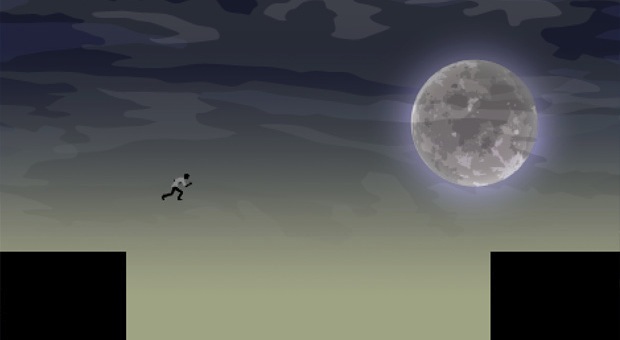
There is a game I played on my iPhone. It’s called One Single Life and I didn’t play it again. The game’s concept is very simple: you run, you jump, and you land on the next building. There is just one catch: if you die, you die. You do not get a second chance. This is one of the most thrilling games I have ever played; the knowledge that my quarter-inch avatar is about to leap quite possibly to his tiny death sends tremors to my fingers. My heart beats fast, and my palms are as dry as dust. I am terrified.

I know this sensation well, and it is the pause before the leap. In my youth, I spent a great deal of my time rock climbing, mostly at indoor rock gyms since the weather was usually bad. Some of the long routes were scary; one curved wholly over the ceiling of the gym, some sixty or seventy feet off the ground. Still, there was always a sense of safety, of a second life: the floor was cushioned, you were roped in, your climbing buddy had you.

But there was a time when a friend and I went walking in the Swiss Alps. I say walking, but we were young and foolish, and couldn’t resist the temptation to race each other up small cliffs here or there, quite proud of our budding climbing skills. This naturally delayed us, and we found ourselves quite late in the day still on a glacier, not even close to where we needed to be, and so decided quite wisely to take a shortcut over a low peak to the north. The peak had looked innocent enough on the map, but when we arrived at its base, we realized we were faced with a hundred-foot cliff face that was not quite vertical…and of course we just had to climb it. After all, it would surely be faster than going around.

I won’t speak of the abandoned Swiss military base at the top of this mountain – that is for another time – but it was halfway up this ridiculously foolish ascent that I first truly realized that I could die. Despite my confidence, the rock was loose, and in grasping for a handhold, the stone simply came free in my hand. For a single, endless moment, I wheeled slowly, sickeningly away from the cliff, releasing the rock and knowing it might hit my friend below me, and all the while grasping in utter desperation at the cliff with the two remaining fingers that attached me to it. Somehow – I have no memory of it to this day – I did not release my grip from the wall. I believe I was in tears when we finally arrived at the top.

The free fall in the stomach, the dryness of hands, the hypersensitivity to every touch and sound, are the hallmarks of standing on the edge of death. Sadly, my experience in the Alps was not the only time this sensation came over me. Countless times since then, I have found myself on that edge, often with a blade to my wrist. I have lived with people who have stood on that edge with me, and we would stare into the darkness together. The sensation, as the steel bites into your skin, or the rope rubs roughly on your neck, is not of pain, or of comfort, or even of anguish: it is the dusty, gliding feeling of standing right on that edge, toes over the abyss, and deciding to leap.

In the end, I never leapt. Some I know did, but were caught, and survived. Some leapt and we never saw them again. I could never overcome the sensation, the thrill of death that had saved me that day in the Alps, and fell back from the edge each time. I was crushed, dismayed, guilty and furious, and all this would collapse into the deadness that I was doomed to live for yet another day; but I was nonetheless alive.

This was all some time ago, and though I still see the edge each day, I keep my distance. I wouldn’t want to fall off by mistake. I can’t convincingly say that the fear of the leap has taught me anything, but I am glad of it, for had I jumped I would not know my wife, and I would not know our son, and the world would have been a darker place.

Still, I wonder at the thoughts of those others, at the moment they chose to make the leap. I imagine it was release – the final decision they would ever need to make was done, and there was no need to look back.

Douglas Adams on Tea

Yesterday, I ate a small chocolate egg and it gave me a throat infection. It isn’t very nice, and put a bit of a damper on the last day of our friends’ visit from England.

In fact, it seemed a little weird that the egg should make me sick, so I consulted with my biologist wife, who confirmed that I likely had a virus/bacteria already colonizing the wetlands of my esophagus, and the sugar from the egg was like rain after a drought – they just ate it all up, and then made lots of nasty germ babies.

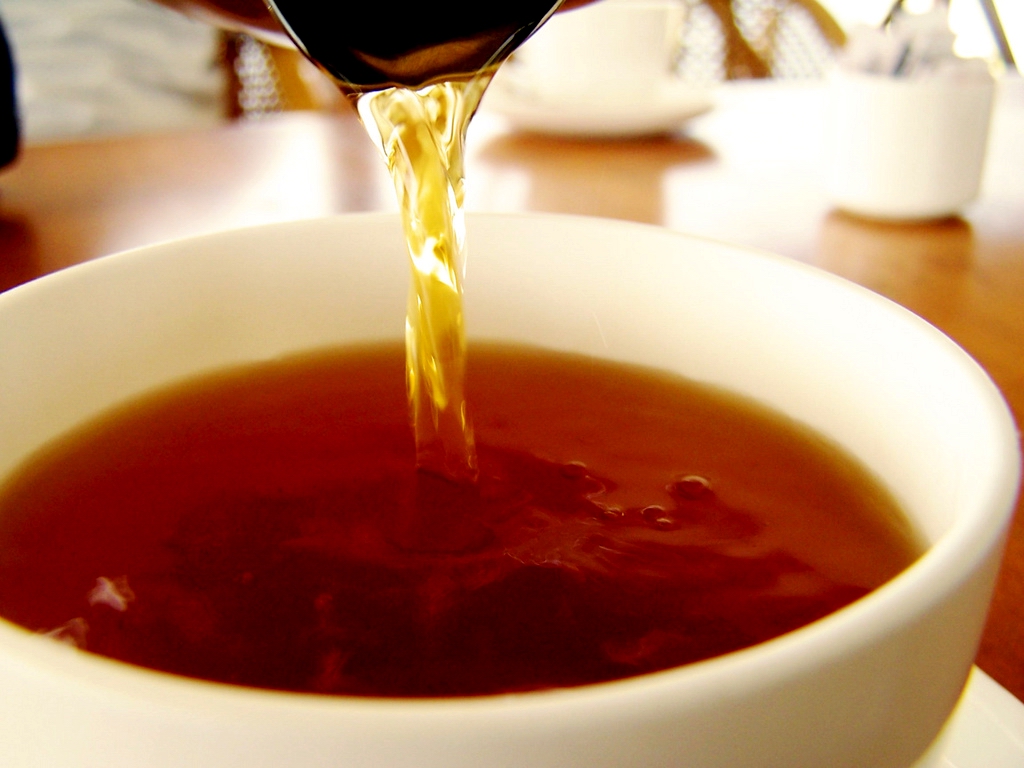
Anyway, the upshot of it is that I’ve been eating very little, and drinking lots and lots and lots of tea. I like tea; I usually poison myself with coffee most days, but only because it gives me a swifter kick up the ass. Tea is good at night, and good in the morning, and…well hell, it’s good pretty much all the time.

All this thinking about tea, coupled with our delightful British friend who drank somewhere between five to ten cups a day while she was here, got me thinking of what Douglas Adams had to say on the subject, and since it felt pretty relevant right now, I thought I’d share it with you all.

As a side note, I have no idea how copyright plays into this; I’ll give all due credit, and if someone asks me to take it down, so be it.

Tea

One or two Americans have asked me why the English like tea so much, which never seems to them to be a very good drink. To understand, you have to make it properly.

There is a very simple principle to the making of tea, and it’s this – to get the proper flavour of tea, the water has to be boilING (not boilED) when it hits the tea leaves. If it’s merely hot, then the tea will be insipid. That’s why we English have these odd rituals, such as warming the teapot first (so as not to cause the boiling water to cool down too fast as it hits the pot). And that’s why the American habit of bringing a teacup, a tea bag, and a pot of hot water to the table is merely the perfect way of making a thin, pale, watery cup of tea that nobody in their right mind would want to drink. The Americans are all mystified about why the English make such a big thing out of tea because most Americans HAVE NEVER HAD A GOOD CUP OF TEA.  That’s why they don’t understand. In fact, the truth of the matter is that most English people don’t know how to make tea anymore either, and most people drink cheap instant coffee instead, which is a pity, and gives Americans the impression that the English are just generally clueless about hot stimulants.

So the best advice I can give to an American arriving in England is this: Go to Marks and Spencer and buy a packet of Earl Grey tea. Go back to where you’re staying and boil a kettle of water. While it is coming to a boil, open the sealed packet and sniff. Careful – you may feel a bit dizzy, but this is in fact perfectly legal. When the kettle has boiled, pour a little of it into a teapot, swirl it around, and tip it out again. Put a couple (or three, depending on the size of the teapot) of tea bags into the pot. (If I was really trying to lead you into the paths of righteousness, I would tell you to use free leaves rather than bags, but let’s just take things in easy stages). Bring the kettle back up to the boil, and then pour the boiling water as quickly as you can into the pot. Let it stand for two or three minutes, and then pour it into a cup. Some people will tell you that you shouldn’t have milk with Earl Grey, just a slice of lemon. Screw them. I like it with milk. If you think you will like it with milk, then it’s probably best to put some milk into the bottom of the cup before you pour in the tea*. If you pour milk into a cup of hot tea, you will scald the milk. If you think you will prefer it with a slice of lemon, then, well, add a slice of lemon.

Drink it. After a few moments you will begin to think that the place you’ve come to isn’t maybe quite so strange and crazy after all.

* This is socially incorrect. The socially correct way of pouring tea is to put the milk in after the tea. Social correctness has traditionally had nothing whatsoever to do with reason, logic, or physics. In fact, in England it is generally considered socially incorrect to know stuff or think about things. It’s worth bearing this in mind when visiting.

Taken from “The Salmon of Doubt”, published 2002 by Macmillan

Original text written May 12, 1999

© Completely Unexpected Productions Ltd. 2002

And that’s how I’ve been drinking my tea for the past few days. Thank you, Douglas.