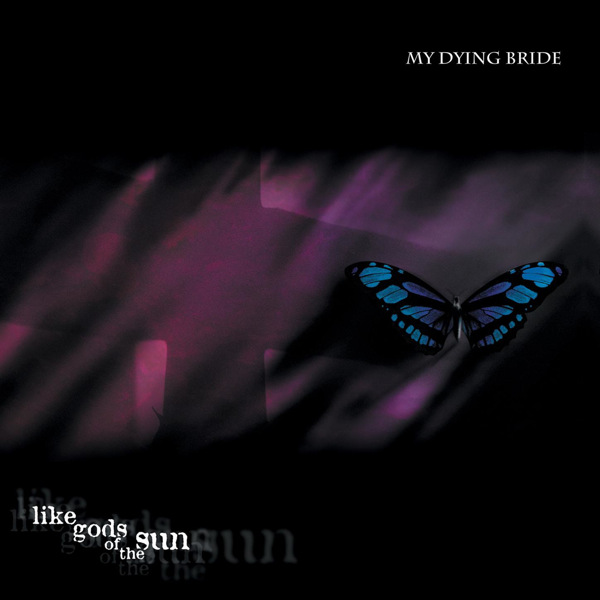
Music I Love: “Like Gods of the Sun”, My Dying Bride (1996)

There are four bands I could not live without, and the doom and despair of My Dying Bride is at the top of that list. For decades, they have been darkening the musical world with their unique brand of metal, and each of their albums has wrenched my heart and filled it with darkness.

They began their career in the early nineties, releasing the groundbreaking As the Flower Withers in 1992. Though the influence of eighties death metal is still apparent here, striking songs such as Sear Me and The Return of the Beautiful stand out as a preview for what was to come: slow, haunting and utterly crushing with the weight of darkness.

The follow-up, 1993’s Turn Loose the Swans, set the stage for the rest of their career. Gone were the fast death metal riffs, and for the first time we heard Aaron Stainthorpe’s wonderful, gloomy and heartbreaking voice, coupled with the dark growls of their death metal roots. What we were left with was the epitome of doom metal.

The Angel and the Dark River, in 1995, continued the melodic, atmospheric trend, and dispensed with growled vocals entirely. The violin, which had been a mainstay of their lineup since the very beginning, became ever more prominent, and the band were clearly leaping from strength to strength.

And then, in 1996, they released Like Gods of the Sun. To this day, this remains a masterpiece of doom metal, and it was here, on their fourth album, that we could see all the pieces finally come together. Crushing yet memorable, songs such as the title trackGrace Unhearing, and For You envelop the listener in a black, dark world of sound. Words of darkness and despair sweep around you, speaking of evil, pain and sadness:

Falling, drowning, deeper and forever

Choking, sinking, deeper into this ocean

Screaming, crying, for someone to save me

Reaching, hoping, calling to no one

Grace Unhearing – My Dying Bride, 1996

As we finally approach the ending of the album, the exceptionally dark It Will Come gives way seamlessly to the brilliant Here in the Throat. With its sudden change of rhythm halfway through, it pounds relentlessly onwards, drawing you inexorably towards the final, inevitable conclusion.

Except it doesn’t end there. After an album of doom, darkness and heaviness, something entirely other suddenly soothes its way through the speakers. Entering with haunting beauty – only synth and violin – the weeping, tragic For My Fallen Angel brings the album to the only close it could have possibly had. A three-stanza spoken poem, it swirls around you, and as the final notes linger, and then finally fade to silence, you feel as though there is nothing left in all the world, and you are left in eternal, silent darkness; a soothing, warm oblivion that will take you away forever.

This album was such a mirror for my own state of mind at the time that it has become inextricably linked to the darkest of thoughts for me. It played endlessly through sleepless, gothic, depressed nights, when candles burned down around me and the scent of blood rose in the air.

Tales of Despair: Eternal Blood

The Vampire – Philip Burne-Jones

I was one of the (probably many) goth kids who grew up obsessed with all things dark; lord amongst the demons and monsters were, naturally, the vampires. What a beautiful romance these creatures held; to live eternally, at the price of the blood of your fellow men and women. The visceral attraction of blood, warm and flowing, the bitter metallic taste, the swoon of the letting – these were the things that captured my mind.

With this came the gloriously evil tales – not only the fantasies of Nosferatu and Dracula, but the terrifying histories of Vlad the Impaler, and the Countess Báthory. Drinking, bathing, delighting in blood – all was dark, brooding, and beautiful. A natural part of this was the romanticism of the vampire, and I will hold my hand up and say that I watched many vampire movies – notably Francis Ford Coppola‘s Bram Stoker’s Dracula, long before reading of the literature.

Gary Oldman as Dracula (1992)

Francis paints a picture of a medieval man, tortured by war and death, renouncing god for eternal life upon the suicide of his one, only, true love – that he will await her forever, fed on the blood of men. And wait he does, until by happenstance, he sees her likeness in Mina, the fiancée of Jonathan Harker, a minor solicitor visiting his Transylvanian castle. Determined to fulfill his prophecy, he abandons Jonathan to his fate amongst the vampires of his castle, traveling to England in a desperate attempt to be with her. He meets with her, charms her, and seduces her – only to be torn apart again as she leaves him to be wed to Jonathan (resulting in one of the most memorable performances by Gary Oldman, weeping in agony over his loss of her).

Yet his work is done; she remembers him, and becomes infatuated, and begs him to transform her as well. And then, as she begins to change, Dracula retreats once more to his home. Now bound to him, Mina can think of nothing else, and Jonathan, now accompanied by the delightful Anthony Hopkins as Van Helsing, realize they must pursue and destroy the count if they are to save her. In the bitterest of endings, the wounded Dracula begs his long-lost love to give him peace, and – having lived to see he beloved one last time – he is put to death by her own hand.

First edition of Bram Stoker’s Dracula

Little did I know how little – and how much – this romanticized tale had in common with Bram Stoker‘s brilliant and seminal novel from 1897. While the characters remain the same, their intentions, motivations and desires could not be more different. Strikingly told from the perspective of journal entries and newspaper clippings, the loose plot is similar – Jonathan Harker, the newly-appointed solicitor, traveling to Transylvania to aid the Count Dracula in finalizing his purchase of land in London, and to teach him the ways of the English. Gradually ensnaring Jonathan in his castle with the three vampiric sisters, Dracula comes to London – for the pure desire to live amongst the great population, and to feed at his leisure.

Dracula does turn Mina, but not out of any romantic desire – it is a punishment, revenge against the men who would destroy him. He uses her, tracks his foes through her visions. In doing so, however, he betrays his own intentions, and is eventually hunted down and destroyed.

By all accounts, Bram’s original text is heart-stopping and gripping; the format of its writing ensures the survival of no character, for there is no narrator. We are left until the very end to know, even, whether the party of vampire hunters have triumphed over the bloodthirsty Count. In some ways, Francis’ version is one filled with emotional torment, anguish and despair – to pine for a lost love for four hundred years, only to be denied a life with her in the final moments is a heartbreak of unsurpassed proportions. Yet Bram’s original tale is by far the most frightening, and reeks of an entirely different form of despair: the knowledge that you are fighting an all-encompassing evil, one that delights in the destruction of all men.

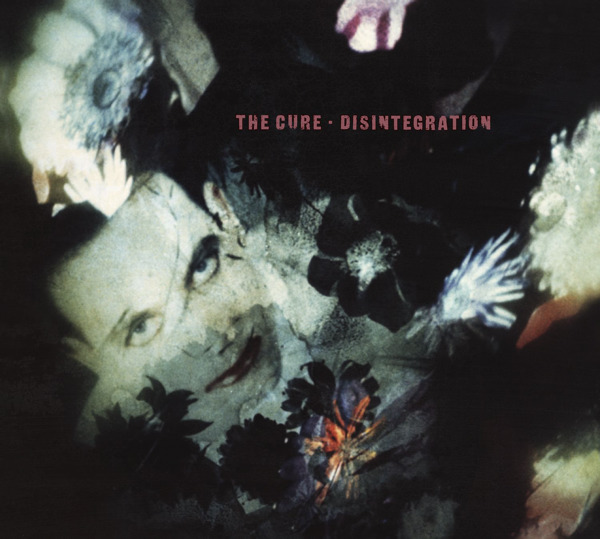
Music I Love: “Disintegration”, The Cure (1989)

So here’s a band I’m late to, having only got around to liking them in the last year. I know what you’re thinking (where the hell were you for the last thirty years?), but in my defense, I was raised on a diet of Schubert and Chopin, and in my rebellious teens began to blow my ears off with Metallica and Slayer.

The upshot is that, even though I knew I really ought to be into The Cure, I just somehow never got around to it. Life was saved by a happy coincidence involving Pandora and an unlimited iPhone data plan; it all started with The Sisters of Mercy in the car on the way to work, which turned into Depeche Mode in the car to work, which turned into Siouxsie and the Banshees, and naturally, The Cure. (Blondie and The Smiths somehow found their way in there too; did you ever notice that big hit Muse had a while ago, Uprising, has an awful lot in common with Call Me?)

Now see, I should have bloody known I loved Robert Smith and his miserable band of Brits back when I first watched The Crow, given that their song, Burn, features rather prominently (along with Ministry, which gives away the awesomeness of this movie).

But it wasn’t until very recently that I bought my very first ever The Cure album! I’m a little disappointment to say I bought it on a CD; long gone are the beloved days of actual records.

I pretty much knew it was going to have to be Disintegration. My wife personally loves Boys Don’t Cry, from their debut album, but being a good little goth, it’s just a little too upbeat for me. Disintegration is a lush, brooding and miserable head trip, from the opening acid-fuelled Plainsong, through to absolutely gorgeously despondent tracks such as Pictures of YouPrayers for Rain, and the title track.

Robert, being the good little goth he was, was in a thoroughly miserable and depressed state by 1989, upset by the fact that The Cure were popular, and consequently began using LSD to self-medicate (now, of course, we’re all stuck with valium). The result was one of their darkest records to date, and many of the lyrics reflect this. From lost love (a favorite meme of The Cure) to the anxiety of drugs, each and every track paints pictures in black:

“I think it’s dark and it looks like rain,” you said

“And the wind is blowing like it’s the end of the world,” you said

“And it’s so cold, it’s like the cold if you were dead,”

Then you smiled for a second

Plainsong – The Cure, 1989

Remembering you, how you used to be

Slow drowned, you were angels, so much more than everything

Hold for the last time, then slip away quietly

Open my eyes, but I never see anything

Pictures of You – The Cure, 1989

And I feel like I’m being eaten

By a thousand million shivering furry holes

And I know that in the morning I will wake up in the shivering cold

And the spiderman is always hungry

“Come into my parlour,” said the spider to the fly

“I have something.”

Lullaby – The Cure, 1989

This album has been on repeat for some time now, and it gets better every time. It takes me back to a time when the room was dark, and the candles were lit, and there was smoke in the air and the soothing sound of music, soft and dark, permeated the stillness. Of lying on the ground, of the scent of blood, and the trip as the floor begins to tilt beneath you.