Tales of Despair: Eternal Blood

The Vampire – Philip Burne-Jones

I was one of the (probably many) goth kids who grew up obsessed with all things dark; lord amongst the demons and monsters were, naturally, the vampires. What a beautiful romance these creatures held; to live eternally, at the price of the blood of your fellow men and women. The visceral attraction of blood, warm and flowing, the bitter metallic taste, the swoon of the letting – these were the things that captured my mind.

With this came the gloriously evil tales – not only the fantasies of Nosferatu and Dracula, but the terrifying histories of Vlad the Impaler, and the Countess Báthory. Drinking, bathing, delighting in blood – all was dark, brooding, and beautiful. A natural part of this was the romanticism of the vampire, and I will hold my hand up and say that I watched many vampire movies – notably Francis Ford Coppola‘s Bram Stoker’s Dracula, long before reading of the literature.

Gary Oldman as Dracula (1992)

Francis paints a picture of a medieval man, tortured by war and death, renouncing god for eternal life upon the suicide of his one, only, true love – that he will await her forever, fed on the blood of men. And wait he does, until by happenstance, he sees her likeness in Mina, the fiancée of Jonathan Harker, a minor solicitor visiting his Transylvanian castle. Determined to fulfill his prophecy, he abandons Jonathan to his fate amongst the vampires of his castle, traveling to England in a desperate attempt to be with her. He meets with her, charms her, and seduces her – only to be torn apart again as she leaves him to be wed to Jonathan (resulting in one of the most memorable performances by Gary Oldman, weeping in agony over his loss of her).

Yet his work is done; she remembers him, and becomes infatuated, and begs him to transform her as well. And then, as she begins to change, Dracula retreats once more to his home. Now bound to him, Mina can think of nothing else, and Jonathan, now accompanied by the delightful Anthony Hopkins as Van Helsing, realize they must pursue and destroy the count if they are to save her. In the bitterest of endings, the wounded Dracula begs his long-lost love to give him peace, and – having lived to see he beloved one last time – he is put to death by her own hand.

First edition of Bram Stoker’s Dracula

Little did I know how little – and how much – this romanticized tale had in common with Bram Stoker‘s brilliant and seminal novel from 1897. While the characters remain the same, their intentions, motivations and desires could not be more different. Strikingly told from the perspective of journal entries and newspaper clippings, the loose plot is similar – Jonathan Harker, the newly-appointed solicitor, traveling to Transylvania to aid the Count Dracula in finalizing his purchase of land in London, and to teach him the ways of the English. Gradually ensnaring Jonathan in his castle with the three vampiric sisters, Dracula comes to London – for the pure desire to live amongst the great population, and to feed at his leisure.

Dracula does turn Mina, but not out of any romantic desire – it is a punishment, revenge against the men who would destroy him. He uses her, tracks his foes through her visions. In doing so, however, he betrays his own intentions, and is eventually hunted down and destroyed.

By all accounts, Bram’s original text is heart-stopping and gripping; the format of its writing ensures the survival of no character, for there is no narrator. We are left until the very end to know, even, whether the party of vampire hunters have triumphed over the bloodthirsty Count. In some ways, Francis’ version is one filled with emotional torment, anguish and despair – to pine for a lost love for four hundred years, only to be denied a life with her in the final moments is a heartbreak of unsurpassed proportions. Yet Bram’s original tale is by far the most frightening, and reeks of an entirely different form of despair: the knowledge that you are fighting an all-encompassing evil, one that delights in the destruction of all men.
Tales of Despair: Falling Through the Roof

October 2nd, 1988.

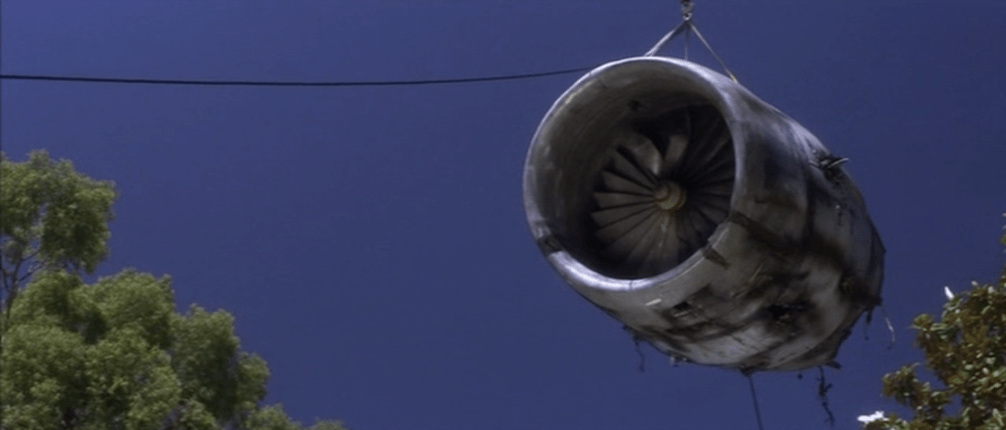
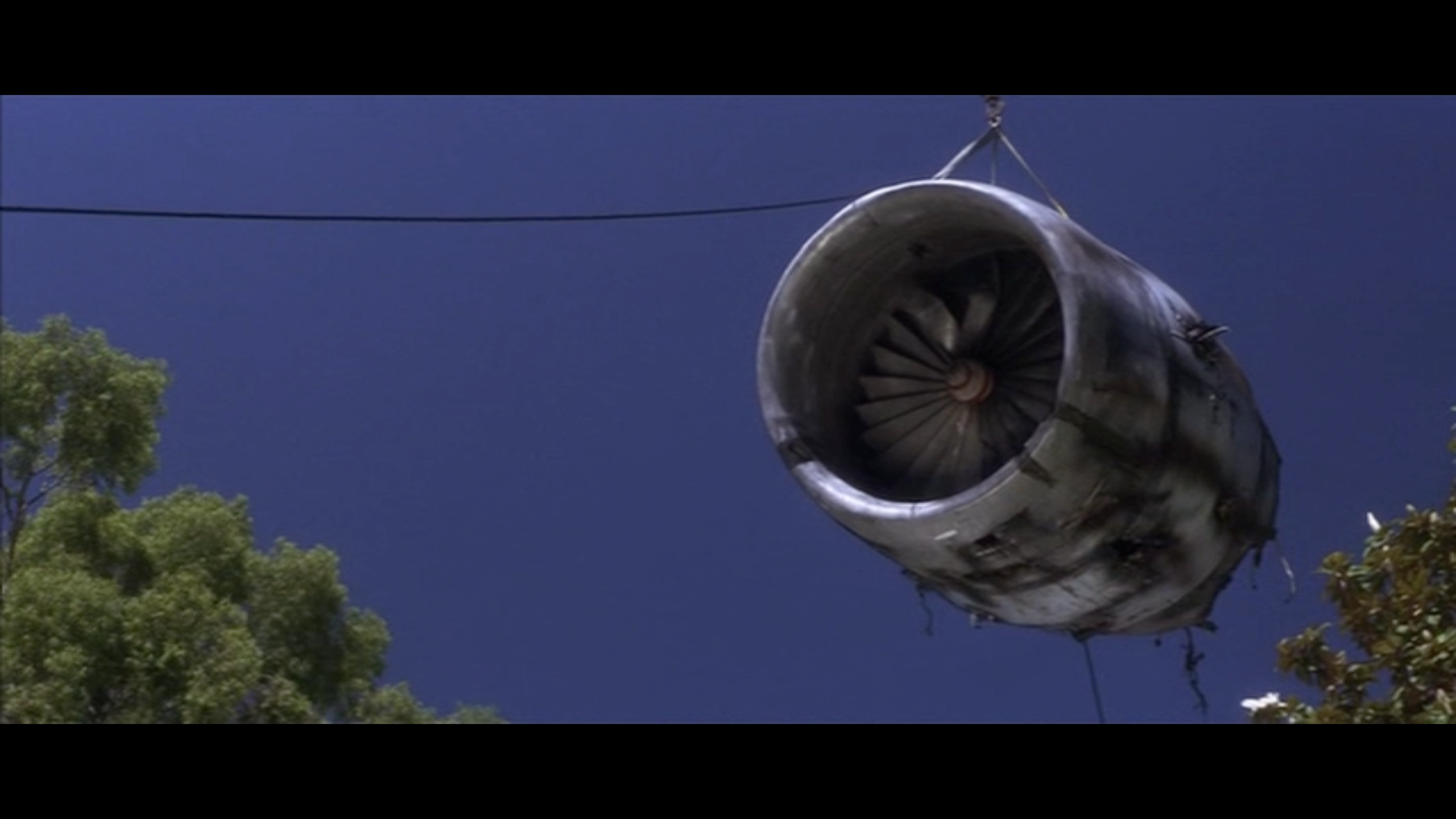
An airplane engine falls through the roof of a teenage boy’s home, and should have killed him: should have, had he not been lured out of the house by an enormous rabbit.

Sound familiar? Then you’ve probably seen Donnie Darko. It is a masterpiece of dark cinema, a mind-bending trip into the world of insanity, and it does so in the most realistic of ways: by making the insanity appear sane. For ultimately, this is what we think, isn’t it, those of us whose grip on reality is tenuous? It’s the world that’s gone mad.

The rabbit plagues Donnie; the rabbit tells Donnie the world is going to end in twenty eight days, six hours, forty-two minutes and twelve seconds. And oh, Jake Gyllenhaal does such a good job of believing it, never doubting it, and descending into the madness that comes with the freedom of knowing it’s all going to end. Yet all the while, we remain rooted firmly in the real world. School goes on; work goes on; life goes on. The rabbit is an illusion; the rabbit is real.

Certainly, the world doesn’t seem like it’s going to end. Nor does it for any of us, of course. Almost certainly, when the end does come, it will be abrupt, it will be instant, and we won’t know any different. But Donnie…oh, Donnie knows.

And it is despair that comes with this. The knowledge that any thing, any action, is meaningless. He burns down the principal’s house, and it is meaningless. A vile secret is unearthed because of it, and it, too is meaningless. He falls in love…and it is meaningless.

The story behind this film unravels the very nature of what is real and what isn’t, and in a very Descartian way dissects the meaning of armageddon. For if we end, the world ends, and there is no way of knowing otherwise. It is an end of life, an end of existence, and most importantly, and end of self.

And in the face of this ending, the destruction of self, Donnie is given a choice, and the choice is this: to let the world end…or to let the world end.

Few people will be given the chance to learn of their death before it comes. Fewer still will make the choice to roll over in bed, and let the engine fall through the roof.

Tales of Despair: The Darkness of Crows

A young man and a woman live, poor, in the slums of Detroit, deeply and madly in love with each other. They harbor a love of the gothic and the dark, and they plan to wed on Halloween, October 31.

The eve of their vows, there is an attack: their apartment broken into, she is raped, beaten and stabbed. He walks in – desperate, he cries out for her, and she for him. Moments later, he is executed before her eyes. Later, under the blinding glare of flashing blue and red, she dies. The girl she cared for and the cop who found her look at each other, and in a moment, their lives are forever changed.

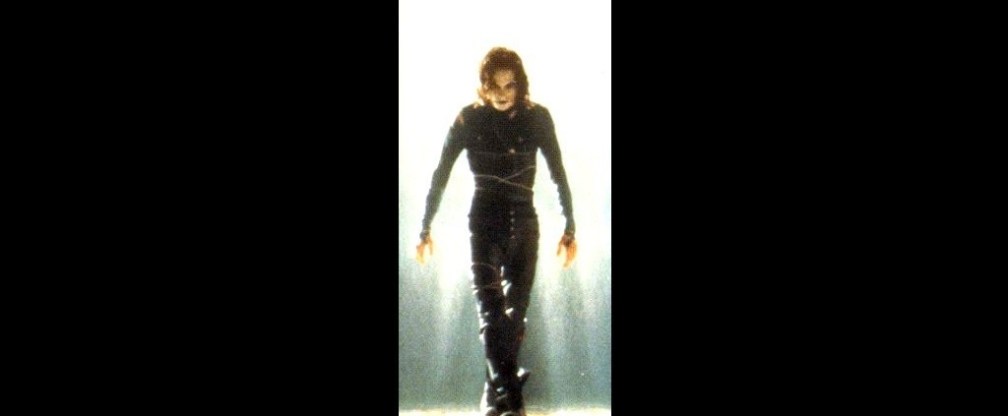
So begins The Crow, the 1994 film that changed the lives of goth kids around the world, and ended the life of Brandon Lee. I was one of those goth kids, and I first saw The Crow in the bitterest depths of my depression, when I believed all hope had gone. I watched it every night for a month, and shed tears each and every time. There are some, I’m sure, that will see this film as little more than the comic book-inspired action movie that it claims to be, but for me there has always been – and will always be – a far greater depth.

Eric Draven, murdered in cold blood before his beloved’s eyes, is raised from the grave one year later by a solitary crow, his strength and guide in his resurrected afterlife. He has returned, and seeks but one thing: retribution for the tragedy wrought upon his fiancée. One by one, he hunts down the four men who ended their lives, and returns their favor to them.

All the while, Sarah, daughter of a drug-addicted prostitute, has learned to live, and rely, on her own, seldom seeing her mother other than for money for food. Her only companion is the defeated and washed-out cop, Albrecht. Gradually, she comes to know of Eric’s return, and seeks him in the ruins of their old apartment. Though they meet, their friendship cannot be rekindled – he is not living.

There is a tone of utter despair to this film, complete futility; even as he takes revenge upon the monsters that destroyed his life, Eric knows it serves little purpose, for the past cannot be changed. In returning, he has brought nothing but hurt to all those around him, inspiring hope in Sarah and then equally crushing it. From the outset, we know that, even should he succeed, he has still lost: his life remains forever gone, and his beloved forever dead.

There is, naturally, a final dramatic battle between good and evil, ending with the beautifully gruesome death of “Top Dollar” atop a ruined cathedral, and the inspiration of hope with the redemption of Sarah’s mother and the reunion between Eric and his long-lost, ghostly Shelley. The most touching scene for me, however, is the meeting between Eric and Albrecht, in Albrecht’s apartment late at night. Albrecht lived Shelley’s dying moments, and through his eyes Eric lives it also. In a touch, every hour of pain and torment fills Eric’s mind, and he recoils, aghast.

What touches me most about this scene, however (I’m tearing up just writing about it!) is what we learn about Albrecht. Against his career, against his home life, against everything he held dear, he remained with this dying girl, this complete stranger, staying by her side and with her hand, until she died. Knowing it was inevitable.

This movie is infused with darkness and despair, gothic tragedy and loss, and yet holds a human compassion beyond many that I have seen before or since. It was everything I needed, and the tears I shed were a sweet, sweet relief.

It is yet a further, well-known tragic addition to this film that Brandon Lee, son of Bruce Lee and Linda Lee Cadwell, died whilst filming when real bullets were substituted for blanks. As such, the film has become as much a eulogy to this bright and emerging actor as it is a piece of dark, gothic cult art. They say no parent should bury their child, and this film – a piece of trite entertainment, comparatively – proved the most terrible loss a person could ever bear.

R.I.P. Brandon Lee
1965 – 1993