The Redemption of Erâth: Book 2, Chapter 8

Chapter 8: Further Tales by the Fire

It was as much an impossibility as were Brandyé’s inexplicable journeys to lands far away (or dreams, as Ermèn called them), yet Brandyé could not deny the senses that told him the friend whom he had not seen in almost five years now stood before him.

The light was fading swiftly, and Brandyé could see few of Elven’s features, but he saw well enough the short and grizzled beard, the hair so much longer than he had last seen it, and above all the life in the eyes that was ever in his memory. Elven was shawled in a thick cloak, black as his own though made of cloth and not hide, and Brandyé was astonished to see a short blade at his side, for he had never known Elven to bear a weapon.

And of course, to the side and pecking at the ground was Elven’s falcon, and at the sight of her a swell of memories rushed upon his mind, and unbidden a tear came to his eye. Brandyé reached out a hand to touch Elven, and laid his fingers upon his face. “How can it be you?”

For his part, Elven seemed unable to speak at all, for he would only shake his head, his mouth open. For many moments they gazed wordlessly upon each other, until finally the falcon broke the silence with a impatient cry.

“Hush, Sonora,” Elven spoke finally, and it seemed the spell of silence was gone, for in a moment Elven had grasped Brandyé in a great embrace. “My dearest Brandyé! I cannot even begin to say how you have been missed! Oh – in all of Erâth, how is it we should both happen upon this spot at this same moment?”

“I have become a wanderer,” Brandyé said, for it felt true enough, though he had be with Ermèn for some weeks now. “I am here in these woods for lack of anywhere else to be. But what of you?”

“There is so much I wish to tell you,” Elven said. “I live here now, with both mother and father as well as Maria and Julia. We left Consolation nearly a year ago now, seeking a sheltered life from the rule of the Fortunaé.”

“What has happened?”

“The Lord Garâth is dead – Danâr now rules in his place, and his rule is cruel.” Elven looked once more about him, as though only just now realizing the closing dark that was upon them. “Come,” he said, “follow me. I will bring you to our home; it is not far.”

For a moment Brandyé hesitated, for he was reluctant to leave Ermèn to wonder where he was, but he realized that there was little other choice; he would not arrive at Ermèn’s before full night, and he did not wish to be among the trees unprotected. He rose to his feet as did Elven, and together they set out through the trees, Elven leading the way.

It was not long before Brandyé began to see a glow among the trees ahead, and they were soon upon on a small building of logs: a veritable home in the woods, though it was of rough construction and boasted no decorations of any kind. “This is our home,” Elven said as they approached. “It was built by father and I throughout the weeks of the summer, and has proved excellent shelter since then.” He paused at the door, which was made of several uneven boards fastened to each other by yet more boards, and hinged to the wall by, of all things, thick rope. “I do not know how mother and father will take you,” he said quietly. “We have not spoken of…of my sister since you left.”

Brandyé nodded. “I will understand anything they have to say.”

Elven pushed upon the door and it swung upon, and they stepped in, and Brandyé was presented with an astonishing, welcoming, and at the same time bittersweet sight. In many ways, the inside of Elven’s home was not dissimilar to Ermèn’s; he faced one large room, though it was considerably larger than Ermèn’s. There appeared to be in the walls no windows, though Brandyé later learned that they had smaller doors cut into the wall that could be swung open during the day. Nonetheless the scene was well lit, for many candles stood on tables and counters, were held by candelabra on the walls, and even hung from the ceiling in a crude chandelier. […]

Read the complete chapter here.

The Devil’s Details: Flatland and a Nine-Year-Old

Off the grid.

Off the grid.

A conversation about Star Wars turned into multiverse theory, the shape of the universe, and infinite dimensions this morning.

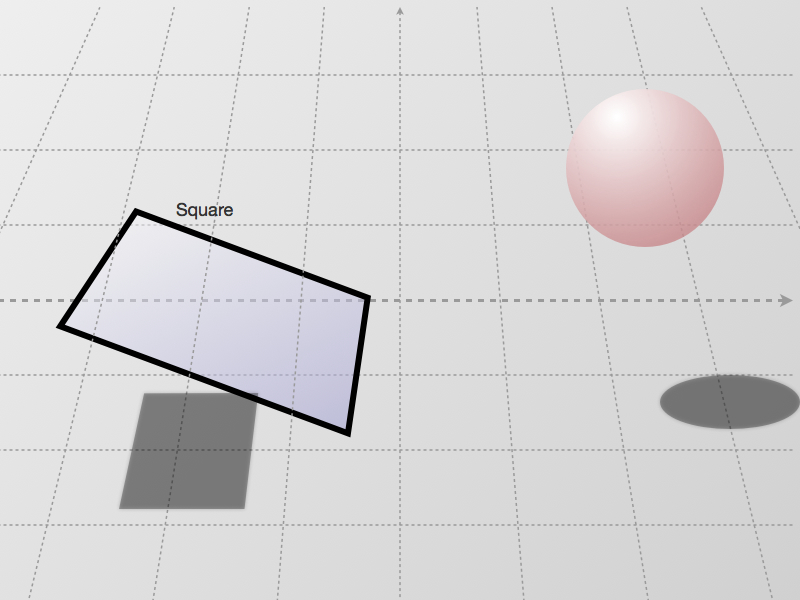
There’s a wonderful book called Flatland by Edwin Abbott Abbott. It’s essentially a discourse on the theory that there can be an infinite number of spatial dimensions under the guise of a delightful fictional story. A square lives in Flatland, where his entire world is in two dimensions.

Flatland Illustration 1

One day he meets a sphere, but of course can’t quite understand what he’s looking at: to him, he simply sees a line getting gradually bigger, and then gradually smaller.

Flatland Illustration.004

To help him understand the limitations of his two-dimensional universe, the sphere lifts the square high above his kingdom, where he can now look down upon all that he has, unto this point, seen only as lines.

Flatland Illustration 2.002

He eventually travels to a one-dimensional kingdom as well, before suggesting to the sphere that there could, in fact, be any number of higher dimensions, simply unobservable to our eye. The sphere rejects this notion as absurdity, and the square returns to his land, only to be accused of blasphemy for speaking of his adventures, and spends the rest of his life in jail. Fun stuff.

I tried reading Flatland to Little Satis once, but the language was too high for him. It’s a shame, because the concept within is presented in a wonderfully clear and understandable way.

Satis Logo with ©

Thought of the Week: Forget Einstein, H.G. Wells was the Father of Quantum Physics

MenmoonfrontMy wife recently came across H.G. Well’s War of the Worlds on TV, which was not the War of the Worlds with Tom Cruise in it, nor the infinitely superior The War of the Worlds from 1953 with Gene Barry. Interestingly (as I discovered) she had never read the original novel, which meant the twists of the tale were quite a pleasant surprise. I will say that I did not watch this adaptation with her, but suffice to say that humans use some kind of virus to destroy the rampaging Martians.

This naturally got me thinking about our beloved prototypical science-fiction authors such as H.G. Wells and Jules Verne, as well as, naturally, contemporary visionaries as well (amongst whom I would cite Gene Roddenberry as being one of the most influential). There is always a great danger in predicting the future, because it can be all too easy to become ensnared by the limitations of our mechanical knowledge, and lose sight of the true predictions: the state of human society, and the concepts that will develop over the following years, decades or centuries.

Jules Verne – the father of science fiction.

Jules Verne – the father of science fiction.

Though both Wells and Verne excelled at fantastical story-telling, to me it is undoubtedly Verne who gave the deepest thought to the progress of technology and its impact on the human race. Well’s visions of invading aliens and devolved humans in the far-flung future are engaging and frightening, but there is little reality for them to be based upon, and indeed the more we’ve come to learn of the universe, the more impossible these predictions appear.

The imaginations of Jules Verne continue to ring true through to the very present. This may be to do with the differences in their early lives; as a law student in Paris, Verne had access to some of the best literature and minds of the time, and essentially unlimited potential to nurture his fascination with travel and science. Wells, by contrast, grew up with little money, serving a number of unsatisfactory apprenticeships and teaching jobs, all in order to simply make a living. These themes ultimately reflect in his work, which appear to focus more on human interaction and class.

H.G. Wells – the father of quantum physics.

H.G. Wells – the father of quantum physics.

Verne’s fictional accounts of the future and the impossible have borne out in reality with uncanny accuracy. In 1873 he predicted the ability to travel around the globe at high speed in Around the World in Eighty Days. Fifty years later, it could be done in only three or four; today, in less than one. He famously predicted a self-powered submarine in 1870 with 20,000 Leagues under the Sea; today we have legions of such machines. He even imagined extra-terrestrial outposts such as in Off on a Comet, where a number of people are forced to coexist on a comet that pulled them from Earth as it passed nearby.

It comes as a surprise, then, that between the two authors’ visions of space travel (Verne’s From the Earth to the Moon in 1865 and Wells’ The First Men in the Moon in 1901), it is actually Wells who got it more ‘right’. Verne imagines people shot from a giant cannon; though technically possible, it would result in such phenomenal pressures that the unhappy astronauts would likely be mush by the time they left the Earth’s atmosphere.

Wells, on the other hand, creates a substance called cavorite, which has the interesting ability to repel gravity. At first glance this appears to be utterly impossible of course – far less likely than a moon-cannon – until we start to look into the world of quantum mechanics. Without diving too deep (for fear of losing myself!), I’d like to point out the theoretical graviton. When you boil the universe down to its most fundamental parts and start to observe all the wonderful weirdness that happens, one of the questions that arises is: what actually makes things attracted to each other? So far there is no answer, but one hypothesis is a massless particle called the graviton. If it exists, it would be responsible for the very thing that keeps our feet on the ground.

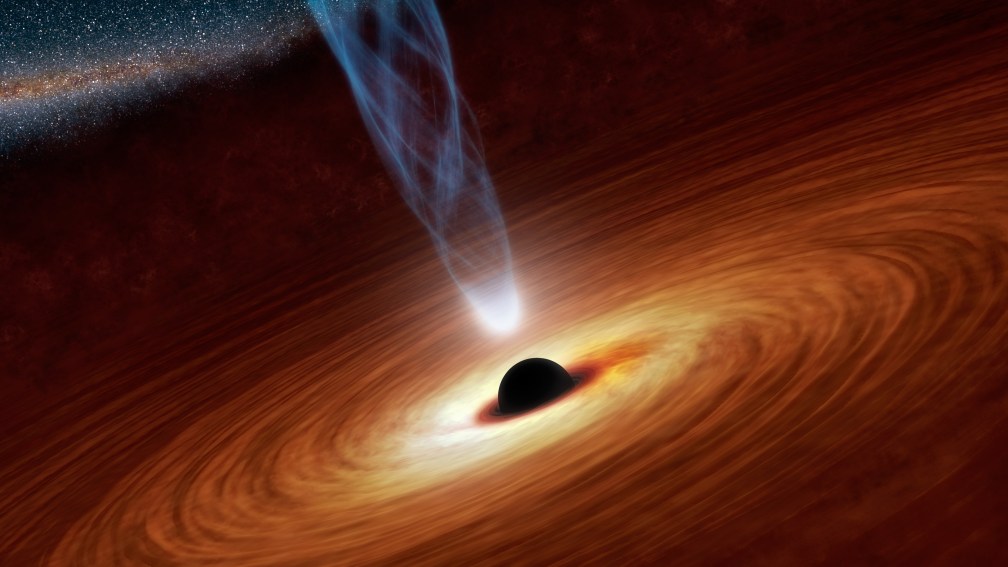
Given that, it then comes to mind that if gravity is the result of a particle, then that particle could be blocked. In fact, it may even have an anti-particle. If you could discover or create a material that could either cancel or block gravitons, you would essentially have created the potential for a free-floating object even in close proximity to extremely massive bodies – not just the earth or the sun, but potentially even black holes! Imagine the implications of that for astrophysics!

So ultimately, though Verne’s predictions have borne out more successfully and accurately, Wells holds the trump card for inventing quantum mechanics twenty years before anyone began doing any serious theoretical work in the field! Einstein, eat your heart out.

Wouldn't it be cool to be able to sit here – and not get sucked in?

Wouldn’t it be cool to be able to sit here – and not get sucked in?

Satis Logo with ©