I spent some time today (possibly wasted time—hard to say) going back through books one, two and what’s finished of three and counting the number of named characters in each book. Total so far? Ninety-three.
Nearly one hundred names in two and a half books seems pretty extreme; it means at least two newly introduced names per chapter, at least. Of course, not nearly all of these characters are important, and sometimes they are named merely for the sake of convenience (e.g. keeping track of who’s talking in dialogue). Of these ninety-three characters, twenty-four of them I’ve counted as ‘primary characters’; that is to say, characters without whom the book or the events within could not exist. Among these are:
- Brandyé Dui-Erâth: the primary protagonist and hero of the story
- Elven Dottery: his closest friend, and secondary protagonist from Exile onward
- Elỳn: an Illuèn (race of Light), who features primarily in Brandyé’s dreams in the first book
- Sonora: Elven’s sister, and catalyst for many of the events in Consolation
I ended up creating a mind map of all the characters, because I’m at the point where I’m starting to reuse certain names, simply because I forgot that I already used them before. This is what it looks like at the moment:

Mind map of the characters in The Redemption of Erâth, with partial connections shown.
This is something I actually had to separate off from the mind map I’d created for the entire book series, which included a lot of other information such as races, themes, locations, etc. This mind map is actually so large that I feel it’s now less than helpful:

Mind map of the entire book series!
Anyway, the point of this is to say that I’m starting to feel a little overwhelmed by all these characters rearing their little heads and telling me their names. It makes me realize, though, that not all great fiction necessarily relies on a great number of characters. And that makes me despair, slightly.

How many people were in The Lord of the Rings?
Now when it comes to characters, there exist absolutely phenomenal stories with very large numbers of characters. According to Middle-Earth in Statistics, there are nearly 1,000 named characters throughout Tolkien’s extended worlds, including The Lord of the Rings, The Hobbit and The Silmarillion. A huge number of these are there merely in passing, but nonetheless exist and were created by Tolkien at some point. Similarly, according to (the wonderfully reliable) Yahoo Answers, there are 772 named characters throughout the Harry Potter series. War and Peace purportedly has over 600 in a single novel.
“Without Pip, Estella, Joe, Miss Havisham and the others, there would be no story at all.”
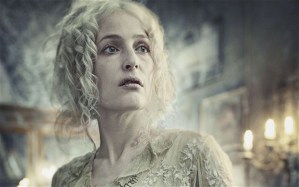
Miss Havisham—one of the most unforgettable characters in literary history.
However, one of my favorite works of fiction ever, Charles Dickens’ masterpiece Great Expectations, has only eighteen characters worth mentioning (according to SparkNotes). How did an enormous epic such as Great Expectations manage to reach its conclusion with such a comparably small number of characters? How did Dickens manage to keep the reader interested in so few people over such a long novel?
To my mind, the answer lies not only in the development of the characters, which Dickens does masterfully, but in the narrative itself, and the fact that in Great Expectations, the entire story is the story of the characters. It’s a life tale. Without Pip, Estella, Joe, Miss Havisham and the others, there would be no story at all. No one of them could be removed without severely affecting the outcome of the story, or potentially rendering it utterly impossible.
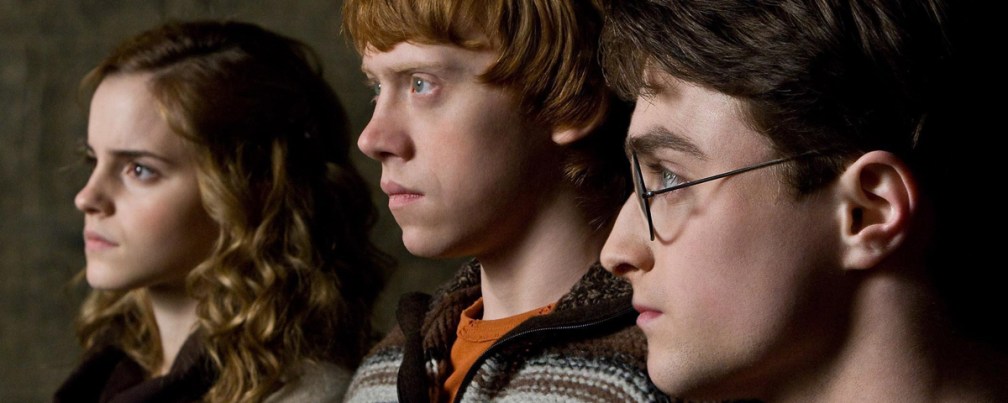
As much as I love the Harry Potter series, the same can’t truthfully be said, and this is evidenced by the film series: so many characters from the books were excised, condensed or changed that in some places things seem almost utterly different. Did Harry really need Hermione and Ron? Arguably not—the relationship between the three central characters, whilst important, doesn’t necessarily drive the story. Harry could have been attributed the characteristics of his two friends, and the battle against Voldemort and evil would have remained relatively unchanged.

Frodo and Sam—who really needed the other more?
To a lesser extent, the same could be said of The Lord of the Rings. Did Frodo really need Sam? Arguably, Merry and Pippin were more crucial to the plot than the relationship between these two main characters, for they encouraged the Ents to war, without which Helm’s Deep likely would have fallen.
And it makes me wonder about the direction of my own story. In some ways, The Redemption of Erâth is, like Great Expectations, the story of a single man’s life, from childhood to old age (much of which we have yet to see). But I’m starting to wonder if the story is too plot-driven; how much does the plot rely on the relationships between the various people of the world I’ve created? As far as I can see (and bear in mind, I can see a little further than you, the reader, at the moment!), there are only three people in the entire story that absolutely must exist for the story to be; much like Harry Potter only ‘needs’ Harry and Voldemort, or The Lord of the Rings only ‘needs’ Frodo and Sauron. At least I have more than that, but when I think about a masterpiece like Great Expectations, I realize that every one of those eighteen characters absolutely must be there, or the story fails. And it makes me wonder—where does my own story lie?
Which do you think is better—character- or plot-driven fiction?
Featured image from http://www.fanpop.com/clubs/harry-ron-and-hermione/images/7724592/title/trio-hbp-photo.

 Beetlejuice, Beetlejuice, Beetle—

 Satis Writes