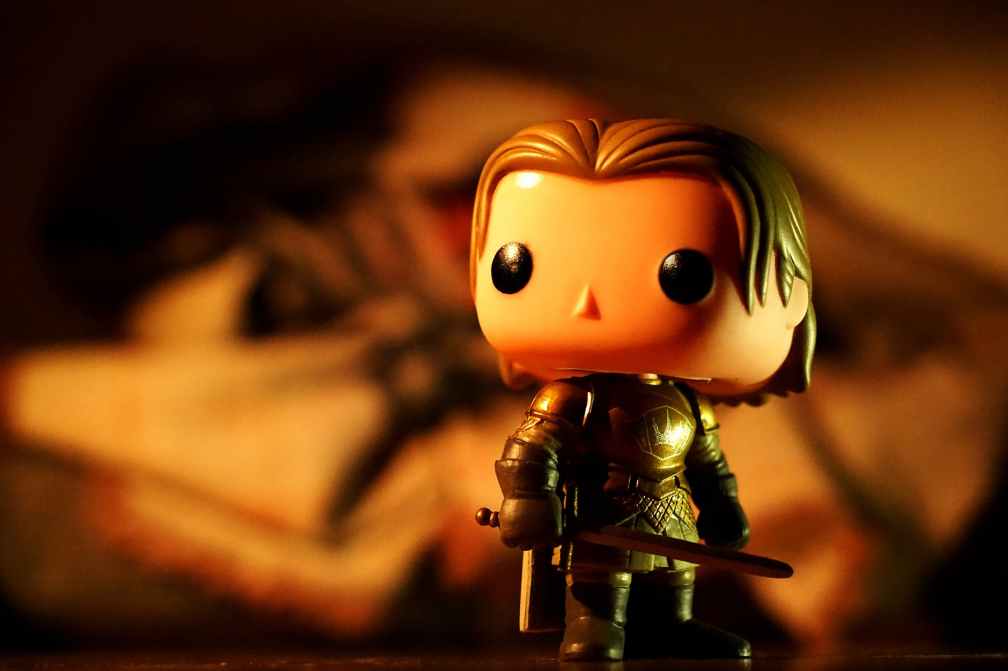
Movie Night: Mortal Engines

Year: 2008
Genre: Fantasy
Cast: Hera Hilmar, Robert Sheehan, Hugo Weaving

In a post-apocalyptic world where cities ride on wheels and consume each other to survive, two people meet in London and try to stop a conspiracy.

As odd as it might seem, I’ve never really fully embraced steampunk. I mean, I appreciate the aesthetic, the blend of the modern and the antique, and the way in which it borrows from fantasy to allow things to work without true explanation, or scientific backing. And yet somehow I’ve never read a steampunk novel, or watched a steampunk movie. Until now.

I will admit that I have a soft spot for anything by Peter Jackson, and the way in which he brought Philip Reeve’s classic to life is a visual feast. From the conglomerate blend of London, reimagined as an enormous tank (hundreds of feet high) with all the classic landmarks of St. Paul’s Cathedral and the London Underground (and was that a piece of the Gherkin I saw fronting the whole thing?), to the airships that combine hot air balloons with jet engines, this is, to the eyes at least, a steampunk dream come true.

But of course, stunning visuals is only to be expected with anything involving Peter Jackson (see The Lord of the Rings), but of late it seems he’s struggled to tell a compelling story. Many of his more recent films have been critically panned, including the unfortunate Hobbit movies, and even The Lovely Bones, all of which were based on long-beloved books. In fact, Peter Jackson seems only capable of creating remakes and adaptations, but I don’t fault him for that, because to me, I think he does a bang-up job (that’s a good job, in case you were wondering).

You see, I think a lot of people misunderstand what Peter Jackson is trying to do. He doesn’t create films for the box office, nor does he pander to the lowest common denominator. I’ve read scathing reviews of Mortal Engines by supposed critics who clearly didn’t take the time to research the original source material, or appreciate in any way that Peter Jackson is making the films that us, the readers, have always wanted.

And therein lies the beauty of this film. It doesn’t explain; it doesn’t hold the reader’s hand. Mortal Engines is a faithful adaptation, true to the aesthetic and true to the plot. If you really want to understand the depth and complexities, you really need to read the book. Many of the events, character motivations and indeed scenarios don’t make 100% sense without context, even though Jackson does manage to cram a lot of world-building and exposition into a (for him) rather modest 2-hour runtime. And if the plot seems kitsch or predictable, it’s because it’s an adaptation of a 20-year-old book whose plot is essentially the same.

I wish I’d seen Mortal Engines when it was released; Peter Jackson, and director Christian Rivers, deserve considerably more credit than they were given for this film, and to see it on the big-screen, I imagine, would have been spectacular. That being said, it’s still a delight in HD or 4K, and I’m glad I finally got around to watching it, because it’s now taken a special place for me in my film collection.

Of course, it’s never going to get a sequel, which is a shame as there are three more books to adapt, but Hollywood is run by the box office, and when a film actually loses money, you can’t expect much more to come from it. Here’s to hoping it becomes a cult classic over time, because it deserves it.

9/10 would watch again.

A Change of Pace

I’ve been struggling to write for nearly a year now. When I released my young adult novel in the autumn of 2017 (under my real name), I had a plan that I would spend 2018 writing the fourth Redemption of Erâth novel, and 2019 could focus on my second attempt at YA.

Sadly, this isn’t how things have turned out. I spent most of 2018 trying to start writing (with very little success), whilst also attempting to market and sell my YA novel. This did not work. I’ve spent most of 2019 trying to get going on the second YA novel … which also didn’t work.

In the midst of all of this, I’ve become increasingly negligent of my blog, and The Redemption of Erâth has dropped off the face of the earth. There have been a lot of ups and downs (mostly downs) over the past two years, but nothing I haven’t been able to weather before. No – this time, I think I’ve really just become complacent, and found it easier to do the things that keep me going day by day, without finding room for the things that make those days worth living.

That thing is writing. The feeling of accomplishment, of success, when writing the final lines of a novel … there is nothing comparable. It’s a deluge of heady satisfaction, and it doesn’t matter if another soul in the world ever reads it. Just knowing that something exists in the world that did not before is a reward worth a thousand kingdoms.

So what can I do? The first thing I know I can’t do is make a promise. Promises lead to broken hearts, and I’d not have that for anything. But I can try. I can continue to try, day by day, and if I write a word or not, I know that the next day will come, and with it new energies and new ideas that might be able to revive me.

So for now, I will put a pause on my YA work, and see what the world of Erâth has to hold for me, for Brandyé, Elven, and all the others. I am going to try diving back in to the fourth book in the Redemption of Erâth series, and see if my mind can fathom the next steps there better than it can in the real world.

I will do my best to post regular updates and thoughts, but as before – no promises. I do look forward, though, to the idea of regaining this community, discovering new people, and writing new worlds.

Here’s to the next 12 months!

When Characters Derail the Plot

My characters have a pesky habit of doing things I didn’t expect them to – especially when they’re talking to each other. Frankly, it’s kind of annoying and I wish they’d quit it, but they never listen to me any more than they listen to each other. It makes it very difficult to plan a conversation that advances the plot, because they don’t care which way the story goes, especially if they haven’t said their piece yet.

When I’m writing more plot-driven fantasy, like The Redemption of Erâth, it’s mildly infuriating because there are plenty of dialogue scenes that are required to explain a plot point or give some back story. It’s fine when it’s mostly one character relating events that happened to them, but when I need characters to come to a realization or change the nature of their relationship (fight, fall in love, etc.), they just don’t do what I want or expect.

When I’m writing heavily character-driven fiction, such as my YA novel 22 Scars (as C.M. North), it becomes a major pain in the ass, because the entire story hinges on people in the book saying the things that they need to say to get to the next plot point … and sometimes, they just don’t.

The problem is in keeping the back and forth of the dialogue realistic. It just doesn’t work out to have conversations like this:

Character A: “Relinquish her, you fiend!”
Character B: “Never, sir! Prepare to die!”
Character A: “Prepare thyself!”
*Fight begins because really that’s what this was all getting at in the first place*

My dialogue tends to go more like this:

Character A: “Relinquish her, you fiend!”
Character B: “Never, sir! Prepare to die!”
Character A: “Oh. That’s a rather intense threat. Maybe we should talk about this.”
Character B: “Speak what thou wilst.”
Character A: “Well you see, it looks like you aren’t treating my friend here with all that much respect, and I think you’d find yourself in a significantly happier relationship if you took a moment to listen to what she has to say.”
Character C: “I’ve been telling you all along, I’m not unhappy, I just want to be heard! You come home every day from pillaging and burning villages and you track mud all over my tapestries, and I just want you to appreciate what I do for you!”
Character B: “Hm. I think I could do that.”
Character A: “Now, isn’t that better?”

Okay, so this isn’t a great example, but it serves to illustrate how my characters, especially in dialogue, tend to take on a life of their own and drive the direction of the story in ways I never anticipated.

It makes overall plotting difficult, and I’m not a pantser. I structure my stories meticulously before beginning to write, and when I’m writing narrative passages, action sequences or even just single-character scenes, things tend to flow pretty smoothly. As soon as these characters have to interact with each other, though, things go bat-shit crazy. I have a scene I’m working on at the moment where a young man confronts his abusive father, and it’s ended up at a point where the young man is threatening the father with the broken neck of a bottle. I didn’t think that was going to happen, and I can’t see a way out of it without sending the father to the hospital, which is really going to derail the plot, because it’s going to require a police report, possibly a trial, and a whole lot of nonsense that isn’t relevant to the story. I just needed them to have a fight – the bottle was never supposed to be part of the scene, but I’ll be damned if the kid didn’t just up and snatch it.

Anyway, the point is that I find writing dialogue difficult, but perhaps not for the reason most people do. I don’t have too much difficulty writing believable dialogue, but rather the opposite: in making it too realistic, I can’t control its direction very well.

For those of you who write, what’s your experience in writing dialogue? Can you manage to convey the points necessary within your control, or do you find that, like me, the characters tend to do what they want?