
Yesterday, I ate a small chocolate egg and it gave me a throat infection. It isn’t very nice, and put a bit of a damper on the last day of our friends’ visit from England.
In fact, it seemed a little weird that the egg should make me sick, so I consulted with my biologist wife, who confirmed that I likely had a virus/bacteria already colonizing the wetlands of my esophagus, and the sugar from the egg was like rain after a drought – they just ate it all up, and then made lots of nasty germ babies.
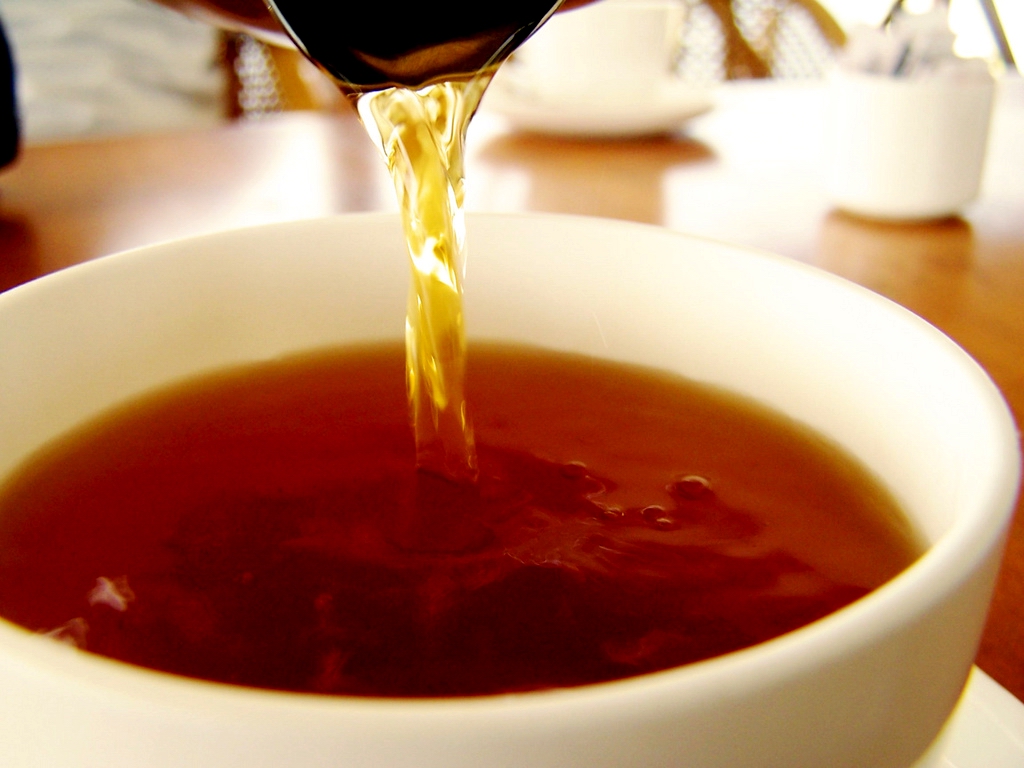
Anyway, the upshot of it is that I’ve been eating very little, and drinking lots and lots and lots of tea. I like tea; I usually poison myself with coffee most days, but only because it gives me a swifter kick up the ass. Tea is good at night, and good in the morning, and…well hell, it’s good pretty much all the time.
All this thinking about tea, coupled with our delightful British friend who drank somewhere between five to ten cups a day while she was here, got me thinking of what Douglas Adams had to say on the subject, and since it felt pretty relevant right now, I thought I’d share it with you all.
As a side note, I have no idea how copyright plays into this; I’ll give all due credit, and if someone asks me to take it down, so be it.
Tea
One or two Americans have asked me why the English like tea so much, which never seems to them to be a very good drink. To understand, you have to make it properly.
There is a very simple principle to the making of tea, and it’s this – to get the proper flavour of tea, the water has to be boilING (not boilED) when it hits the tea leaves. If it’s merely hot, then the tea will be insipid. That’s why we English have these odd rituals, such as warming the teapot first (so as not to cause the boiling water to cool down too fast as it hits the pot). And that’s why the American habit of bringing a teacup, a tea bag, and a pot of hot water to the table is merely the perfect way of making a thin, pale, watery cup of tea that nobody in their right mind would want to drink. The Americans are all mystified about why the English make such a big thing out of tea because most Americans HAVE NEVER HAD A GOOD CUP OF TEA. That’s why they don’t understand. In fact, the truth of the matter is that most English people don’t know how to make tea anymore either, and most people drink cheap instant coffee instead, which is a pity, and gives Americans the impression that the English are just generally clueless about hot stimulants.
So the best advice I can give to an American arriving in England is this: Go to Marks and Spencer and buy a packet of Earl Grey tea. Go back to where you’re staying and boil a kettle of water. While it is coming to a boil, open the sealed packet and sniff. Careful – you may feel a bit dizzy, but this is in fact perfectly legal. When the kettle has boiled, pour a little of it into a teapot, swirl it around, and tip it out again. Put a couple (or three, depending on the size of the teapot) of tea bags into the pot. (If I was really trying to lead you into the paths of righteousness, I would tell you to use free leaves rather than bags, but let’s just take things in easy stages). Bring the kettle back up to the boil, and then pour the boiling water as quickly as you can into the pot. Let it stand for two or three minutes, and then pour it into a cup. Some people will tell you that you shouldn’t have milk with Earl Grey, just a slice of lemon. Screw them. I like it with milk. If you think you will like it with milk, then it’s probably best to put some milk into the bottom of the cup before you pour in the tea*. If you pour milk into a cup of hot tea, you will scald the milk. If you think you will prefer it with a slice of lemon, then, well, add a slice of lemon.
Drink it. After a few moments you will begin to think that the place you’ve come to isn’t maybe quite so strange and crazy after all.
* This is socially incorrect. The socially correct way of pouring tea is to put the milk in after the tea. Social correctness has traditionally had nothing whatsoever to do with reason, logic, or physics. In fact, in England it is generally considered socially incorrect to know stuff or think about things. It’s worth bearing this in mind when visiting.
Taken from “The Salmon of Doubt”, published 2002 by Macmillan
Original text written May 12, 1999
© Completely Unexpected Productions Ltd. 2002
And that’s how I’ve been drinking my tea for the past few days. Thank you, Douglas.


 Satis Writes