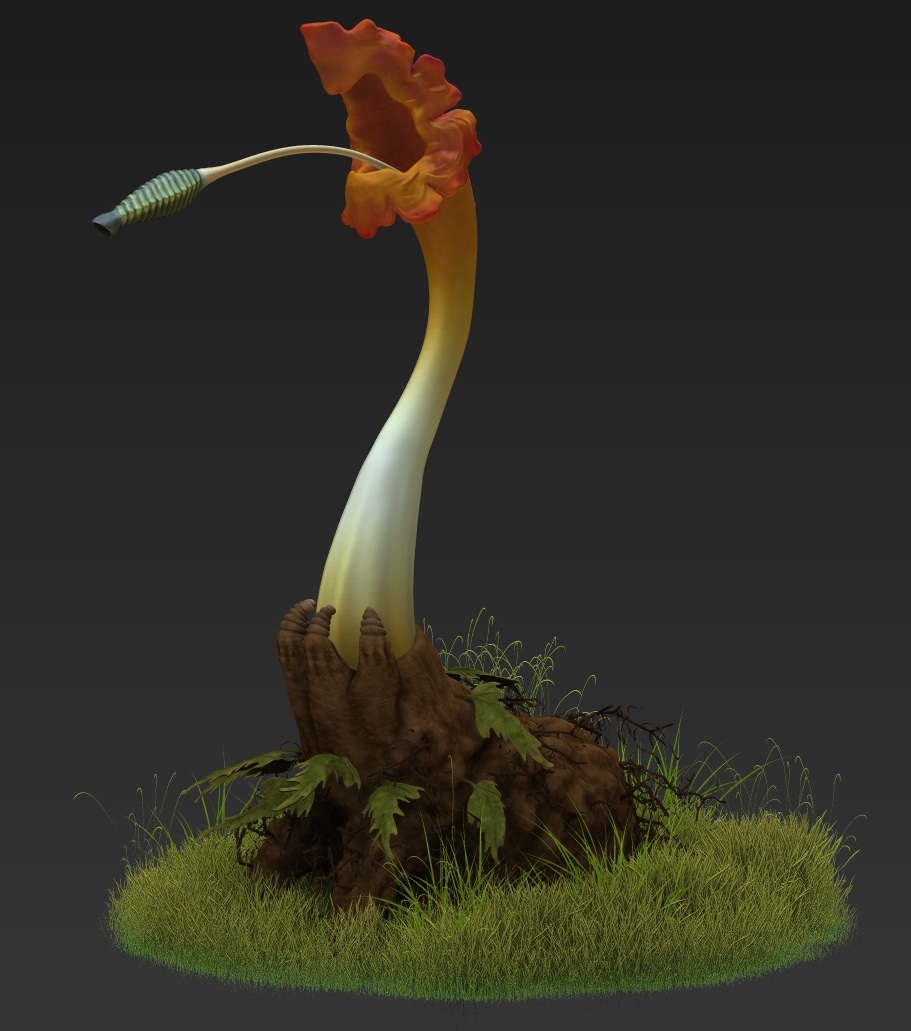
Tales of Despair: Wyndham’s Apocalypse

Does anyone remember John Wyndham? His post-war novels set the stage for science-fiction to come, and despite H.G. Wells‘ prescient War of the Worlds,  he is known to this day as the godfather of the disaster novel.

The influence of his seven stories of terror and disaster have been felt across time and medium, being seen in future novels and films for decades after his lifetime. In particular, his first three novels, The Day of the TriffidsThe Kraken Wakes and The Chrysalids set the stage for apocalypse and disaster, and the strength of human survival in the wake of mass disaster.

Imagine the terror of waking, blind in a hospital, to nothing. No sound, no smell, no sight. Wandering through the streets of London, and discovering that every other person in the great city is equally blind. Some run in fear; some capture the few sighted in violence. Many are dead. All civilization is crumbling around you.

Then, quietly and in the distance, the whisper of monsters approaches. Towering, flesh-eating monsters that ought never to have been released. That ought not to exist. That ought not to be able to move, for they are plants. Yet move they do, and their advantage is great, for among the blind, they sense the movement of the frightened, and strike them down. Poison, stings, death and rotting flesh. Tearing humans limb from limb.

The 2002 film 28 Days Later… pays homage to this brilliantly, with Jim awaking in a hospital to the sound of silence. Stunning scenes of entirely empty London streets reflect the confusion and fright of Bill Masen, suddenly thrust into a twisted reality from which there is no waking, no escape. The fight for dominance among the few survivors parallels the dictatorial colonies of Wyndham’s post-apocalytic vision.

Paramount to these tales is the gut-wrenching realization that there is no return to normality. The world as we know it is gone, and the primal laws of evolution rise: the survival of the fittest. The weak die; the world diminishes. Hope is forsaken, and the sole thought is to make it to the next dawn.

When I first read these stories as a child, I was terrified; I saw tendrils of barbs and poison pushing gently at my window in my nightmares, insidious and threatening. I saw movement in the bushes walking home from school, and ran past the rhododendrons in fright. I haven’t read the novel again since.

However, the most heartbreaking tale of strife remains, to me, The Chrysalids. Here, the apocalypse is long-gone, and the survivors have settled into a rural, medieval society, where preservation of the normal is the law of the bible, and the deviants are hunted down and destroyed. Deviants, however, are abundant. Some are hideously deformed; some are barely noticeable. A single extra toe is cause for banishment and death. And in this setting, a new strain of human comes into being: ones who can sense the thoughts of others. The horror of being driven out by one’s own parents dominates the mood of the story, and I cried bitter tears when David, Rosalind, Petra and the others – mere children, naive and alone in the world – are gradually discovered and hunted in violence by their own families.

Wyndham had his finger firmly on the pulse of despair and hopelessness, inspired perhaps by his horrific experiences in the war, including the storming of the Normandy beaches. Such visions are indelible, and it is possible that these novels were his catharsis; the only way he knew of exorcising these demons.

His terror, his fright and his visions of destruction have inspired generations of creative artists; the world is fortunate to have had such a bleak storyteller.
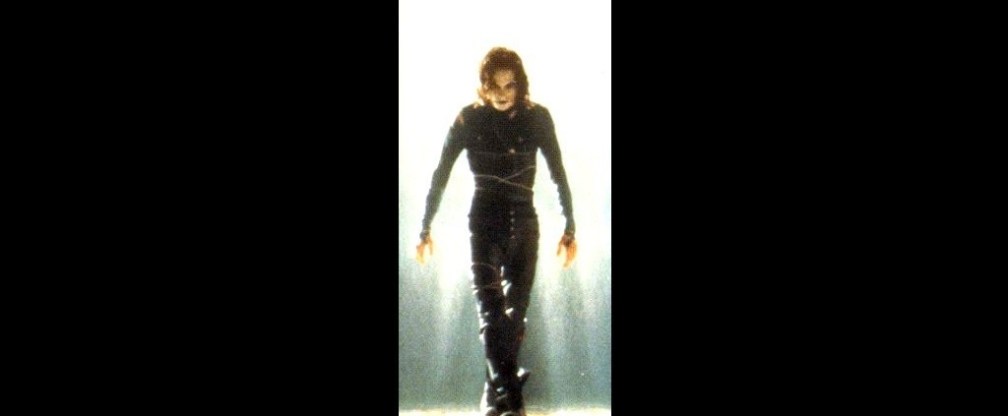

Tales of Despair: The Darkness of Crows

A young man and a woman live, poor, in the slums of Detroit, deeply and madly in love with each other. They harbor a love of the gothic and the dark, and they plan to wed on Halloween, October 31.

The eve of their vows, there is an attack: their apartment broken into, she is raped, beaten and stabbed. He walks in – desperate, he cries out for her, and she for him. Moments later, he is executed before her eyes. Later, under the blinding glare of flashing blue and red, she dies. The girl she cared for and the cop who found her look at each other, and in a moment, their lives are forever changed.

So begins The Crow, the 1994 film that changed the lives of goth kids around the world, and ended the life of Brandon Lee. I was one of those goth kids, and I first saw The Crow in the bitterest depths of my depression, when I believed all hope had gone. I watched it every night for a month, and shed tears each and every time. There are some, I’m sure, that will see this film as little more than the comic book-inspired action movie that it claims to be, but for me there has always been – and will always be – a far greater depth.

Eric Draven, murdered in cold blood before his beloved’s eyes, is raised from the grave one year later by a solitary crow, his strength and guide in his resurrected afterlife. He has returned, and seeks but one thing: retribution for the tragedy wrought upon his fiancée. One by one, he hunts down the four men who ended their lives, and returns their favor to them.

All the while, Sarah, daughter of a drug-addicted prostitute, has learned to live, and rely, on her own, seldom seeing her mother other than for money for food. Her only companion is the defeated and washed-out cop, Albrecht. Gradually, she comes to know of Eric’s return, and seeks him in the ruins of their old apartment. Though they meet, their friendship cannot be rekindled – he is not living.

There is a tone of utter despair to this film, complete futility; even as he takes revenge upon the monsters that destroyed his life, Eric knows it serves little purpose, for the past cannot be changed. In returning, he has brought nothing but hurt to all those around him, inspiring hope in Sarah and then equally crushing it. From the outset, we know that, even should he succeed, he has still lost: his life remains forever gone, and his beloved forever dead.

There is, naturally, a final dramatic battle between good and evil, ending with the beautifully gruesome death of “Top Dollar” atop a ruined cathedral, and the inspiration of hope with the redemption of Sarah’s mother and the reunion between Eric and his long-lost, ghostly Shelley. The most touching scene for me, however, is the meeting between Eric and Albrecht, in Albrecht’s apartment late at night. Albrecht lived Shelley’s dying moments, and through his eyes Eric lives it also. In a touch, every hour of pain and torment fills Eric’s mind, and he recoils, aghast.

What touches me most about this scene, however (I’m tearing up just writing about it!) is what we learn about Albrecht. Against his career, against his home life, against everything he held dear, he remained with this dying girl, this complete stranger, staying by her side and with her hand, until she died. Knowing it was inevitable.

This movie is infused with darkness and despair, gothic tragedy and loss, and yet holds a human compassion beyond many that I have seen before or since. It was everything I needed, and the tears I shed were a sweet, sweet relief.

It is yet a further, well-known tragic addition to this film that Brandon Lee, son of Bruce Lee and Linda Lee Cadwell, died whilst filming when real bullets were substituted for blanks. As such, the film has become as much a eulogy to this bright and emerging actor as it is a piece of dark, gothic cult art. They say no parent should bury their child, and this film – a piece of trite entertainment, comparatively – proved the most terrible loss a person could ever bear.

R.I.P. Brandon Lee
1965 – 1993

Tales of Despair: Your Words Are Heard

A slight change this week; I feel a need to acknowledge a few things, and a few people, and I wish, if possible, to give some hope, both to them and to myself.

Hello, all of you who have tagged a post with the word Depression. I’m glad to have met you.

I started my WordPress blog primarily as a literary endeavor, and when I realized I could browse posts by tag, I started out with stuff like Books, Writing and Fantasy. I’ve met some incredible people, and some incredible writers, and I couldn’t be happier for it. Many of them are listed in the links at the bottom of each of my pages.

A little while ago, however, I wrote a post that I considered tagging with the word Suicide (an incidental tag – it wasn’t my suicide). I was worried that WordPress might have some red flags up for that sort of thing, and so I refrained – but I was curious, and began searching for posts tagged Suicide and Depression. I was scared; this wasn’t a world I wanted to go back to. I continue to have mental health problems, but I can’t realistically call myself depressed, and I haven’t had a suicidal thought for almost five years.

What I discovered is a world of scarred, lonely and deeply traumatized people, each desperately clawing against their despair, unsure day by day if you will win the fight. You are not bad people; you are capable of kindness, generosity, compassion and selflessness – I have seen it through your tales. Many of you have admitted to some of your deepest faults; some of you have discovered the blessed anonymity of the internet and revealed things about yourselves you wouldn’t dare speak of to your closest friends. You have made me wish I had such a community of messed up minds at the lowest point of my own life, over ten years ago now.

I have found myself compelled to communicate with you, through far too many comments and replies, to the point that you probably feel like blocking me from your site, I’m sure. I am connected to you, and I would like you to know that you are connected to each other, whether you know it – whether you admit it – or not. I will never try to help you; I will (try to) never offer advice. At the deepest depths of black, when I could (quite literally) see nothing around me for the haze of darkness that clouded my vision, I swore that if I survived, and was ever in a position to talk to someone else about their own depression, I would not help them.

Some of you may understand this sentiment; help is not always what you need. Support may not be what you need. I remember; all I wanted was kinship. I was convinced, certain, that no one, ever, suffered as I suffered. No one was as depressed as me. I was proud of this fact; my cuts were deeper, my desire for death greater. I was the one that the teachers were scared of; I was the one that dropped out of school. I drew a bitter comfort from this – being depressed was the only thing I was better at than anyone else. I did not – ever – want to get better. I was offended by the very thought that there was a ‘better’ to get; this was me. To an extent, I still hold true to this; I am no longer depressed, but I am not better. I am still on medication, and my mental troubles have shifted to new, and more disturbing, patterns.

If you are seeking help; if you are seeking support, and therapy – I love you for this. If you are not – I love you no less. It is your choice. I have been touched, and disturbed, and horrified at the stories you have shared. I have no excuse for my depression; I had a happy childhood, was a good student, and loved life. When I was fifteen it all fell apart, and has never been put back together again. Some of you have suffered far, far worse – suicide, trauma, sexual abuse – and I would have you know you are stronger than you think, for you have made it this far. You have passed through terrors that would have left me screaming and insane. You are human, all of you, and you have survived. It’s what we’re best at.

Most of all, I want you to know that you have touched me, and reminded me of the desolation I used to call home. I cannot in faith wish you happiness, for you may not be seeking it. I would rather, if you would accept it, wish you balance, consolation and acceptance, both by yourselves and by others. I do not want any of you to die, though it is your choice, should you make that decision. I would have you know that I care for you, as a dispassionate, third party. I’m not going to intervene; I’m not going to interfere. I will continue to listen, though, for as long as you keep writing.

As a final word, something you will probably as one reject: you are all wonderful.

Thank you.


Satis


Alexandra (alexandra writes; aftermath)

bipolarmuse (bipolarmuse)

Carl (stillfugue)

lifeonaxis1 (Mood Disorder, Not Otherwise Specified)

Mandi (Mandi A. Stores)

Nell (letters to dom; pensées sans frontières)

SainT (Dead Negatives)

Sean (alltheavenueslookugly)

Stella (My Body the City: The Secret Life of a Manhattan Call Girl)