Thought of the Week: Them’s Fightin’ Words

I sort of need to make it abundantly clear from the outset tonight that I love my wife very much. Just so you know, sweetie.

My wife and I have known each other for almost ten years. It’s the longest either of us have been in a relationship, which is either very encouraging, or incredibly depressing (depending on how you look at it). There’s a lot we’ve learned together, not the least of which was how to raise a child. I’ll boast a little here and say I’ve probably done most of the learning: I’ve learned to cook (badly), I’ve learned to clean (badly), I’ve learned not to leave the toilet seat up (mostly), and I’ve learned it’s not okay to steal the covers back in the middle of the night, even in February.

My wife has learned that I can be a real jerk (too often).

I’ve learned that my wife should matter more than myself (she already knew that). I’ve also learned that shoulds aren’t necessarily dos, and that there’s a lot more learning to go. I should wipe the stove; I should turn the lights out when I leave the room; I should massage her feet every night.

I should.

And hey – there are times I do these things. Usually I don’t do them very well (except for the light thing, that’s kind of black and white (ha!)), but I do try to do them. Now trying, of course, just isn’t good enough, as my wife knows, so I’ll keep trying harder. Some day I may actually succeed!

Yet…I feel there is one thing I have not learned, and – sorry for this, sweetie – I don’t think she’s learned either, which is this: to not take each other’s frustrations personally. We fight, we do. We fight a lot. I kind of don’t have much of a reference for this, but I hear that most people don’t quite fight so much. And I start wondering why.

I am usually exceptionally good at understanding other people, establishing empathy and predicting their behavior. I am, by my trade, an excellent listener and verbal communicator. I can express concepts simply and clearly, and I can make people feel good about bad situations.

So why do my words fail me with my wife? Why do I end up screaming at the top of my lungs at the person I should love above all others, about…freakin’ blinds?

(Why, for that matter, do my powers of self-analysis equally fail me when I try to figure these things out?)

All I can think is this: when my wife says something critical of me, I feel hurt; I feel devastated. When someone at work says the same thing, I am able to take it at face value, respond in kind, and learn from the experience. With my wife…I either imitate a hedgehog or the Incredible Hulk.

The irony is that I believe she gets frustrated just as equally, but at something entirely different: my lack of ability to listen to, and act upon, her critiques. Can anyone see the cycle here yet? It is a personal affront to her – an insult, even – for me to forget to take out the garbage when I told you to last night! If you see what I mean.

So where to go? What to do? I love her; she (should) know that. She loves me, and I (should) know that, also. But when I piss her off, her response pisses me off, and that response pisses her off, and before you know it we’re in a free-for-all piss-fight and I explode out of my shirt and leap through the roof (in actuality, I can be quite scary).

I suppose ultimately, I just want to feel listened to. Uh…I guess she probably feels the same.

So when can we talk?

Thought of the Week: You Will Be Missed

On Wednesday last week, we received the news that you had died. Any death in the family is hard to process, and it has been especially difficult coming to terms with your parting, for we had not seen or spoken to you in almost two years.

We were heartbroken, of course, that day when we parted ways; you would not leave England, your home for all your life, and we could not stay. Our son – you remember him, I’m sure – cried awful tears when we had to leave, and you should know he cried the same when we learned you were now gone. We never stopped caring.

You were always there; through the tough times, all the fights and the stresses and the endless moving houses, you were always there for us. It felt at the time that you often had little to say, but I realize now that you didn’t need to. You were wise, and trusted us to figure things out – to make it work. And you know what? We did. All these years later, and we’re still a family. You’d be proud of us.

I have so many fond memories of you; we all do. Your wit was second to none, and I recall seeing, in your youth, your agility that would put an acrobat to shame. You were beautiful, always, even as you grew older; I never told you, but I always thought your beard (yes, you had a beard!) was pretty darn cute. Even in spite of your solitary nature, in spite of your natural aloofness, you were always open to a hug and a cuddle, just when it was needed. So many times I was forlorn, and your company would pull me from the depths.

I have missed you over these past few years, and even though I knew I might not see you again, there was always a hope – and it is the loss of that hope that hurts more than anything. In your old age, I wanted to see you one last time, sat warm before the fire, dozing. I wanted to look into your eyes and learn from your wisdom, your intelligence born from a childhood on the streets.

And now, I will never get that chance. You will live forever in our memories, but we will have now only the photographs to remember you by. I would have you know, friend, that every moment with you was a joy, and we could not have asked for a better relative. You will be missed, and never replaced.

We love you.

R.I.P. Shelby W.
1996 – 2012

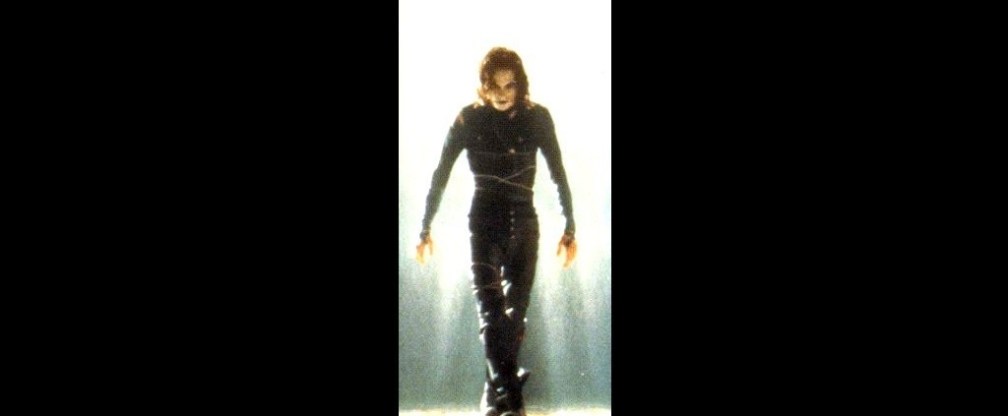
Tales of Despair: The Darkness of Crows

A young man and a woman live, poor, in the slums of Detroit, deeply and madly in love with each other. They harbor a love of the gothic and the dark, and they plan to wed on Halloween, October 31.

The eve of their vows, there is an attack: their apartment broken into, she is raped, beaten and stabbed. He walks in – desperate, he cries out for her, and she for him. Moments later, he is executed before her eyes. Later, under the blinding glare of flashing blue and red, she dies. The girl she cared for and the cop who found her look at each other, and in a moment, their lives are forever changed.

So begins The Crow, the 1994 film that changed the lives of goth kids around the world, and ended the life of Brandon Lee. I was one of those goth kids, and I first saw The Crow in the bitterest depths of my depression, when I believed all hope had gone. I watched it every night for a month, and shed tears each and every time. There are some, I’m sure, that will see this film as little more than the comic book-inspired action movie that it claims to be, but for me there has always been – and will always be – a far greater depth.

Eric Draven, murdered in cold blood before his beloved’s eyes, is raised from the grave one year later by a solitary crow, his strength and guide in his resurrected afterlife. He has returned, and seeks but one thing: retribution for the tragedy wrought upon his fiancée. One by one, he hunts down the four men who ended their lives, and returns their favor to them.

All the while, Sarah, daughter of a drug-addicted prostitute, has learned to live, and rely, on her own, seldom seeing her mother other than for money for food. Her only companion is the defeated and washed-out cop, Albrecht. Gradually, she comes to know of Eric’s return, and seeks him in the ruins of their old apartment. Though they meet, their friendship cannot be rekindled – he is not living.

There is a tone of utter despair to this film, complete futility; even as he takes revenge upon the monsters that destroyed his life, Eric knows it serves little purpose, for the past cannot be changed. In returning, he has brought nothing but hurt to all those around him, inspiring hope in Sarah and then equally crushing it. From the outset, we know that, even should he succeed, he has still lost: his life remains forever gone, and his beloved forever dead.

There is, naturally, a final dramatic battle between good and evil, ending with the beautifully gruesome death of “Top Dollar” atop a ruined cathedral, and the inspiration of hope with the redemption of Sarah’s mother and the reunion between Eric and his long-lost, ghostly Shelley. The most touching scene for me, however, is the meeting between Eric and Albrecht, in Albrecht’s apartment late at night. Albrecht lived Shelley’s dying moments, and through his eyes Eric lives it also. In a touch, every hour of pain and torment fills Eric’s mind, and he recoils, aghast.

What touches me most about this scene, however (I’m tearing up just writing about it!) is what we learn about Albrecht. Against his career, against his home life, against everything he held dear, he remained with this dying girl, this complete stranger, staying by her side and with her hand, until she died. Knowing it was inevitable.

This movie is infused with darkness and despair, gothic tragedy and loss, and yet holds a human compassion beyond many that I have seen before or since. It was everything I needed, and the tears I shed were a sweet, sweet relief.

It is yet a further, well-known tragic addition to this film that Brandon Lee, son of Bruce Lee and Linda Lee Cadwell, died whilst filming when real bullets were substituted for blanks. As such, the film has become as much a eulogy to this bright and emerging actor as it is a piece of dark, gothic cult art. They say no parent should bury their child, and this film – a piece of trite entertainment, comparatively – proved the most terrible loss a person could ever bear.

R.I.P. Brandon Lee
1965 – 1993