Tales of Despair: Metamorphosis


School has a way of taking beautiful works of art and literature and turning them into the most abysmal, monotonous and over-analyzed trite. I was very glad to have read To Kill a Mockingbird long before high school, because it most certainly would have ruined for me. The same is true of The Catcher in the Rye and Of Mice and Men; thanks to my mother’s literary promiscuity (now that doesn’t sound good, does it?), I was exposed to a great canon of wonderful books at a young age, long before school was able to ruin them for me. Some were unsalvageable; I can’t see Macbeth without my mind involuntarily calling up hours of drudgery, trying to find the social implications of the blood on Lady Macbeth’s hands.

One that I barely escaped with was Franz Kafka‘s bizarre tragedy, The Metamorphosis (Die Verwandlung). I discovered it in the school library one day, after someone had suggested it as a great example of existentialism. I’m not to convinced of this anymore, but at the time existentialism was one step away from nihilism, and I was sorts of crazy.

The Metamorphosis is only short, and is very nearly a study in fictional writing taken to an extreme. The best fiction is that which is almost real – introducing a single fantastical element, and watching the fallout. Such is the case when traveling salesman Gregor Samsa wakes up as a giant insect. This is, in a way, the only fiction in the tale; the rest is reactionary.

Imagine being that insect; there is nothing tying you to the reality you knew only the night before; your very body has betrayed you, you are unable to control your movements, and your voice is unrecognizable. Your family, those closest to you, are disgusted by your appearance. Your father wishes you dead, your mother pretends you aren’t there, and only your sister – your closest friend – has even the courage to throw table scraps into the room.

Gregor begins to hide under furniture, all the while desperately clinging to his humanity. His family, seeing his grotesque form, are unaware that he is still able to hear and understand their every word…even when they discuss his own demise.

And eventually, of course, the tale ends; as befits a cockroach, Gregor eventually crawls under a couch, and dies.

Kafka had the strength of will to push his story to its final, logical conclusion; so often remiss in modern fiction, he realized the nature of Gregor’s metamorphosis, and the importance of its permanence. The great changes in life are undoable – both the good, and the bad. Many of us, I’m sure, have at times felt as though we are that insect; deviant, shunned, unwanted and loathed, a burden on those closest to us. And in this, Kafka doesn’t shy away in asking: are we all merely looking for that couch to crawl under?
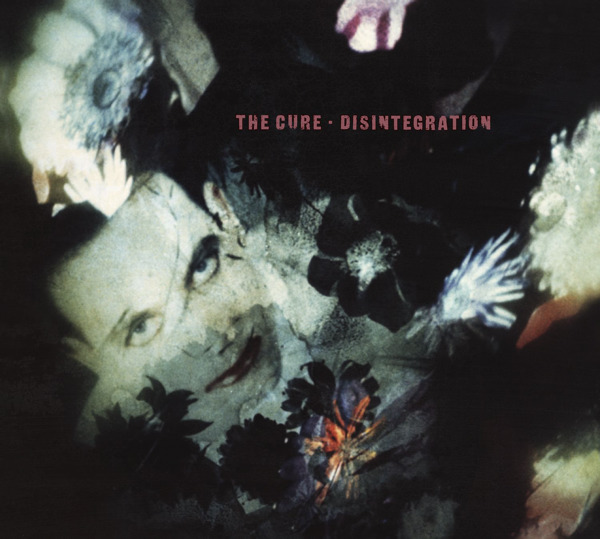
Music I Love: “Disintegration”, The Cure (1989)

So here’s a band I’m late to, having only got around to liking them in the last year. I know what you’re thinking (where the hell were you for the last thirty years?), but in my defense, I was raised on a diet of Schubert and Chopin, and in my rebellious teens began to blow my ears off with Metallica and Slayer.

The upshot is that, even though I knew I really ought to be into The Cure, I just somehow never got around to it. Life was saved by a happy coincidence involving Pandora and an unlimited iPhone data plan; it all started with The Sisters of Mercy in the car on the way to work, which turned into Depeche Mode in the car to work, which turned into Siouxsie and the Banshees, and naturally, The Cure. (Blondie and The Smiths somehow found their way in there too; did you ever notice that big hit Muse had a while ago, Uprising, has an awful lot in common with Call Me?)

Now see, I should have bloody known I loved Robert Smith and his miserable band of Brits back when I first watched The Crow, given that their song, Burn, features rather prominently (along with Ministry, which gives away the awesomeness of this movie).

But it wasn’t until very recently that I bought my very first ever The Cure album! I’m a little disappointment to say I bought it on a CD; long gone are the beloved days of actual records.

I pretty much knew it was going to have to be Disintegration. My wife personally loves Boys Don’t Cry, from their debut album, but being a good little goth, it’s just a little too upbeat for me. Disintegration is a lush, brooding and miserable head trip, from the opening acid-fuelled Plainsong, through to absolutely gorgeously despondent tracks such as Pictures of YouPrayers for Rain, and the title track.

Robert, being the good little goth he was, was in a thoroughly miserable and depressed state by 1989, upset by the fact that The Cure were popular, and consequently began using LSD to self-medicate (now, of course, we’re all stuck with valium). The result was one of their darkest records to date, and many of the lyrics reflect this. From lost love (a favorite meme of The Cure) to the anxiety of drugs, each and every track paints pictures in black:

“I think it’s dark and it looks like rain,” you said

“And the wind is blowing like it’s the end of the world,” you said

“And it’s so cold, it’s like the cold if you were dead,”

Then you smiled for a second

Plainsong – The Cure, 1989

Remembering you, how you used to be

Slow drowned, you were angels, so much more than everything

Hold for the last time, then slip away quietly

Open my eyes, but I never see anything

Pictures of You – The Cure, 1989

And I feel like I’m being eaten

By a thousand million shivering furry holes

And I know that in the morning I will wake up in the shivering cold

And the spiderman is always hungry

“Come into my parlour,” said the spider to the fly

“I have something.”

Lullaby – The Cure, 1989

This album has been on repeat for some time now, and it gets better every time. It takes me back to a time when the room was dark, and the candles were lit, and there was smoke in the air and the soothing sound of music, soft and dark, permeated the stillness. Of lying on the ground, of the scent of blood, and the trip as the floor begins to tilt beneath you.

Tales of Despair: The Suffering of Artists

This is a slightly different take on Tales of Despair this week; rather than focusing on a particular artist, I want to address the nature of despair and depression in art – why is it that darkness forms such a large part of the things we create? What is it that drives the most wonderful among us to the brink of despair?

There was once a young boy who grew up in an idyllic family environment; a boy who enjoyed life and love to paint and draw. And then, when he was only seven years old, his parents divorced. No one spoke to him about it. No one asked him how he felt. His father promised not to remarry, and did. He had another child, and the boy felt replaced. His mother remarried, and was beaten, and abused, and hospitalized. The boy watched each time. The adults, they didn’t see him. They didn’t care.

He continued to draw, and to paint. His work grew dark. He learned to play, and his music was dark. He took drugs, and it took his mind away, and relived the pain for a short moment.

And when he left his home, he avoided people; he made few friends, and they shared his misery. Some of them played too, and they began to play together. Out of the depths of depression, the music they made lifted him; he wrote about his pain, and he sang it to the world. And the world – they drank it deeply, and said he was a great artist. They said he was the voice of a generation; they said he would change the world.

And he didn’t care for what they said. Each word of praise demeaned his writing, abused his art. His music hated the world, and they were too dumb to see it. And he lost the joy his music brought him, and he began to despair. He sank, and was consumed by the black, and knew the world, for him, was ended. One April day, he locked himself away, and killed himself.

He was twenty-seven, and his name was Kurt.

His death was untimely, and it is accepted as a tragedy. Yet it is a tale that is told, over and over again, throughout history and the world of creators.

We suffer, we despair, and the rest of the world asks, why? Of course, the rest of us understand it all too well; insight grants us the pain of doubt, the fear of rejection, the knowledge that all goodness comes to an end.

Yet, why is it that so many of us, so many of those who create, are so afflicted? Hands up if your are a happy artist. In this imaginary crowd, you may well be in the minority. Is it intrinsic, or wrought by outside influence? Do we create because we despair, or do we despair of our creations?

Perhaps it is some of both. When I write, I am lifted, as Kurt was, to a higher plane, a place where words and music float and flow, and the terrible visions in my mind find their way to paper and into sound in the air, and I am relieved of their pain. But when I come down, I look upon my creations, and I am filled with loathing: they are ignorant, they are plagiarism, they lack all subtlety, and are but a poor shadow of the great.

Perhaps the need to create is driven by the hopeless desire to express the inexpressible – how could anyone understand the absolute certainty that the things we create, that bring such value to so many, are inherently worthless? How could anyone understand what it’s like to be consumed by blackness, until your very vision is tinted and the world turns to grey? There are no words, no colors, no sounds that can explain how no bodily wound can equal the agony of a mind turned upon itself.

And yet we persist, we continue to try. We paint with blacks and reds; we write with heavy words that drag down the soul; we play in minor keys and descending notes, recreating the descent into the final, endless darkness.

And eventually, we may join the Kurts, the Vincents, the Ernests and the Sylvias and Virginias; and how could anyone understand the comfort of knowing that, in a world that is chaos and destruction and uncontrollable evil, we have at least the power to bring about our own ending.

We are doomed to create, and doomed to suffer; may we be at least also be doomed to see the beauty in the work of our fellow creators, if never in our own.