Movie Night: First Reformed

Year: 2017
Genre: Drama
Cast: Ethan Hawke, Amanda Seyfried, Cedric the Entertainer

A minister of a small congregation in upstate New York grapples with mounting despair brought on by tragedy, worldly concerns and a tormented past.

We had just finished watching Gattaca (a truly world-class movie) when we came across First Reformed on the iTunes New & Noteworthy section, and thought to give it a try – more because of Ethan Hawke than anything else.

I will say Ethan Hawke seems to truly dedicate himself to whatever role he takes.

The plot – such as it is – centers around a middle-aged minister of a fading congregation whose son was killed in Afghanistan (or Iraq – I can’t remember). Whilst he tries to comfort and help the few remaining members of his flock, he clearly is battling an almost unbearable inner despair – something that becomes painfully evident as he fails to reach the people he tries to help.

First Reformed is really more of a character study on depression and the loss of faith, and the events that take place are at once surreal and hauntingly believable. When Ethan Hawke’s character, Minister Toller, comes across a suicide vest in the belongings of one of his congregation, he doesn’t report it – he takes it. Combined with the stark contrast between his own poorly-attended worship and the wildly successful for-profit church in the neighboring town, and things take – as you can imagine – a nasty turn for the worse.

The final few scenes are nail-bitingly intense, and equally bizarre – suffice to say bombs, churches and barbed wire are involved. This isn’t a happy film, but it subtly underplayed by the entire cast to great effect. You truly believe the emotional rollercoaster of every character, even if you don’t particularly like any of them; the person I felt sorry for the most was ultimately Amanda Seyfried’s Mary, who really didn’t deserve the punishment inflicted on her by Ethan Hawke’s misery and rage.

Sad, despondent and dark.

6/10 would watch again.

Mental Illness and Creativity

This is hardly a revelation, but many of the most creative minds the world has produced suffered from mental health issues to some degree or another. From Pablo Picasso to Charles Dickens, the struggle against the mind is intertwined with the creation of art.

That’s not really what I want to talk about.

What I want to talk about is why I’ve seemingly abandoned this blog, despite its one-time popularity and my commitment to writing. You see, from hundreds of posts in 2012 when I started to only 30 so far this year, my participation in this blog has dwindled, but it isn’t because I’ve been more depressed, or less committed to writing.

It’s because I’ve been medicated.

I suffer from bipolar disorder, which comes with periods of crushing depression, alternated with periods of (for me) hypomania – not quite the euphoric, top-of-the-world feeling of some sufferers, but rather a sense of needing to be prolific, to be productive, to get things done.

Back in 2012, when I first started blogging (also, as it happens, when I started work on The Redemption of Erâth), I was completely unmedicated. And looking back, I think I was going through a long, drawn-out manic phase. I would blog three to four times a week, write for hours a day, and wrote a complete first draft in three months (by contrast, the most recent book in the series, Ancients & Death, took over a year to write).

This period of productivity came with its downsides, too; I became distant from my family, using my writing as an excuse to ignore them and sit in my office for hours, sometimes days, at a time. That wasn’t fair to them. I focused so heavily on my writing that all else – my life, my job – became secondary.

But then something happened. Around 2013 or 2014 (I can’t remember exactly), I went to my doctor and asked for help. I couldn’t handle the depression and the mania anymore. And since then, on and off, I’ve been on a variety of medications, some of which are helpful and others that I had to leave well alone. And one of the things that this medication has done is keep me on a flat, level plane.

That’s okay – it’s what they’re supposed to do. But it has hindered my creativity … to an extent. Whilst I’m not usually cripplingly depressed, nor do I have any real manic phases, which leads to the problem: sometimes I just don’t do anything.

I want to blog regularly. I want to pick back up on my Thought of the Week posts, and others. But the motivation is hard to come by. It isn’t depression – it’s just a lack of desire.

In the meantime, I have done work; I wrote and released my young adult book 22 Scars, and I’ve been working hard at editing and finalizing Ancients & Death. And now, it’s ready for release.

With the book writing a little more out of the way (I’ll probably pick up on the sequel to Ancients & Death sometime in the new year), maybe I can focus back on blogging a bit more. I’d certainly like to revitalize this page. And who knows? Maybe I’ll make some new friends again!


The Redemption of Erâth: Ancients & Death (Vol. III) is available for pre-order, and will be released on Sunday, November 4th.

What Have I Left Behind?

I watched a movie last night called Carrie Pilby (2016). In essence it’s about a startlingly intelligent girl who is trying to figure out her place in a world of people with half her brains and twice her wisdom. It was a cute movie, with just enough humor and drama to satisfy, without leaving you emotionally exhausted by the end. A little predicatble, perhaps, but entertaining.

And I related to it in more than a few ways, which I found surprising, because I don’t usually relate to onscreen characters. Like me, Carrie skipped grades in school. Like I once did, Carrie thought of her intelligence as something that set her above her peers (I now know that intelligence is a poor measure of a person). Like me, Carrie is sometimes depressed. She can’t relate to people, and finds social interactions exceptionally difficult.

The funny thing was that, as much as I related to the titular character, I also related to one of the side characters, too: Cy. Cy is a talented musician who hides his gifts behind humility, and despite his scruff and snark plays clarinet for one of the leading orchestras in the world. And the thought of Cy playing in an orchestra made me think back to my own youth, and what I’ve left behind.

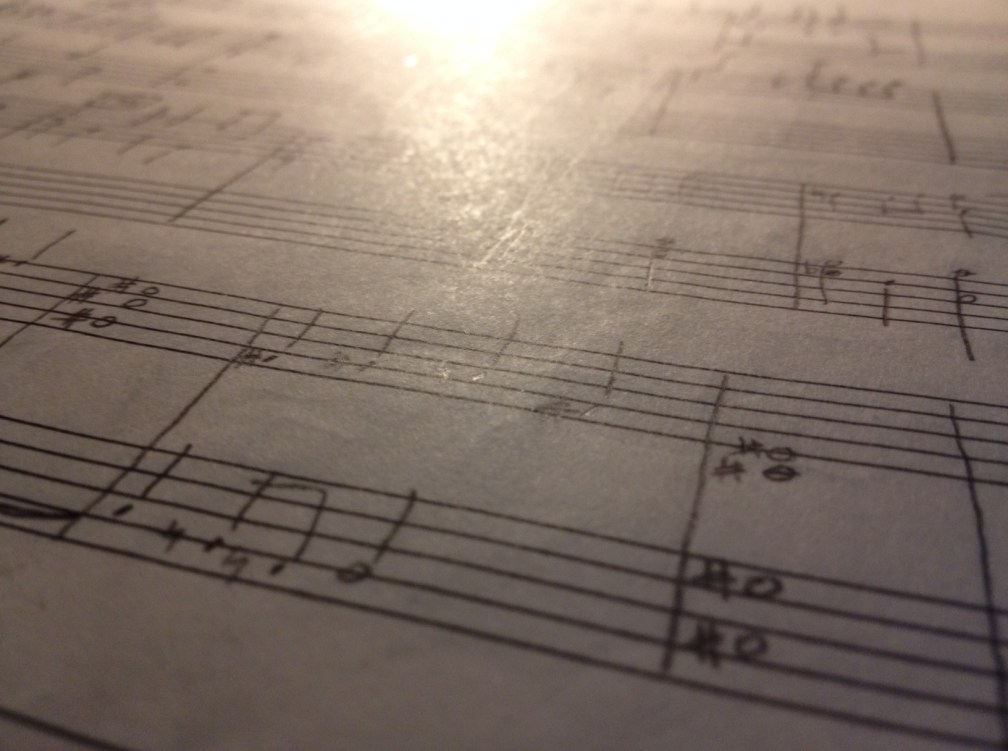
You see, I was once a talented musician. For many years as a child music was everything, was my life and my reason for existence. I dreamed of playing Rachmaninov before crowds of thousands, and as much as I struggled to play my best, I equally enjoyed playing at my best. I gave concerts; I sang in choirs. It led me to a degree in music composition.

And then, slowly, life got in the way. The last time I put note to paper was over a decade ago. The last time I played a real piano was years ago. And whilst you don’t forget things like that, it makes me start to wonder: what was it all for?

There’s something about the creative process that innately calls to me, something that, without which, leaves me feeling hollow, and empty. There have been great periods of my life when I haven’t created anything at all, and these are unsurpisingly linked to the times of my life when my depression has been at its worst.

In recent years my creativity has come in the form of writing, either novels or blogging, and whilst writing words is arguably a lengthier, more arduous process than writing music, it bears the promise of a more immediate reward: it’s easier to get people to read your writing than to listen to your music.

That being said, I miss writing music. I miss the process of orchestration, of wondering which instruments would sound best where, and creating sounds that, until then, had never existed before. Some of my favorite compositions were for a full orchestra, whilst others were smaller, chamber arrangements; yet others were death metal in symphonic form.

I saw some time ago a post about Anthony Hopkins, and how he once wrote a waltz. for decades it went unheard, until it was finally pulled from the dusty shelves and performed for the very first time. I would love to hear my own music performed live. I would love to know what it sounds like in real life, and not in my head, or through poor computer imitations. And watching this movie returned all these thoughts to me. It made me want to experience live music again, to compose, and to create. And hopefully, I will.

It takes time, and it takes effort. It takes years of laboring in the dark before one sees the light. Sometimes the light never shines. And this thought saddens me more than any other; that what I write, what I create—it will die with me, unheard and unread by any, one of millions of stories the world over that will never see the light of day. That will ever remain on the dusty shelves.

I wonder, sometimes: what have I left behind? What life might I have had as a musician and composer? Would it have been any more fulfilling than that of an unknown writer? Or would I have languished, withered and despaired … much as I still to to this day?

I suppose there is no telling; there is no knowing ‘what if’. Nonetheless, it reminds me of how fleeting we all are, and how important it is to do the best we can each day—even if that best isn’t much. Because one day we’ll all be gone, and what we leave behind is all that will remain to remember us by.

To fight the gloom and dark, and persevere in the face of utter despair. Such is life.