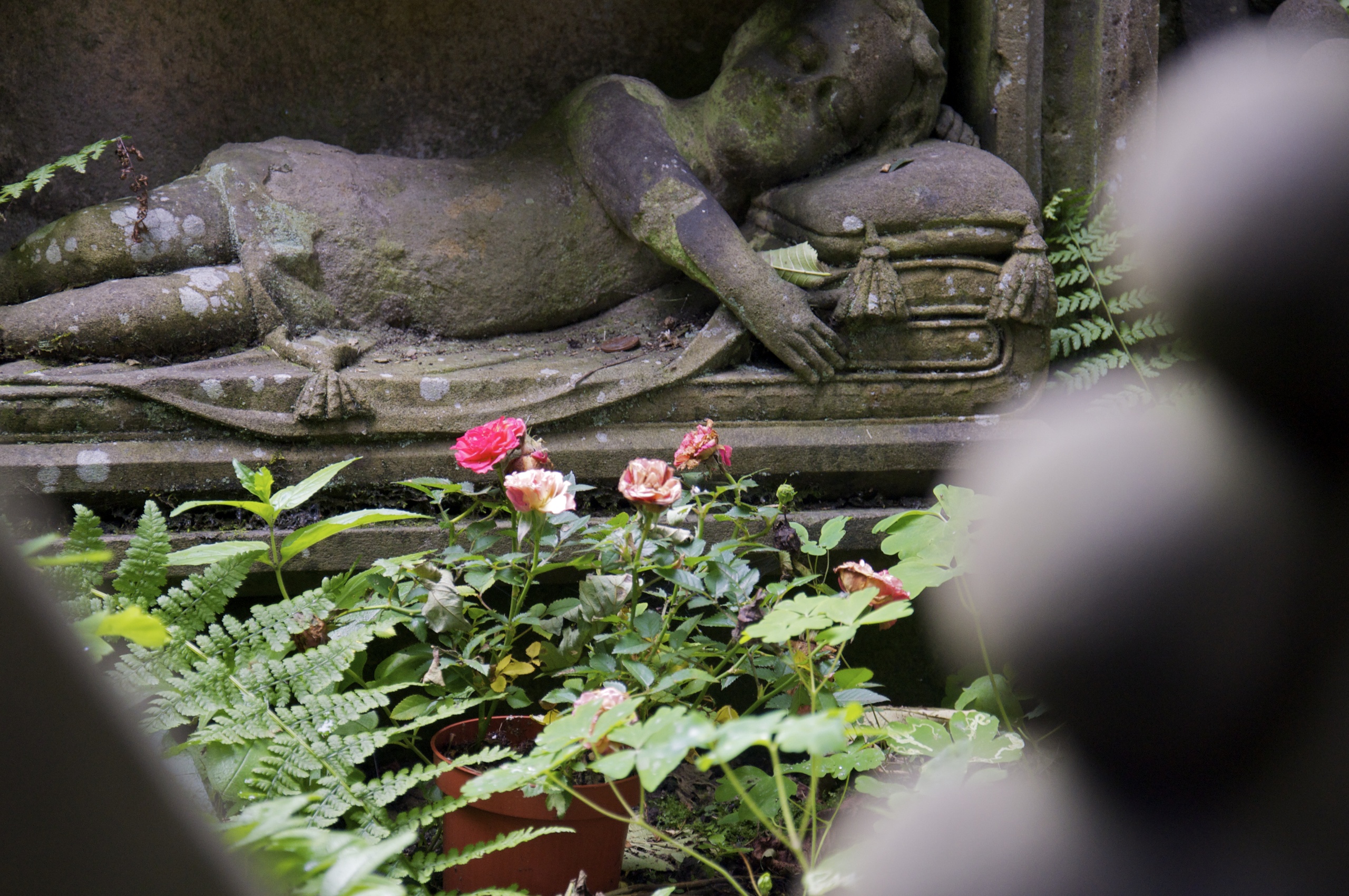
Tales of Despair: The Suffering of Artists

This is a slightly different take on Tales of Despair this week; rather than focusing on a particular artist, I want to address the nature of despair and depression in art – why is it that darkness forms such a large part of the things we create? What is it that drives the most wonderful among us to the brink of despair?

There was once a young boy who grew up in an idyllic family environment; a boy who enjoyed life and love to paint and draw. And then, when he was only seven years old, his parents divorced. No one spoke to him about it. No one asked him how he felt. His father promised not to remarry, and did. He had another child, and the boy felt replaced. His mother remarried, and was beaten, and abused, and hospitalized. The boy watched each time. The adults, they didn’t see him. They didn’t care.

He continued to draw, and to paint. His work grew dark. He learned to play, and his music was dark. He took drugs, and it took his mind away, and relived the pain for a short moment.

And when he left his home, he avoided people; he made few friends, and they shared his misery. Some of them played too, and they began to play together. Out of the depths of depression, the music they made lifted him; he wrote about his pain, and he sang it to the world. And the world – they drank it deeply, and said he was a great artist. They said he was the voice of a generation; they said he would change the world.

And he didn’t care for what they said. Each word of praise demeaned his writing, abused his art. His music hated the world, and they were too dumb to see it. And he lost the joy his music brought him, and he began to despair. He sank, and was consumed by the black, and knew the world, for him, was ended. One April day, he locked himself away, and killed himself.

He was twenty-seven, and his name was Kurt.

His death was untimely, and it is accepted as a tragedy. Yet it is a tale that is told, over and over again, throughout history and the world of creators.

We suffer, we despair, and the rest of the world asks, why? Of course, the rest of us understand it all too well; insight grants us the pain of doubt, the fear of rejection, the knowledge that all goodness comes to an end.

Yet, why is it that so many of us, so many of those who create, are so afflicted? Hands up if your are a happy artist. In this imaginary crowd, you may well be in the minority. Is it intrinsic, or wrought by outside influence? Do we create because we despair, or do we despair of our creations?

Perhaps it is some of both. When I write, I am lifted, as Kurt was, to a higher plane, a place where words and music float and flow, and the terrible visions in my mind find their way to paper and into sound in the air, and I am relieved of their pain. But when I come down, I look upon my creations, and I am filled with loathing: they are ignorant, they are plagiarism, they lack all subtlety, and are but a poor shadow of the great.

Perhaps the need to create is driven by the hopeless desire to express the inexpressible – how could anyone understand the absolute certainty that the things we create, that bring such value to so many, are inherently worthless? How could anyone understand what it’s like to be consumed by blackness, until your very vision is tinted and the world turns to grey? There are no words, no colors, no sounds that can explain how no bodily wound can equal the agony of a mind turned upon itself.

And yet we persist, we continue to try. We paint with blacks and reds; we write with heavy words that drag down the soul; we play in minor keys and descending notes, recreating the descent into the final, endless darkness.

And eventually, we may join the Kurts, the Vincents, the Ernests and the Sylvias and Virginias; and how could anyone understand the comfort of knowing that, in a world that is chaos and destruction and uncontrollable evil, we have at least the power to bring about our own ending.

We are doomed to create, and doomed to suffer; may we be at least also be doomed to see the beauty in the work of our fellow creators, if never in our own.
Tales of Despair: Falling Through the Roof

October 2nd, 1988.

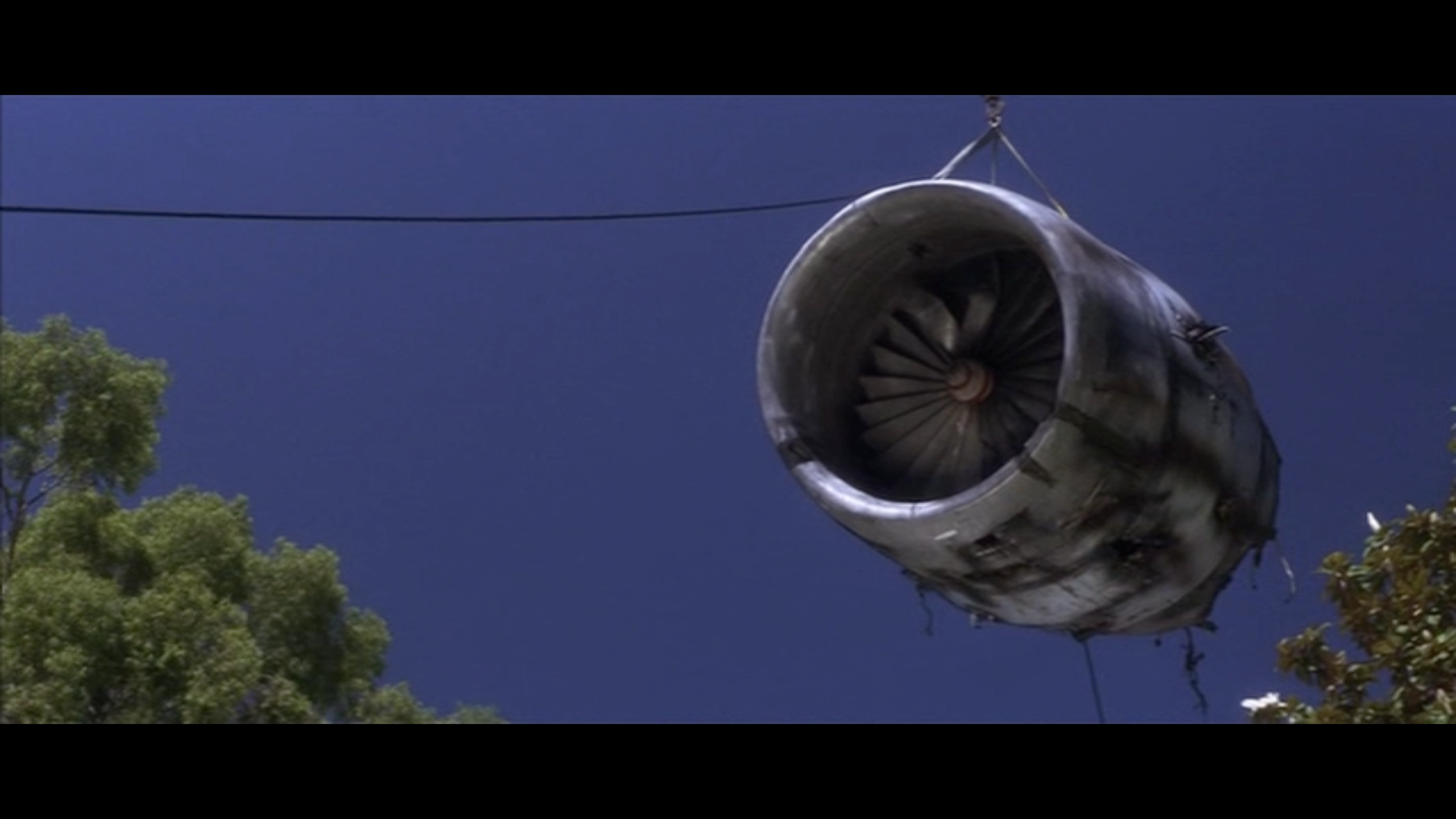
An airplane engine falls through the roof of a teenage boy’s home, and should have killed him: should have, had he not been lured out of the house by an enormous rabbit.

Sound familiar? Then you’ve probably seen Donnie Darko. It is a masterpiece of dark cinema, a mind-bending trip into the world of insanity, and it does so in the most realistic of ways: by making the insanity appear sane. For ultimately, this is what we think, isn’t it, those of us whose grip on reality is tenuous? It’s the world that’s gone mad.

The rabbit plagues Donnie; the rabbit tells Donnie the world is going to end in twenty eight days, six hours, forty-two minutes and twelve seconds. And oh, Jake Gyllenhaal does such a good job of believing it, never doubting it, and descending into the madness that comes with the freedom of knowing it’s all going to end. Yet all the while, we remain rooted firmly in the real world. School goes on; work goes on; life goes on. The rabbit is an illusion; the rabbit is real.

Certainly, the world doesn’t seem like it’s going to end. Nor does it for any of us, of course. Almost certainly, when the end does come, it will be abrupt, it will be instant, and we won’t know any different. But Donnie…oh, Donnie knows.

And it is despair that comes with this. The knowledge that any thing, any action, is meaningless. He burns down the principal’s house, and it is meaningless. A vile secret is unearthed because of it, and it, too is meaningless. He falls in love…and it is meaningless.

The story behind this film unravels the very nature of what is real and what isn’t, and in a very Descartian way dissects the meaning of armageddon. For if we end, the world ends, and there is no way of knowing otherwise. It is an end of life, an end of existence, and most importantly, and end of self.

And in the face of this ending, the destruction of self, Donnie is given a choice, and the choice is this: to let the world end…or to let the world end.

Few people will be given the chance to learn of their death before it comes. Fewer still will make the choice to roll over in bed, and let the engine fall through the roof.

Thought of the Week: You Will Be Missed

On Wednesday last week, we received the news that you had died. Any death in the family is hard to process, and it has been especially difficult coming to terms with your parting, for we had not seen or spoken to you in almost two years.

We were heartbroken, of course, that day when we parted ways; you would not leave England, your home for all your life, and we could not stay. Our son – you remember him, I’m sure – cried awful tears when we had to leave, and you should know he cried the same when we learned you were now gone. We never stopped caring.

You were always there; through the tough times, all the fights and the stresses and the endless moving houses, you were always there for us. It felt at the time that you often had little to say, but I realize now that you didn’t need to. You were wise, and trusted us to figure things out – to make it work. And you know what? We did. All these years later, and we’re still a family. You’d be proud of us.

I have so many fond memories of you; we all do. Your wit was second to none, and I recall seeing, in your youth, your agility that would put an acrobat to shame. You were beautiful, always, even as you grew older; I never told you, but I always thought your beard (yes, you had a beard!) was pretty darn cute. Even in spite of your solitary nature, in spite of your natural aloofness, you were always open to a hug and a cuddle, just when it was needed. So many times I was forlorn, and your company would pull me from the depths.

I have missed you over these past few years, and even though I knew I might not see you again, there was always a hope – and it is the loss of that hope that hurts more than anything. In your old age, I wanted to see you one last time, sat warm before the fire, dozing. I wanted to look into your eyes and learn from your wisdom, your intelligence born from a childhood on the streets.

And now, I will never get that chance. You will live forever in our memories, but we will have now only the photographs to remember you by. I would have you know, friend, that every moment with you was a joy, and we could not have asked for a better relative. You will be missed, and never replaced.

We love you.

R.I.P. Shelby W.
1996 – 2012