Thought of the Week: Her (A Memoir)

Don’t forget, you can be reading your copy of The Redemption of Erâth: Consolation in just a few minutes for only $3.99! Click here to buy.

***
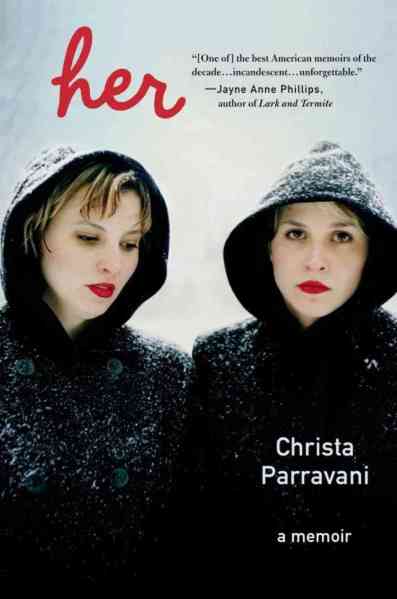
9780805096538_custom-23ea9dcbbd6c95e517d5b756b350ec37ea1b8833-s6-c30Well, I managed to achieve one of my New Year’s resolutions already, and read an entire book to myself. Perhaps if I continue to read this year, I can start a new blog series of reviews! How about that?

Like the best books, I downloaded a copy of Her: A Memoir at the behest of a good friend, Alexandra Corinth. You can read her review of the book here, if you want. She has her opinions of the book (rather glowing, all told), and I have mine. They may intersect.

Her: A Memoir is the story of twin sisters torn apart by violence, rape, drug abuse and eventually death (the blurb makes no secret of this, so it’s hardly a spoiler). This ought to have given me some clue as to what I was getting myself into reading this book, but I plunged ahead anyway. I also made the rather severe mistake of reading a number of reviews of the book before I’d finished myself, which means my own opinion may now be influenced.

Her: A Memoir is for the most part a gut-wrenching, harrowing, painful book to read. Christa Parravani doesn’t ease into the story, with the opening line:

“I used to be an identical twin.”

We are torn from there through the twins’ childhood, growing up in a broken home, learning to mistrust men, and within a few chapters we read of Cara’s rape in her own words (an interesting touch; interspersed throughout the book are Cara’s own writing, from journals and diary extracts). We learn of the addiction to prescription drugs, the move to heroin, and soon enough, Cara’s fatal overdose.

The first part of the book is haunting, certainly, but it was the second part, wherein Christa very nearly destroys her own life following her sister’s death, that I found particularly difficult to read. It’s here that we learn what it meant to Christa to be a twin, and what it meant to become ‘twinless’. We follow her through marital infidelity, more prescription drugs, mental institutions, and finally—finally—a form of salvation in her new husband and newborn child.

What did I think of Christa’s account of her life? It’s hard to say. I’ve read reviews, both raving and scathing. Some have likened her writing to poetry; I disagree. The more negative reviews tend to focus on the selfish, narcissistic and thoroughly inconsiderate nature of the two twins, mentioning that the art of memoir is to make the people likable. I also disagree. People are selfish, they do horrible things to each other, and to Christa’s credit she doesn’t try to rationalize the things she did; she simply paints the picture as she recalls it.

Personally, I think that Christa may have written this memoir too soon. She is still only in her thirties now, and though the book does end with the hope that, with her child, things will be better, there’s a lot of life still left for Christa to go through. I suspect there’s a lot of mental and emotional trouble that she will have to deal with as he continues to grow.

There are times in the book where Christa appears to speak for all twins in the context of her relationship with her own sister, but I think that between the lines there is an awareness that their relationship went beyond sibling love. Several times she writes as if she was Cara. Several times she writes of her doubts over her own individuality. Before and after her sister died, there are times when she seems to fail to recognize the difference between the two of them. It strikes me that this, in itself, is something worth seeking professional help for.

Ultimately, Her: A Memoir is the story of Christa’s struggle to survive, first with her twin and then without. All such struggles are deeply personal, and what one person weathers can kill another. I know people who have suffered far worse tragedies; there are, of course, people who kill themselves over far lesser ones. I don’t mean to belittle what Christa went through—I can hardly imagine her pain—but I would have liked to see a slightly greater distance from the events that are described. I would have liked to see what Christa learned. I would have liked to see a wider context. Perhaps if Christa had written this memoir five or ten years later, we would have seen that.

Stylistically, the writing could have been better. It jumps; it freezes. Short sentences move on from one another with sometimes very little flow. Dashes of poeticism glare out of context. Sometimes there are descriptions and details that fail to show their relevance. Does this detract from this book? Not really—I recognize many of these faults in my own writing. Writing is words in order, and the story is told; I wasn’t looking for poetic beauty on every page. But the occasional disjointedness does stand out.

I did not enjoy the book; I am nonetheless glad to have read it. I was tense, stressed and worried on every page. I felt deeply for Christa and Cara. I will probably be worried about them for some time to come. I hope that Christa will have a happy life with her new husband and daughter. I hope that she can retain the hope she finishes the book with. I hope she can find peace.

My; this is a terrible review. More a train of thought than anything. Sigh. If you’ve read Her: A Memoir, what did you think?

★ ★ ★ ★ ☆

Featured image from http://therumpus.net/2013/07/her-by-christa-parravani/.

Screen Shot 2015-01-07 at 6.46.37 PM

Movie Night: Beetlejuice

Year: 1988

Director: Tim Burton

Production Company: Geffen Company

Leads: Alec Baldwin, Geena Davis, Michael Keaton

Beetlejuice, Beetlejuice, Beetle—

No! Ahh!

What is there to say about this immensely enjoyable Tim Burton classic that hasn’t already been done to death? Heh heh. This tale of a very-much-in-love couple who plunge to their demise off a New England covered bridge, only to be resurrected as hosts in their own house, is such a staple of the Tim Burton canon that its only surprise is not featuring Johnny Depp. At least there’s the magnificent Danny Elfman score, setting the stage for many a musical-of-the-dead to come.

It wasn't the smoking that killed me …

It wasn’t the smoking that killed me …

This was, of course, the first time Little Satis had seen Beetlejuice, and I think that some of the humor escaped him slightly. After all, the whole movie concept is a just a touch on the dark side, and much of it relies on understanding the many ways there are to die. I actually found myself holding myself in check at points and deliberately not pointing things out – such as Sylvia Sidney‘s breathing smoke from her slit throat – just to avoid disturbing a ten-year-old. I’ll admit – it’s been a while since I’ve seen the film myself, and I forgot a few parts.

One part I most definitely did not forget, however, is Winona Ryder‘s ultra-goth Lydia Deetz, which, along with her portrayal of Mina Murray in Dracula a few years later, firmly cemented my lifelong crush for her. The funny thing is that, looking back on it, she really wasn’t all that miserable; apart from an obsession with all things weird and strange, it wasn’t until she met the deceased Maitlands that she uttered that favorite phrase of goth kids everyhere: “I wish I were dead.” And at the end—what’s with the dancing?

Ah, Winona …

Ah, Winona …

Still, there’s enough inexplicable shenanigans in the movie to let that one slide, and this is perhaps the film’s only fault: not everything makes 100% sense. Of course, it could be argued that’s part of its charm, and I wouldn’t disagree – but why on earth do dead people end up on an outer space sand planet when they leave their house? Why did they end up confined to their house in the first place? And why, oh why, couldn’t Beetlejuice tell Lydia his own name? He freaking broadcasts it on dead-TV! And why did he need to marry Lydia? Hm … Beetlejuice, Corpse Bride … it seems Tim Burton has himself a little obsession with marrying the dead, no?

Anyway, Beetlejuice is an ineffably enjoyable movie (I’m not sure that even makes sense), and if you haven’t seen it, you don’t deserve to be alive!


★ ★ ★ ★ ★

Satis Logo 2014

Thought of the Week: Suicide from the other Side

This is a difficult post to write, for a number of reasons, but I should preface it by saying to my family and friends: I am not currently thinking of ending my life. Just to put that out there. I may be struggling with one of the worst depressions I’ve known in recent years, but suicide is not on the cards, at the moment.

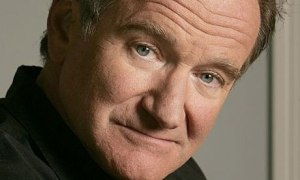
rob460It was for Robin Williams, however, as I’m sure you are all aware. I don’t want or need to say much about his death; by now it’s pretty-well assumed he deliberately killed himself, unless it was an asphyxiation accident, which…well, you know. It happens.

Anyway, the point is that Robin Williams is dead, and as much is being made of the coverage of his death as is being made of the tragedy itself. Should we even be talking about it, some are asking; what if this media hype encourages others to kill themselves just like he did? There’s a ‘suicide crisis’, one galling headline read (I couldn’t even bring myself to read that one). Some newspapers are focusing on his life, others on his death, and yet others on his family, who I understand asked to be left alone.

In all the furore, one theme that seems to be standing out to me is that suicide is an evil, and one to be prevented at all costs. If only he’d taken his medications; if only she’d kept up with therapy. If only they’d’ve talked to someone, let someone in, they might still be alive today.

So I’m going to ask a dangerous question: what if they were?

Let’s say Mr. William’s attempt had not succeeded, or perhaps never happened at all. We wouldn’t be talking about him at all, except perhaps for upcoming movie roles, and he would be going about his business somewhere in southern California, smiling to all and tormented inside in ways the rest of us could not even imagine. If he wasn’t dead right now, might he not be wishing he were?

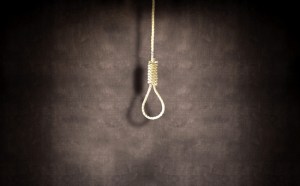
nooseI have been on the brink of suicide many times before. I know friends who have tried (none who have succeeded, as it happens). It takes a lot to put you there. Even in the absolute darkest pits of despair, the mind’s natural struggle for life is incredibly strong. Death is terrifying, it’s an unknown. It takes an almost inhuman mental strength to set in motion events that will end your own life, whether it’s pulling a trigger or tightening a noose. It’s a strength I have never had, which is the only reason I’m still here at all. (Remember that: I’m not here because I chose to live; I’m here because I was afraid to die.)

It requires a conviction that nothing, absolutely nothing ever again in the world will be worth staying alive for. An absolute certainty that death is a better option than life. Because for many thousands of people, a life of misery and torment is still better than death. It’s still life. If you’re struggling to understand this, let me throw this out to the religious among you: this certainty is as absolute as your belief in a god.

Could those people whose belief in death is absolute be wrong? Absolutely. No one can see the future. But every day we make decisions based on what we think is likely to happen over the next few minutes, days, or even years. For those who choose suicide, every path they can see leads only to more pain, for themselves and for those they love.

Because yes, suicide victims can still love those they leave behind. Sometimes that love becomes their impetus: the guilt of their own misery and the effect it has on those around them can be a powerful incentive. It’s certainly been reason enough for me to contemplate suicide in the past. I love my wife and son, and the pain I put them through on a daily basis tortures me.

What point am I driving at here? I suppose it’s this: suicide need not be a taboo. It certainly isn’t for those who try. Loss causes pain and saddens us, and it’s those left behind who are so adamant that no one else should ever kill themselves again. Maybe in the wake of a celebrity suicide, some people will be compelled to try something they wouldn’t have normally considered. But those people already were thinking about it, weren’t they? Maybe they didn’t have a clear idea of what to do or how, but they knew deep down that they wanted to end their life.

Is it right to keep those people alive? For whose sake are we doing so? Whose decision is it, who lives and who dies? And why?

Lest you misread this, I am not advocating suicide. On the contrary, I am among the selfish who want to keep the living with me. But I would have you ask these questions, of yourself and of others: who are we to decide?

Featured image from http://rap.genius.com/Riff-raff-cool-cup-lyrics#note-1756293.

Satis Logo 2014