A Gothic Symphony: Beginning

It is a dark city on such a late summer evening. The sun is blood over the rooftops, and the girl in the park is sitting in the last rays passing between the old brick buildings.

It is a small park, of course; not much more than a few benches and a couple of old trees, but it is a refuge in a town that is huge, and busy. The trees haven’t begun to turn yet, and the grass and paths are golden in the spaces between their leaves. There are people, and they pass through, but they are few, and don’t spare the girl a glance.

The girl is sixteen; looks fourteen. The cigarette hangs in her hand, ash burned back almost to her fingertips. Black hood over her head and black jeans to her boots, she’s like a darker shadow in the shade of the trees. A lock of crimson hangs forward, and the small silver nose ring glints a little. Under the hoodie is a lace top, black also, and at her breast is a silver pendant: a silver crucifix entwined with snakes. A choker holds a black glass heart with a skull inside to her throat. […]

Read the complete chapter here.

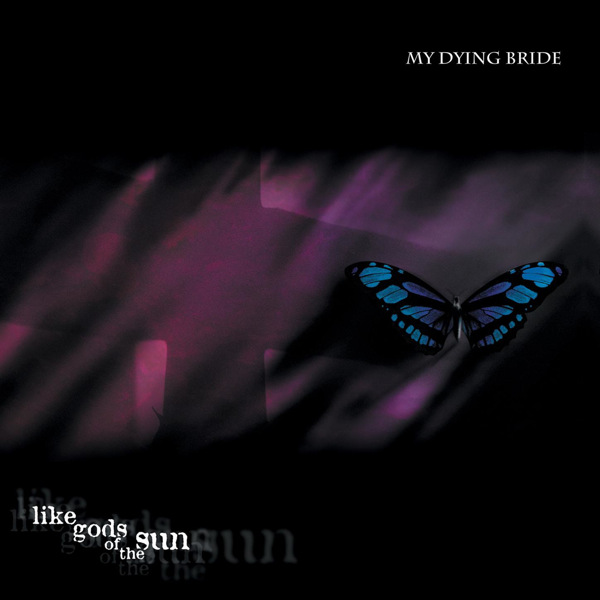
Music I Love: “Like Gods of the Sun”, My Dying Bride (1996)

There are four bands I could not live without, and the doom and despair of My Dying Bride is at the top of that list. For decades, they have been darkening the musical world with their unique brand of metal, and each of their albums has wrenched my heart and filled it with darkness.

They began their career in the early nineties, releasing the groundbreaking As the Flower Withers in 1992. Though the influence of eighties death metal is still apparent here, striking songs such as Sear Me and The Return of the Beautiful stand out as a preview for what was to come: slow, haunting and utterly crushing with the weight of darkness.

The follow-up, 1993’s Turn Loose the Swans, set the stage for the rest of their career. Gone were the fast death metal riffs, and for the first time we heard Aaron Stainthorpe’s wonderful, gloomy and heartbreaking voice, coupled with the dark growls of their death metal roots. What we were left with was the epitome of doom metal.

The Angel and the Dark River, in 1995, continued the melodic, atmospheric trend, and dispensed with growled vocals entirely. The violin, which had been a mainstay of their lineup since the very beginning, became ever more prominent, and the band were clearly leaping from strength to strength.

And then, in 1996, they released Like Gods of the Sun. To this day, this remains a masterpiece of doom metal, and it was here, on their fourth album, that we could see all the pieces finally come together. Crushing yet memorable, songs such as the title trackGrace Unhearing, and For You envelop the listener in a black, dark world of sound. Words of darkness and despair sweep around you, speaking of evil, pain and sadness:

Falling, drowning, deeper and forever

Choking, sinking, deeper into this ocean

Screaming, crying, for someone to save me

Reaching, hoping, calling to no one

Grace Unhearing – My Dying Bride, 1996

As we finally approach the ending of the album, the exceptionally dark It Will Come gives way seamlessly to the brilliant Here in the Throat. With its sudden change of rhythm halfway through, it pounds relentlessly onwards, drawing you inexorably towards the final, inevitable conclusion.

Except it doesn’t end there. After an album of doom, darkness and heaviness, something entirely other suddenly soothes its way through the speakers. Entering with haunting beauty – only synth and violin – the weeping, tragic For My Fallen Angel brings the album to the only close it could have possibly had. A three-stanza spoken poem, it swirls around you, and as the final notes linger, and then finally fade to silence, you feel as though there is nothing left in all the world, and you are left in eternal, silent darkness; a soothing, warm oblivion that will take you away forever.

This album was such a mirror for my own state of mind at the time that it has become inextricably linked to the darkest of thoughts for me. It played endlessly through sleepless, gothic, depressed nights, when candles burned down around me and the scent of blood rose in the air.

Tales of Despair: When the Walls Begin to Crumble

Imagine you are not who you say you are. You are something different, something other, that no one else sees. Something that no one else can be allowed to see, for fear it will destroy you both.

So many years ago, you became this other you. Like a slow tide, you were unconsciously inundated, uncertain when the first cold touch of sea first came, but knowing that the depths were rising. Before long, all that remained were dead eyes, remaining above the surface – and soon, you sank below, and the deep and the black swallowed you whole.

The dark became your life; it threatened to take your life; it was around you, and in you, and through and through, it was you. And the drowning was a bliss, because as slowly the breath was stolen from your lungs, all things became unimportant, and thought left you mind. Day upon day passed, undistinguished, and the very light of the sun was darkness to your eyes.

And then, like all things, it came to pass; the waters receded, and the world returned…but it was not as before. You were changed, irrefutably, and irreparably. The world became always dark, and the thrills and joys were muted and grey. And you began to notice the ways of the world, and cynicism and spite grew like poison thorns in your mind. You pitied – and envied – the thoughtless, empty, blissfully unaware souls that surrounded you, deluding themselves with false happiness and toiling ignorantly towards insignificant goals.

And you came to realize that you had to survive. There was no place for one like you anymore in the world. And so, piece by piece, you crafted your mask – you built the walls.

And you built them high, and strong, and through the windows came the smiling light of a joyful soul. The walls were whitewashed, and the roof was tiled, and the shutters painted, and the garden neatly tended. What a beautiful house, they all said – what a wonderful person. There is humor, there is wit, there is drive and there is compassion. You looked around, and you observed, and your false house became a mirror of those among whom you now live. Always careful – only a small piece from here, a tad from there – just enough that they all believe you are your own, original, colorful creation.

What they don’t know – what they can’t know – is that inside, the lights are out, and the floor is dusty, and on the walls the cobwebs hang thick. Here is where you go at the end of each and every day. And the worst is that, on your way home, you see that bright, friendly house you built, and for a moment – just a moment – you believe in it. You built your walls so convincingly that you have fooled yourself.

How were you to know what was to come? How could you have known that those walls wouldn’t last forever? It almost seemed you could live in that fantasy, and as long as you stayed on the outside, the dark might not actually be real. And then – now – the walls are beginning to crumble. Brick by brick, you see them fall away. There are days when you try to patch, support and rebuild, but it is insidious – like that first, callous tide that pulled you under and changed you forever.

Soon, the walls may fall away, and there, huddling amid the rubble, is you – the true you, the twisted and deformed you, the you that was made, all those years ago. And there will be no hiding, and no rebuilding. And then, the tide will come in again, and it will wash away the ruins…and perhaps, it will wash away you.