The Redemption of Erâth: Book 2, Chapter 13

Chapter 13: Purpose and Power

For some days following their conversation with Athalya, Elven seemed to stay apart from Brandyé, and he saw his friend only occasionally in passing, here and there. He was uncertain what kept him at bay, but thought it had something to do with the history Athalya had recounted to them. He had seen that Elven had been unhappy during most of it, and was surprised; for him there was only a great curiosity in learning about his past, and the events that had led to this point. However, deep in the back of his mind he recalled the look Elven had given him when he had agreed to hear Athalya’s tale, and wondered if there was some resentment there. He would have wished it was not so, but since Elven would not speak with him, there was little he could do.

Instead, Brandyé spent his time with Elỳn, and came to know her and her ways well. She spoke to him of her own past, and the events she had witnessed in her lifetime. As best Brandyé could tell, she was at a minimum three thousand years old, which was a thing that astounded him, and was difficult to comprehend. She had been among the Illuèn of Thaeìn before Goroth had set his armies upon them, and so had not witnessed the terrible massacres that were wrought upon the Illuèn of Aélûr and Cathaï. But it was with great sadness that she described their betrayal by the very men they had been protecting, and the terrible dismay of those who had survived.

Of the battles of the War of Darkness she would say little, but Brandyé learned something of the Dragon Lords, which was a thing that greatly fascinated him. Ever since his grandfather’s tale in the Burrow Wayde in his childhood, which he now recognized as an elaborated version of the final battle of that war, he had been enthralled by the thought of these great winged creatures, and Elỳn’s words reignited this curiosity in him. The dragons were creatures of Darkness, she said, but were not under the influence of the Duithèn. This he did not understand at first, until she pointed out that there was also light that was not under the influence of the Illuèn, and death that occurred without the presence of the Namirèn. They lived in the farthest northern reaches of Thaeìn, and had had little care for men, other than those who lived among them and tended to their needs.

The dragons did not belong to men, she explained, but nor did the men belong to them. Each lived side by side with the other, and where men provided food and shelter for the dragons, they provided a great protection for their companions. At first they had no interest in the coming of Goroth and the settling of Darkness over the world, and remained to the north, keeping to themselves. But something had changed for them, it seemed, for in their darkest hour, when the great city of Vira Weitor was besieged by the armies of Cathaï and about to fall, the dragons descended suddenly upon their enemy, and sent them fleeing in terror.

It was the Dragon Lords who had also brought about the defeat of Goroth, though it was, she said, an accident. In the thick of battle, the dragon of the king of the Dragon Lords sustained a great wound, and in its final throes sent itself crashing upon Goroth. At its claws and flames the demon lord was brought to his knees, and would have recovered had Daevàr not been at their side, and seized this once chance to smite him down.

But despite this victory, many dragons and their lords were wounded or dead, and they retreated once more to the north. “They have not been heard of since,” she told him, “and we suspect they have long since died out. It is a great tragedy, for they were among the most precious of beings in all of Erâth: dark, yet not under the yoke of Darkness.”

“How does that make them precious?” Brandyé asked.

“It is important to know that there are creatures in the world that are not directly under the influence of any of the seven Ageless. It is a sign that the world can survive on its own without their presence. After all, though the Mirèn are no more, life continues on.”

“It is a shame,” Brandyé said. “I would have like to meet a dragon.” […]

Read the complete chapter here.

The Redemption of Erâth: Book 2, Chapter 12

Chapter 12: The Tale of the Illuèn

In the end, Brandyé and Elven stayed for several months among the Illuèn, and came to learn their ways. It was some time before Elven was well enough to walk again, and longer still before he had overcome his incessant desire for corinthiaë. The Illuèn healer told them that they had discovered a hitherto unknown property of what was commonly known as a pain reliever. Brandyé was curious, but wished heartily that he had never come across the plant. Too many nights had he sat beside Elven, sweating and shivering, crying desperately for more corinthiaë and speaking to people who were not there.

During his time on their island Brandyé discovered many wondrous things, but none so startling as the great population of swans that lived with and among the Illuèn. Great birds of purest white, the glided serenely on the water or settled on the grass near the Illuèn’s homes, and Brandyé recalled the one time he had seen them before, with his grandfather on their journey to Daevàr’s Hut in his youth. “The most graceful birds in all of Erâth,” Reuel had said of them, and Brandyé could not help but agree. He found it peculiar that there were so many living here in the middle of the Trestaé mountains, and asked Elỳn about them.

“You did not think there were only creatures of Darkness?” she asked with a smile. “The swans are our own – creatures of light. They are gentle but powerful, and they remind us of the splendor of the world that once was.”

Sonora, having circled anxiously over Elven during his fever in the forest, finally came to rest with them on the Illuèn’s island, and did not particularly like the swans much at all. To her they were too large, and would not let her near the water. It was a consolation that she was by far faster and more agile than they, and she would often dive headlong in the water of the lake, retrieving a fish and taking it high in the branches with her – always in the view of many swans.

Elỳn introduced Brandyé and Elven to many of the folk, including Elven’s healer, whose name was Rỳlan, and Kayla, who helped him regain his feet afterward. Kayla had been among those who had fought the fierundé, and from her Elven learned many techniques of combat, and they spent much time together.

As for Brandyé, his desire for combat was less than ever, far from the fantasies of glorious battle from his youth. He had seen too much death, first in Consolation and then among the Cosari, and did not wish to learn how to deal it. For him, he was far more interested in learning of the Illuèn, and the nature of their influence upon the world.

“You are clearly not everywhere,” he said to Elỳn, “yet there is light everywhere. I can see you have great control over light and its power, but how is it you can influence what is seen hundreds of miles away?”

“We were responsible for bringing light to Erâth in its earliest days,” she replied, “but we are not ‘light’. Light would exist without us; yet our existence brings light to the world.”

“I do not understand,” said Brandyé. “What were to happen if there were no Illuèn?”

“There will soon enough be none,” Elỳn said with a sad sigh. “We are relinquishing our influence over light, leaving it to the natural course of life. In some centuries, no doubt, we will be no more. You have perhaps seen some of our people that do not appear quite as the others do? They are those who have begun to fade from this world already.”

Brandyé shook his head, for this was difficult for him to grasp. “Where are they going to?”

“Not here,” she said simply, and Brandyé could understand no more of it.

So it was with much of what he encountered during his time with the Illuèn. He could not understand how their orbs of light functioned, and thought it must be magic, though they assured him it was not. They would give no further explanation, however, and he wondered if perhaps the Illuèn themselves no longer knew how their homes had once been built. […]

Read the complete chapter here.

Thought of the Week: Rules in Fiction

A writing friend of mine recently shared a Facebook post about sticking to the rules in writing. I tried to share it but for some reason it wouldn’t let me, so I thought I’d write a short blog post about it instead.

The gist of the post was that in fiction, it’s important that the characters and situations abide by whatever rules are set up in the first place. Not necessarily the rules of the real world – if that were so, pretty much all fantasy would be out the window. Rather, each world that each author creates must have its rules that the characters must be bound to – whether they be rules of physics, of etiquette, or culture. Fiction is rife with examples of this, and the reason is simple: in a world where anything is possible, everything becomes mundane. We don’t want our characters to suddenly have superhuman powers because it’s convenient at that point in the story; we don’t want our spaceships to just instantly be somewhere else because it avoids the tedium of the journey.

Star Trek (a favorite of mine) is a wonderful example. From The Next Generation onward, they hired scientific consultants to make sure that the ideas they had obeyed – to an extent – the real-world rules of physics. Warp drive is one of them. If a spaceship could simply go as fast as it needed to, there’d be no fun in the adventure of getting there. Instead, they borrowed from Einstein and simply pushed the limits of the speed of light a little bit further. It turns out that the reason a ship can’t travel past warp 10 is because it would require an infinite amount of energy to do so. We aren’t bound by technology – we’re bound by the rules of the world around us.

Harry Potter is another good example. One would think that in a world of spells, curses and magic that pretty much anything could be possible. We can levitate objects, we can transform into cats, we can have light whenever we want because it’s convenient to do so – except, you have to be extremely skilled to be able to do such things. Wizards and witches are bound by the limitations of their own capabilities; Harry and his friends can’t do everything they want to, because they have yet to learn how. Even the most powerful of wizards can’t do anything, because some are better than others at various aspects of the wizarding world. Dumbledore can’t turn into a dog; McGonagall can’t predict the future (though of course, neither can Trelawney). Harry can’t stop Snape invading his mind, at least at first. (Truth be told, I haven’t read past The Order of the Phoenix, so forgive me if some of this is wrong).

From my musical background, I’m reminded of something the great Russian composer Shostakovich (I think) once said:

“The more I restrict myself in my writing, the better my music becomes.”

Alright, it’s a paraphrase and it might be from a different composer, but the point is the same. Restrict yourself as much as you can, and your writing will be the better for it.

~

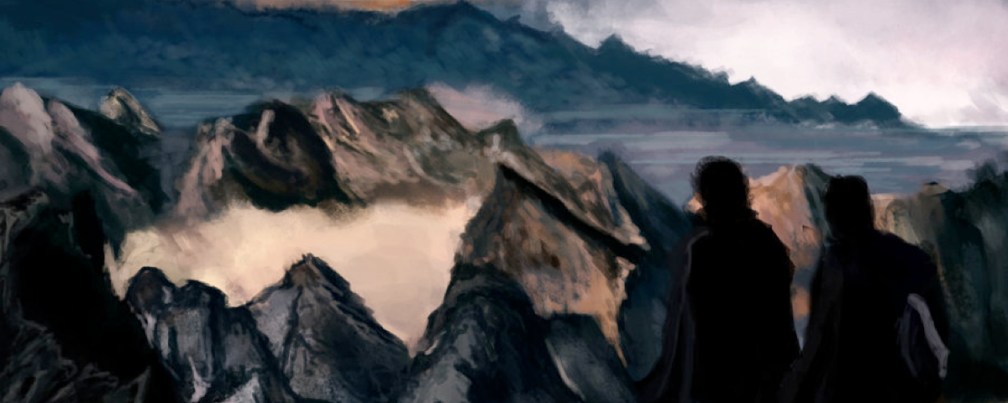
Featured image from http://www.deviantart.com/morelikethis/127027387?view_mode=2.

Satis Logo with ©