The Redemption of Erâth: Editing Book Two

The New Year has come, and with it I’m diving deep into the editing process for Book Two, Exile. I actually received the manuscript back from my editor in November, but between my depression, working on my symphony (which I’ve now stopped working on, of course … ) and the holidays I just couldn’t bring myself to start work on it until now. The main reason, of course, is that there is a lot of work to do:

There are two major things here and, to brace you, it probably means extensive re-writes.

—Parisa, my editor

The first major issue she had was that the goal/conflict of the book were unclear. The second is the organization of the book. And, as much as it pains me to admit it, she’s absolutely right.

The thing is, The Redemption of Erâth: Exile was a difficult book to write, and is a difficult book to fit into the series. It’s basically a great, big transition between the small world of Consolation that Brandyé knows so well, and the greater world of Erâth that is, essentially, a mystery to him. We are introduced, along with Brandyé, to new people, new cultures and new worlds, and throughout this journey he is unsure what his purpose is among all of it. In Consolation, he was basically a big fish in a small pond; now he’s a guppy in the Pacific, so to speak. With Book Three, Ancients and Death (which, as some of you know, I’ve already started to write), the goal becomes much clearer. The role of certain characters becomes clearer as well.

But in Exile, everything is a bit of a mystery. It’s an adventure story, a little bit like The Hobbit is compared to The Lord of the Rings. And this is the problem. I know, as the author, what’s important in the story and what will come back in future books. You, as the reader, don’t. And I need to make things clearer.

Some of you have already read through the rough draft of Exile as I’ve posted it here on satiswrites.com; for the rest of you, here is a brief summary of the novel’s five parts:

Part I: Cosari of the South

Brandyé is captured by a race of men known as the Cosari, and lives as a slave and servant among them for several years. Eventually be befriends one of them, a sea captain by the name of Khana. After a disastrous sea battle, Brandyé is set free with a fond parting gift from Khana.

Part II: In The Forests of the Trestaé

Traveling now alone through an unknown forest, Brandyé encounters first an odd old man named Ermèn, and then old friends: the Dotterys. He learns of the fate of Consolation and the Fortunaé, and learns about himself and the Darkness within him. He vows to set out to discover the wider world of Erâth and fight against Darkness, and Elven agrees to accompany him.

Part III: The Illuèn

Set upon by fierundé, Brandyé and Elven are rescued by a mystical race of beings: the Illuèn. They spend some time with them recovering, and learn much of the history of Erâth, confirming that which Brandyé’s grandfather had once already told him of: there was many ages ago a great war of Darkness, and the banished Duithèn, race of Darkness, are now beginning to return.

Part IV: Erârün

Setting out from the Illuèn, now accompanied by one of their kind named Elỳn, Brandyé and Elven come across their first great kingdom of men: Erârün. They are captured by a knight named Tharom Hulòn, but released when the king of Erârün realizes they are in the company of the fabled Illuèn. At Elỳn’s behest, Brandyé joins Erârün’s soldiers, and is soon dispatched to the northern borders of Erârün, there to defend their people against the oncoming forces of Darkness.

Part V: The Hochträe

After a terrible defeat against the newly amassed armies of Darkness, Brandyé flees to the mountains with Elven. Here they are taken in by another kingdom of men: the Hochträe. The Hochträe are the only people of Erâth not yet under the influence of the Duithèn, and here Brandyé and Elven see the sun for the first time in years. Despite their hospitality, Elven and Brandyé begin to argue about their journey forward, and eventually they part ways: Elven returning to the people of Erârün, and Brandyé moving ever further north in an effort to find Namrâth: a weapon that may help in defeating the Duithèn.

Now, this is the generic structure my editor suggests, which I genuinely find helpful:

  • Introduction
  • Setting up the conflict
  • False win/defeat of the hero
  • Midpoint
  • Hero realizes his mistakes and has to bounce back
  • Uncover a shocking truth (optional)
  • Black moment before the end
  • Resolution to change things around

So how does this all line up? The introduction is, clearly, Brandyé’s time with the Cosari. Is a fifth of the book too much to dedicate to the introduction? Hopefully not the way I’ve rewritten it (I’ve now edited the first five chapters, and am about to five into the sixth). The Cosari are vital to the story, and will return in later books. Promise! Setting up the conflict? As my editor points out, the book’s main conflict is Brandyé’s struggle against Darkness—both internally and externally. This comes about during his conversations with Ermèn and Elỳn, but perhaps I can make it a little stronger. False win? His light-heartedness with Elven. Midpoint? The time spent with the Illuèn. I think this is actually pretty strong.

I don’t have a part where Brandyé realizes his mistakes, though—this could definitely be worked in. Black moment before the end? I don’t see this in the story, actually—if anything, Brandyé becomes more resolute at the end of the book, although this does tie in well with the final point she made.

So there’s some work to be done, definitely. However, the first five chapters, I think, will have been the hardest: they were the weakest part of the book, in the sense that, in the words of my editor, “they didn’t seem to matter”. I’ve added a goal within those first few chapters—especially in chapters four and five—which I hope gives Brandyé a little bit more reason to have spent so much time among the Cosari before setting out on his journey.

For those of you (I’m looking at you, Neil!) who have read through Consolation in its published form and the rough draft of Exile, what do you think of the above changes? I want Book Two to be as strong as possible, but I don’t feel like I can wantonly cut out the Cosari or the Hochträe (both suggestions by my editor), as they will become increasingly important in future books.

What are your thoughts?

Thought of the Week: What Makes Me Happy (?)

A very good friend of mine recently posted on Facebook, stating that he was going to rant about something, but decided instead to list things that make him happy.

I thought this was very clever. You see, as someone who suffers from some form of major depressive disorder (bipolar, unipolar depression … something like that), I don’t often take the time to think about things that make me happy. I tend to operate more on a guilt/shame line of feelings; I could endlessly list things that make me feel bad about myself. And when I stopped to think about it, I realized that I couldn’t, off the top of my head, come up with anything.

Which is sort of a shame, really.

What makes me happy? I thought. Do puppies make me happy? Not really. What about kittens? I like them, but they make me sneeze. Good music? Too much butter on toast? Little children using words they don’t understand? All sorts of things come to mind that, perhaps, ought to make me happy, but I can’t be entirely certain any of them actually do.

Then it occurred to me that although not everything makes me happy, there certainly are things that, if nothing else, help me appreciate the world a little more each day. Things that renew my faith in humanity, or inspire me to continue when things are at their bleakest. And to return the favor to my friend for inspiring this post, here is a list of ten things that, if not make me happy, at least make me appreciate life a little more than usual:

1. When Little Satis asks me to read to him at night.

Reading

There’s something awfully rewarding not only about reading to your child, but them actually wanting to be read to. Even better when it’s your own story they want you to read!

2. Talented people who don’t take themselves too seriously.

_73332750_cumberbomb

There’s something unparallelably adorable about Benedict Cumberbatch. Plus, he’s a freaking dragon!

3. Clever rhyme schemes.

Still

Running uphill

Swimming against the current

I wish I weren’t

So fucked

Feels like I’m stuck

Lost in a sea

Of mediocrity

—Dream Theater, As I Am (Train of Thought, 2003)

Dream Theater’s lyrics are not always so clever, but this particular line often gets stuck in my head (possibly because it often reflects my own internal monologue).

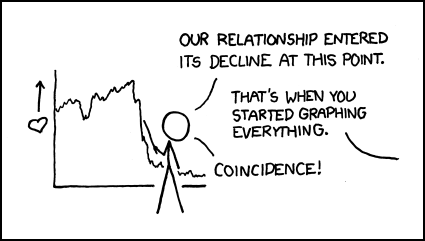
4. Graphs and charts.

decline

XKCD have some of the most marvelous and insightful graphs in the comic universe.

5. Typing the last word of a novel.

This is something I’ve done precisely twice. Those words are “laughed” and “spoke”, respectively.

Just realized they’re both past-tense verbs pertaining to speech. Perhaps the last word of Ancients and Death should be “giggled”.

6. Those months when you get paid three times.

roll-of-money

Those of you on monthly salaries might not understand this, but when you get paid fortnightly, every so often there’s a month with three paydays. It’s like winning the lottery!

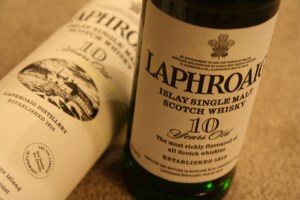
7. Really nice islay single malt scotch whiskey.

Bottle-Shots-064

Not something I have all that often, but there’s something irresistible about the earthy, peaty flavor of a really nice single malt scotch. Those extra paydays help.

8. Browsing through independent record stores.

record collector

This is Record Collector, one of my favorite independent record stores. It’s in Sheffield, England, and I stopped in during our recent trip. My favorite thing is to buy a CD or record with an interesting cover by an artist I’ve never heard of and see what it’s like. It’s a shame there are so few of these wonderful shops left.

9. Mince pies.

mince-pie_2739967b

Basically, it’s not Christmas without mince pies. End of story.

10. Lists.

bucket-list

I’m rather fond of lists—wish lists, in particular. I have a rather extensive list of albums and movies I want to listen to and see. I also keep an ongoing shopping list on my iPhone with probably around 200 items on it at any given moment. Not sure what the point of that is, actually.

11. (Bonus) High-resolution stock photography.

Broken camera

It may be slightly ironic that I took this high-res photo from an article about not taking photos from websites, but … I am linking to it (click above).

Featured image from http://www.huffingtonpost.com/mike-sheridan/the-life-you-want_b_6044498.html.

Screen Shot 2015-01-07 at 6.46.37 PM

Thought of the Week: Character-Driven Fiction

I spent some time today (possibly wasted time—hard to say) going back through books one, two and what’s finished of three and counting the number of named characters in each book. Total so far? Ninety-three.

Nearly one hundred names in two and a half books seems pretty extreme; it means at least two newly introduced names per chapter, at least. Of course, not nearly all of these characters are important, and sometimes they are named merely for the sake of convenience (e.g. keeping track of who’s talking in dialogue). Of these ninety-three characters, twenty-four of them I’ve counted as ‘primary characters’; that is to say, characters without whom the book or the events within could not exist. Among these are:

  • Brandyé Dui-Erâth: the primary protagonist and hero of the story
  • Elven Dottery: his closest friend, and secondary protagonist from Exile onward
  • Elỳn: an Illuèn (race of Light), who features primarily in Brandyé’s dreams in the first book
  • Sonora: Elven’s sister, and catalyst for many of the events in Consolation

I ended up creating a mind map of all the characters, because I’m at the point where I’m starting to reuse certain names, simply because I forgot that I already used them before. This is what it looks like at the moment:

Mind map of the characters in The Redemption of Erâth, with partial connections shown.

Mind map of the characters in The Redemption of Erâth, with partial connections shown.

This is something I actually had to separate off from the mind map I’d created for the entire book series, which included a lot of other information such as races, themes, locations, etc. This mind map is actually so large that I feel it’s now less than helpful:

Mind map of the entire book series!

Anyway, the point of this is to say that I’m starting to feel a little overwhelmed by all these characters rearing their little heads and telling me their names. It makes me realize, though, that not all great fiction necessarily relies on a great number of characters. And that makes me despair, slightly.

How many people were in The Lord of the Rings?

How many people were in The Lord of the Rings?

Now when it comes to characters, there exist absolutely phenomenal stories with very large numbers of characters. According to Middle-Earth in Statistics, there are nearly 1,000 named characters throughout Tolkien’s extended worlds, including The Lord of the Rings, The Hobbit and The Silmarillion. A huge number of these are there merely in passing, but nonetheless exist and were created by Tolkien at some point. Similarly, according to (the wonderfully reliable) Yahoo Answers, there are 772 named characters throughout the Harry Potter seriesWar and Peace purportedly has over 600 in a single novel.


“Without Pip, Estella, Joe, Miss Havisham and the others, there would be no story at all.”


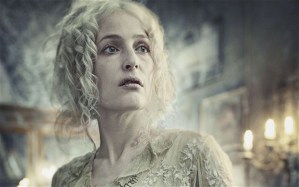
Miss Havisham—one of the most unforgettable characters in literary history.

Miss Havisham—one of the most unforgettable characters in literary history.

However, one of my favorite works of fiction ever, Charles Dickens’ masterpiece Great Expectations, has only eighteen characters worth mentioning (according to SparkNotes). How did an enormous epic such as Great Expectations manage to reach its conclusion with such a comparably small number of characters? How did Dickens manage to keep the reader interested in so few people over such a long novel?

To my mind, the answer lies not only in the development of the characters, which Dickens does masterfully, but in the narrative itself, and the fact that in Great Expectations, the entire story is the story of the characters. It’s a life tale. Without Pip, Estella, Joe, Miss Havisham and the others, there would be no story at all. No one of them could be removed without severely affecting the outcome of the story, or potentially rendering it utterly impossible.

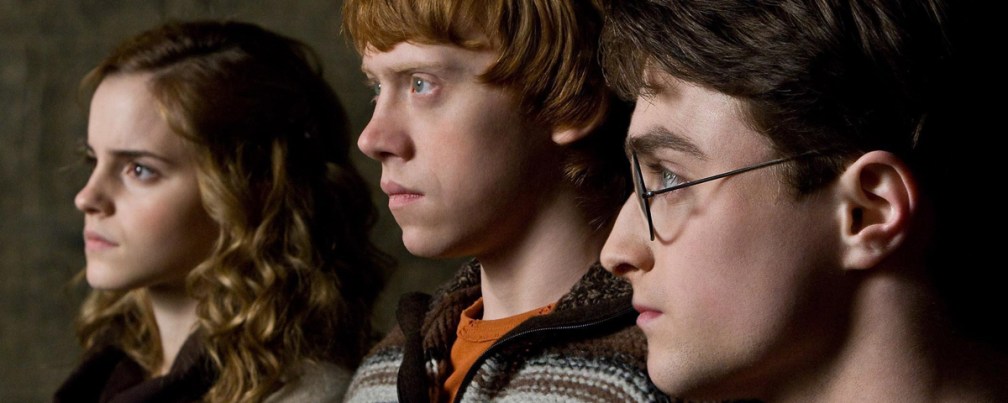
As much as I love the Harry Potter series, the same can’t truthfully be said, and this is evidenced by the film series: so many characters from the books were excised, condensed or changed that in some places things seem almost utterly different. Did Harry really need Hermione and Ron? Arguably not—the relationship between the three central characters, whilst important, doesn’t necessarily drive the story. Harry could have been attributed the characteristics of his two friends, and the battle against Voldemort and evil would have remained relatively unchanged.

Frodo and Sam—who really needed the other more?

Frodo and Sam—who really needed the other more?

To a lesser extent, the same could be said of The Lord of the Rings. Did Frodo really need Sam? Arguably, Merry and Pippin were more crucial to the plot than the relationship between these two main characters, for they encouraged the Ents to war, without which Helm’s Deep likely would have fallen.

And it makes me wonder about the direction of my own story. In some ways, The Redemption of Erâth is, like Great Expectations, the story of a single man’s life, from childhood to old age (much of which we have yet to see). But I’m starting to wonder if the story is too plot-driven; how much does the plot rely on the relationships between the various people of the world I’ve created? As far as I can see (and bear in mind, I can see a little further than you, the reader, at the moment!), there are only three people in the entire story that absolutely must exist for the story to be; much like Harry Potter only ‘needs’ Harry and Voldemort, or The Lord of the Rings only ‘needs’ Frodo and Sauron. At least I have more than that, but when I think about a masterpiece like Great Expectations, I realize that every one of those eighteen characters absolutely must be there, or the story fails. And it makes me wonder—where does my own story lie?

Which do you think is better—character- or plot-driven fiction?


Featured image from http://www.fanpop.com/clubs/harry-ron-and-hermione/images/7724592/title/trio-hbp-photo.

Satis Logo 2014