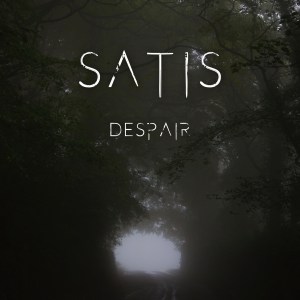
Despair (2023), by Satis

In the past, I’ve used the category “Music I Love” to discuss music that has been particularly important to me over the course of my life. Anything from Mozart to Metallica, I’ve often mentioned the significance of their emotional response in me, or how it meant something at a particular time of my life.

This time, however, I’m changing it up slightly. While this post is intended to highlight music that is indeed very important to me, this time the music I’m discussing is … my own!

It may not have been made entirely clear to everyone over the course of my blogging tenure, but my background and education is in music, not writing – specifically composition. And in recent years, I’ve taken the time to reinvest in that old, forgotten passion, and write some new music.

Back in 2019-2020, I began thinking that I would like to write an album that blended the best of classical orchestration with the gritty heaviness of metal music (my two musical loves). As I began to experiment with different ideas, I realized that I could write something of a heavy metal symphony; nothing so pretentious as Deep Purple’s Concerto for Group and Orchestra, yet more focused and structured around the orchestra itself than something like Nightwish, whose music – whilst evocative and generally excellent – tends to be “orchestrated” metal. I was looking to write music that could only exist with both contrasting elements; remove one, and the other isn’t sufficient to carry the music alone.

And so was born Despair; a five-track, hour-long album of metal and orchestra, exploring themes of darkness and misery through music. It took a long time – over a year – to complete the first draft, and a year further to fine-tune the sounds, hone the orchestration, and get it to a standard where I felt it was publishable.

And whilst the follow-up, an album soon-to-be-released called Shade Under Trees of Longing, has (in my opinion) a far superior production, I am nonetheless proud to announce that Despair is now live and available to stream through all your favorite platforms: Apple Music, Spotify, iTunes, and more!
New Music Is Available!

So … when I’m not writing, it seems, I’m writing music. Whilst The Redemption of Erâth has been on pause for a few months, I’ve been revisiting some music I created between 2019 and 2021 – an album of symphonic metal called Despair.

Recently, I upgraded the orchestral sample libraries I use, and re-recorded all five tracks of the album using EastWest’s phenomenal samples and sound engine. Whilst the final result may not sound exactly like a live orchestra, it’s (in my mind, at least) pretty damn close.

So without further ado, I present to you: Despair, a suite of orchestral heavy metal in five parts, channeling the deepest, darkest emotions of human nature!

1: Depression

Depression is the first track from Despair, opening with quiet strings and horns, building to crescendo before the crushing heaviness of the metal band comes crashing in. Segueing to a softer, melodic verse section, things eventually take off with pounding guitars and drums, intertwining a full orchestra through rises and falls until a heavier recapitulation brings us to the outro – soft and quiet again, building into a sudden wall of orchestral noise and a thundering drum punctuation that leaves on a cliffhanger, waiting for the next track.

2: Anger

Bursting in with furious strings and brass, Anger ups the pace and energy tenfold, a full orchestra blasting away until dropping out suddenly to allow for the metal band to take over with churning, grinding riffs. Never giving in to a slower beat, the song carries forward in a kind of scherzo-and-trio format, building to a climax before a middle section that leads again with devastating riffs, before recapitulating to the opening. Finally drawing to close with every instrument at full tilt, Anger is a crushing ode to unbridled fury.

3: Fear

Opening with a rumbling, unsettled bass line, Fear is deliberately the most disjointed piece of the suite, wavering between numerous time and key signatures throughout. There are moments of melody interspersed between longer passages of chromatic atonality, but the overall mood is one of anxiety and unsettled, indescribable fearfulness.

4: Grief

Almost entirely orchestral (the band comes in only briefly at the very climax of the piece), Grief takes us through a journey of pathos and heartbreak, with sweeping strings and devastating horn lines drawing influence from the raw emotion of the greatest of classical composers – Tchaikovsky, Beethoven, and more. From the soft, distant opening to the thundering timpani that bring the song to a heaving climax of sadness, Grief will tug at your heartstrings and (hopefully) give you chills at all the rights moments.

5: Despair

The epic conclusion and title track, Despair opens with a hammering timpani roll and huge, crashing chords from the band and full orchestra – nearly a full two minutes of opening to a 20-minute track that winds through many layers of instrumentation before coming to a quiet close halfway-through, only to burst back into life with grand horns and strings sustaining the melody over churning guitar riffs. Through a varied development we finally return to a grand reprise of the opening, announced with a huge gong crash, before moving on to the closing of the song, and the album, with a revisiting of the very opening of Depression, bringing the full album to a close.

Music I Love: “Slipknot”, Slipknot (1999)

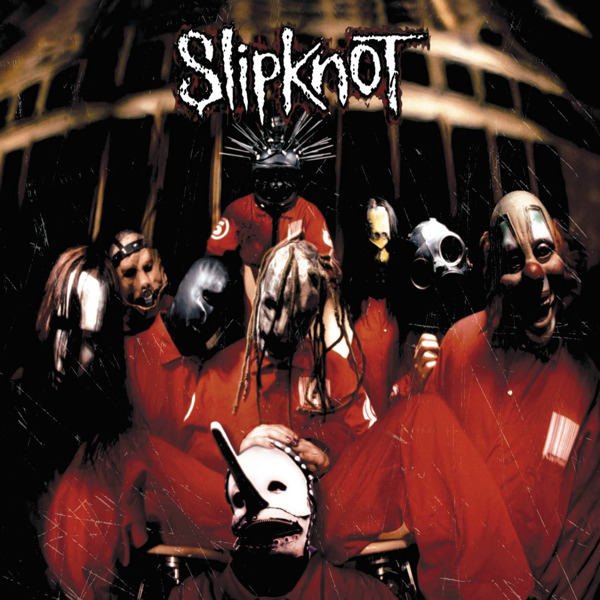
Slipknot

There’s frankly not a whole lot to be said about this seminal album that hasn’t already been discussed ad infinitum in every possible media avenue in existence, but that doesn’t stop this from being one of my absolutely favorite albums of all time. I once wrote a dissertation about the expression of emotion through music, and Slipknot featured pretty heavily.

Slipknot were a nine-member (sadly now only eight) band from Des Moines, and to read through any of their lyrics, they had some issues:

Insane – am I the only motherf***er with a brain?

I’m hearing voices but all they do is complain

How many times have you wanted to kill

Everything and everyone – say you’ll do it but never will

Eyeless – Slipknot, 1999

It’s hard to recall the impact these – and the rest of the album’s – words had back in 1999. From the opening few seconds of (sic) you are bludgeoned by a frenetic, nearly incoherent rage, an insatiable fury that could stand up to an atomic blast and win. I can’t think of anything in the realms of rock or metal – or music in general – that even came close to such a level of energetic hate. In particular was the subject of this vitriol; unlike previous “angry” bands like Rage Against the Machine, there were no targets for Slipknot’s hostility, no politics; here was a terrifying group of people with not pity or mercy.

It’s scary enough to be facing an uncontrollable madman, never mind a vicious and calculating psychopath.

Which is ironic, because Corey Taylor and Joey Jordison et al. are, in conversation, a bunch of pleasant guys, albeit many with disturbing or traumatizing pasts. In a way, the band became cathartic for them: a way to express the inexpressible, to release the rage that had built up in them.

Another disturbing aspect of this burgeoning phenomenon was the use of grotesque and terrifying masks and costumes, furthering the disassociation of these people and their music from reality. By dehumanizing themselves, they created a heightened level of terror – an image of demons, quite possibly directly from the pits of hell.

So controversial was their debut album that it was considered likely that the group would either disband or kill each other before ever recording another album. Instead, they released Iowa in 2001, shattering their first album’s popularity by reaching #3 in the US Billboard 200. If Slipknot was an explosion of raw fury and rage, Iowa was a more refined hatred, a feeling of a more calculated and targeted ire, which of course was all the more disturbing; it’s scary enough to be facing an uncontrollable madman, never mind a vicious and calculating psychopath.

Their style and emotion became ever more refined with Vol. 3: The Subliminal Verses, and – if such a thing is possible – a more mellow kind of anger with All Hope Is Gone. However, none of their succeeding albums can come close to the untamed fury of their first album. It’s raw, abrasive, offensive and uncomfortable, and it is because of these qualities that it is such an outstanding work. There is nothing I have come across in the history of music recording that comes so close to the very embodiment of demonic rage and hate; it is likely as far as music can get whilst still remaining coherent.

Slipknot can be cathartic for me, too; whenever I’m feeling stepped on, maddened or infuriated, a play through this album is more than enough to get it all out. Like they said:

Who the f*** are you?  F*** you!

Better suck it up ’cause you bled through

Better get away from me

Stay the f*** away from me

Eyeless – Slipknot, 1999

SLIPKNOT-1