Tales of Despair: The Darkness of Crows

A young man and a woman live, poor, in the slums of Detroit, deeply and madly in love with each other. They harbor a love of the gothic and the dark, and they plan to wed on Halloween, October 31.

The eve of their vows, there is an attack: their apartment broken into, she is raped, beaten and stabbed. He walks in – desperate, he cries out for her, and she for him. Moments later, he is executed before her eyes. Later, under the blinding glare of flashing blue and red, she dies. The girl she cared for and the cop who found her look at each other, and in a moment, their lives are forever changed.

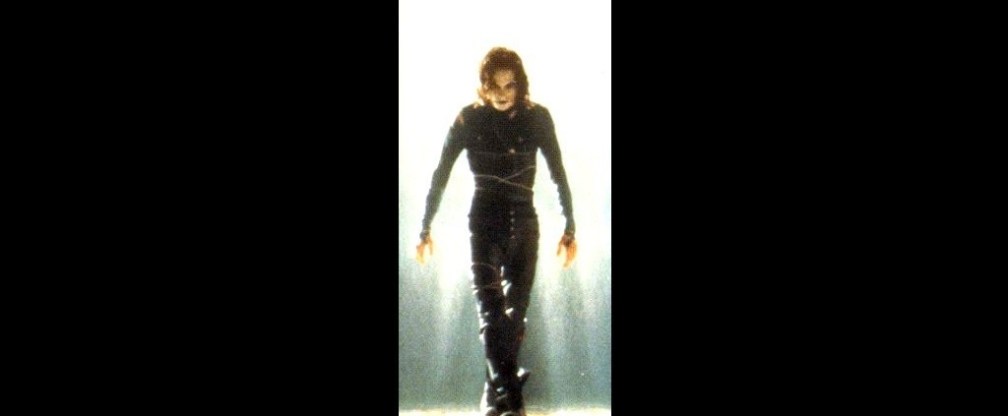
So begins The Crow, the 1994 film that changed the lives of goth kids around the world, and ended the life of Brandon Lee. I was one of those goth kids, and I first saw The Crow in the bitterest depths of my depression, when I believed all hope had gone. I watched it every night for a month, and shed tears each and every time. There are some, I’m sure, that will see this film as little more than the comic book-inspired action movie that it claims to be, but for me there has always been – and will always be – a far greater depth.

Eric Draven, murdered in cold blood before his beloved’s eyes, is raised from the grave one year later by a solitary crow, his strength and guide in his resurrected afterlife. He has returned, and seeks but one thing: retribution for the tragedy wrought upon his fiancée. One by one, he hunts down the four men who ended their lives, and returns their favor to them.

All the while, Sarah, daughter of a drug-addicted prostitute, has learned to live, and rely, on her own, seldom seeing her mother other than for money for food. Her only companion is the defeated and washed-out cop, Albrecht. Gradually, she comes to know of Eric’s return, and seeks him in the ruins of their old apartment. Though they meet, their friendship cannot be rekindled – he is not living.

There is a tone of utter despair to this film, complete futility; even as he takes revenge upon the monsters that destroyed his life, Eric knows it serves little purpose, for the past cannot be changed. In returning, he has brought nothing but hurt to all those around him, inspiring hope in Sarah and then equally crushing it. From the outset, we know that, even should he succeed, he has still lost: his life remains forever gone, and his beloved forever dead.

There is, naturally, a final dramatic battle between good and evil, ending with the beautifully gruesome death of “Top Dollar” atop a ruined cathedral, and the inspiration of hope with the redemption of Sarah’s mother and the reunion between Eric and his long-lost, ghostly Shelley. The most touching scene for me, however, is the meeting between Eric and Albrecht, in Albrecht’s apartment late at night. Albrecht lived Shelley’s dying moments, and through his eyes Eric lives it also. In a touch, every hour of pain and torment fills Eric’s mind, and he recoils, aghast.

What touches me most about this scene, however (I’m tearing up just writing about it!) is what we learn about Albrecht. Against his career, against his home life, against everything he held dear, he remained with this dying girl, this complete stranger, staying by her side and with her hand, until she died. Knowing it was inevitable.

This movie is infused with darkness and despair, gothic tragedy and loss, and yet holds a human compassion beyond many that I have seen before or since. It was everything I needed, and the tears I shed were a sweet, sweet relief.

It is yet a further, well-known tragic addition to this film that Brandon Lee, son of Bruce Lee and Linda Lee Cadwell, died whilst filming when real bullets were substituted for blanks. As such, the film has become as much a eulogy to this bright and emerging actor as it is a piece of dark, gothic cult art. They say no parent should bury their child, and this film – a piece of trite entertainment, comparatively – proved the most terrible loss a person could ever bear.
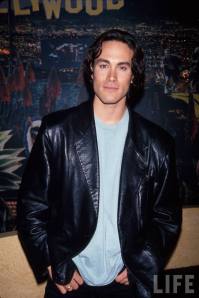
R.I.P. Brandon Lee
1965 – 1993
Thought of the Week: Rowling’s Labryinth

My son and I just recently finished reading Harry Potter and the Goblet of Fire. I have to admit that, considering the book is several hundred pages longer than its three predecessors, I wasn’t quite sure what was filling up all those pages. It got good – very good – at the end, but I can’t help feeling that it was, compared to Harry Potter and the Philosopher’s Stone, Harry Potter and the Chamber of Secrets and Harry Potter and the Prisoner of Azkaban, it felt somewhat bland. Other than a whole lot of prepubescent love interest, nothing really happened.

We may not read the rest of the books for a while. Goblet of Fire noticeably takes a turn into darkness, and I’m not sure if we’re ready for that (ironic, considering the nature of the story I’m writing for him). Nonetheless, we enjoyed it, finished it, and moved on. We’re revisiting The BFG at the moment (which is pretty darn dark in its own way!).

Another ritual he and I have is Friday movie nights. Netflix has become an invaluable instrument in our weekly film fix, and we’ve watched anything from the awful Jackie Chan movie Spy Next Door to the slightly better The Accidental Spy, among others. This week we watched The Dark Crystal for the first time. I had not seen it before, and I must say, I was swept away by the story, the beauty and the sheer dedication of the animatics in the movie. It was made in 1982, and puts Team America: World Police to shame. In more ways than one.

Before that, we watched another Jim Henson masterpiece; one that I remember well from my own childhood: Labyrinth. Does anyone remember a terribly young Jennifer Connelly and a terribly camp David Bowie? Must have been heaven for her, I’m sure! It was a real treat to visit this surreal, acid-trip vision of my youth, and I couldn’t help pausing the movie from time to time to point out particular things to my son. Imagine having to explain David Bowie. Whew.

In the proceedings, I noticed a few other things as well. Things that rang a bell from elsewhere.

Hoggle…or Hogwarts?

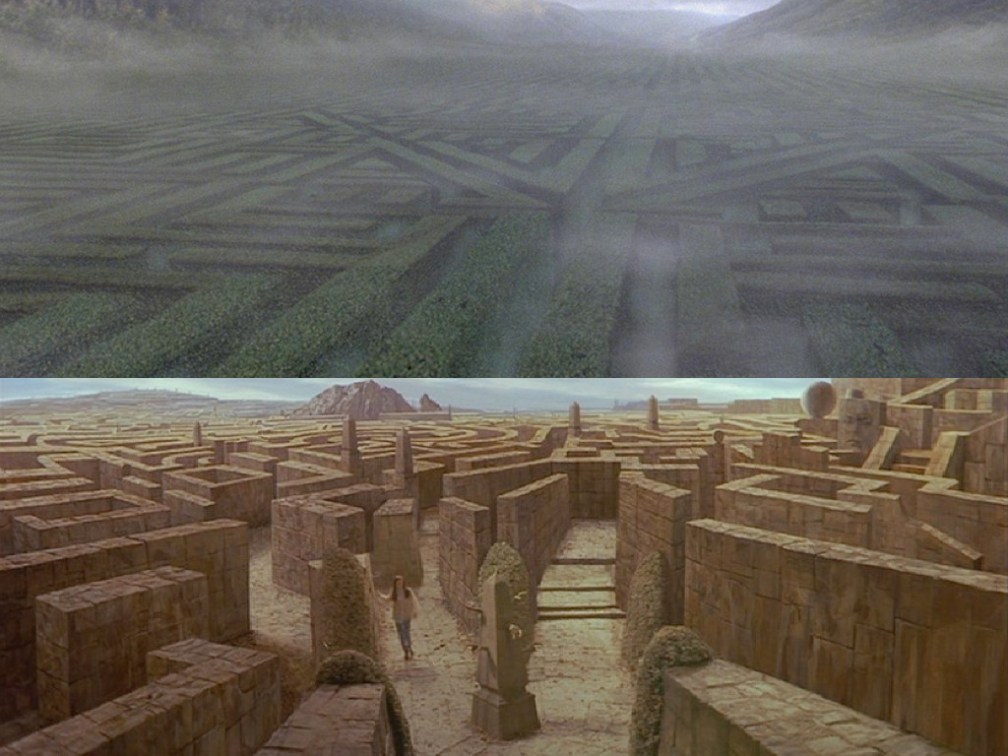
As you may have noticed at the head of the post, I have placed side by side (top by bottom?) a still from Harry Potter and the Goblet of Fire and Labyrinth. Does anyone see a resemblance? Now, surely mazes aren’t particularly uncommon – there’ve been plenty of movies and stories that have featured them, The Shining and Alice in Wonderland amongst others. Both of these predate Labyrinth and Harry Potter. In truth, at first I didn’t even see any connection.

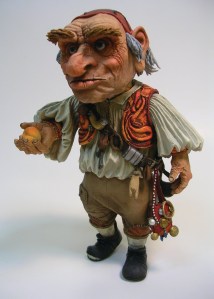
But then, a couple of other things happened. Remember Hoggle? A grumpy, self-depricating and ultimately heroic little dwarf who guides Sarah through the maze. When we are first introduced to him, Sarah in her distraction mistakenly calls him Hogwart. Hogwart – really? This was the first coincidence I picked up on, and pointed it out in laughter – imagine they both came up with the same name!

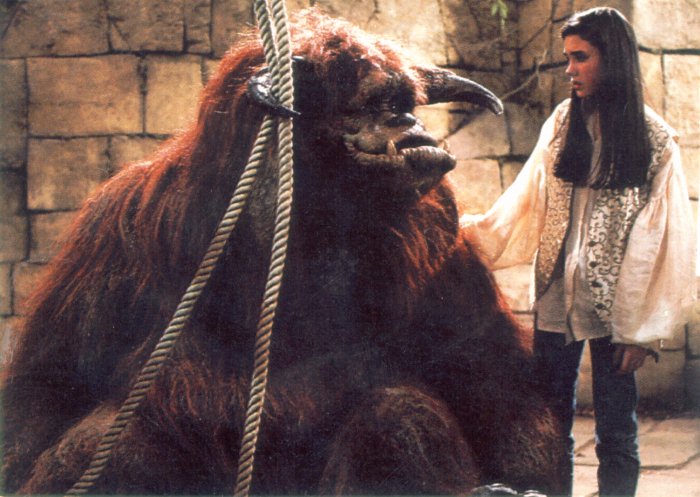
A little later, my suspicions were raised. Remember the big, hairy, somewhat dimwitted monster that befriends Sarah and has some bizarre power to control rocks? Name’s Ludo. Yes, Ludo. Just like Ludo Bagman, the Head of the Department of Magical Games and Sports.

Ludo Bagman…maybe.

They say you need at least three points to plot a graph. I wouldn’t want to go so far as to say Ms. Rowling took inspiration from Labyrinth; however, it feels these are a few coincidences too far. Two characters that share names with Rowling’s universe, and a giant maze that serves as the testing ground, and ultimately the transformation from child to adult, in both stories? I just don’t know…

Anyway, it turns out I’m not the first one to think of this, as a quick Google search will tell you. Some people see the coincidences; some dismiss them. I don’t necessarily want to make a claim either way, but just bring it to your attention: what do you think?

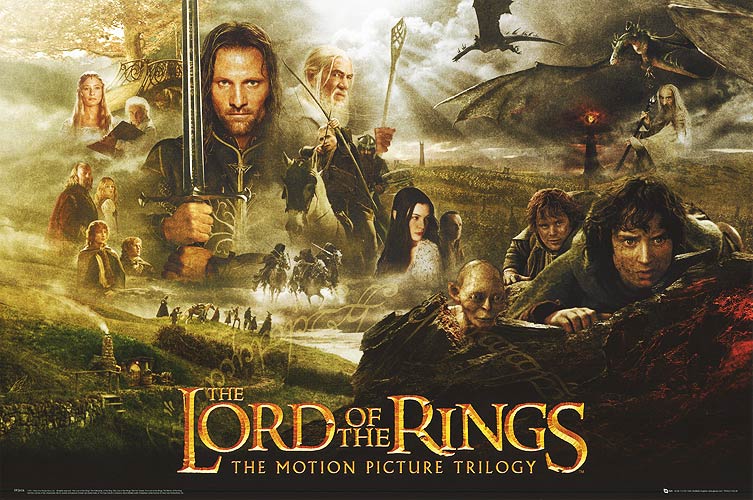
Music I Love: “The Lord of the Rings”, Howard Shore (2001-2003)

In my mind, there is only one lord of film score, and it is John Williams. In terms of prolificacy, variety, emotion and sheer staying power, he is undefeated. So I’m going to talk about the composer that one-upped him.

Howard Shore has been scoring films for quite some time; his first features film was The Brood, back in 1979 (having said that, John Williams started way back in 1958!). He spent the next two decades writing music for many, many notable, famous and oscar-winning films. The FlyThe Silence of the LambsPhiladelphiaCrash and Gangs of New York all bear his haunting melodies. More recently, he has been responsible for Martin Scorcese‘s masterpiece, Hugo, which is one of my favorite films of the past ten years.

But – poor soul – he had never won an Oscar, and I hate to say it, but I can’t remember a melody or tune from any of these movies. Can you? I remember The Silence of the Lambs opening with some eerie piano music, but couldn’t sing the tune back to you at all. In part, of course, these have all been exceptionally serious films, and such movies can rarely sustain a rousing melody. John Williams, with his plethora of forays into fantasy (Jaws, Star Wars, Indiana Jones, Close Encounters of the Third Kind, Superman, E.T. The Extraterrestrial), has had much more freedom in expressing his artistic style.

So if the nature of the film determines the expressiveness of the soundtrack, what would this mean for The Lord of the Rings? Peter Jackson brought a depth to these tales that defied expectation, with sweeping landscapes, battles of epic proportions and an impossible attention to detail; there is more Elvish spoken in the film than appears in all three books. What could Howard possibly write that would not only support this monument, but overshadow the film itself and bridge the gap between the image and the audience?

He delved deep, scoured every mote of his musical training and knowledge, released himself from all constraints: and wrote an opera.

For any of you familiar with the programmatic music of the late 1800s, a movement pioneered by Beethoven sought to tell stories through music. The composer would craft a theme for each part of the tale, and the listener would be expected to follow the story by picking up and recognizing these themes. It was Wagner, however, that created the concept of the leitmotif: a very specific and recognizable melody – a tune, as it were – to represent characters, places and events. These might appear on their own, perhaps at the introduction of a new character; they might appear combined with numerous others, building an entire scene and plot, reinforcing the story told through the opera itself.

Now, the application of this concept to film is hardly new; John Williams achieved this brilliantly in Star Wars, of course. Everyone can recall the opening theme, which is used to represent, most often, Luke Skywalker. But can you also remember the Imperial March? Perhaps the force theme (first heard when Luke is looking out over the twin sunsets of Tatooine)? Each of these memorable motifs recurs throughout the films, brought back not at random, but very deliberately to represent specific elements in the film.

So where did Howard Shore go beyond this? He composed nearly a hundred separate, individual leitmotifs for the film, some of the most recognizable being the Ring (heard over the opening titles), the Shire (heard when we are first introduced to Frodo), the Black Riders (quick, low notes on bassoons), Isengard (heavy, descending thirds in the brass), Mordor (high, chromatic brass), Rohan (wonderful, rustic fiddle) and, most brilliant of all, Gondor: horns, playing in the style of hunter’s horns of days past (heard in the most hair-raising climax, musically, of the entire trilogy, when Gandalf is racing up the seven levels of Minas Tirith, desperately seeking the Lord Denethor).

Howard, however, took his multitudinous leitmotifs, and used them in ingenious and subtle ways, signifying the most important changes and climaxes of the tale. Take, for instance, the theme of the Fellowship – heard in full at that famous scene, used in the trailers, where Gandalf appears over the lip of a rocky hill, as the Fellowship, fresh from Rivendell, set out on their quest. This theme is heard abundantly throughout the first film, often heard in its full orchestration. It is also heard throughout the second and third films as well, but: not in full. The theme of the Fellowship is never heard in its complete, orchestrated version again following the breaking of the Fellowship.

Other instances of this ingenuity are equally noticeable elsewhere; Isengard and Mordor have distinct, but complementary, brass themes. When we are shown scenes involving both Saruman and Sauron, these themes are heard together. The Isengard theme is associated also with the Nazgûl, and these two themes are heard prevalently as the goblin army leaves Minas Morgul under the watch of the Witch King of Angmar.

To me, Howard’s score for The Lord of the Rings represents possibly the finest music ever committed to film, both in its scope, inventiveness and sheer beauty. I feel his heart and his soul poured into this score, and if he never betters it, it will remain his crowning achievement. It is inseparable from the film, and from the tale; I cannot read Tolkien’s passages of Rohan without the theme of the Rohirrim passing through my head.

So watch out, John – you might have the quantity, but here, in this instance, Howard has the quality. I believe I could live the rest of my life and never hear such beauty in a film.