Thought of the Week: A Little Story

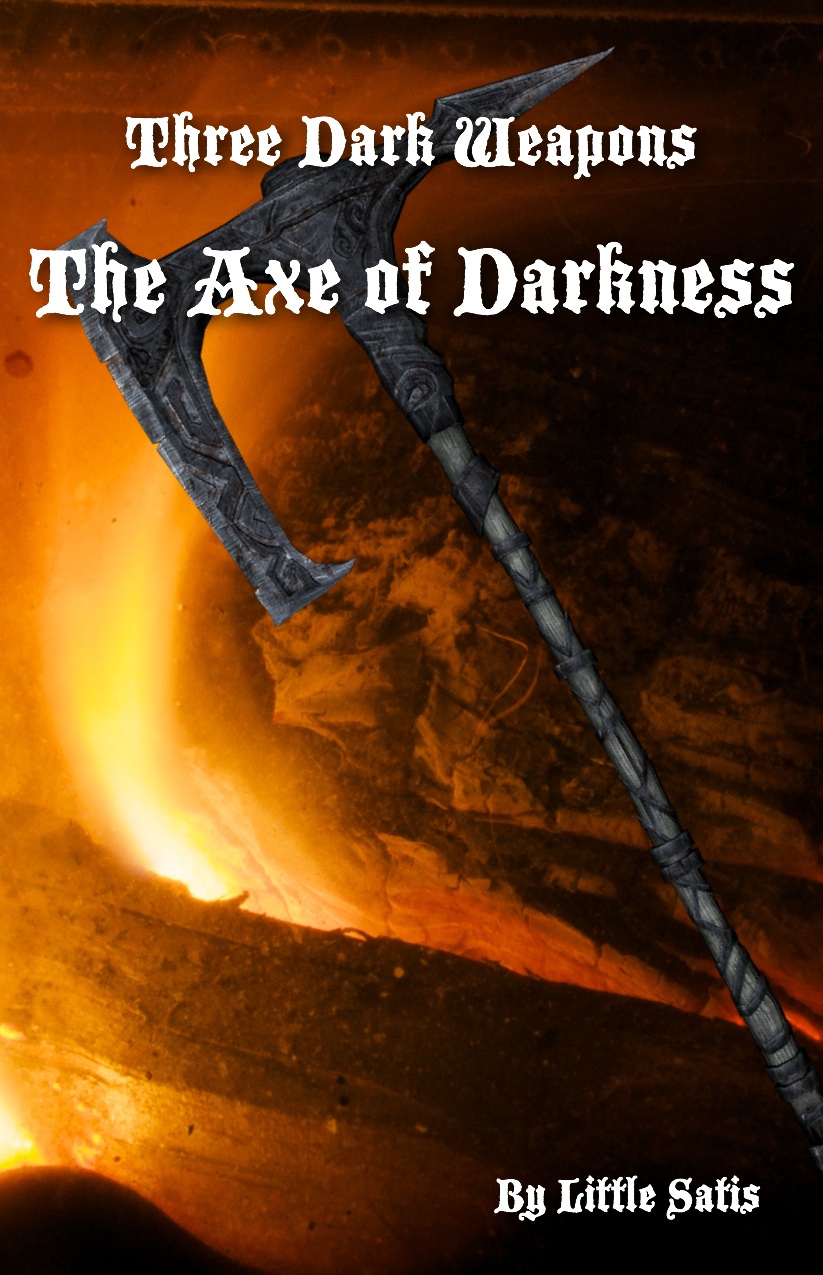
The Axe of Darkness

Sorry for the delay this week – same problems as last week, you know.

Anyway, short and sweet: I thought I’d share a little story with you. It’s very special and inventive, and was originally written out by hand in the small hours of the morning before everyone woke up. It took a lot of effort, and reflects a labor of love. Amazingly, it’s only the first of four such stories, which together form an epic fantasy, spanning an entire world and pitting our hero against unsurmountable forces of darkness.

I wonder where the inspiration came from.


Three Dark Weapons

The Axe of Darkness


By Little Satis


Chapter One

Ash lived in a land called Sath. Life there was good; he had friends, his mother and father gave him food and shelter. Life was good, except for one thing: the land was owned by the villainous Shadow Lord. There were only three known weapons that could defeat him: the Axe of Darkness, the Dagger of Hands and the Sword of Death.

Ash felt that they were evil weapons, but he thought that evil could defeat evil. His father had attempted to take the weapons, but before he could even start the quest a tree fell on him, and injured his leg badly. Ash was only thirteen when he got the greatest surprise of his life.


Chapter Two

“Ash,” said Roan when he came back to his house. Roan was Ash’s father.

“What?” said Ash.

“The time has come for you to take on the quest that I never started.”

“What?” said Ash again. “You don’t mean the Three Weapons Quest?”

“Yes, I do,” said Roan.

“No,” said Ash. “I will not go.”

“You must,” said Anna, Ash’s mother.

“I don’t even know how to wield a sword,” said Ash.

“That is why I will teach you,” said Roan.

Ash saw he was going no matter what (unless there was something like a storm). “Okay,” he said. “When do we start?”


Chapter Three

Ash started to train the next day, and the next. He kept getting cuts and scrapes.

“Ow!”, he said one day as he cut himself with his sword. Roan walked over to Ash.

“You have to be more careful,” said Roan as he cleaned the cut.

Then three figures jumped over the wall.

“Shadow Knights!” said Roan as he drew his sword.

They were clad in black armor with wickedly curved swords, but Roan was ready to fight. In three swift chops of Roan’s blade, the Shadow Knights lay dead on the ground.

“Wow,” said Ash.

“Let’s get you trained,” said Roan.


Chapter Four

One month later, Ash was ready to go. He had a sword and a dagger, and wore a vest of armor under his shirt. He was walking into a forest. Its trees had no leaves. He stepped into the forest, and found himself in the middle of the forest.

There was no path behind him. He took a step back and found himself on the path.

“Clever,” said Ash. “Illusions.”

He walked on until a beast stopped him. It had two fangs, one hundred teeth, big claws and two black hungry eyes.


Chapter Five

The beast attacked. Ash jumped and drew his sword. He landed on his feet. He swung his sword at the beast, but missed. The evil beast snapped its jaws, and nearly took off Ash’s arm. Ash swung his sword at the beast, and missed again. Then the beast pounced on Ash. Ash struggled to free himself, but he couldn’t. Then he freed one hand, and managed to plunge his sword into the belly of the beast.

It howled and stood on hind legs, and fell. Ash ran away; he was glad to be rid of the beast.


Chapter Six

Ash slowed to a walk. He thought he wouldn’t make as much noise, and would be less likely to attract any more beasts. He kept walking until he got to a clearing of green grass.

“That’s funny,” said Ash. The rest of the grass around it was gray. He walked onto the patch of green grass, fell  and began to sink — it was quicksand!


Chapter Seven

Ash struggled, but he only sunk deeper. He saw a vine and clung on to it, but it broke and got sucked into the quicksand.

“Help!” cried Ash, but he knew it was pointless.

Suddenly, another beast came, and another. Soon there were ten beasts, hoping for fresh meat. Ash sunk more, and the beasts drew nearer. Then, Ash was sucked under.


Chapter Eight

Ash fell out of a trap door under the quicksand. He was in a chamber. Before him was a door, and out of the door came ten Shadow Knights.

Ash drew his sword. The Shadow Knights attacked. Ash’s sword parried the first Shadow Knight’s sword and stabbed him. Ash made quick work of the rest; in nine chops, they were dead.

He went into the next chamber, to find the Axe of Darkness held by a Shadow Knight. This Shadow Knight had gray armor, and horns on his helm.


Chapter Nine

The Shadow Knight said, “I am Sta.”

Sta attacked. Ash blocked the attack, but was sent flying back.

“You cannot defeat me when I carry the Axe of Darkness,” said Sta. “You are pathetic.”

Ash got to his feet. He stabbed Sta in the knee, but Sta didn’t even flinch. Then Sta got a lucky shot and cut off Ash’s left hand.

Ash swung his sword and cut off Sta’s head. Ash picked up the Axe of Darkness and put it to his wrist, which was bleeding badly. Then, his hand was restored.


Chapter Ten

Ash stood up, holding the Axe of Darkness. He slammed it against the wall. The wall broke, and daylight came in. He walked outside to find the ten beasts were still there.

He took out his sword, and then put it away. He had the Axe of Darkness — there was no need for a messy sword fight.

He slammed it into the ground, and caused an earthquake that killed the beasts. He had won.

Ash was one step closer to freeing Sath from the Shadow Lord.
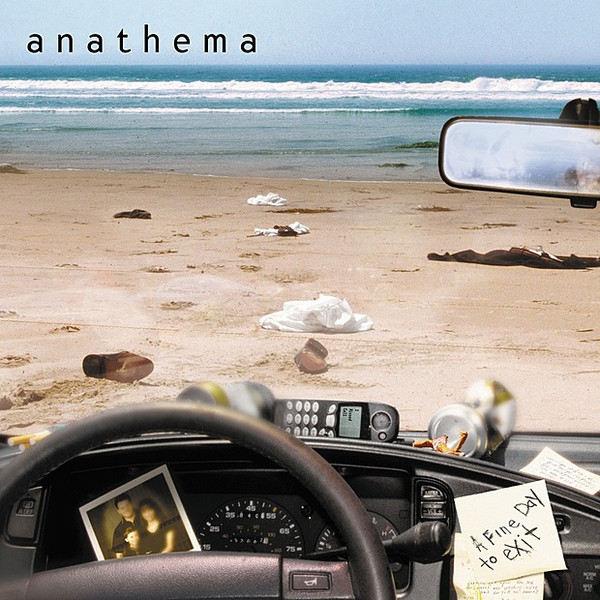
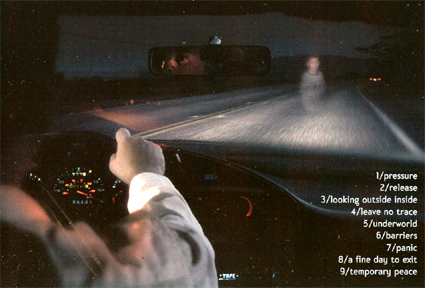
Music I Love: “A Fine Day to Exit”, Anathema (2001)

Following on the heels of our heart-to-heart about depression, it seems only fair to share what is for me possibly the most depressing album I have ever heard.

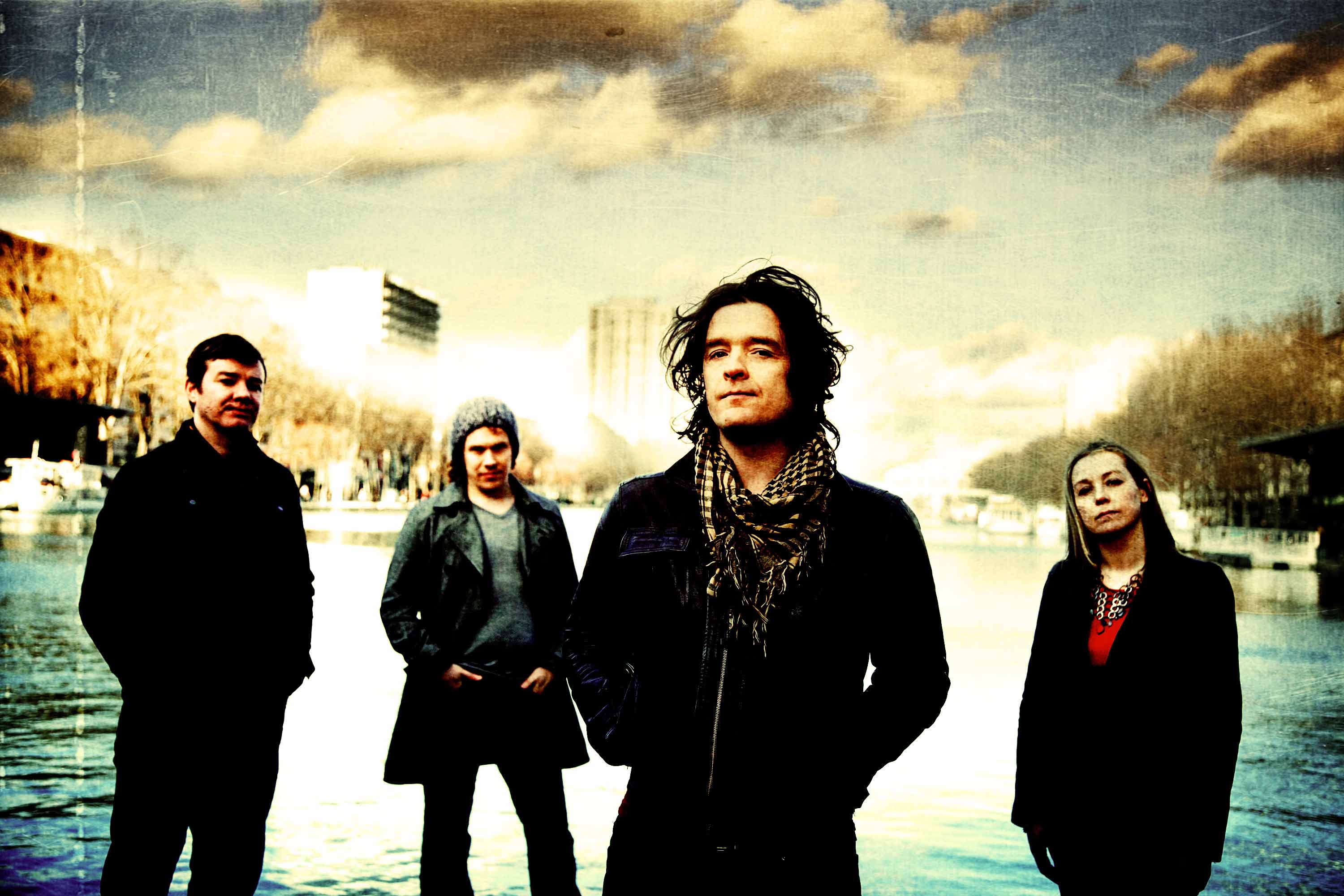
Anathema is the final piece of my ‘big four’ (the others being My Dying Bride, Opeth and Sentenced). Their roots begin right along side fellow Northeners My Dying Bride, a heavy and dirge-like Doom Metal band from Liverpool. It didn’t take them long to gain the attention of Peaceville, who signed them for a four-album deal.

The Crestfallen (EP) was their first mainstream release, a 32-minute dirge of atonal distortion and howled vocals. Even here, though, their more sensitive side, which would only become more prominent, can be heard in tracks such as Everwake. Their first full-lenth, Serenades, brought this musical style to a strong consistency, winding from leaden and moaning distress such as Lovelorn Rhapsody to haunting, acoustic interludes like J’ai Fait Une Promesse. The closer is an epic 23-minute drone; synths and soothing harmonies intertwine, changing slowly and subtly.

The following EP, Pentecost III, carried this style further, focusing on lengthy, heavy and atmospheric tracks. When The Silent Enigma came out in 1995, however, the beginnings of a marked change in style became apparent. Though still heavy and filled mainly with growled vocals, the musical style began to become less dissonant, with songs such as Cerulean Twilight and the wonderful A Dying Wish bringing a desolate and sad tone to their style.

Then, something happened that cemented the transition from Doom Metal to atmospheric, haunting and dismal rock: Darren White, the vocalist, left. Rather than hiring a new vocalist, guitarist Vincent Cavanagh took up the mic. Unable (or unwilling) to growl like Darren, 1996’s Eternity is now a classic album, an epitome of their canon. Alternative 4 carried this yet further, becoming ever more distant from their metal roots. By the time Judgement was released in 1999, the heaviness of their past was all but gone, leaving behind a deeply sad style of alternative rock.

And then came A Fine Day to Exit, in 2001. This is an incredibly important—and precious—album for me. Every one of the nine tracks simply drips with depression, and this became the soundtrack to my life at the time of its release. This album is Anathema perfected; nothing before or since has quite touched its sense of absolute, utter despair.

Both musically and lyrically, A Fine Day to Exit carries the listener on an uninterrupted journey through landscapes of darkness, each song blending seamlessly into the next. The piano-driven ostinato of Pressure feels like a crushing weight on the chest, a feeling of stress that doesn’t life. As it fades, Release picks up, its striking opening guitars lulling the listener into its landscape of sadness. Release eventually peters out to the subtle sound of heating pipes in an old, run-down building, and the inescapable arpeggios of Looking Outside Inside gently ease their way into the ear. This is perhaps the best song on the album, building up slowly, gradually, from acoustic nothingness into a rage of entrapment.

As feedback leads the way into Leave No Trace, the album settles into a soothing swaying between slow and faster-paced songs, and the lyrics become noticeably more unstable. An unsettling feeling of a descent into madness begins to creep into the music, with Underworld turning out some disturbing imagery.

Climbing up the wall gonna creep between the cracks

Get out of my skull tie the rope around my neck

Destroy all emotion gonna rip my face to shreds

Cut my eyeballs open

Underworld – Anathema, 2001

(Breaking Down the) Barriers brings a sense of calm, and indeed feels like a sort of conclusion. Heart-rending, it speaks of the ever-growing disconnect between two people who realize they are utterly disconnected. Try as they might, there is no salvation.

And then, all hell breaks loose. A great pause of silence follows …Barriers, as if preparing for the storm that is to follow. Rapid, wavering guitars then break in, musically reflecting the sudden and complete unbalance of Panic‘s disturbing words.

I don’t think it’ll all end up like this

There’s spiders on the wall and they stink of piss

Dead heads lying in the corner

Staring at me making me feel bad

I put my hands up to my eyes

But the holes in my palms let me find a way

To corner you…

Panic – Anathema, 2001

Racing through at breakneck speed, Panic represents the peak of the album, the final release of the terrible tension of an unstable mind. From here it descends into the final moments of utter despair, the title track A Fine Day to Exit bringing with it a sense of absolution.

Then, finally, the perfect conclusion: Temporary Peace. Slow, quiet and bleak, it is a resting, a peace; a settlement from the madness. It speaks of finality, of the the darkness dragging you under for the last time. Its closing lines reflect this, simultaneously intimating the momentary quiet before the ending.

Beyond this beautiful horizon

Lies a dream for you and I

This tranquil scene is

Still unbroken by the rumours in the sky

But there’s a storm closing in

Voices crying on the wind

The serenade is growing colder

Breaks my soul that tries to sing

And there’s so many thoughts

When I try to go to sleep

But with you I start to feel

A sort of temporary peace

There’s a drift in and out

Temporary Peace – Anathema, 2001

And as the final notes ring out, the music dissolves into the sound of breaking waves, and the muttering nonsense of a madman.

The flow of this album so perfectly reflects my own cycle of madness that it cuts me to the very soul, unfailingly bringing tears to my eyes by the final dying sounds. The tension, the guilt, the increasing loss of control, until it finally all breaks loose—and then, when the rage is spent, dissolving into nothing but the desire to fade into absolute blackness, and never return.

This is not an easy album, but it is ultimately rewarding. Just beware: it will not put you in a happy mood.

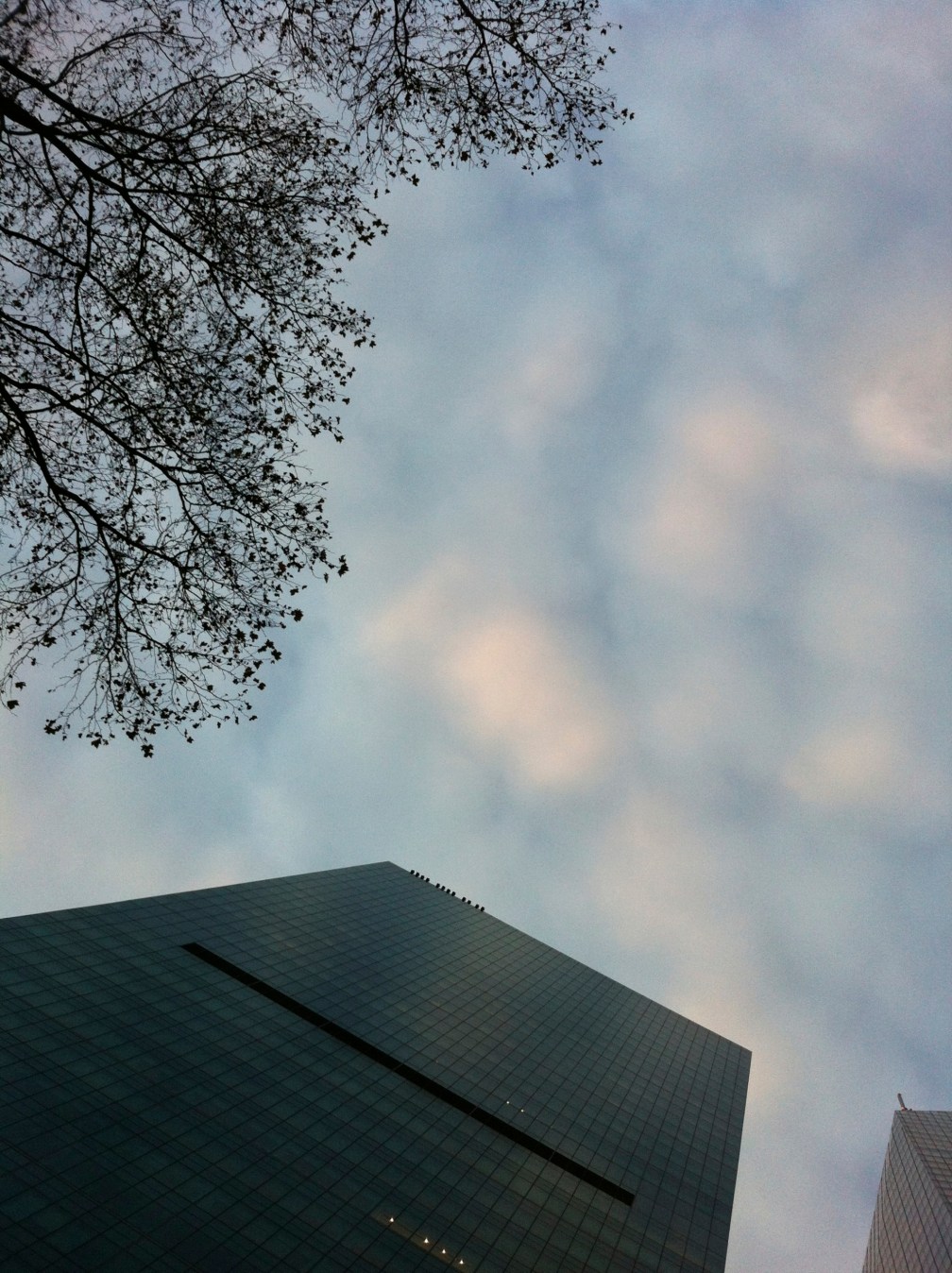
Daily Photo: November 30, 2011

New York’s buildings are really, really tall.

A weekend trip into the city; we go whenever we can, and I am always astonished at the scope and grandeur of the twentieth-century architecture there. Although I ultimately love the older Village, I am always in awe of the great midtown skyscrapers.