Are Infodumps Ever Okay?

The lofty standard to which I hold The Redemption of Erâth is, naturally, Tolkien’s own epic fantasy, The Lord of the Rings. I look to it for inspiration, for guidance, and even, at times, for stylistic advice. It’s an important tome, and influences many of the things that happen in my own work.

I started The Redemption of Erâth as literally a background novella, a short story detailing the history of the world of Erâth, its various Ages, and how it came to be the place of Darkness that it is in the novels themselves. It is, I suppose, the literaly definition of an infodump; it’s purely informational, with little plot or story, and even fewer main characters. It isn’t story; it’s a history book. It might still be interesting to read, and certainly enhances the enjoyment of the main series itself, but is by no means necessary.

However, in the books themselves—ConsolationExile, and now Ancients & Death, there is a lot of background information that is, if not strictly necessary, at least important to know in order to understand the full impact of the events that take place. In Consolation, much of this takes the form of the ancient legends and tales that Brandyé’s grandfather, Reuel, tells him on winter nights before the hearth. In Exile, there’s a bit of a concentrated backstory element in Chapter 12, The Tale of the Illuèn. It’s essentially a retelling of the fall of Erâth as detailed in History of Erâth. And now, in book three, there’s an entire chapter without characters—only a narrator explaining the major events in the great War of Erâth.

These chapters sometimes feel like roadblocks. As Kirkus Reviews pointed out for Exile:

“The different set pieces of history and myth enrich the story, almost to the point of distracting from the plot, which hovers in place during hefty infodumps.”

—Kirkus Reviews

They go on to say it isn’t all bad, but it still leaves me wondering if—and how—such information can be related to the reader—and if it’s even necessary. Could the plot simply move forward without these chapters?

But then I’m reminded of The Lord of the Rings. The second chapter of The Fellowship of the Ring is entitled The Shadow of the Past, and is essentially the same thing: Gandalf relating to Frodo much of the history and events that are important to understand in order to grasp just why the destruction of the One Ring is so vital to the surival of Middle Earth. Tolkien could have arguably just set off with the Ring, having Frodo figure things out over the course of his journey, but instead he chose to pause the story almost before it’s begun, just to make sure the reader is clear on what’s going on.

So when I ask myself if those infodumps in The Redemption of Erâth are a distraction, I think back to my inspiration. If Tolkien thought it was okay, then it’s good enough for me. I might not do it as well as he does, but I just hope it doesn’t stall the plot so stiffly that the reader puts the book down. After all, aren’t epic battles and tales of the fall of kingdoms interesting in their own right?

What do you think? Is it ever okay in a book to just spit out a bunch of background, or should it be more subtely weaved into the story?

What Have I Left Behind?

I watched a movie last night called Carrie Pilby (2016). In essence it’s about a startlingly intelligent girl who is trying to figure out her place in a world of people with half her brains and twice her wisdom. It was a cute movie, with just enough humor and drama to satisfy, without leaving you emotionally exhausted by the end. A little predicatble, perhaps, but entertaining.

And I related to it in more than a few ways, which I found surprising, because I don’t usually relate to onscreen characters. Like me, Carrie skipped grades in school. Like I once did, Carrie thought of her intelligence as something that set her above her peers (I now know that intelligence is a poor measure of a person). Like me, Carrie is sometimes depressed. She can’t relate to people, and finds social interactions exceptionally difficult.

The funny thing was that, as much as I related to the titular character, I also related to one of the side characters, too: Cy. Cy is a talented musician who hides his gifts behind humility, and despite his scruff and snark plays clarinet for one of the leading orchestras in the world. And the thought of Cy playing in an orchestra made me think back to my own youth, and what I’ve left behind.

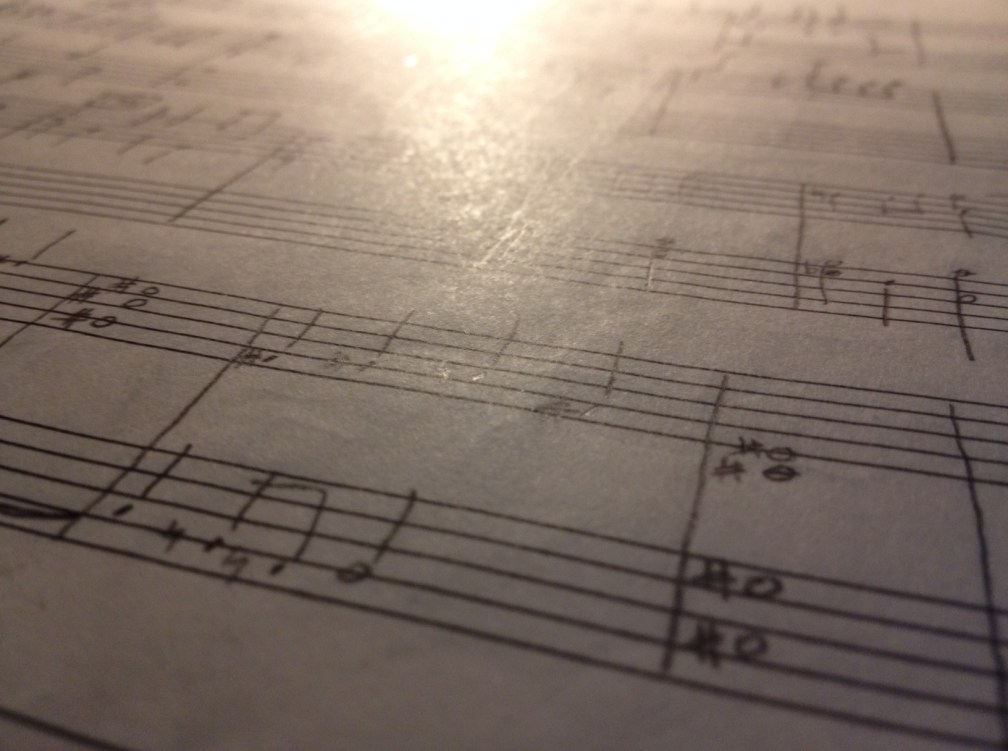
You see, I was once a talented musician. For many years as a child music was everything, was my life and my reason for existence. I dreamed of playing Rachmaninov before crowds of thousands, and as much as I struggled to play my best, I equally enjoyed playing at my best. I gave concerts; I sang in choirs. It led me to a degree in music composition.

And then, slowly, life got in the way. The last time I put note to paper was over a decade ago. The last time I played a real piano was years ago. And whilst you don’t forget things like that, it makes me start to wonder: what was it all for?

There’s something about the creative process that innately calls to me, something that, without which, leaves me feeling hollow, and empty. There have been great periods of my life when I haven’t created anything at all, and these are unsurpisingly linked to the times of my life when my depression has been at its worst.

In recent years my creativity has come in the form of writing, either novels or blogging, and whilst writing words is arguably a lengthier, more arduous process than writing music, it bears the promise of a more immediate reward: it’s easier to get people to read your writing than to listen to your music.

That being said, I miss writing music. I miss the process of orchestration, of wondering which instruments would sound best where, and creating sounds that, until then, had never existed before. Some of my favorite compositions were for a full orchestra, whilst others were smaller, chamber arrangements; yet others were death metal in symphonic form.

I saw some time ago a post about Anthony Hopkins, and how he once wrote a waltz. for decades it went unheard, until it was finally pulled from the dusty shelves and performed for the very first time. I would love to hear my own music performed live. I would love to know what it sounds like in real life, and not in my head, or through poor computer imitations. And watching this movie returned all these thoughts to me. It made me want to experience live music again, to compose, and to create. And hopefully, I will.

It takes time, and it takes effort. It takes years of laboring in the dark before one sees the light. Sometimes the light never shines. And this thought saddens me more than any other; that what I write, what I create—it will die with me, unheard and unread by any, one of millions of stories the world over that will never see the light of day. That will ever remain on the dusty shelves.

I wonder, sometimes: what have I left behind? What life might I have had as a musician and composer? Would it have been any more fulfilling than that of an unknown writer? Or would I have languished, withered and despaired … much as I still to to this day?

I suppose there is no telling; there is no knowing ‘what if’. Nonetheless, it reminds me of how fleeting we all are, and how important it is to do the best we can each day—even if that best isn’t much. Because one day we’ll all be gone, and what we leave behind is all that will remain to remember us by.

To fight the gloom and dark, and persevere in the face of utter despair. Such is life.

To See or Not to See: the Importance of Imagery in Writing

I got my first tidbit of feedback from a reader (and friend) on A Gothic Symphony, and it was an interesting thing to hear. While she liked the story itself (and is still reading it, as it happens), she found it quite fast-paced, and wanted to ‘see’ more of what was going on. She thought it would make a good movie.

What she meant was that she felt she wasn’t able to fully visualize the settings and surroundings of the novel. There are some parts of the story where I deliberately spend a little bit more time on the setting, but many of the chapters focus more on characters’ thoughts and points of view. It’s certainly a character-driven story.

This was interesting because it’s in stark contrast to my other book series, The Redemption of Erâth (published under the pen-name Satis). In this ongoing series of fantasy novels, one of the primary points of feedback I’ve received is that the story feels slow and drawn out in places, and I spend too much time focusing on setting and imagery.

The funny thing is that the first book in the Redemption of Erâth series and A Gothic Symphony are pretty much the same length (around 100,000 words, although I’m working on cutting A Gothic Symphony down a bit). In theory, they ought to take exactly the same amount of time to read.

So what makes a story feel slow or fast, and how does imagery come into play?

What I’m slowly learning as a writer, I think, is that it largely depends on the subject matter and the way the writer chooses to tell the story. For a plot-driven story in a fantasy world, the world itself is a large component of what drives the story. In my case, the fictional world of Erâth is the setting for the action and plot, and everything from its politics to its geography influence the course of the story. In this regard, it’s vital that I take at least some time to paint a picture of what it’s like to live in this world, although I’ve tried to do it by reference and inference rather than page upon page of description.

The thing is, I think some people simply want to get to the action of the story. They care about the world in which the story takes place, but not at the expense of what’s actually happening. In A Gothic Symphony, I may have taken for granted that the reader will already be familiar with the world in which it’s set—modern-day urban and suburban locations. In this regard, when I describe the action from the point of view of a particular character, the dominant trait is learning what that character thinks, and how they would respond to a given situation.

And from the sounds of it, I may have gone too far the other way. From giving too much description, I’m now not giving enough. This is a tricky thing to rectify, because in trying to recreate an authentic dialogue and train-of-thought, I skip the imagery—because it’s not how a person thinks, or talks. There are chapters where I step out of the characters into a third-party observer point-of-view, and these are the ones in which descriptions come into play.

So it sounds like I have some work to do. The good news is that I’ve clearly learned to write stories that feel much faster-paced; now I just need to learn to control that pacing.