In Pursuit of Perfection

Very few things in this world are perfect. Our jobs, our relationships, our partners and ourselves – these are all subject to the (often enormous) imperfections of life, and for the most part we live our lives content with – or at least ignoring – this fact most of the time.

It doesn’t help that perfection is highly subjective; one person’s ‘perfect’ book might be another’s most-loathed prose ever. I saw a post on Reddit the other day asking for opinions on the ‘perfect’ movie; answers ranged from Star Wars to The Grapes of Wrath. Many people agreed, others disagreed, and some simply suggested their own ‘perfect’ movies.

Unfortunately, despite knowing full-well that perfection is unattainable, many of us are perfectionists anyway. I know I am – or at least, I used to be – and I know many others who share this trait with me. For me it varies from subject to subject, as I suspect it does with many; those things I’m most passionate about are the things I have the highest expectations of. Projects that mean a lot to me come with an elevated need to be as close to perfect as possible.

But here’s the thing: perfection, whilst not technically impossible, depends entirely on the scale at which one is assessing the thing claiming to be perfect. My books, for instance, are far from perfect. They contain numerous flaws, plot holes, typos (despite intense editing), and passages that, in retrospect, I wish I had written differently.

But let’s zoom in a little more. Take the following passage:

“And so it was with a lighter heart that Brandyé Dui-Erâth began to walk away from the river and away from all he knew. And so it was that, unknown to him, Darkness followed behind and laughed.”

Satis – The Redemption of Erâth: Consolation

These are the final lines of the first Redemption of Erâth book. For the style and setting, to me this is as perfect as I can make it. I adore this lines, it took me a long time to come up with them, and they close out a book of sadness and despair beautifully. These two sentences are, to me, perfect. Better still is that they form the last paragraph of the book, because it leaves the reader feeling both sadness and hope.

One of the things I’ve been doing for my alter-ego’s upcoming young adult novel is writing songs to go with it. I’ve put down the notes, played with the sound, and recorded some vocals. Again – far from perfect. Yet some of the songs I actually really enjoy. My singing isn’t great, and the guitars sound a little artificial at times, but there are the odd ‘magic moments’ that really make me think, wow – I did a good job.

The problem is that minute perfection is exponentially difficult to scale. One note, one sentence, can be perfect. But art is made of millions of paint strokes, and not every one of them can be perfect. And as artists, we have a choice: we can go back and change and improve to no end … or we can just release the damn thing and let people enjoy imperfection.

After all, a song with perfect timing will not only sound like it’s being played by a robot – a robot is the only thing that could play it perfectly. Imperfections make us human, and some of the best recordings and works of literary genius are all the better for their imperfections; they help the rest stand out all the more as the genius that it really is.

Besides – most people will never notice.
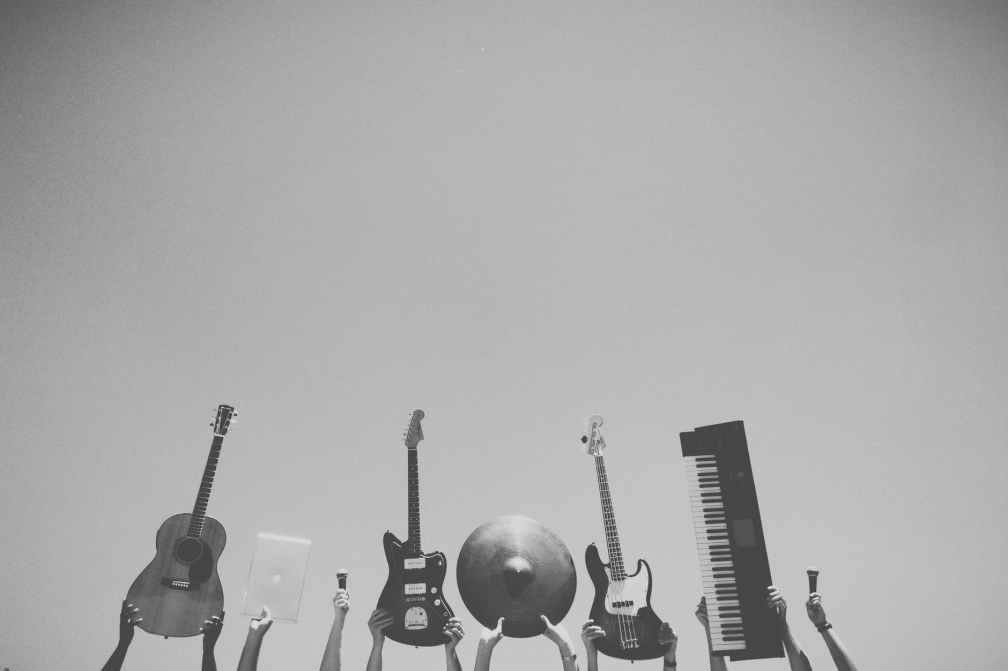
The Perils and Potentials of Pastiche

When I was a young composer in high school, I thought the pinnacle of musical genius to aspire to, the composer to emulate and copy and write like, was Beethoven. I had a deep love also for Sibelius, and Liszt, and Dvorák, and sought to write music along their styles, too. Little did I realize as I was cutting my compositional teeth that I understood their music’s beauty, without understanding its importance.

It wasn’t until I got to college and had my first compositional tutoring session that my world collapsed. I proudly placed in front of my professor the culmination of my childhood work – a full-length orchestral symphony that could’ve been written by Schubert – and watched in mounting horror and deepening shame as he methodically tore it apart. It was, in a word, a pastiche.

I had never heard the term before, and had never been presented with its concept as a negative thing; I had never been exposed to the idea that imitating art is not in fact worthwhile, but instead misguided flattery and a twisting of influence into something derivative and necessarily ‘less-than’.

It crushed my spirit.

But from the ashes of my early compositions rose something far, far better, and I am to this day indebted to my early composition professor for what he taught me about originality. You see, I had been laboring for years under the impression that the best works of art I could create would be in the same style as my influences. It never occurred to me to think otherwise; after all, shouldn’t I be writing the music I wanted to hear? And if what I wanted to hear was Dvorák’s ‘New World’ symphony, then shouldn’t I rewrite it with my own notes?

What I learned instead was the ability to see a work of art for its context, and not just its enjoyability. The dissonances and unsettling cross-rhythms of Beethoven’s ‘Eroica’ symphony are beautiful, uplifting and inspiring, yes – but they are far more important than that, because they represented a moment in musical history when people heard something they had never heard before. But Beethoven didn’t simply create a symphony that was entirely atonal or arhythmic; he wrapped these special moments in a musical tapestry that in other ways harkens back to Mozart, and Haydn, and Bach before them. It was new, but it wasn’t unfathomable.

And this is where I learned the difference between pastiche and originality. You see, I could write a symphony that would sound like Beethoven’s tenth … but why should I? Where’s the value in recreating something that won’t have sounded ‘new’ for 250 years?

Instead, I started working on a style all my own, borrowing from what I enjoyed in others’ music and molding it into a shape that was recognizable, yet (almost) entirely new. I wrote clarinet solos; I wrote elegies for voice and string quartet. I wrote a 14-minute musical essay on the canon form for full orchestra. (To this day this remains one of my favorite compositions.)

And this is something I’ve learned to translate from music into writing, as well. When I started writing The Redemption of Erâth, I more or less wanted to write a story that would read like Tolkien. I realize now that this was misguided (I have nowhere near the mastery of the English language to even place in the same league as Tolkien), and as the series has progressed, I feel I’ve begun to develop my own linguistic style.

When I wrote my young adult novel, 22 Scars, however, I refused to read anything in a similar genre. This story was important to me, and it was important that I write it in a way that really could only have come from me. With short, often incomplete sentences, multiple points of view, and little to no emotion in third-person scenes, I was able to create a literary world that (hopefully) embodies the spirit of numb depression, draws the reader in and puts them squarely in the shoes of a suicidally depressed teen with a tragic upbringing.

The tonal difference between The Redemption of Erâth and 22 Scars is distinct, to say the least; I suspect most people would not assume they were the work of the same author. But there’s a reason for that; the entire world of Erâth is derivative of Tolkien’s Middle-Earth, and so it makes sense that the tone of those stories would match. The world of 22 Scars, however, is bleak, numb, and highly personal – it is my world.

Now, this isn’t to say necessarily that all pastiche is worthless; I believe there is a value in being able to recreate the style of your favorite artists whilst recognizing that what you’re creating isn’t necessarily meant to stand on its own without context. For my second YA novel, The Broken, I needed to write a few songs to get in the heads of the band members described in the book. However, these songs would be from the early- to mid-nineties, and to write songs that I would write today wouldn’t have fit. Instead, I listened to a lot of Rage Against the Machine, Korn, and even through to System of a Down and Slipknot, and wrote five songs that, to my ear, could have been the bastard children of these bands.

If I were to write a soundtrack to a period film, I would want that soundtrack to sound like it came from that era. The same rules apply. I wouldn’t bill that soundtrack as art in its own regard, but rather to be considered against similar works of the era.

Ultimately, I think that there is a fine line between influence and pastiche. It’s fine to be influenced by other artists, but the moment what you create could have been made by that same artist, you’ve lost the most important thing in art: your own soul.

Passing the Torch of Depression

It’s incredible, to an extent, to consider that my son is fifteen.

When I started writing The Redemption of Erâth as bedtime stories for him, he was a wide-eyed seven-year-old, in love the wonder of fantasy and the magical places stories can take you. When I first published Consolation in 2014, he was ten – old enough to understand the importance of such a feat, yet young enough to whole-heartedly believe that it could be a success.

And now, five years later, he is very much an adult. Not wholly – he hasn’t entirely mastered social interactions or handling money (something he’s unlikely to learn from me) – but enough so that to hear him speak, or read his writing, you could certainly be forgiven for thinking he’s at least ten years older than he actually is. He’s socially aware, intelligent beyond books, and able to hold a political conversation with evidence to support his stance.

But there’s something else that’s happening as he gets older, and it’s as disconcerting as it might be inevitable. He’s starting to show symptoms of depression.

I might be reading too much into it – after all, teenagers frequently fall into dark moods and monosyllabic interactions – but there are many of the hallmarks of depression in his behavior and attitude, and I don’t mean from a clinical perspective.

I mean from a personal one.

At fifteen, he’s beginning to behave exactly the way I did the year depression took me away forever. He’s moody, miserable, frequently uncommunicative, and denies that anything is wrong more or less all the time. He won’t talk to me about his feelings, about his relationships or friends, and I worry that he might be falling into the great void that I did at his age.

It’s so hard to talk to him, because it isn’t ever clear if he’s really listening, or taking my words to heart. I don’t have advice; I don’t have any good suggestions. All I have is a lifetime of experience with misery and depression, and the only thing I ever wanted for him was to not descend into that same abyss.

If I could let him know anything, it would be that most important of knowledges, the one thing I never knew or felt in my own youth: he’s not alone. I wish I could help him understand that he has a companion, he has support – he has someone who intimately understands what it feels like to hate yourself, to worry compulsively over someone you love, and to wish with all your heart that things could be somehow different; that you could return to the past of youthful abandon, or fast-forward to the future where all the heartache of youth is long-spent.

He has me.

If you’re out there; if you read this; please understand that I want you to know it’s okay to feel the way you do. It’s okay to feel sad, depressed and miserable. It’s okay to despise your life and wish it was different. It’s okay to dream about escape, to hope for love and to want to avoid talking to anyone because it’s embarrassing, painful and frustrating.

It’s totally okay to be you.

And furthermore, I’m sorry. I’m sorry I haven’t been as supportive as I could have been. I’m sorry I lie in bed while you do the dishes and clean the house. I’m sorry I’m a pathetic excuse for a parent who probably seems like a cruel taskmaster, pushing my own responsibilities on you because I can’t bear them myself.

And most of all, I’m sorry to have passed you this torch of depression. I hope dearly that I’m wrong; I hope that you can find a way to grow out of it, to find happiness and joy in life. Maybe you do, and you just hate me. Hell, I don’t even care if that’s the case.

But if you are suffering in the throes of despair, please, please understand that you can talk to me. I won’t judge; I won’t discipline. I won’t even speak, if you don’t want me to. I’ll just listen, and I promise at the end of it I won’t tell you to suck it up, or that ‘that’s life’; all I can say is I’m sorry, and I know what it’s like.

Truly – I know what it’s like.